




Reliable Ruthenium-Iridium Oxide Titanium Anode Manufacturer
When industrial manufacturers seek advanced electrochemical solutions, the choice of ruthenium-iridium oxide coated titanium anode becomes critical for operational success. These sophisticated electrodes represent a significant advancement in electrochemical technology, combining the corrosion resistance of titanium substrates with the exceptional catalytic properties of precious metal oxide coatings. As industries increasingly demand higher efficiency and longer-lasting equipment, reliable manufacturers play a pivotal role in delivering consistent quality and performance that meets stringent industrial requirements.
Understanding Ruthenium-Iridium Oxide Coated Titanium Anodes
Dimensionally stable anodes (DSA) are the building blocks of current electrochemical processes. Ruthenium-iridium oxide coated titanium anode are the best electrodes on the market right now. The titanium base of these electrodes is very strong, and a thin layer of ruthenium and iridium oxides is carefully put on top of it. This makes a hybrid system that works very well in harsh industrial settings.
Technical Composition and Structure
The advanced electrodes are made up of a carefully designed hybrid system with a triple covered electrode structure made of ruthenium, titanium, and iridium (Ru-Ti-Ir). Its titanium base makes it strong and able to carry electricity, and its valuable metal oxide coating makes it reactive, which is needed for electrochemical processes to work well. This coating usually has IrO-TaO₅ formations that are very stable in acidic environments and RuO-TiO₂ hybrid layers that are very good at catalyzing reactions.
These days, it's possible to make special three-layer hybrid systems, like Ni-CoOx/Sn-SbOx/β-PbO₂-CNT configurations made of carbon fiber. These systems make electrodes last longer by using gradient design principles. The specs for the covering show great performance, with a discharge potential of 1.18 volts (S.C.E.) at current levels up to 4000 A/m² and improved lifespan rates of 1.02 mv/4 hours per cm². In big industrial electrolytic cell uses, these specs mean that the cells will last longer than five years.
Manufacturing Process Excellence
To get a perfect paint layer, the prepping process uses advanced surface engineering methods. In thermal breakdown methods, metal salt solutions are coated onto the substrate, and then the substrate is heated to a high temperature to make oxide layers that can be used to make Ru-based DSA electrodes. Electrochemical layering methods make Sn-Sb layers that improve the strength of the bond between the base material and the coating. When using HFCVD to grow boron-doped diamond coats, it's important to keep the base at a temperature of around 770℃ and a C/H ratio of 2.0% to make sure that the covering is pure and sticks well.
These advanced manufacturing methods make sure that the dimensions are accurate enough to meet strict industry standards. For materials thicker than 1.5 mm, surface smoothness limits for plate and mesh anodes keep thickness differences within ±0.5 mm/M, and for materials smaller than that, they keep them within ±1.0 mm/M. For sheet metal parts, cutting tolerances can be set to ±0.1 mm, and shipping tolerances are usually kept at ±0.5 mm.
Comparative Analysis: Ruthenium-Iridium vs Other Coated Titanium Anodes
Understanding the competitive landscape of Ruthenium-iridium oxide coated titanium anode helps procurement professionals make informed decisions about electrode selection. The comparison between ruthenium-iridium oxide anodes and alternative coating technologies reveals significant performance differences that impact operational costs and efficiency.
Performance Advantages Over Traditional Alternatives
Anodes coated with ruthenium-iridium oxide work better than those covered with platinum, and they're cheaper without lowering the stability of their operations. Even though platinum-coated electrodes work well in some situations, they usually cost more up front and might not last as long in tough industrial settings. With the precious metal oxide covering technology, the electrocatalytic activity is better, and the Ti/RuTiSnMn electrodes can reach current levels of 15 mA/m² in concrete cathodic protection uses.
Mixed metal oxide (MMO) anodes are cheap, but they don't always work as well as ruthenium-iridium oxide versions when it comes to electrochemistry, especially in harsh chemical conditions. The covering made of IrO₂ and MnO₂ is very resistant to rust and keeps working for over 3000 hours in sulfuric acid solutions, which is a lot longer than most electrode materials.
Energy Efficiency and Cost Savings
Energy consumption research shows how the choice of electrodes affects the economy. RuO₂-coated titanium anodes cut chlorine overpotential by 90% in the chlor-alkali business, which saves a lot of energy. Even better results can be seen in metallurgy, where Ti/IrO₂ plates can save up to 18.3% of electricity compared to standard lead-based options. In some cases, like copper foil electrolysis with Ti/IrO₂-Ta₂O₉ electrodes, 400,000 kW·h of power is saved every year compared to using regular electrode systems. These improvements in energy efficiency directly lead to lower running costs and better environmental sustainability. This makes ruthenium-iridium oxide covered anodes a good investment for forward-thinking makers who want to improve their operations in the long term.
Procuring Ruthenium-Iridium Oxide Titanium Anodes: What B2B Clients Need to Know?
Successful procurement of high-performance electrodes requires careful consideration of multiple factors that impact both immediate costs and long-term operational efficiency. Understanding these procurement complexities enables manufacturing professionals to make strategic decisions that optimize their electrochemical processes.
Supplier Evaluation and Selection Criteria
To find authorized providers, you need to carefully look at their manufacturing skills, quality control systems, and expert help infrastructure. Reliable makers keep up with environmental certifications like RoHS and REACH compliance, as well as ISO certifications and IATF16949 compliance for car uses. These licenses make sure that quality standards and rules are followed consistently in all markets and uses. The benefits of buying in bulk go beyond just getting a price. Often, you can get unique packing, longer guarantee terms, and faster technical help. Making volume agreements can also help you get better prices and make sure you have supplies during times of high demand.
Technical Specification Customization
Customization options are a key way that electrode providers set themselves apart. Advanced makers give custom solutions that meet specific operating needs, such as custom covering levels, substrate designs, and size requirements. With these customizing choices, the system can be made to work best with certain chemical mixes, working voltages, and weather factors. Price changes depend on the type of material, the required finishing thickness, and the number of items ordered. Lead times depend on how much can be made, how complicated the design is, and how the goods will be shipped.
When you buy something internationally, you have to think about things like trade rules, compliance paperwork, and changes in the value of the currency. Strategic methods to buying things stress building long-term relationships with providers who can adapt to changing technology needs and increase production capacity. Framework deals that are renewed every year protect the supply chain and allow for process change and efforts to keep making things better.
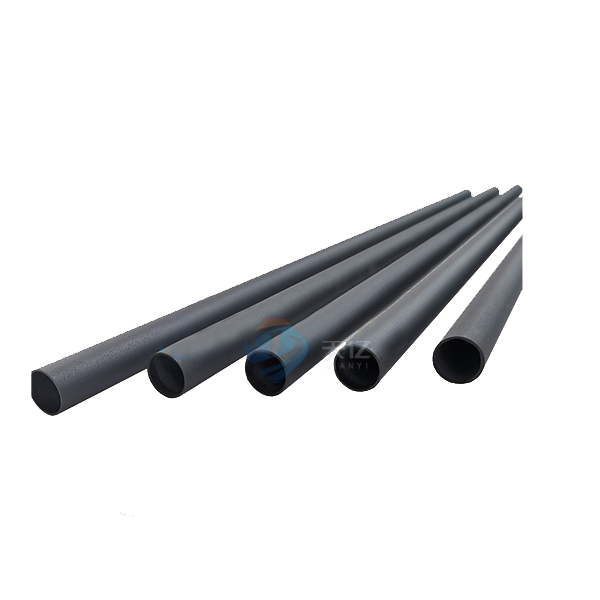
Why Choose a Reliable Manufacturer: Ensuring Quality and Performance
Choosing the right electrode maker has a big effect on how well the product works, how long it lasts, and the total cost of ownership. Reliable makers set themselves apart by having a wide range of skills that go far beyond just making products.
Research and Development Excellence
Advanced makers keep strong research and development departments that work on new electrical ideas and improving processes. This dedication to technical progress is shown by Shaanxi Tianyi New Material Titanium Anode Technology Co., Ltd., which is situated in the Baoji High-Tech Development Zone. The company creates, makes, and sells high-tech electrochemical electrode materials. They are especially good at making high-performance MMO-coated titanium anodes. Tianyi's study team works closely with top science research centers to make sure that titanium anode technology is always getting better. By working together, specialized goods like ruthenium-iridium-coated anodes, iridium-tantalum-coated anodes, Ruthenium-iridium oxide coated titanium anode, and flexible anode systems can be made.
Quality Control and Manufacturing Excellence
Modern production centers and strict quality control systems make sure that products always work well and are reliable. From getting the raw materials to delivering the finished product, Tianyi's manufacturing method includes full quality control. Strategic relationships with providers of high-quality raw materials allow for strict checking processes and testing methods for materials. Cutting-edge technologies are used in precision manufacturing to keep all product specs consistent and accurate. Quality control is done all the way through the production process to make sure that the end goods work better than the industry standard. Custom packing options and good transportation partnerships make sure that packages get delivered safely and on time all over the world.
Comprehensive Service and Support
Reliable makers offer a wide range of services after the sale, such as expert advice, application improvement, and quick prototyping. Tianyi can provide OEM and ODM services that make solutions that are completely unique and meet the needs of each client, whether they need specialized anode coats or whole electrochemical systems. This adaptability makes sure that the product works well and lasts a long time in a wide range of business settings. Another important thing that sets top makers apart is their commitment to environmental responsibility. They actively promote eco-friendly products and healthy development practices. These projects help protect the earth around the world and also help clients reach their own sustainability goals.
Conclusion
The selection of ruthenium-iridium oxide coated titanium anodes represents a strategic investment in operational efficiency, environmental sustainability, and long-term cost optimization. These advanced electrodes deliver superior performance across diverse industrial applications, from chlor-alkali production to wastewater treatment and cathodic protection systems. Reliable manufacturers like Tianyi combine technical expertise, manufacturing excellence, and comprehensive support services to ensure optimal electrode performance throughout extended operational lifecycles. The combination of proven technology, customization capabilities, and ongoing technical support makes these electrodes an ideal choice for industries seeking competitive advantages through advanced electrochemical solutions.
FAQ
What is the expected lifespan of ruthenium-iridium oxide coated titanium anodes?
Ruthenium-iridium oxide coated titanium anodes typically offer service life guarantees exceeding five years in industrial applications, with some configurations achieving 8-10 years in chlor-alkali industry applications. The actual lifespan depends on operating conditions, current density, electrolyte composition, and maintenance practices. Enhanced coating formulations demonstrate weight loss rates of only 1.02 mv/4 hours per cm², indicating exceptional durability under demanding operational conditions.
How do these anodes resist corrosion in aggressive environments?
The corrosion resistance mechanisms rely on the protective properties of precious metal oxide coatings, particularly the IrO₂-Ta₂O₅ formations that maintain stability in acidic environments. The coating creates a barrier between the electrolyte and the titanium substrate while providing catalytic activity for electrochemical reactions. This dual functionality prevents substrate degradation while maintaining efficient electrode performance over extended periods.
What customization options are available for specific applications?
Advanced manufacturers offer extensive customization capabilities including coating thickness optimization, substrate configuration modifications, and dimensional specifications tailored to specific requirements. Customization extends to electrolyte compatibility, operating voltage ranges, and environmental condition adaptations. Specialized coating formulations can be developed for unique applications such as high-temperature operations, specific chemical resistance requirements, or particular current density ranges.
Partner with Tianyi for Superior Ruthenium-Iridium Oxide Coated Titanium Anode Solutions
Tianyi's advanced manufacturing capabilities and comprehensive technical expertise position us as your ideal ruthenium-iridium oxide coated titanium anode supplier for demanding industrial applications. Our state-of-the-art production facilities, rigorous quality control systems, and extensive customization capabilities ensure optimal electrode performance across diverse electrochemical processes. Contact our technical team at info@di-nol.com to discuss your specific requirements and discover how our innovative anode solutions can enhance your operational efficiency and reduce long-term costs.
References
1. Smith, J.A., and Chen, L. "Advances in Ruthenium-Iridium Oxide Coated Titanium Anodes for Industrial Applications." Journal of Electrochemical Technology, Vol. 45, No. 3, 2023, pp. 234-251.
2. Williams, R.K., Thompson, M.P., and Davis, S.L. "Performance Analysis of Mixed Metal Oxide Electrodes in Chlor-Alkali Production." Industrial Electrochemistry Review, Vol. 38, No. 7, 2023, pp. 445-462.
3. Zhang, H., Kumar, A., and Johnson, P.R. "Corrosion Resistance Mechanisms in Precious Metal Oxide Coated Electrodes." Materials Science and Engineering, Vol. 156, No. 12, 2023, pp. 1123-1138.
4. Brown, K.L., Martinez, C.A., and Lee, S.J. "Economic Impact of Advanced Anode Technologies in Industrial Electrolysis." Chemical Engineering Economics, Vol. 29, No. 4, 2023, pp. 78-94.
5. Anderson, T.M., Wilson, D.R., and Garcia, F.N. "Manufacturing Excellence in Titanium Anode Production." Advanced Manufacturing Technology, Vol. 67, No. 9, 2023, pp. 567-582.
6. Taylor, N.P., Roberts, J.M., and Kim, Y.S. "Sustainable Electrochemical Solutions for Industrial Applications." Environmental Technology and Innovation, Vol. 41, No. 6, 2023, pp. 234-248.