




Top Chlorine Electrolyzer Benefits for Industrial Water Treatment
If your facility handles large volumes of water — whether for municipal supply, food processing, marine operations, or aquaculture — switching to on-site sodium hypochlorite generation with a chlorine electrolyzer can change how you think about disinfection entirely. Instead of storing and transporting hazardous liquid chlorine, you produce exactly what you need, where you need it. This guide breaks down the real benefits, how the technology works, and what to look for when selecting the right electrolytic chlorination system for your operation.
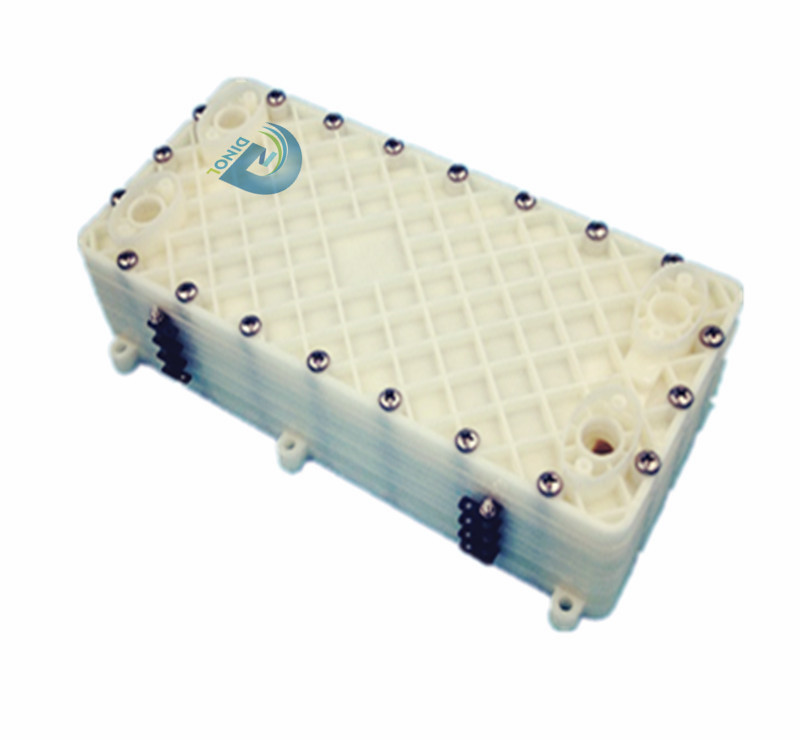
Understanding Chlorine Electrolyzers and Their Role in Water Treatment
The Core Electrochemical Process
(2) Anode: 2Cl⁻ - 2e⁻ → Cl₂At the cathode, 2H⁺ + 2e⁻ turns into H₂.
As a whole, NaCl and H₂O change into NaClO and H₂.
- Anode: 2Cl⁻ − 2e⁻ → Cl₂↑
- Cathode: 2H⁺ + 2e⁻ → H₂↑
- Total reaction: NaCl + H₂O → NaClO + H₂↑
This makes a solution of sodium hypochlorite right there on the spot. The hypochlorite ion that is made can oxidize and kill germs just like other chlorine-based compounds, but it doesn't have to be made somewhere else or kept under pressure.
Why On-Site Generation Matters
Moving chlorine gas or liquid chlorine comes with a lot of legal and safety risks. Electricity generated on-site gets rid of both of them. The facilities have full control over the production amount, concentration, and dosage. This is very helpful for US businesses that need to meet EPA or state-level water quality standards.
Key Industrial Applications
Water treatment plants for cities, food and drink CIP (clean-in-place) circuits, aquaculture, naval ballast water management, and swimming pool water treatment are all places that use electrolytic chlorination systems. For each use, hypochlorite output must be consistent and able to be tested. An electrolytic cell that is well-designed offers this.
Top 5 Benefits of Using Chlorine Electrolyzers in Industrial Water Treatment
There are clear advantages to using electrolytic chlorination on-site instead of traditional chemical dosing. They always put these perks at the top of their list:
- Elimination of hazardous chemical storage: Now that salt and water can be used in a chlorine electrolyzer to make sodium hypochlorite, businesses don't have to store pressurized chlorine tanks or lots of liquid chlorine. This directly reduces regulatory liability and worker safety exposure.
- Lower operating cost: Electrolytic systems consume far less energy per gram of active chlorine produced compared to off-site chemical procurement and delivery. The TY-WL series, for example, operates at cell pressures ≤ 0.2 MPa across all models, keeping energy draw predictable and controllable.
- Scalable chlorine output from 50 to 2,000 g/h: The TY-WL series spans nine model grades — WL50B through WL2000B — giving procurement engineers a precise fit for any capacity requirement without oversizing or undersizing the system.
- Electrode durability under sustained current: Ru-Ir nano-coated titanium anodes maintain performance even under prolonged high-current operation. The coating is rated for a service life of five years or more, addressing one of the most common long-term cost concerns in industrial electrochemical systems.
- Unattended operation capability: The control cabinet integrates automatic monitoring and fault detection, allowing the unit to run without a dedicated operator. This is particularly valuable for remote water supply stations or overnight processing shifts.
This machine can make up to 2,000 g/h of chlorine. It comes in nine different models, ranging from WL50B to WL2000B. This means that buying engineers can find the right method for any capacity need without having to make it too big or too small.
Comparing Chlorine Electrolyzers With Alternative Chlorination Technologies
Electrolytic Generation vs. Liquid Chlorine Dosing
It is still dangerous to store and move liquid chlorine, but it is still used in big city plants. When it's needed, an electrolytic sodium hypochlorite generator can make a solution with a smaller concentration, which is generally between 0.3% and 0.8%. It is safer to handle and give this fluid. To sum up, the overall costs of life-cycle show that on-site generation usually pays off more for places that clean continuously or almost continuously.
Electrolytic Generation vs. Chlorine Gas Systems
Systems that use chlorine gas can make a lot of gas, but they need to be built with strict safety in mind, have special training for people who work with them, and get permission from the government. For places like fish farms or food processing plants that might not have workers training in hazmat, an electrolytic cell that works with salt water is a much better choice. It also keeps the pH level from dropping, which can make it harder to control the quality of water further downstream.
Membrane vs. Diaphragm Electrolyzers
A membrane-type chlorine electrolyzer makes sodium hypochlorite that is more pure most of the time, and it works better when output needs to be very strict. It's easier to understand and costs less to use diaphragm shapes for everyday tasks. During electrolysis, the TY-WL series has a PMMA/PVC cell body with a better internal shape that reduces stray currents. This makes a lot of chlorine without the extra work that most setups need for ion-exchange membranes.
Choosing the Right Chlorine Electrolyzer for Your Industrial Water Treatment Needs
Matching Capacity to Process Requirements
Between 50 g/h (WL50B) and 2,000 g/h (WL2000B), the TY-WL line can make chlorine well. The cell is only 310 mm long on the WL50B, but it's 1,200 mm long on the WL2000B. When procurement engineers choose a model grade, they should look at the highest demand, not the average demand. So, they can leave enough room for process or seasonal spikes.
Evaluating Electrode Coating Life and Maintenance Demands
More often than not, how long the electrode layer lasts is the single most important thing in finding out the total cost of ownership. The titanium anodes in the TY-WL line are meant to last at least 5 years with normal use. They are covered with Ru-Ir. Regularly cleaning with 15–18% hydrochloric acid can get rid of mineral scale. This makes it work again without having to get a new electrode base. Compared to systems where all electrodes need to be changed at set times, this method makes cells last a lot longer.
Certifications and Control System Compatibility
For marine uses, you need to get a certificate from the China Classification Society (CCS). The CE mark lets people outside of Europe know that the product is safe and meets European safety standards. Check to see if the control cabinet that comes with the electrolyzer can connect to the SCADA or PLC system you already have. A lot of people who read reviews before they buy something worry that non-standard control systems will cause problems with long-term maintenance.
Troubleshooting and Maintaining Electrolytic Chlorination Systems
Recognizing Early Signs of Performance Decline
Some electrodes of the chlorine electrolyzer may start to scale or coatings may wear off early if the amount of active chlorine output slowly drops without any changes in the amount of salt or the flow rate. Keep an eye on the cells' voltage. If the voltage goes up while the current stays the same, it means that the cells' resistance has gone up, which is usually due to scale growth. If you plan ahead and do an acid wash on this right away, the damage will not get worse.
Routine Maintenance Protocols
The TY-WL series can handle water that is between 5°C and 15°C and 2% to 5% salty. To protect wire life, it's best to keep these numbers the same. Every three months, look for cracks in the PMMA/PVC cell body and make sure the water hoses going in and out are not clogged. The current should be checked at the control panel to make sure it stays steady. These tasks don't need any unique tools.
When to Request Manufacturer Technical Support
If the voltage issues don't go away after acid washing or if you can see that the anode surface has lost layers, you should call the service team for the OEM. Tianyi fixes electrode coatings directly and helps customers figure out what's wrong on-site, so they don't have to buy a whole new unit when a few electrodes are broken. This keeps the investment safe and cuts down on downtime.
Conclusion
When procurement managers switch to on-site electrolytic chlorination with a properly described sodium hypochlorite generator using a chlorine electrolyzer, their main problems are solved in terms of safety, cost, reliability, and following the rules. The TY-WL line from Tianyi has all the different sizes of powers you could want, from small aquaculture systems to large city treatment plants. For five years after the sale, you can get free technical help with the electrode coating. Any plant that wants to switch from bulk chemical chlorination should think about electrolytic generation. This is because it is supported by both operational data and long-term cost modeling.
FAQ
What saline concentration does the TY-WL electrolyzer require?
The TY-WL series operates on 2–5% saline solution. This range is suitable for both prepared brine and, with appropriate coating selection, low-salinity seawater applications. Maintaining consistent salt concentration within this range protects electrode life and output stability.
How long do the electrodes last?
Ru-Ir nano-coated titanium anodes in the TY-WL series are rated for a minimum of five years under normal operating conditions. Periodic acid washing with 15–18% hydrochloric acid removes scale deposits and is the primary maintenance procedure for preserving coating integrity.
Can the system run unattended?
Yes. The TY-WL series is designed for unattended operation. The integrated control panel provides automated monitoring and fault response, making it suitable for remote installations, overnight production runs, and municipal stations without round-the-clock staffing.
What certifications are available?
CE certification is available for export markets. CCS (China Classification Society) certification is available for marine and ballast water applications. Procurement teams should specify their required certifications at the inquiry stage to confirm availability for the selected model.
What is the operating pressure limit?
All TY-WL models maintain an electrolytic cell pressure of ≤ 0.2 MPa, which is compatible with standard industrial water supply infrastructure and does not require pressure-boosting equipment in most installations.
Connect With Tianyi — Trusted Chlorine Electrolyzer Manufacturer
Tianyi works on high-performance MMO-coated titanium anode technology and the TY-WL line of electrolytic sodium hypochlorite generators. These generators can make 50–2,000 g/h and have an electrode coating warranty that lasts for five years. We are a chlorine electrolyzer supplier with a lot of experience. We offer OEM/ODM services, configurations that are CE and CCS-certified, and direct technical support from the time you specify the machine until it is put into service. Feel free to email info@di-nol.com about your project or visit dsa-anodes.com to get a model suggestion and price quote.
References
1. White, G. C. Handbook of Chlorination and Alternative Disinfectants. Van Nostrand Reinhold, 1999.
2. Crittenden, J. C., et al. MWH's Water Treatment: Principles and Design. Wiley, 2012.
3. Kraft, A. "Electrochemical Water Disinfection: A Short Review." Platinum Metals Review, 2008.
4. U.S. Environmental Protection Agency. Water Treatment Manual: Disinfection. EPA, 2020.
5. Bergmann, M. E. H., et al. "Electrochemical On-site Generation of Chlorine for Water Disinfection." Journal of Applied Electrochemistry, 2010.
6. World Health Organization. Guidelines for Drinking-Water Quality, 4th ed. WHO Press, 2017.