




What Makes Titanium Anodes Effective for PCB Etching Solutions?
If you work in PCB manufacturing or procurement, you already know that the anode material you choose directly affects etch quality, production uptime, and long-term operating costs. A titanium anode for PCB etching solution has become the go-to choice for electronics manufacturers worldwide because it delivers stable electrochemical performance, resists aggressive acidic chemistries, and lasts significantly longer than graphite or lead-based alternatives. In this article, I'll walk through exactly why titanium anodes outperform traditional options and how to pick the right one for your production line.
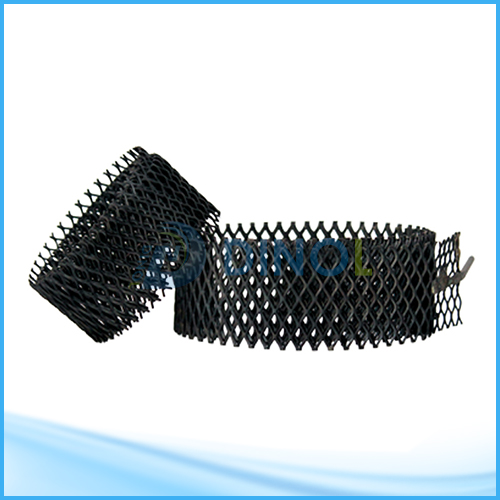
Understanding Titanium Anodes in PCB Etching
How They Work Electrochemically
Titanium anodes operate as dimensionally stable anodes (DSAs) in etching baths. The titanium substrate carries a Mixed Metal Oxide (MMO) coating—typically ruthenium-iridium or iridium-tantalum—that acts as the active catalytic layer. This coating lowers the oxygen evolution overpotential, which means the anode drives electrochemical reactions at lower energy input while maintaining a consistent current distribution across the board surface.
Why Uniformity Matters for PCB Precision?
Uniform current distribution is not a minor detail in PCB fabrication—it determines trace width accuracy and copper removal consistency. Traditional graphite anodes erode unevenly over time, introducing current density fluctuations that degrade etch precision. MMO-coated titanium anodes maintain their geometry throughout their service life, which keeps the etching field stable and reduces the rate of defective boards per production run.
Corrosion Resistance and Extended Service Life
Acidic cupric chloride and alkaline etching solutions are chemically aggressive environments. Titanium's natural oxide layer provides passive corrosion protection, and the MMO coating adds a second barrier against chemical attack. Independent electrochemical studies show that a titanium anode for pcb etching solution can achieve service lives exceeding 8–10 years under standard PCB etching conditions—far beyond what graphite or lead alternatives offer.
Key Advantages of Titanium Anodes for PCB Manufacturing
Picking the right anode material has a direct effect on how well your facility works, how well it follows environmental rules, and how much it costs. When it comes to making PCBs, MMO titanium anodes stand out because of the following:
- High current efficiency: In well-maintained systems, the MMO coating maintains faradaic efficiency over 95% by supporting high anodic current density with little side reactions. This immediately results in the removal of copper more quickly and accurately.
- Low energy consumption: The total cell voltage remains low because the active coating reduces the voltage drop at the anode-electrolyte contact. In high-volume, round-the-clock facilities, lower cell voltage results in a considerable savings in power costs per square meter of board produced.
- Good deposition uniformity: The MMO layer's homogeneous surface conductivity and stable dimensional geometry provide an even current field that enhances the quality of copper recovery and lessens the need for post-etch adjustment.
- Environmentally friendly operation: Titanium anodes contribute no metallic pollution since they do not dissolve into the etching fluid. This lowers the cost of disposing of hazardous waste and supports ISO 14001 compliance objectives by making wasted etchant recovery cleaner and simpler.
- Low maintenance cost: The robust titanium-MMO structure reduces planned downtime, in contrast to graphite anodes that need regular dimensional checks and replacements. When compared to lead-based anode systems, maintenance teams report less interventions each quarter.
High economy with current: The MMO coating allows for a high anodic current density with few side reactions. This keeps the faradaic efficiency above 95% in systems that are well taken care of. This means that the copper can be removed faster and more accurately.
How to Choose the Right Titanium Anode for Your PCB Etching Needs?
Match the Coating to Your Chemistry
Different etch chemistries require different MMO formulations. Ruthenium-iridium coatings perform well in acidic CuCl₂ systems, while iridium-tantalum coatings offer better stability in high-chloride or alkaline environments. Always confirm the coating specification with the supplier before ordering, and request a datasheet that lists the recommended current density range and compatible solution pH.
Consider Dimensions and Current Load
Anode geometry—plate, mesh, rod, or tubular—affects current distribution across your specific cell design. I recommend calculating the required anode surface area based on your target current density (typically 100–500 A/m² for PCB etching lines) and the cell volume. Oversizing reduces wear; undersizing causes hot spots that shorten coating life.
Verify Quality Certifications and Supplier Capabilities
A reliable titanium anode for PCB etching solution supplier should provide material certifications (ASTM B265 Grade 1 or Grade 2 titanium substrate), coating thickness reports, and accelerated life test data. Suppliers with OEM/ODM capabilities can produce custom dimensions and geometries to fit existing equipment without requiring cell redesign—an important factor for OEM equipment manufacturers.
Maintenance Best Practices to Prolong Titanium Anode Efficiency
Routine Cleaning Protocols
Cleaning cells on a regular basis keeps scale and oxide from building up, which raises cell resistance. A weak hydrochloric acid rinse (5–10% HCl) gets rid of calcium and copper deposits well without hurting the MMO coating. I suggest doing this every 30 to 60 days, depending on how full the tub is, and always rinsing with deionized water afterward.
Handling and Storage Guidelines
Chemically, MMO coatings last a long time, but mechanically, they are easily damaged by impact. Anodes should be kept flat or vertically in padded racks; they shouldn't be stacked without protective dividers. Before installation, the finishing surface should be checked under good lighting. Even small harm to the covering speeds up corrosion of the titanium base in certain areas.
Troubleshooting Premature Performance Loss
If the cell voltage goes up by more than 10% at a set current, this could mean that the layer is breaking down or getting dirty. To find the reason, measure the voltage drop from the anode to the cathode separately. If cleaning doesn't improve performance, a professional coating thickness test can show if re-coating is cheaper than replacing the whole thing.
Real-World Applications and Case Studies
PCB Manufacturer Copper Recovery Case
In Southeast Asia, a medium-sized PCB factory changed their acidic CuCl₂ etching line from using graphite anodes to using a titanium anode for pcb etching solution. Within six months, they saw a 12% drop in the amount of electricity used for each production cycle and were able to recover high-purity copper (>99.5%) from the used etchant to sell again. The time between replacing the anode went from every 8 months to over 4 years.
Semiconductor Lead Frame Application
Stable current density is a must for precise semiconductor etching. One company said that after using iridium-tantalum MMO anodes, the rejection rate on fine-pitch lead frames dropped by over 20% in the first three months after installation. Trace width variation also went down by 18%.
Looking Ahead: Coatings and Process Intelligence
The business world is going toward MMO catalyst layers that are thicker and real-time current tracking systems that can spot coating degradation before it hurts the quality of the product. These changes go well with stricter rules about how to handle used etchants and zero-liquid-discharge rules in important industrial markets.
Conclusion
Titanium anodes covered with MMO have measured performance benefits in PCB etching, including stable current distribution, long service life, low energy draw, and no bath contamination. When buying engineers and management teams look at different anode materials, the data always shows that a titanium anode for pcb etching solution is better than graphite or lead. The three steps that decide how much value you get from this technology are choosing the right coating formulation for your etch chemistry, keeping the anodes in good shape, and getting them from an approved source.
FAQ
How long does a titanium anode last in a PCB etching bath?
Under standard operating conditions—current density within the rated range, proper cleaning intervals, and no physical damage—an MMO-coated titanium anode typically lasts 8–10 years. Service life depends heavily on coating quality, bath chemistry, and maintenance consistency.
Is a titanium anode compatible with both acidic and alkaline etching solutions?
Yes, but the coating formulation matters. Ruthenium-iridium MMO is preferred for acidic CuCl₂ systems, while iridium-tantalum MMO handles alkaline and high-chloride baths more effectively. Always specify your solution chemistry when requesting a product quote.
What is the cost-benefit case for switching from graphite?
Graphite anodes typically need replacement every 6–12 months and can contaminate the bath with carbon particles. MMO titanium anodes last years longer, require less frequent cleaning, and introduce no bath contamination. Most facilities recover the higher initial purchase cost within 12–18 months through reduced replacement frequency and lower waste disposal fees.
Can titanium anodes be custom-sized for existing equipment?
Yes. Reputable manufacturers offer full customization of anode dimensions, geometry, and coating specification to fit existing electrolytic cells without redesign.
Get Your Custom Titanium Anode Quote from Tianyi
Tianyi is an expert in making high-performance MMO-coated titanium anodes that are used for electroplating, PCB etching, and water treatment. As an experienced titanium anode for pcb etching solution manufacturer, we offer OEM/ODM services, coating options, and dimensions that can be changed to fit your needs. We also do strict quality control. Contact us at info@di-nol.comto submit an RFQ and get your application-specific quote or technical datasheet right away.
References
1.Trasatti, S. — Electrochimica Acta, 2000. "The Absolute Electrode Potential: An Explanatory Note."
2.Comninellis, C. & Vercesi, G.P. — Journal of Applied Electrochemistry, 1991. "Characterization of DSA-type oxygen evolving electrodes."
3.Panizza, M. & Cerisola, G. — Chemical Reviews, 2009. "Direct and mediated anodic oxidation of organic pollutants."
4.Beer, H.B. — Journal of the Electrochemical Society, 1980. "The Invention and Industrial Development of Metal Anodes."
5.ASTM International — ASTM B265, 2020. "Standard Specification for Titanium and Titanium Alloy Strip, Sheet, and Plate."
6.Rajeshwar, K. & Ibanez, J.G. — Environmental Electrochemistry: Fundamentals and Applications in Pollution Abatement, Academic Press, 1997.