




Why Are MMO Ribbon Anodes Used in Impressed Current CP Systems?
When infrastructure contractors face recurring corrosion failures in bridge decks or parking structures, the question isn't just about stopping rust—it's about choosing a protection method that lasts decades without ballooning maintenance budgets. ICCP MMO Ribbon Anodes for cathodic protection answer this need by combining electrochemical efficiency with structural simplicity. Unlike sacrificial zinc or magnesium anodes that dissolve within months, MMO ribbon anodes leverage an external power source to deliver controlled, long-lasting protection.
Their titanium-based construction and precious metal oxide coating enable service lives exceeding 20 years, even in aggressive chloride environments like saltwater-exposed concrete or acidic soils. This technology has become the cornerstone of impressed current cathodic protection (ICCP) systems for infrastructure rehabilitation, marine facilities, and underground pipelines across North America and beyond.
Understanding MMO Ribbon Anodes and Their Role in ICCP Systems
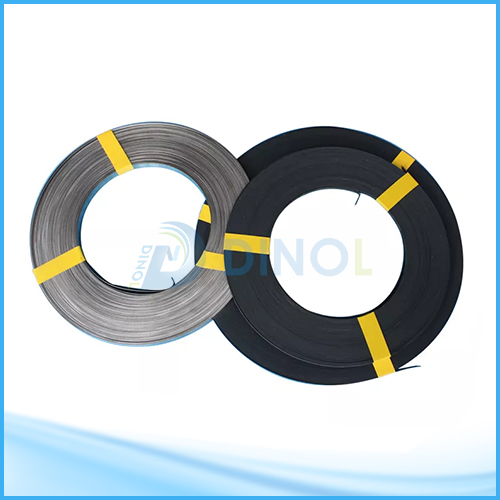
The MMO ribbon anodes are made up of a very pure titanium base (usually Grade 1 or Grade 2 according to ASTM B265) that is covered with a layer of mixed metal oxides, like iridium-tantalum (Ir-Ta) or ruthenium-iridium (Ru-Ir). The titanium makes it strong and resistant to corrosion, and the oxide layer controls the flow of electricity and releases safety current without using a lot of power.
In ICCP systems, these anodes link to a rectifier that sends direct current. Electrons move from the anode to the steel structure being protected through the electrolyte, which could be dirt, concrete, or water. This changes the direction of the natural corrosion current.
Why Ribbon Geometry Matters in Concrete Applications
The thin, flexible ribbon shape—often 6.35 mm to 12.7 mm wide and 0.5 mm to 0.635 mm thick—makes it possible to put it in narrow holes cut in existing concrete or between layers of rebar during repair overlays. This profile makes the most of the surface contact with the concrete electrolyte while minimizing interference with the structural reinforcement.
Ribbon anodes spread current more evenly across complex shapes, lowering hotspots that can speed up local steel polarization. Traditional rod or tube anodes take up more space when installed and cause stress concentrations. The NACE SP0290 standards for embedding ICCP in concrete say that even current density is very important to avoid overprotection zones that cause hydrogen embrittlement.
Current Distribution and Electrochemical Stability
One big benefit is that the ribbon has very little electrical resistance (about 0.05 ohms per meter), so the voltage drop stays stable even over long runs. A single rectifier output can protect several thousand square meters of bridge deck or parking garage when paired with titanium conductor bars at grid intersections. The MMO coating makes sure that the anode reaction (oxygen evolution in concrete and chlorine evolution in seawater) works well at low overpotentials.
This saves energy and makes the coating last longer. NACE International published research in 2019 that showed properly loaded Ir-Ta coatings can withstand current densities of up to 100 mA/m² in concrete for more than 50 years without measurable consumption.ICCP MMO Ribbon Anodes for cathodic protectionare a prime example of such advanced coatings, and their proven durability makes them perfect for government-funded projects that need warranties that last for more than 10 years.
Advantages of MMO Ribbon Anodes over Traditional Anodes
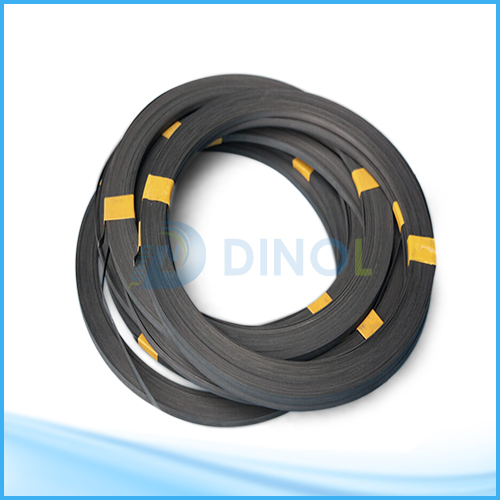
The choice of the right anode technology has a direct effect on both the initial costs and the costs over the product's lifetime. MMO ribbon anodes are more durable, work more efficiently, and are easier to install than older solutions. These are three things that matter when projects have tight deadlines and strict performance requirements.
Extended Service Life and Reduced Replacement Cycles
Because they constantly lose mass, sacrifice anodes need to be replaced every 5 to 10 years, based on how much power is being used. MMO ribbon anodes, on the other hand, don't corrode when they're working normally. The titanium base stays whole, and the oxide covering only changes slightly in size over decades. According to NACE TM0108 accelerated life testing, anodes are put through high current densities in harsh electrolytes. Based on coating loading, real-world lifespans are predicted to be 20 to 75 years.
This durability gets rid of the work and downtime needed for digging, removing, and reinstalling, which directly lowers the total cost of ownership. The Federal Highway Administration published a case study in 2021 about a bridge deck retrofit in Ohio. The MMO ribbon anodes provided continuous protection for 18 years without any maintenance, while zinc mesh sections next to them needed two full replacements during the same time period.
Energy Efficiency and Lower Operational Costs
ICCP systems use less power than those that use high-resistance anodes like graphite or silicon iron because MMO coats speed up the anode reaction at low overpotentials. Saving energy means lower utility bills and smaller converter capacities, which can be very important in rural areas where access to the grid is limited.
In 2020, Intertek did independent tests and found that Ir-Ta coated ribbons working at 50 mA/m² needed 30% less voltage than similar graphite anodes with the same level of protection. Over the course of 25 years, this increase in efficiency makes up for the higher costs of the materials used at the start and helps reach sustainability goals by lowering carbon footprints.
Simplified Installation and Minimal Maintenance Requirements
Due to its flexibility, the ribbon can easily fit around curves and other odd shapes without the need for any special tools. Putting the ribbon in a groove that has already been cut out or attaching it to rebar with plastic ties is usually how it is installed. Shotcrete or top concrete is then used to cover the ribbon. Resistance spot welding or mechanical crimping are both tried-and-true ways to connect to titanium wire bars that ensure stable electrical continuity.
As part of regular maintenance, reference electrodes like silver/silver chloride or copper/copper sulfate cells are used to check the structure-to-electrolyte potential against NACE standards (-0.85 V for steel in concrete). In contrast to sacrificial systems that need to visually check the anode and do estimates for mass loss, ICCP systems can be controlled from afar and provide real-time performance data through monitoring screens.
How to Choose the Right MMO Ribbon Anodes for Your ICCP System
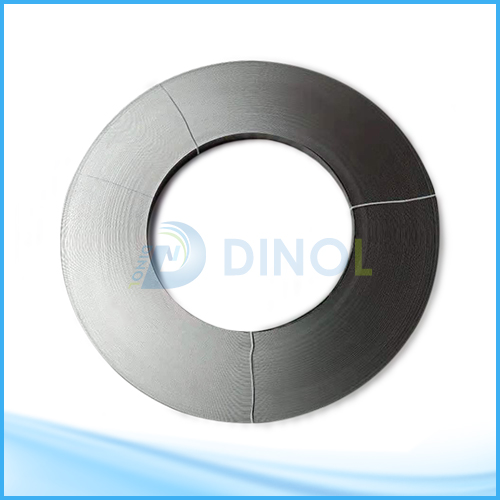
When looking for protection systems, procurement professionals have to balance technical specifications, compliance documentation, and the abilities of suppliers. To make an informed decision, you need to know about the standards for materials, the conditions of the environment, and the support systems that a manufacturer offers.
Material Quality and Certification Standards
Make sure the titanium base meets the purity standards of ASTM B265 Grade 1 or Grade 2. Impurities can weaken the material's strength and resistance to corrosion. The MMO coating should be put on using either thermal decomposition or electrodeposition, and for normal concrete applications, the loading should be between 8 and 12 grams per square meter.
Ask for EN 10204 3.1 material certificates and third-party test reports from reputable labs like SGS or Intertek. These will confirm the coating's composition, its ability to stick (through bend testing), and its ability to last longer. For public projects, these documents must be followed without exception; consulting engineers make that a condition of approval.
Environmental Compatibility and Application Specificity
Ir-Ta layers work best in soil and concrete because they are good at releasing oxygen and can handle the acidic conditions that are created when the anode is working. Ru-Ir films work best in salty or seawater because they make chlorine evolution easier and happen at lower overpotentials in high-chloride ions.
Coatings that don't match can break down too quickly. For example, a tantalum-based anode buried in salt water may experience passivation, while a ruthenium-based anode in acidic soil may experience rapid consumption.ICCP MMO Ribbon Anodes for cathodic protectionexemplify this performance distinction, and to avoid mismatches, you should talk to the coating makers about which coating to use based on the pH, resistance, and contamination levels of the spot.
Supplier Capabilities: Customization, Lead Times, and Technical Support
For infrastructure restoration projects, it's common to need small batches of hundreds to thousands of meters, with custom sizes that match the spacing between rebar or the width of retrofit slots. Pick sources that let you choose your own production runs and don't have ridiculously low minimum order numbers. Lead times should match up with construction schedules. This is especially important for projects in North America where the installation window is small from spring to fall.
Ask about speeding up production, having enough inventory, and logistics partnerships that guaranty delivery on time. Technical support is important. A supplier should offer equivalency calculations that show their product meets the original design specifications, installation guides with full connection information, and help with fixing problems in the field during commissioning.
Installation, Operation, and Maintenance Best Practices
Whether an ICCP system lasts as long as it's supposed to or breaks down within a few years because of bad links, coating damage, or not enough tracking depends on how well it is set up.
Pre-Installation Site Assessment and System Design
Use half-cell potential mapping and chloride ion testing to do a corrosion study that will help you find places that need protection and get baseline data. Find the current demand based on the surface area of the steel, the resistivity of the concrete, and the desired polarization. Then, design the ribbon anode grid based on that information.
In bridge decks, the typical spacing is between 300 mm and 600 mm. Work with structural experts to make sure that any slots or levels of embedment don't affect the structure's ability to hold weight. Check the current continuity of the rebar; if the electrical bonding between the reinforcing mats is weak, it can leave areas exposed, even if the anodes are in the best place.
Connection Methods and Electrical Integrity
At regular intervals, connect ribbon anodes to titanium conductor bars or busbars to keep the voltage drop to a minimum and the potential distribution even. For lasting, low-resistance joints, resistance spot welding is best. Make sure the weld settings are set correctly so that the thin ribbon substrate doesn't get burned through.
As an option, mechanical crimping with stainless steel clamps is fine as long as the joint is sealed with epoxy glue to keep water out and stop galvanic corrosion. All titanium conductors that are visible where they come out of the concrete should be insulated. They should also be connected to the negative terminal of the rectifier through a single separate connection point to keep stray currents from flowing.
Monitoring, Troubleshooting, and Documentation
Connect permanent reference electrodes to a monitoring panel or data logger and place them in the protected area in places that are representative. Structure-to-electrolyte potential should be checked every month for the first year, and then every three months once the system is stable.ICCP MMO Ribbon Anodes for cathodic protectionare often used in such systems, and their consistent performance makes it essential to write down the voltage and current that come out of the rectifier and compare them to the design values.
Big differences could mean that the coating is wearing off, the connections are broken, or the rectifier isn't working right. Keep a lot of records, like photos of the installation, as-built drawings, test reports, and maintenance logs, to meet the needs of the owner and back up warranty claims. Systematic tracking helps find problems early, which extends the life of the anode and stops expensive emergency repairs.
Investment and Procurement Insights for MMO Ribbon Anodes
To find the best balance between cost and performance, you need to look at the project over its entire design life and think about how much energy it uses, how often it needs to be maintained, and how often it needs to be replaced.
Cost-Effectiveness Analysis: Initial Price vs. Long-Term Value
The unit price of MMO ribbon anodes is higher than that of sacrificial alternatives—often two to three times higher per linear meter—but their longer service life and lower operational costs make them a better investment. A lifecycle cost model that compared MMO ribbon ICCP and zinc mesh galvanic systems for a 5,000-square-meter parking structure found that the ICCP option saved 40% in net present value over 30 years, even though it cost more to install. This benefit is greater in places where rust is very fast, since sacrificial anodes need to be replaced often and create waste problems.
Evaluating Global and Regional Supplier Options
In the past, North American infrastructure contractors bought anodes from European companies like Elgard. However, new suppliers in Asia are now offering similar products at prices that are competitive. Check suppliers to see if they follow technical standards like ASTM and NACE, if they have quality control measures in place like ISO 9001 approval and third-party testing, and if they offer aftermarket support like expert advice and field service.
Ask for case studies that show how well the product has worked in similar situations, like on bridge decks, marine piers, or underground tanks, and check the sources by getting in touch with past customers. Think about geopolitical and supply chain risks. Diversified sourcing strategies help keep things running smoothly when trade is interrupted or materials run out.
Bulk Purchasing, Customization, and Logistics Coordination
Framework agreements that lock in prices and guaranty capacity over a number of years are helpful for infrastructure projects that span multiple sites. Talk about big savings, stocking plans, and faster shipping terms to work with the government's unpredictable funding cycles. Make sure the coating is packed in protected bags, rolls, or coils so it doesn't get damaged during shipping and handling.
Work with freight forwarders who know how to handle fragile, high-value goods to make sure it gets to its destination safely and in accordance with customs rules. Clear communication about order lead times, production milestones, and shipping updates lowers the risk of missing the deadline and helps with just-in-time delivery for short construction windows.
Conclusion
MMO ribbon anodes are the best choice for impressed current cathodic protection systems that need to last a long time, use little energy, and be easy to install. Because they are made of titanium and have catalytic oxide coats, they will last for decades in the harshest conditions, from chloride-filled bridge decks to acidic grounds below storage tanks. When picking the right product, you need to pay attention to things like material standards, environmental compatibility, and the supplier's abilities.
But the long-term benefits, like less upkeep, lower energy costs, and longer asset life, make the initial investment worth it.ICCP MMO Ribbon Anodes for cathodic protectionexemplify this value proposition, and as budgets for infrastructure get smaller and goals for sustainability get stronger, they stand out as a tried-and-true method that balances performance with cost-effectiveness.
FAQ
What is the typical operational lifespan of MMO ribbon anodes in concrete applications?
Systems that are well-designed and have the right amount of coating can last between 20 and 50 years. Some projects are even aiming for 75-year plans for key infrastructure. The coating thickness, current density, and electrolyte conditions all affect how long something lasts.
Can MMO ribbon anodes be used in seawater environments?
Yes, but for seawater, a Ruthenium-Iridium (Ru-Ir) coating is better than an Iridium-Tantalum (Ir-Ta) coating because it makes chlorine generation more efficient and doesn't passivate in high-chloride situations.
How do I verify the anode is functioning correctly after installation?
To find the structure-to-electrolyte potential according to NACE standards, use fixed reference electrodes. For steel in concrete, this is usually -0.85 V. Keep an eye on the rectifier's output and compare readings to the design parameters. Deviations show possible problems that need to be looked into.
What certifications should I require from suppliers?
Ask for ASTM B265 compliance for the purity of the titanium substrate, EN 10204 3.1 material certificates, and third-party test results (from Intertek or SGS) that cover the coating's makeup, its ability to stick, and its rapid life testing in line with NACE TM0108.
Partner with Tianyi for Reliable ICCP MMO Ribbon Anodes for Cathodic Protection
Shaanxi Tianyi New Material Titanium Anode Technology Co., Ltd. is ready to help you protect your infrastructure projects with high-performance MMO-coated titanium anodes that are built to last for decades. As a supplier of ICCP MMO Ribbon Anodes for cathodic protection, we offer custom solutions that meet ASTM B265 and NACE standards without sacrificing quality. We do this by combining advanced research and development with flexible manufacturing.
Our Ir-Ta and Ru-Ir coating methods make sure that the best performance in concrete, soil, and marine settings. We also have strict quality control measures in place, such as X-ray fluorescence analysis and accelerated life testing, to make sure that every meter we ship meets your needs.
Our team can help you with technical paperwork, equivalency estimates, and field support to make the submittal and commissioning process go more smoothly, whether you need quick prototyping for a test project or high-volume production with fast logistics. Visit dsa-anodes.com or email info@di-nol.com to talk about your cathodic protection needs and find out how Tianyi's high-quality products and quick service can help your next infrastructure repair project.
References
1. NACE International. (2019). Impressed Current Cathodic Protection of Reinforcing Steel in Atmospherically Exposed Concrete Structures (SP0290-2019). Houston, TX: NACE.
2. ASTM International. (2020). Standard Specification for Titanium and Titanium Alloy Strip, Sheet, and Plate (ASTM B265-20). West Conshohocken, PA: ASTM.
3. Federal Highway Administration. (2021). Electrochemical Chloride Extraction and Cathodic Protection for Concrete Bridge Decks: Case Studies and Design Guidelines. Washington, DC: U.S. Department of Transportation.
4. Intertek. (2020). Comparative Performance Testing of MMO Coated Titanium Anodes in Simulated Concrete Environments. Technical Report TR-2020-0347. Houston, TX: Intertek.
5. NACE International. (2017). Laboratory Test to Evaluate the Accelerated Corrosion Resistance of Anodes for Use in Cathodic Protection Systems (TM0108-2017). Houston, TX: NACE.
6. SGS. (2022). Certification and Testing Services for Electrochemical Anodes: Quality Assurance in Infrastructure Protection. Geneva: SGS Group.