




Best Electrolytic Sodium Hypochlorite Generators for Municipal Plants
As a water treatment procurement professional, you understand the pressures of picking the correct disinfection equipment. The ideal electrolytic sodium hypochlorite generator designed for municipal facilities produces chlorine on-site from just salt and water – no bulk chemical storage, no transportation hazards and fewer compliance issues. The output range of Tianyi’s TY-WL series is from 50 g/h to 2000 g/h, which is a realistic match for water consumption facilities, wastewater treatment plants and industrial water networks of different sizes.
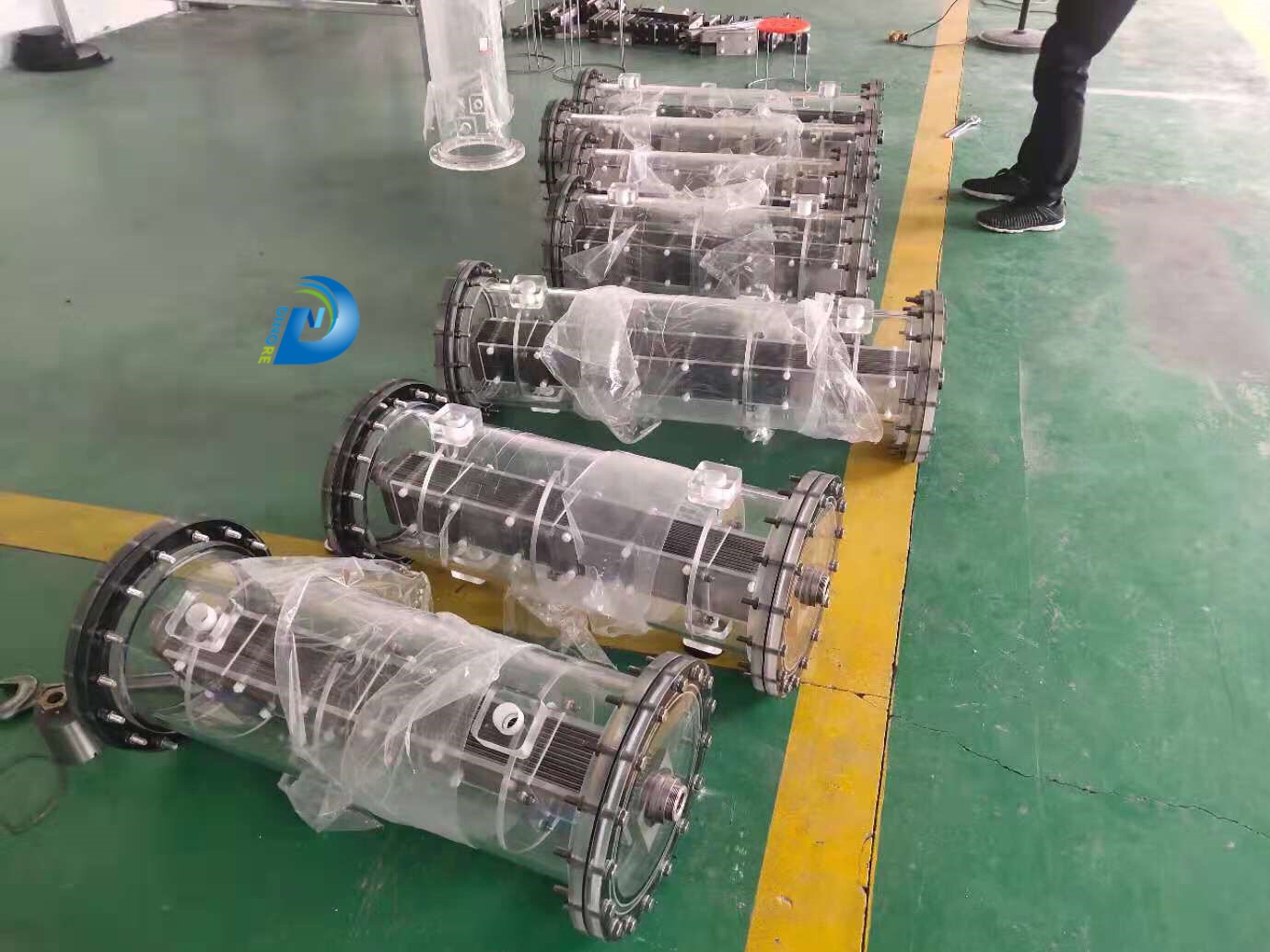
Understanding Electrolytic Sodium Hypochlorite Generators
On-site chlorine generation technology has matured considerably over the past two decades. Understanding how it works helps procurement teams make better decisions at every stage of the buying process.
How the Electrochemical Reaction Works
Inside the electrolytic cell, brine solution (2%–5% saline) passes between titanium anodes and cathodes. The electrode reactions proceed as follows:
- Anode: 2Cl⁻ − 2e⁻ → Cl₂↑
- Cathode: 2H⁺ + 2e⁻ → H₂↑
- Total reaction: NaCl + H₂O → NaClO + H₂↑
The hypochlorite ion produced carries the same oxidation and disinfection capacity as other chlorine derivatives, making it fully effective for pathogen control in drinking water systems.
Core Material and Electrode Design
The Tianyi TY-WL electrolytic cells utilise titanium substrates with Mixed Metal Oxide (MMO) coatings. More precisely, ruthenium-iridium (Ru-Ir) nano-coatings. This coating method is corrosion resistant even for long term high current operation. The PMMA/PVC cell housings are structurally stable at operation pressures up to 0.2 MPa. This electrode design also enables brief air exposure with out performance degradation, which is important during maintenance periods.
Key Functional Advantages Over Chemical Systems
On-site production eliminates the requirement for hazardous chemical delivery totally compared to obtaining bulk hypochlorite containing sodium or liquid chlorine. The system works on salt, water and energy. Salt is inexpensive, and the electrical efficiency of chlorine generation makes for predictable operational expenses. The U.S. EPA’s Water Security Initiative data show that on-site production dramatically lowers incidents related to chemical handling at municipal facilities, in line with industry adoption patterns during the early 2000s.
TY-WL Series: Models and Specifications for Municipal Use
Choosing the right model starts with matching chlorine output to plant demand when selecting electrolytic sodium hypochlorite generator. The TY-WL series spans nine standard configurations, each engineered for different flow and capacity requirements.
Model Range from WL50B to WL2000B
The table below summarizes key parameters across the TY-WL product line:
| Model | Effective Cl₂ Output | Current | Voltage | Flow Rate |
|---|---|---|---|---|
| WL50B | 50 g/h | 60A ±20% | ≤5V | 6–8 L/h |
| WL100B | 100 g/h | 60A ±20% | ≤15V | 12–20 L/h |
| WL200B | 200 g/h | 84A ±20% | ≤15V | 25–35 L/h |
| WL300B | 300 g/h | 84A ±20% | ≤20V | 36–50 L/h |
| WL500B | 500 g/h | 120A | ≤30V | 65–85 L/h |
| WL1000B | 1000 g/h | 156A ±20% | ≤40V | 125–170 L/h |
| WL2000B | 2000 g/h | 460A ±20% | ≤40V | 250–400 L/h |
All models accept 2%–5% saline input at 5–15°C and operate at a cell pressure of ≤0.2 MPa.
Matching Output to Plant Scale
Small municipal systems or food plant CIP circuits typically require outputs in the 50–300 g/h range, covered by models WL50B through WL300B. Mid-scale drinking water plants and aquaculture facilities generally need 500–1000 g/h. Large water treatment works or ballast water treatment systems on vessels may require the WL1500B or WL2000B. Selecting the right model prevents both under-dosing — which risks compliance failure — and over-specification, which wastes capital.
Electrode Maintenance and Pickling Protocol
Long-term electrode performance depends on scheduled acid cleaning. The TY-WL series specifies pickling using 15–18% hydrochloric acid solution to remove mineral scale from electrode surfaces. This process restores conductivity and extends electrode service life. Tianyi provides full after-sales technical support, including on-site electrode coating repair services, so plants can avoid downtime from premature electrode degradation.
Cost, Efficiency, and Environmental Considerations
Procurement managers frequently need to justify capital expenditure against long-term savings. On-site chlorine generation offers a clear financial case when lifecycle costs are compared honestly.
Upfront vs. Lifecycle Cost Comparison
The initial capital outlay for an electrolytic sodium hypochlorite generator on-site system is higher than purchasing commercial sodium hypochlorite. However, commercial hypochlorite degrades during storage, requiring overdosing to compensate — which adds cost. A 2019 analysis published in the Journal AWWA found that municipal plants switching to on-site generation reduced annual disinfectant chemical expenditure by 30–60% depending on plant scale and local chemical pricing.
Energy Consumption and Electrical Efficiency
The TY-WL series operates at low voltage (≤5V to ≤40V depending on model), which keeps power consumption manageable. The electrode geometry and MMO coating reduce unnecessary resistive losses. Over a five-year service period, these efficiency characteristics translate to lower electricity bills compared to older-generation electrolytic systems that used plain titanium electrodes.
Regulatory and Environmental Alignment
Many U.S. states and municipalities have tightened requirements around chlorine storage and transportation following incidents at water treatment facilities. On-site generation produces only what is needed, keeping inventory near zero. This approach aligns with both EPA disinfection byproduct rules and OSHA process safety management thresholds, reducing regulatory exposure for plant operators.
Maintenance, Safety, and Operational Best Practices
Even well-designed tools need to be used with care. The TY-WL series is designed to work without being watched, but it works best when it has a regular repair schedule.
Routine Inspection Schedule
Every week, operators should check the flow rate and concentration of the brine feed. The condition of the electrode surface and the readings on the control panel should be checked once a month. For plants that run constant job cycles, acid cleaning (pickling) is usually done every three months. These steps stop the buildup of calcium and magnesium scale, which is the main reason why electrolytic cells lose capacity and voltage too quickly.
Automation and Remote Monitoring
The control boxes made by Tianyi have touchscreens and can be used with remote tracking. Automatic alerts can be set up for plants to receive when there is an abnormal current, voltage drift, or flow interruption. This is important for city managers who are in charge of multiple dosing points in a distribution network. Real-time data logging also helps maintenance teams find performance trends before they turn into failures and helps with regulatory reporting.
Safety Protocols for Hydrogen Gas Management
The cathode generates hydrogen gas as a by-product during electrolysis of electrolytic sodium hypochlorite generator. The electrolytic cells must be installed in ventilated enclosures or outdoor locations, and hydrogen vent lines must remain unobstructed. NFPA 70 sets requirements for equipment handling hydrogen. Tianyi provides installation guidance and operator training to ensure safe commissioning and compliance.
Procurement and Installation Guide for Municipal Purchasing Managers
Buying something on this scale involves a lot of different people. The engineers, procurement, and operations teams all have a stake in the end choice.
Verifying Certifications and Compliance
More and more, municipal bids need electrical equipment to have CE certification. For marine applications, you also need approval from the China Classification Society (CCS) or a similar flag-state. Customers who handle food need paperwork that meets NSF/ANSI cleanliness standards. Before shortlisting, make sure that the seller can provide the certification paperwork that your standard calls for.
Evaluating Supplier Track Record
Ask for written case studies from similar installations. Records of plant capacity, operating hours, and electrode replacement are all important. A seller who doesn't have any references that can be checked in a similar situation is a sourcing risk, especially for projects that take a long time to start up (usually between 3 and 9 months from project approval to trial operation).
Installation, FAT, and Training Support
Tianyi supports Factory Acceptance Testing (FAT) before the product is shipped and Site Acceptance Testing (SAT) after it has been installed. There is on-site commissioning and training for the operator, which covers normal operation, how to handle alarms, and how to clean with acid. This makes it easier for plant staff to learn and cuts down on the time needed for trial runs before full production is handed over.
Conclusion
On-site sodium hypochlorite production via electrolytic sodium hypochlorite generator is a proven, practical alternative to bulk chemical purchases for municipal water disinfection. Tianyi’s TY-WL series covers output rates from 50 g/h to 2000 g/h, equipped with MMO-coated titanium electrodes guaranteed for a minimum five-year service life.
This product line is well worth consideration for facilities looking to upgrade their disinfection systems, thanks to low salt consumption, stable electrical performance and comprehensive after-sales support. Before tendering, procurement teams should request test data, project references and a customized quotation.
FAQ
What is the difference between an electrolytic sodium hypochlorite generator and purchasing bulk hypochlorite?
Because the generator on-site electrolyzes salt water to make sodium hypochlorite, there is no need for chemical supplies or holding tanks. Bulk hypochlorite breaks down in a few weeks, and you have to overdose to keep the residue level high. On-site production gets rid of storage losses and lowers the risk of damage during handling.
How long do the electrodes last in the TY-WL series?
The Ru-Ir MMO-coated electrodes in the TY-WL series are made to last at least five years if they are used correctly and cleaned regularly with 15–18% hydrochloric acid. The actual lifespan varies on the feed water quality and the working current density.
What salt concentration does the TY-WL system require?
All TY-WL models work with a saline solution of 2% to 5% and water that is 5 to 15°C at the inlet. The system can also work with seawater that is low in salt, so it can be used in marine and coastal settings.
Does Tianyi provide technical support after installation?
Sure, Tianyi can help with installation, train operators, provide FAT/SAT support, and fix electrode coatings on a regular basis. Customers can email the technical team at info@di-nol.com or go to dsa-anodes.com to find information about the products.
Connect with Tianyi for a Custom Quote on Your Municipal Project
The TY-WL series from Tianyi can be bought from a reputable company that has made electrolytic sodium hypochlorite generators for use in water treatment, marine applications, and food processing. Tell us how much chlorine your plant needs, what the site is like, and what certifications it needs, and our engineering team will make a proposal that fits your needs. To start talking right away, email us at info@di-nol.com or go to dsa-anodes.com.
References
1. American Water Works Association. Journal AWWA: On-Site Sodium Hypochlorite Generation for Water Treatment. 2019.
2. U.S. Environmental Protection Agency. Water Security Initiative: Chemical Disinfection Technologies Review. 2010.
3. World Health Organization. Guidelines for Drinking-Water Quality, 4th Edition. 2017.
4. White, G.C. Handbook of Chlorination and Alternative Disinfectants, 5th Edition. John Wiley & Sons, 2010.
5. Kraft, A. "Electrochemical Water Disinfection: A Short Review." Platinum Metals Review, 2008.
6. National Fire Protection Association. NFPA 70: National Electrical Code. 2023 Edition.