




Best Titanium Conductor Band Suppliers for Cathodic Protection Projects
If you manage ICCP projects for pipelines, storage tanks, or marine structures, choosing the right titanium conductor band for cathodic protection can make or break your system's long-term performance. This buying guide walks you through what these components actually do, how they compare to alternatives, what to look for in a supplier, and how to procure them with confidence. Whether you're a project engineer submitting a material spec or a procurement manager vetting vendors, you'll find practical answers here.
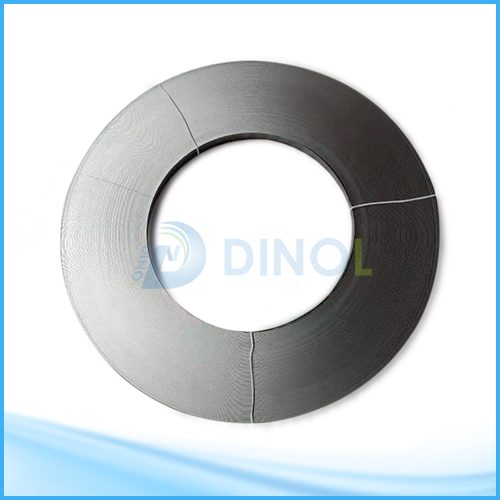
Understanding Titanium Conductor Bands in Cathodic Protection
What They Are and How They Work
One of the parts inside an ICCP anode unit is a titanium conductor band for cathodic protection. As per ASTM B265, it is a Grade 1 or Grade 2 commercially pure titanium strip that is not covered and carries electricity. It's not a part of the chemical reaction itself. It instead makes a single low-resistance circuit out of the MMO anodes, busbars, and DC power sources. The protected structure will get a steady flow of electricity because of this.
Key Technical Specifications
Standard sizes range from 10 to 50 mm wide, 1 to 5 mm thick, and up to 6,000 mm long. You can also get it in coils or have it made just the way you want it. Because the titanium conductor band for cathodic protection has a low resistance, the output stays stable even when there are a lot of anodes in a row. Gr2 titanium is a bit stronger and better for installations that need to be strong mechanically. Gr1 titanium is best for places that are submerged. Both grades can be joined with welding or bolts.
Why Titanium Works Where Other Materials Fail
Titanium forms an inactive oxide film that protects it from chloride attack, sulfate reduction, and deposit formation. This film also renews itself. A titanium conductor band for cathodic protection doesn't break down like copper does when it comes into contact with wet ground or water. It doesn't break like graphite or high-silicon cast iron does when pushed or pulled. This passive stability directly lowers the risk over time for places that are buried or submerged and hard to repair.
Comparing Titanium Conductor Bands with Other Materials
Titanium vs. Copper
Copper moves electricity better than titanium when it is dry and under control. But in salty earth and water, it rusts fast. In just a few years, a copper wire buried next to an MMO anode string can become the weak link in the circuit. This is especially true in places where there are a lot of stray currents or chloride. Titanium conductor bands for cathodic protection don't rust very quickly in seawater when the ICCP is working normally.
Titanium vs. Stainless Steel
Stainless steel doesn't rust very easily, but it can crack and pit in chloride-rich environments. This is a known way that it can fail according to the NACE TM0177 testing standards. A titanium conductor band for cathodic protection is better than stainless steel when it comes to saltwater and wet soil, especially when the electrolyte has more than 500 parts per million of chlorides. Because it is lighter than it is strong, it is also easy to put on offshore buildings.
Total Cost of Ownership
A titanium conductor band for cathodic protection costs more per meter up front than copper or stainless steel. If you think about how much it would cost to fix a broken underground connection in the bottom of a tank or a buried pipeline, you can see how valuable titanium is in the long term. Titanium is designed to last 20–50 years and doesn't need much maintenance. A lot of field data from AMPP (formerly NACE) shows that MMO anode systems with titanium parts that distribute current last a lot longer than other choices.
Leading Titanium Conductor Band Suppliers and Manufacturers
How to Evaluate a Supplier
That being said, not every business that makes titanium strips knows how to meet the needs of ICCP systems. You should make sure that any possible sellers you talk to can give you mill certificates that are in line with ASTM B265, proof of Certificates of Conformance (CoC), and reports on measurement checks. With a range of sizes and thicknesses for both Gr1 and Gr2, you can use them for different types of projects without having to make any changes.
If you want to buy a titanium conductor band for cathodic protection, here are the most important things you should look for:
- Material traceability: Each batch should have paperwork with a heat number that can be linked to the raw titanium mill. It shouldn't just be a standard Certificate of Conformance (CoC) from the wholesaler.
- Customization capacity: Unique strip lengths or pre-formed forms are often needed for tasks like covering the bottoms of large storage tanks or long-distance pipes. Suppliers who can cut and form the metal in-house will cut down on the wait time.
- Standard alignment: Make sure the seller can give you information that mentions EN 12954, NACE SP0176, or GB/T 50934 for standard alignment. This will depend on the needs of your project.
This risk helps ensure that titanium conductor band for cathodic protection will not get rejected during design institute review at a later stage, one of the most common and costly delays in ICCP projects.
Shaanxi Tianyi New Material Titanium Anode Technology Co., Ltd.
The Baoji High-Tech Development Zone in China is home to Tianyi. This area is known as the center for processing titanium. It sells its full line of MMO anodes as well as pure titanium conductor bands for cathodic protection. Being able to order different types of materials, sizes, and connection shapes from the same supplier is important because they can match different types of materials, sizes, and connection shapes all at once.
Tianyi can work with both OEM and ODM setups. They offer batch delivery plans that work with project timelines of 12 to 18 months, and they provide technical paperwork packages that meet international standards for protecting against corrosion. The engineers at that company can choose materials and make spec sheets with the help of design firms.
Installation and Maintenance Best Practices
Surface Preparation and Fitment
Before putting the titanium conductor bands for cathodic protection in place, clean all of their contact surfaces to get rid of oxide scale, oil, and dust. Titanium or coated steel tools should be used to put things together so that the joints don't galvanically couple. Check the torque specs. If the links aren't tight enough, contact resistance will go up and hotspots will form, which will damage both the strip and the anode end over time.
Verifying Electrical Continuity
Once everything is set up, check the resistance of the circuit across each titanium conductor band for cathodic protection before you pour the concrete or fill in the holes. If the number for resistance is much higher than what was estimated for the size of the strip, the connection is bad or the materials were switched incorrectly. Write down these readings and keep them with your "as-built" records. You will need them for future surveys.
Routine Inspection Protocols
The potential should be checked once a year with a calibrated reference electrode on systems that are buried or submerged. While titanium conductor bands for cathodic protection don't need any routine upkeep, connection points should be checked for seal integrity during planned shutdowns. This is especially important at the anode module interface. To keep water out of underground and submerged junction points, many people use connection enclosures with an IP68 rating.
How to Purchase Titanium Conductor Bands for Your Projects
Define Your Technical Requirements First
Before you ask for quotes, write down the width, thickness, length range, grade of titanium, surface finish, and any shapes that are already cut out for your titanium conductor band for cathodic protection. Tell us if you need cut pieces, coil stock, or lengths that are already straight. Don't forget to write down the standard (ASTM B265, EN, or GB) and if your design school requires mill certificates to use a certain heat number style.
Evaluate Lead Times and Batch Delivery
A lot of big ICCP projects take between 12 and 18 months to finish, from the first delivery to the last start-up. People who might sell you a titanium conductor band for cathodic protection should be asked if they can keep a certain amount in stock for your project and send it out as needed. This keeps the cost of stocking low up front and makes sure that all the materials are ready for each step of the project.
Confirm After-Sales Technical Support
An honest business does more than just ship things. Your design team may have technical questions about the titanium conductor band for cathodic protection. Make sure the provider you choose can answer them, send out updated CoC documents if the project's specs change, and quickly send out new stock if installation losses are higher than expected. When it comes to long-term building projects, these service promises are more important than when you just buy something once.
Conclusion
It is very important to pick the right titanium conductor band for cathodic protection systems because it will affect both the beginning of the project and the asset's health in the long run. Titanium is very good for marine, underwater, and industrial ICCP uses since it has a passive oxide film, is strong, and can be used with MMO anode designs. The best supplier will be able to keep to your project schedule from the first delivery to the final start-up, and their materials will have been checked for quality. Also, they should have all the paperwork they need ready.
FAQ
Why is titanium preferred over copper for ICCP conductor bands?
Soil and water that are high in chloride can cause copper to rust. This is especially true when there is anodic polarization, which can happen near ICCP circuits. Because the titanium conductor band for cathodic protection doesn't dissolve because it has an inactive oxide layer on top of it, the system's transmission stays stable for as long as it should without any extra safety measures.
What design life should I expect from a titanium conductor strip?
A titanium conductor band for cathodic protection is made to last 20 to 50 years in seawater and buried soil under normal ICCP working conditions for pure titanium strips sold in stores (Gr1/Gr2). You can expect this lifespan if the connections are properly sealed and the current density stays within the design limits.
Can titanium conductor bands be customized for unusual project geometries?
Yes. There are a lot of different shapes that can be made, but companies that have their own bending machines can offer a titanium conductor band for cathodic protection that is already twisted or drilled. Most of the time, ICCP has lengths of 10 to 50 mm and thicknesses of 1 to 5 mm. Anode strings that are up to 6,000 mm long or coil-shaped can be used.
What certifications should a supplier provide?
Ask for an ASTM B265 mill certificate with a heat number that can be tracked, a Certificate of Conformance, and dimensional inspection reports for your titanium conductor band for cathodic protection. For projects that need to follow EN 12954 or NACE SP0176, ask the supplier for a document that shows how the standards are aligned.
Connect with Tianyi for Your Next Cathodic Protection Project
Tianyi's titanium conductor band for cathodic protection is produced to ASTM B265 Gr1/Gr2 with full material traceability, customizable dimensions, and documentation packages that meet EN, NACE, and GB standards. As a trusted manufacturer serving offshore, pipeline, and tank-bottom ICCP projects globally, Tianyi supports batch delivery schedules and direct engineering consultation. Contact us at info@di-nol.com or visit dsa-anodes.com to request a quote or technical data sheet.
References
1. AMPP (Association for Materials Protection and Performance). NACE SP0176: Corrosion Control of Steel Fixed Offshore Structures Associated with Petroleum Production. 2023.
2. British Standards Institution. EN 12954: Cathodic Protection of Buried or Immersed Metallic Structures — General Principles and Application for Pipelines. 2019.
3. ASTM International. ASTM B265: Standard Specification for Titanium and Titanium Alloy Strip, Sheet, and Plate. 2020.
4. Baeckmann, W., Schwenk, W., & Prinz, W. Handbook of Cathodic Corrosion Protection. Gulf Professional Publishing, 1997.
5. Morgan, J. H. Cathodic Protection, 2nd ed. NACE International, 1993.
6. Shreir, L. L., Jarman, R. A., & Burstein, G. T. Corrosion: Metal/Environment Reactions, Vol. 2. Butterworth-Heinemann, 1994.