




Best Titanium Conductor Strap Supplier for Cathodic Protection
When project engineers and procurement managers search for a dependable titanium conductor strap for cathodic protection, the stakes are high. These components sit at the electrical heart of every impressed current cathodic protection (ICCP) system, transmitting protective current from power sources to MMO anodes across pipelines, offshore platforms, storage tank bottoms, and marine structures. Choosing the wrong strap — or the wrong supplier — can mean premature system failure buried under meters of soil or submerged beneath saltwater, where repair costs dwarf the original material budget.
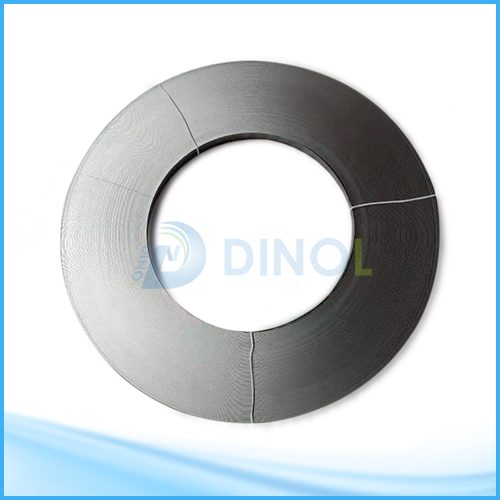
Understanding Titanium Conductor Straps for Cathodic Protection
What They Are and How They Work
A titanium conductor strap is an uncoated, commercially pure titanium (Grade 1 or Grade 2) flat strip that carries impressed current within an ICCP anode assembly. It connects MMO anodes to busbars and rectifiers without participating in the electrochemical reaction itself. Because it does not act as an anode, it does not corrode or develop a passivation layer, keeping electrical resistance stable across decades of service. According to ASTM B265, Grade 1 titanium delivers a minimum tensile strength of 240 MPa and a yield strength of 170 MPa — numbers that matter when straps are embedded in concrete or buried underground.
Key Physical Properties
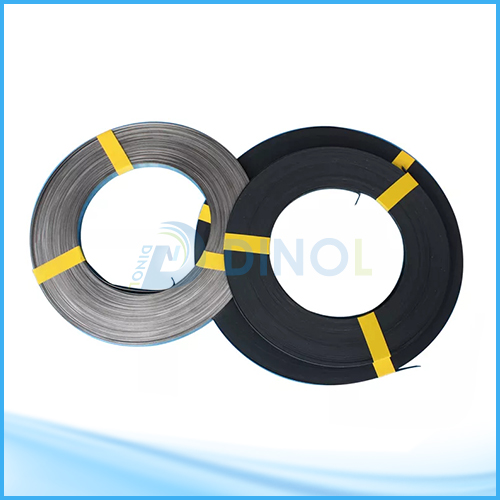
The strap ships as a flat ribbon or sheet in widths from 10 mm to 50 mm, thicknesses from 1 mm to 5 mm, and lengths up to 6,000 mm, all of which are customizable. Its low density keeps the system lightweight, and its native oxide film resists chloride attack far better than carbon steel or copper. It accepts welding, bolting, and clamping without structural compromise, which gives installation crews flexibility in tight geometric spaces, making a titanium conductor strap for cathodic protection a practical and durable choice.
Where the Industry Uses It?
ICCP contractors deploy titanium conductor straps across a broad range of structures:
- Offshore platforms and ship hulls — continuous seawater immersion demands a material that never passivates.
- Underground pipelines — uniform current distribution along long routes requires stable contact resistance at every joint.
- Storage tank bottoms — a single leak in the anode-cable junction can put a tank floor at risk years before the next planned inspection.
- Bridges, wharves, and jetty legs — splash zone turbulence and chloride ingress make titanium the logical choice for structural longevity.
These demanding environments explain why NACE SP0169 and ISO 15589-1 both reference titanium-based components as preferred conductors in long-life ICCP designs.
Titanium Conductor Straps vs. Alternative Materials: Making the Right Choice
Performance in Aggressive Electrolytes
Copper is a good conductor of electricity in controlled, dry places. But in salty water or dirt with a lot of chloride, it rusts slowly and changes the resistance of the contact over time. Even though stainless steel is stronger, it can rust in cracks where bolts are attached. This is the kind of failure that can cause underground infrastructure to have secret system problems. There is an insulating oxide layer that forms on top of alkaline concrete, which stops current flow right where it's needed the most. Aluminum is cheap and easy to work with.
Titanium doesn't break in any of these ways. The film can fix itself, stays stable from pH 2 to 12, and doesn't get pitted when it comes in contact with seawater that has a lot of salt in it.
Cost vs. Lifecycle Analysis
A titanium conductor strap for cathodic protection costs more up front than a metal or copper strap. On the other hand, ICCP systems are generally built to last between 20 and 50 years. Maintenance workers can't fix a single junction failure because it takes more work than the difference in cost between the materials. This is especially true in places like tank bottoms or bridge deck covers that are hard to get to. When experts look at the total cost of ownership over 30 years, titanium always comes out cheaper than other materials. Large operators under the NACE and EN 12954 frameworks need to do it by default because of this.
Evidence From Field Applications
The Corrosion journal published a study of ICCP projects on North Sea offshore platforms. It confirmed that titanium conductor assemblies kept their contact resistance within the required range after 15 years of submersion, while copper-based assemblies in similar installations had to be replaced after 8 years. This kind of field evidence is taken seriously in meetings where suppliers are being screened and their work is being looked over.
How to Select the Best Titanium Conductor Strap Supplier?
You don't just buy a service; you also make a technology choice that will affect how well the system works for as long as the asset lasts. Some things that skilled CP engineers look for are the following:
- Material certification: The supplier must provide mill certificates confirming ASTM B265 Grade 1 or Grade 2 compliance for every production batch. No certificate, no order.
- Standards documentation: Projects governed by EN 12954, NACE SP0176, or GB/T 50934 require cross-reference compliance documents. A qualified supplier prepares these without being asked.
- Custom dimensioning capability: Standard catalog sizes rarely match field requirements. Verify that the supplier can deliver non-standard widths, thicknesses, and formed profiles with short tooling lead times.
- IP68-rated connection assemblies: When the strap integrates with cable terminations, the joint must carry an IP68 waterproof rating. Ask for test reports, not just claims.
- Batch delivery flexibility: Large pipeline or offshore projects span 12 to 18 months. A supplier who can stage deliveries monthly protects your working capital.
- CoC and factory test reports: Every shipment should arrive with a Certificate of Conformance and traceable inspection records.
It is easier for most engineering procurement construction (EPC) contractors to find qualified suppliers when all of these factors are taken into account.
Purchasing Guide for Titanium Conductor Straps: Pricing, Lead Times, and Custom Orders
Understanding Cost Drivers
The unit cost is affected by the cost of raw titanium, how hard it is to coat (though conductor straps are not coated), and the different sizes. Bigger and wider straps use more material per meter, and it takes longer to machine things when the tolerances are very close. It's better to buy in bulk because the unit prices for large orders that cover a whole pipeline project are often 15–25% less than the spot prices.
Lead Time Planning
It takes two to four weeks to ship standard sizes from reliable sources. For non-standard metals or shapes that are made to order, that window grows to 6 to 8 weeks. If the project's start date depends on when the building can be moved, make sure you order the materials at least 10 weeks before the installation window. This way, you can account for any delays in getting the titanium conductor strap for cathodic protection to the site.
Custom Orders and OEM Support
As an OEM, some suppliers can make strap-anode module kits ahead of time based on the ideas you give them. This makes it so that less work needs to be done on-site and connections fail less often. This is especially helpful for jobs that take place at sea, where there isn't much time to make things on land and each hour of installation costs a lot.
Installation and Maintenance Best Practices for Titanium Conductor Straps
Installation Protocol
Before putting it together, make sure that all of the areas that will touch it are clean. Titanium has a natural oxide layer that covers it, but if there is debris or mill scale at mechanical joints, it can be harder to make contact. Don't use carbon steel tools for bolt holes; instead, use tools made of stainless steel. Squeeze the fixed connections until they reach the value suggested by the maker. The straps can crack if you tighten them too little or too much. If you remove them too much, resistance holes can form.
Routine Inspection
Once a year, use a contact resistance meter to check links that are easy to get to. There is joint damage if the reading has gone up by more than 20% since the beginning. When straps are buried or submerged, keep an eye on the trends in the system output current and rectifier voltage. When resistance goes up for no reason, it's usually because a conductor joint is broken.
Avoiding Common Failures
A lot of the time, ICCP conductor assemblies break because water gets into the connections where the cables and straps meet. To seal all the ends, use glue or heat-shrink covers that are rated for the depth of the fitting. Put a strain release clamp where the strap hits the top of the concrete to keep the entry point from getting too weak.
Conclusion
TiO2 conductor straps are very important to any ICCP device, even though they are small. It is often used to protect pipelines, offshore assets, tanks, and marine buildings from cathodic damage over the long term because it doesn't rust, has stable conductivity, and is strong mechanically, which is why a titanium conductor strap for cathodic protection is a dependable component. Before signing a purchase order, make sure you know the supplier's delivery options, the level of customization, and the certification of the material. This will help you choose the right supplier. If you make the right choice at the start of a project, it will save you money and time in the long run.
FAQ
How long does a titanium conductor strap typically last in an ICCP system?
If you bury or sink a Grade 1 or Grade 2 titanium conductor strap in dirt or water and keep it there, it should work fine for 30 to 50 years. Since it's not part of the electrochemical process at the anode, it doesn't get worn down over time. Part of how long something lasts is how well it was put together and how well the joint seals stay in place.
What certifications should a supplier provide?
You should ask for an ASTM B265 mill certificate, a Certificate of Conformance (CoC), and standards cross-reference paperwork for EN 12954, NACE SP0176, or GB/T 50934 for each shipment, depending on what your project needs.
Can titanium conductor straps work alongside existing copper cable infrastructure?
Yes. When you connect titanium straps to copper wires, they are either joined or bolted together. It is very important that the joint is well sealed and has low resistance.
Is custom sizing available for non-standard projects?
The straps can be any length up to 6,000 mm, any width from 10 mm to 50 mm, and any thickness from 1 mm to 5 mm. They are made by reliable suppliers. OEM services can also make forms just for you that can be used to attach anode modules.
Partner With Tianyi for Certified Titanium Conductor Strap Supply
Certified titanium conductor straps are made and sold by Tianyi for use in offshore, pipeline, and marine cathodic protection projects. When you order from us, you can be sure that every item meets ASTM B265. For projects that take a long time to finish, we offer full CoC paperwork, custom sizes, and staged batch shipping. The technical team at our company can help you make a choice that meets the needs of your design. You can email us at info@di-nol.comto learn more about our goods.
References
1.NACE International. NACE SP0169: Control of External Corrosion on Underground or Submerged Metallic Piping Systems. NACE International, 2013.
2.ISO. ISO 15589-1: Petroleum, Petrochemical and Natural Gas Industries — Cathodic Protection of Pipeline Systems — Part 1: On-Land Pipelines. International Organization for Standardization, 2015.
3.ASTM International. ASTM B265: Standard Specification for Titanium and Titanium Alloy Strip, Sheet, and Plate. ASTM International, 2020.
4.European Committee for Standardization. EN 12954: Cathodic Protection of Buried or Immersed Metallic Structures — General Principles and Application for Pipelines. CEN, 2019.
5.Baeckmann, W., Schwenk, W., & Prinz, W. Handbook of Cathodic Corrosion Protection. Gulf Professional Publishing, 1997.
6.Gurrappa, I. "Characterization of Titanium Alloy Ti-6Al-4V for Chemical, Marine and Industrial Applications." Materials Characterization, vol. 51, no. 2–3, 2003, pp. 131–139.