




A Practical Guide to Selecting Flexible Linear Anodes for CP Projects
Selecting the right flexible linear anodes for cathodic protection is one of the most consequential decisions a corrosion engineer makes during a tank or pipeline maintenance cycle. Get it right, and you protect steel assets for 40+ years with minimal intervention. Get it wrong, and you face hidden under-deposit corrosion, failed inspections, and costly emergency shutdowns. This guide walks through everything from core technology principles to procurement best practices, giving you a clear framework to evaluate products, compare alternatives, and source with confidence.
Understanding Flexible Linear Anodes in Cathodic Protection
How They Work
In an impressed current cathodic protection (ICCP) device, a movable linear anode works as an extra anode. It sends protective current through the backfill and into the structure being protected when it is connected to the positive terminal of a transformer-rectifier. The steel structure that is attached to the negative terminal goes through cathodic polarization, which stops the electrochemical process that causes corrosion on its surface. The process uses up the anode, which is why the choice of material directly affects how long the system will last.
MMO/Ti vs. Conductive Polymer: What's the Difference?
Two kinds of anodes make up most of the market. Anodes for MMO/Ti use a pure titanium base (Ti content ≥99.6%) that is covered with Mixed Metal Oxides, which are usually iridium, ruthenium, and tantalum, with a layer thickness of 6–10 μm. They can send out currents of up to 656 mA/m (DN-30 model with ¦3.0 mm wire) and last more than 40 years. Conductive polymer bendable anodes, on the other hand, have a copper wire that is stranded and covered with a stable conductive polymer. They put out 52–82 mA/m in soil (without and with coke backfill), and they work well in crowded facilities where the flow of electricity needs to be very even.
Key Technical Specifications to Know
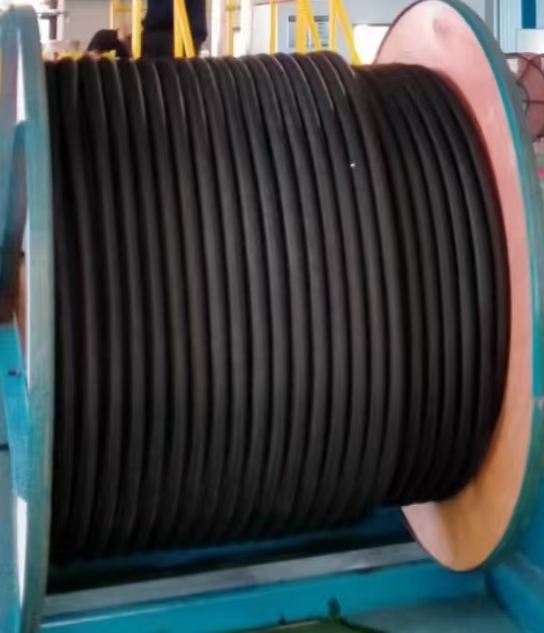
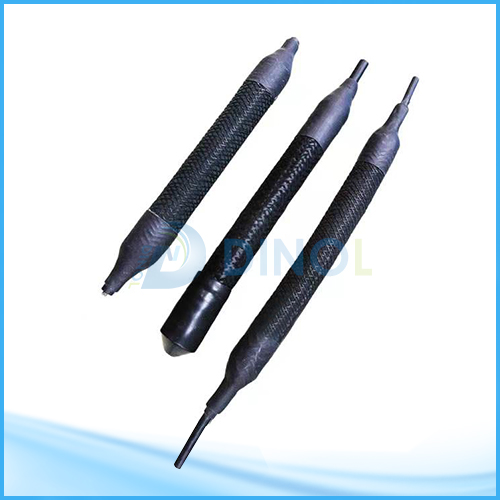
Both types of anodes have a similar physical shape: they come in 500- or 1,000-meter reels and can be cut to any length. The outer diameter is about 38 to 40 mm. Standard wire sizes are 1×10 mm² XLPE/PVC, but for harsh conditions, you can also choose PVDF/HMWPE or EPR/CSPE. Engineers can fine-tune the output of current using MMO/Ti wires with diameters of 1.0 mm, 1.5 mm, 2.0 mm, and 3.0 mm. When products are made to ASTM standards and have ISO 9001 certification, buying teams have the records they need for compliance checks, which is particularly important when procuring flexible linear anodes for cathodic protection.
Comparing Flexible Linear Anodes with Alternative CP Solutions
Flexible vs. Rigid and Ribbon Anodes
Rigid graphite or cast iron anodes have been used for a long time in impressed current systems, but they can't be used in places with complicated geometries, like tank bottoms with uneven foundations, pipe crossings with a lot of people, or retrofits with little room for trenching. While ribbon anodes are flexible, they don't produce the same amount of current as a well-designed linear anode system. Along their whole length, flexible linear anodes make consistent electrode-to-soil contact. This leads to more even polarization across the protected surface.
Flexible Anodes vs. Deep-Well Impressed Current Systems
Deep-well groundbeds focus current flow from a single point. This works well in big open areas but makes shielding difficult in networks of many pipes. A flexible linear anode that is laid parallel to the structure lets current flow close to it, which lowers the voltage drop caused by resistance and stops interference with nearby metal structures. This benefit of being close is even more important in high-resistivity soils, which are common in industrial areas near the coast. Because the current path is shorter, less power is used per meter of protected structure.
When Each Solution Makes Sense
Flexible linear anodes are the best choice for the outside bottoms of storage tanks, coated pipelines that are getting old, parallel pipeline corridors, and underground storage tanks. Deep-well systems can still be used for rural cross-country pipes with simple shapes and few buried buildings close to each other. Flexible anodes are faster to place and easier to move around for upgrade projects with short maintenance windows (30–60 days after tank cleaning), which is a major advantage of flexible linear anodes for cathodic protection.
Key Factors and Criteria for Selecting Flexible Linear Anodes
Match the Anode to the Environment
The anode's performance is affected by the resistivity of the soil, the amount of water in it, and the presence of chlorides. When used in salty or ocean, MMO coatings that are designed to release chlorine (Ru-Ir based) work better than those that release oxygen. When mixed with dirt, calcined petroleum coke backfill lowers groundbed resistance and makes the anode last longer. The published output for polymer flexible anodes goes from 52 mA/m without backfill to 82 mA/m with it. This is a big change when building a system to meet the GB 50393 protection requirements.
Verify Service Life Documentation
It is hard to check these structures after they have been installed because they are buried and hidden. Ask for written proof of the design life; reputable companies offer guaranties of at least 40 years, backed by data from rapid life tests according to NACE TM0108. Also, ask for material papers that say the titanium base is pure (≥99.6%) and that the MMO coating loading has been checked by XRF analysis. A value of 0.0009 Ω for the contact resistance between the MMO/Ti wire and the internal cable is a quality indicator that can be measured and should be included in procurement contracts.
Installation and Commissioning Practices
In this field, this is how things usually work:
- Dig a trench parallel to the pipeline or along the tank perimeter to the required depth.
- Spread half the coke breeze bed, then lay the flexible anode centered on it.
- Cover the anode with the remaining coke breeze to ensure full encapsulation.
- Compact with native soil, then complete final backfill.
- Connect to the transformer-rectifier and conduct initial polarization measurements.
To get the right depth, dig a tunnel parallel to the pipeline or around the tank.
Procurement Insights: How to Source the Best Flexible Linear Anodes?
Evaluating Suppliers
The market for CP materials is based on relationships. In China's refining belt, design institutes have a big impact on what products are chosen, and case studies from similar refinery tank farms are more reliable than brochures. Ask for ISO 9001 certificates, ASTM compliance paperwork, and proof of third-party accelerated life testing from any flexible linear anodes for cathodic protection maker or provider you are considering. Instead of just sending you the product, ask the manufacturer if they can provide system-level support, such as matching the anode to the rectifier and doing potential surveys after installation.
Pricing, Lead Times, and Order Management
For stocked items, standard wait times are 15–20 days. For amounts less than 10,000 meters, they can be up to 30 days. Lead times must usually be discussed for orders bigger than 10,000 meters. Reputable manufacturers offer free samples that can be used to check the quality before signing a framework contract. Payment terms often include L/C, T/T, and other trade finance tools that work with the longer payment terms that refineries usually need. Make sure the supplier has enough stock to meet short maintenance windows without charging extra for fast delivery.
After-Sales Technical Support
Downstream risk is caused by a supplier that only sells materials and doesn't offer any help in the field. In contracts, make it clear that the supplier must provide installation advice, help with measurements on-site, and testing of the system's effectiveness after it has been set up. This is especially important for CP systems at the bottom of storage tanks, where the buried anode makes regular performance checks the main way to make sure quality.
Real-World Applications and Case Studies
Storage Tank External Bottom Protection
A lot of steel storage tanks above ground have MMO/Ti linear anodes with Φ1.5 mm wire (DN-15 model) that deliver 328 mA/m on the outside bottoms. In a known case at an industrial tank farm, a net-type anode grid was put in place during a 45-day repair window. This kept the polarization of the steel at –850 mV (CSE) across the whole plate area, which met the requirements of NACE SP0169 and GB 50393. More than 40 years is the expected time between replacements.
Aging Pipeline Rehabilitation
Conductive polymer bendable anodes work especially well on pipes where coating breaks have gotten a lot worse over time. Because they can release current evenly along the length of the installation, they avoid the over- and under-protection zones that point-source anodes create in complicated multi-pipe corridors. Published data shows that the radius of bend can be as small as 500 mm, which means that it can be installed in utility lines that aren't very wide.
Offshore and Marine Structures
Offshore jacket structures and wharf piling systems use MMO flexible anodes that can handle current levels of up to 2,000 A/m² and temperatures of up to 80°C. The titanium substrate protects the anode surface from corrosion caused by chloride, and the anode stays the same size over many decades of service cycles thanks to its low consumption rate (milligrams per ampere-year vs. pounds per ampere-year for graphite).
Conclusion
To choose the correct flexible linear anodes for cathodic protection system, you need to make sure that the project's requirements are met for material type, current output, and service life documentation. MMO/Ti linear anodes work best in remote and high-current situations, while conductive polymer anodes work best in crowded facilities and to fix up old pipelines.
FAQ
What is the typical service life of a flexible linear anode?
MMO/Ti linear anodes are designed for a service life of 40 years or more under normal operating conditions. This figure assumes current densities remain within design limits and coke breeze backfill is properly applied. Conductive polymer anodes also target similar long-term performance when installed with adequate backfill.
Can flexible linear anodes retrofit into an existing CP system?
Yes. The primary compatibility check involves matching the anode's output current and driving voltage to the existing transformer-rectifier's output range. Cable type and connector sealing must also be verified. Most manufacturers offer custom cable configurations — XLPE/PVC, PVDF/HMWPE, or EPR/CSPE — to match existing system infrastructure.
Is coke breeze backfill always required?
In soil applications, coke breeze backfill is strongly recommended. It lowers groundbed resistance and raises current output — for conductive polymer anodes, output increases from 52 mA/m to 82 mA/m with backfill. In water applications, direct installation without backfill is standard practice.
How do I verify anode performance after installation?
Post-installation verification relies on close-interval potential surveys for pipelines and potential distribution mapping for tank bottoms. Contact the anode supplier to arrange post-commissioning measurement support, as this is part of a complete system delivery.
What certifications should I request from a supplier?
Request ISO 9001 quality management certification, ASTM material compliance documentation, and accelerated life test reports per NACE TM0108. Material certificates confirming titanium purity (≥99.6%) and XRF-verified MMO coating loading are standard quality assurance documents.
Partner with Tianyi for Proven Flexible Linear Anodes for Cathodic Protection
It is expected that MMO/Ti linear anodes will last at least 40 years under normal use. This number is based on the idea that current densities will stay within the acceptable range and that coke breeze backfill will be properly used. Long-term performance goals for conductive polymer anodes are also the same, as long as they are installed with enough backfill.You can email your requirements to info@di-nol.com.
References
1.NACE International. Cathodic Protection of Underground Storage Tank Systems. NACE SP0285, 2011.
2.ASTM International. Standard Practice for Conventions Applicable to Electrochemical Measurements in Corrosion Testing. ASTM G3, 2019.
3.Peabody, A.W. Control of Pipeline Corrosion. 2nd ed. NACE International, 2001.
4.von Baeckmann, W., Schwenk, W., & Prinz, W. Handbook of Cathodic Corrosion Protection. 3rd ed. Gulf Professional Publishing, 1997.
5.NACE International. Test Method: Impressed Current Laboratory Testing of Aluminum Alloy Anodes. NACE TM0108, 2012.
6.GB 50393. Technical Code for Anticorrosion Engineering of Steel Petroleum Storage Tanks. National Standards of China, 2008.