




A Buyer’s Guide to ICCP MMO Coated Titanium Anodes and Design
If you manage cathodic protection projects for pipelines, storage tanks, offshore platforms, or marine infrastructure, choosing the right anode material is one of the most consequential decisions you'll make. This guide focuses on iccp mmo coated titanium anodes for cathodic protection—what they are, how they compare to alternatives, what to look for when buying, and how to design systems around them effectively.
Understanding ICCP MMO Coated Titanium Anodes
What Are MMO Coated Titanium Anodes?
The MMO (Mixed Metal Oxide) treated titanium anodes are made up of a commercially pure titanium base (usually ASTM B265 Grade 1 or Grade 2) that is heated and covered with a special oxide layer. The coating has oxides of iridium, ruthenium, or tantalum, chosen based on the electrolyte environment. This oxide layer works as an electrical catalyst for the anodic process and keeps the titanium base from oxidizing.
How the Coating Works
The MMO layer works as a very stable anode (DSA) in terms of size. It doesn't break down during use like reusable anodes do. Instead, it moves charge between the electrode and the liquid with very little material loss, which is usually measured in grains per ampere-year. These anodes have a very long service life in harsh settings because of this trait.
Coating Configurations Available
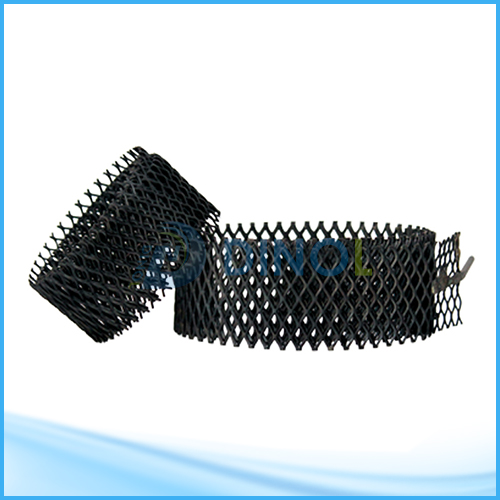
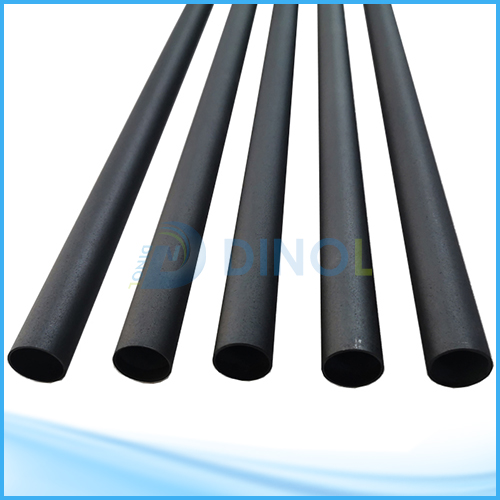
Tianyi makes these anodes in two different types: Ru-Ir MMO and Ir-Ta MMO. They can be made with one or two sides. You can choose from mesh, ribbon, disk, and custom geometries as shapes. The length, width, diameter, and thickness of the parts can all be changed to fit the needs of the system design.
Comparing MMO Coated Titanium Anodes with Other Anode Types
High-Silicon Cast Iron and Graphite Anodes
Traditional anodes made of high-silicon cast iron are fragile, heavy, and wear out pretty quickly. Graphite anodes also break easily when they are put under mechanical stress, and they break down more quickly in salt water. Both need to be replaced more often, which raises the cost of upkeep over time and causes more system downtime. This is especially a problem for sites that are underground or submerged and hard to get to, which is why iccp mmo coated titanium anodes for cathodic protection are increasingly preferred for their durability and longer service life.
Platinized Titanium Anodes
Platinized titanium anodes work well in low-current-density situations, but they cost more because platinum is more expensive. Also, they don't work as well in places with a lot of chloride and high current densities as Ir-Ta MMO formulations, which stay stable in seawater at up to 600 A/m².
Why MMO Wins in Long-Term Projects
For building projects that are meant to last between 20 and 50 years, MMO-coated titanium anodes are the best value for money. Because they don't wear down very quickly, can handle pH levels from 1 to 12, and don't change shape when heated or cooled, they are the best choice for engineers designing long-term impressed current systems in the oil and gas, marine, and civil sectors.
Key Benefits and Applications of MMO Coated Titanium Anodes
Performance Advantages Worth Knowing
This is what makes MMO coated titanium anodes better than other options in terms of technology:
- Corrosion resistance: The titanium substrate forms a self-healing oxide film, protecting the base metal even if the MMO coating sustains localized damage during handling or installation.
- High current density capability: Ir-Ta MMO formulations support 100 A/m² in soil and up to 600 A/m² in seawater, enabling compact anode configurations without compromising protection coverage.
- Low consumption rate: The coating wears at a rate that supports decades of service without replacement, reducing total lifecycle cost on buried or submerged assets.
Because of these benefits, the most common problems with older anode types are that they break down too soon, the connection seals fail, and the current output changes over time.
Real-World Application Areas
Titanium anodes coated with MMO are used in many different types of industries. Oil and gas companies use them to protect the floors of storage tanks and cross-country pipelines by putting them in deep wells or on a spread-out surface. In marine construction, they are put on jetties, ship hulls, and the bases of offshore wind turbines, all of which are in chloride-rich water and need to be resistant to corrosion and long-lasting mechanically. Anodes made of ribbons and mesh keep reinforced concrete bridge decks from rebar corrosion that is caused by chloride getting into the concrete. These anodes are also important for the long-term stability of water treatment plants.
Procurement Considerations: Selecting and Buying MMO Coated Titanium Anodes
Certifications and Standards Compliance
Before you approve a supplier, make sure that their products meet the standards that apply. NACE TM0108, NACE TM0294, EN 12954, and GB/T 50934 are often part of this for foreign and cross-sector projects. A trustworthy supplier of iccp mmo coated titanium anodes for cathodic protection should be able to give you a Certificate of Conformance (CoC), test results for their electrochemical performance, and paperwork that shows how their products match up with the project's requirements.
Customization and Lead Time Planning
A lot of the time, big infrastructure projects need to be delivered in stages, sometimes over 12 to 18 months. Early on, find out if the manufacturer can work with different delivery times without affecting the quality of the product. To avoid delays during purchase, customization of sizes, coating type, and wire connection method should be agreed upon during the design phase.
Evaluating Connection Seal Integrity
When ICCP systems are underground or underwater, water getting into the anode-to-cable junction is one of the most common field failures. Set an IP68 rating as the bare minimum for closing, and ask for pull-test data to confirm the mechanical strength. When the installation is deep underground or buried, the quality of the connection is just as important as the anode material.
Designing ICCP Systems with MMO Coated Titanium Anodes
Design Principles and Layout
To make an ICCP that works, you need to know the resistivity of the soil or water at sea, the shape of the structure, and the target protection current density. The mesh or ribbon shape of MMO titanium anodes makes it possible to put them in different places along pipelines or in concrete buildings. This spreads the current more evenly than with point-source anode configurations. It is common to weld, bolt, or clamp disk or tubular anodes to conductor bars on offshore platforms and marine piles.
Anode Placement and Current Distribution
Protection consistency is based on where the anodes are placed strategically in relation to the covered structure. In pipeline groundbeds, the distance between anodes needs to take into account differences in the soil's resistivity as well as the fact that the protective current weakens as it goes along the pipe. In concrete uses, mesh anodes that are put on top of rebar zones must overlap enough to keep protected areas from forming, a key design consideration when deploying iccp mmo coated titanium anodes for cathodic protection.
Maintenance and Monitoring
MMO anodes don't need much regular maintenance, but the system needs to be checked every so often by measuring the pipe-to-soil potential or the hull potential against a reference electrode to make sure protection levels stay within the desired ranges. By adding remote tracking to the rectifier control system, engineers can find problems with the current early on, before they become protection breakdowns.
Conclusion
It takes more than just comparing unit prices to find the right anode for an impressed current cathodic protection device. The final result is affected by many things, such as the design life, coating chemistry, connection integrity, standards documentation, and supplier support. When specifying iccp mmo coated titanium anodes for cathodic protection, engineers should also weigh the operating current density the coating can sustain, the substrate grade and mesh geometry, and how the anode will perform in the specific soil or concrete environment. A low upfront price can be misleading if the anode fails early, forcing costly excavation and replacement. Suppliers that provide third-party test reports, clear ASTM references, and responsive technical support reduce long-term risk far more than a marginal discount ever could. The real measure of value is cost per protected year, not cost per unit.
FAQ
How long do MMO coated titanium anodes last in seawater environments?
When operated within their rated current density range, Ir-Ta MMO formulations can achieve service lives exceeding 20 to 50 years in seawater. The titanium substrate itself is non-consumable, meaning the anode maintains its dimensional stability throughout its working life.
Can these anodes be customized for specific ICCP designs?
Yes. Coating type (Ru-Ir or Ir-Ta), shape (mesh, ribbon, disc, or custom), dimensions, and connection method can all be specified to match project requirements. Manufacturers like Tianyi offer full customization support, including documentation packages for design institute approval.
What is the main performance difference between MMO titanium and graphite anodes?
Graphite anodes oxidize and physically degrade over time, particularly in chloride environments. MMO titanium anodes are dimensionally stable—they do not consume during operation. This means consistent current output, lower replacement frequency, and better suitability for inaccessible installations.
What coating should I specify for soil versus seawater applications?
Ir-Ta MMO is generally preferred for soil and freshwater due to its stability at lower current densities. Ru-Ir MMO performs well in seawater environments where higher current density operation is required.
Partner with Tianyi for Your Next ICCP Project
Ir-Ta MMO mixtures can last more than 20 to 50 years in saltwater if they are used within their rated current density range. To put it another way, the titanium substrate doesn't break down, so the anode stays the same size throughout its useful life.Send an email to info@di-nol.com.
References
1.NACE International. NACE TM0294: Testing of Embeddable Impressed Current Anodes for Use in Cathodic Protection of Atmospherically Exposed Steel-Reinforced Concrete. NACE International, 2007.
2.NACE International. NACE TM0108: Test Methods for Evaluating the Performance of Impressed Current Anodes for Cathodic Protection of Buried or Submerged Steel Structures. NACE International, 2008.
3.Baeckmann, W., Schwenk, W., & Prinz, W. Handbook of Cathodic Corrosion Protection. Gulf Professional Publishing, 1997.
4.NACE International. NACE SP0176: Corrosion Control of Steel Fixed Offshore Structures Associated with Petroleum Production. NACE International, 2007.
5.European Committee for Standardization. EN 12954: Cathodic Protection of Buried or Immersed Metallic Structures—General Principles and Application for Pipelines. CEN, 2001.
6.Pedeferri, P. Corrosion Science and Engineering. Springer, 2018.