




Can a Lead Oxide Anode Be Customized for High-Current Applications?
Yes — a lead oxide anode can absolutely be customized for high-current applications. Standard versions often struggle with heat buildup, coating degradation, and dimensional mismatch under elevated current densities. Through targeted modifications — adjusting the PbO₂ coating composition, reinforcing the titanium substrate, and optimizing electrode geometry — engineers can configure a lead oxide anode to handle demanding electrochemical loads across electroplating, electrolytic copper refining, and hydrogen production. At Tianyi, we engineer these customizations against client-defined parameters, from current density thresholds to operating chemistry, so performance is validated before a single batch ships.
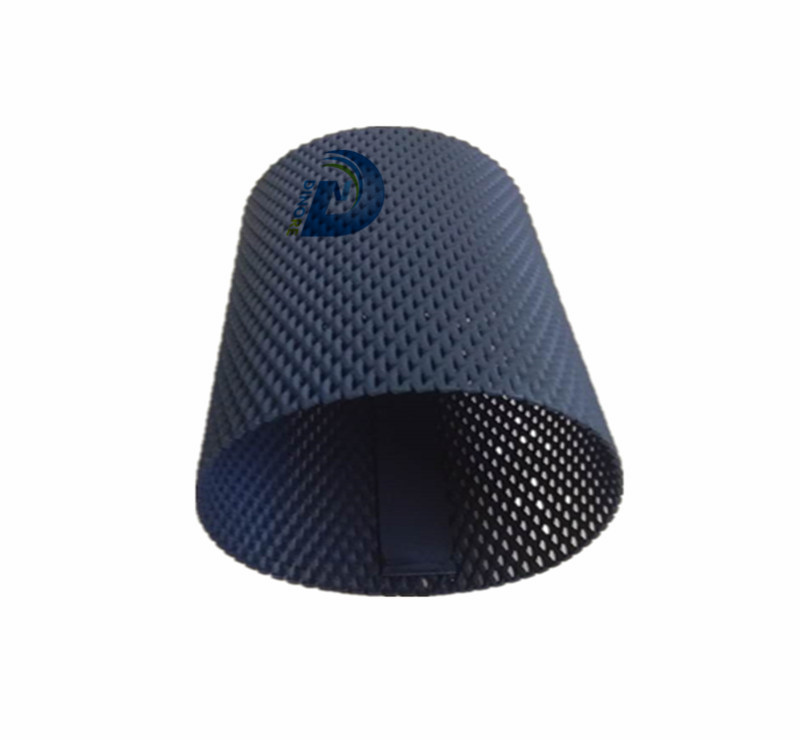
Understanding Lead Oxide Anodes and Their Working Principles
Chemical Composition and Electrochemical Role
Lead oxide anodes are made with a titanium base that is covered in highly pure lead oxide, which in its industrial form is mostly lead dioxide (PbO2). That is why PbO₂ is good for reactions that release oxygen in acidic electrolytes because it has a high oxidation potential (about 1.455 V vs. SHE). It is rigid because of the titanium base, and the oxide layer moves electrons around where the electrode meets the electrolyte.
Operating Parameters That Define Performance
A current level of 10 to 100 A/dm² is enough for most lead oxide anodes to do their jobs. How thick the layer is and what chemicals are in the bath affect how much temperature it can handle. The electrode has to stay the same size for hundreds of hours of use in sulfuric acid-based solutions, which are common in copper electroplating. It can't break or stop working.
Comparing Lead Oxide Anodes to Alternatives
When the current is high, graphite anodes break down quickly and pollute the bath. Some anodes, like those made of ruthenium-iridium on titanium, can clear chlorine for a longer time, but they cost more per unit. Lead oxide anodes are flexible and offer good electrochemical efficiency, a lower material cost, and the ability to be recoat. Because of this, they are often used in electroplating, hydrometallurgy, and the making of electrolytic cells.
Challenges of Using Standard Lead Oxide Anodes in High-Current Applications
Thermal and Mechanical Stress
Lead oxide anodes that you can buy off the shelf are not made to withstand high temperatures. When the current levels are higher than what was planned, joule heating makes some areas warmer or cooler than others. This makes the oxide coating crack a little, which speeds up the process of delamination. In a copper electroplating plant that is always running at a high current, if the anode fails, the bath can get dirty and the line can stop working without warning.
Accelerated Corrosion and Degradation
Most clothes don't last as long as they should in hard ions baths like high-acid or mixed-halide baths. The current is spread out unevenly when covering loss is more than 20–30% of the original mass. It takes more energy and makes the coating less even. Service times get faster and fix costs go up if you don't have a custom-matched coating standard.
Regulatory and Environmental Constraints
Lead-based probes must be thrown away, treated, and recorded in a way that follows the rules. Some standard goods might not fully track their materials. This means that companies that follow ISO 14001 or REACH could be audited. Automotive Tier 1, medical devices, and aerospace are all regulated industries. So, procurement teams need suppliers who can provide certified documentation and offer coating services to cut down on the amount of hazardous waste that is made.
How Lead Oxide Anodes Can Be Customized for High-Current Applications?
Composition and Coating Optimization
Changing the crystal structure (alpha vs. beta phase), loading weight (g/m²), and adding elements to lower resistance is the most important thing that can be done to tune the PbO₂ layer. More electricity flows through alpha-PbO than beta-PbO because it sticks to things better. At Tianyi, we change the phase ratio based on the current density window and the electrolyte chemistry we want to achieve. This makes sure that the layer lasts as long as it's supposed to and doesn't wear off quickly.
Structural and Geometric Reinforcement
When there is a lot of electricity, it really stresses out the shape of the sensors. It is possible to change the bus bar contacts' shape, the size of the anode plate, and the thickness of the base in order to lower the resistance at the connection points. There are exact size limits that must be followed for bipolar plate setups that are used in electrolytic copper systems or to make electrolytic hydrogen. From batch to batch, our production process keeps tolerances to ±0.1 mm. This lets production engineers make sure that all units fit together the same way.
Validation Through Lab and Field Testing
Before they are put into full production, customized anodes are put through polarization curves, impedance spectroscopy, and rapid life testing in a virtual working environment. For field validation, small tests are then done with the real process chemistry of the client. As early as possible, this two-step process finds ways things can go wrong and gives buying teams written proof of performance compliance before they sign the yearly framework agreements.
Customized Lead Oxide Anodes vs. Alternative Solutions
You need to be honest about your comparisons if you want to make the right choice about procurement. Different types of anodes have different pros and cons when it comes to cost and performance:
- Customized Lead Oxide Anode (PbO₂ on Ti): Best suited for high-current acid environments such as copper electroplating and electrolytic refining. Recoatable titanium substrate reduces lifecycle cost by 60–70% versus buying new. Moderate initial unit cost. Compliance documentation available.
- Mixed Metal Oxide (MMO) Anodes (Ru-Ir / Ir-Ta on Ti): Superior for chlorine or oxygen evolution in long-cycle operations. Higher upfront cost, but excellent service life in the right application. Not always the most cost-effective choice for high-current acidic copper baths.
- Graphite Anodes: Lowest initial cost but consumable. Bath contamination risk is real. Replacement frequency in high-current operations often negates the price advantage within 6–12 months.
Custom-made Lead oxide anode (PbO2 on Ti): Best for places that are acidic and have a lot of current, like copper etching and electrolytic processing. Recoatable titanium base lasts longer and costs 60% to 70% less than buying new. At first, it was cheap per lot. There is paperwork for compliance.
Best Practices for Maintaining Customized Lead Oxide Anodes
Routine Inspection and Cleaning Protocols
Check the anode surfaces every 200 to 500 hours, or more often if the bath is very rough. When you have hard water, scale layers like calcium carbonate can get in the way of the active coating and break down the high voltage in one area. Brushing and then rinsing with a weak acid (5–10% H₂SO₄) can get rid of fouling without hurting the PbO₂ layer.
Early Failure Detection
When the current stays the same, watch out for a rise in cell voltage of 5 to 10 percent that you can't explain. This is often a sign that the coating is starting to thin or split. Small cracks can be found before they get bigger by regularly checking the surface under UV light. It's better to plan maintenance ahead of time than to have to shut down in an emergency if you notice damage early.
Recoating and Sustainable Disposal
It is not possible to use up the titanium base in a Tianyi lead oxide anode. The substrate can be stripped, inspected, and recoated after the active coating has reached the end of its useful life. This is much cheaper than replacing the whole thing. When certified waste of lead-containing materials is thrown away for substrates other than recoating, it must follow local environmental rules. This circular way of doing things cuts down on both the cost of getting things and the amount of dangerous trash that is made.
Conclusion
Electrochemical processes today need a lot of current, which wasn't possible with standard lead oxide anodes. That hole is filled by customization, which includes changing the coating phase, making the base stronger, and testing it in approved ways. A performance-specified anode is better than a stock product because it lasts longer, costs less, and meets compliance standards. This is especially true for sourcing and engineering teams in the new energy, electroplating, and metallurgy sectors. It's not the other way around; Tianyi adds anodes to your process.
FAQ
Can customization extend the service life of a lead oxide anode in high-current use?
Yes. It is possible to make a customized lead oxide anode that lasts much longer than a standard off-the-shelf product.
How do the costs compare to graphite anodes?
It has been shown that better coating design can add 40 to 80% to the service life of some electroplating and electrolytic cleaning processes.
What certifications should I verify before selecting a supplier?
Check to see if the materials have an ISO 9001 quality management certificate, paperwork showing they follow RoHS and REACH rules, and records of how they were made. Chains that serve cars should make sure they are aligned with IATF 16949. Ask for more than just general product details. You should also ask for coating loading reports (g/m² of active material) and data from rapid life tests.
Can the titanium substrate be recoated after the coating is spent?
Yes. You can't eat the metal base. A new PbO₂ layer is added after the metal has been ground and pickled in acid. That's about 60% to 70% less than what it would cost to buy new anodes.
Get a Customized Lead Oxide Anode Quote from Tianyi
Tianyi knows a lot about engineered anode solutions that can handle a lot of current in industrial settings. We've been making lead oxide anodes for a long time, and we can let you change the finish, base size, weight, and paperwork for each batch. Our work also meets ISO standards. Your team can meet your needs with technical precision and production capacity, whether you need samples of prototypes or a deal for long-term supply. You can email us at info@di-nol.comto get a quote.
References
1.Pletcher, D., & Walsh, F. C. Industrial Electrochemistry. Springer, 1990.
2.Trasatti, S. "Electrodes of Conductive Metallic Oxides." Journal of Electroanalytical Chemistry, 1980.
3.Comninellis, C., & Chen, G. (Eds.). Electrochemistry for the Environment. Springer, 2010.
4.Velichenko, A. B., & Devilliers, D. "Electrodeposition of Fluorine-Doped Lead Dioxide." Journal of Fluorine Chemistry, 2007.
5.Walsh, F. C., & Ponce de León, C. "Progress in Electrochemical Flow Reactors for Laboratory and Pilot Scale Processing." Electrochimica Acta, 2018.
6.Lipp, L., & Pletcher, D. "The Preparation and Characterization of Lead Dioxide Coated Titanium Electrodes." Electrochimica Acta, 1997.