




How are powered water heater anode rods installed correctly today?
Installing a powered water heater anode rod for cathodic protection requires a methodical approach that most plumbing professionals and informed DIYers can complete within an hour. The process involves shutting off the water supply and power source, draining several gallons from the tank, removing the existing sacrificial rod, threading in the MMO titanium rod with PTFE tape on the 3/4" NPT fitting, routing the low-voltage power cable to the control module, and verifying the LED indicator confirms an active protection circuit. Getting each step right determines whether the tank receives consistent electrochemical protection or develops early corrosion failures.
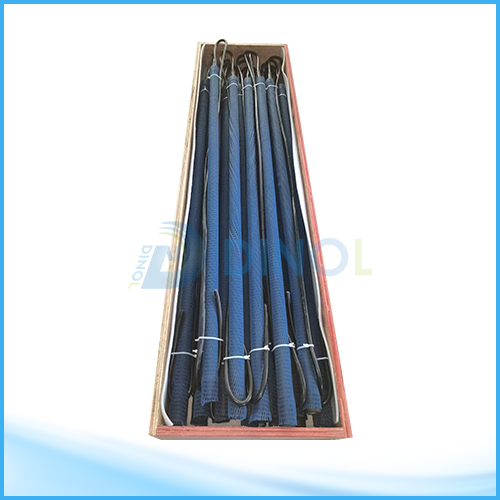
Understanding Powered Water Heater Anode Rods and Their Function
Usually, magnesium, aluminum, or zinc anodes are used as sacrifices. They break down over time to keep rust away from the steel tank wall. Because they work on galvanic principles, the rod material oxidizes while the tank does not. The obvious problem is that depletion will happen. If you have hard water or water that has been eased, a magnesium rod can wear out in 18 months instead of the expected 3–5 years.
Impressed Current Cathodic Protection (ICCP) is the name of the electrochemical process that a powered anode rod uses. The rod sends a controlled low-voltage DC current into the water, which changes the electrochemical potential at the inner surface of the tank and stops oxidation at its source. It is made of a highly pure Grade 1 or Grade 2 titanium substrate covered with Mixed Metal Oxides (MMO), most often an Iridium-Tantalum or Ruthenium-Iridium mix. The rod itself does not dissolve. Its dimensions stay the same even after decades of use.
This difference is very important for B2B purchasing decisions. If a rod never runs out, it means that it doesn't need to be replaced on a regular basis, that silt doesn't build up from the anode mass dissolving, and hydrogen sulfide gas isn't made when magnesium reacts with sulfate-reducing bacteria. Finally, that last point directly addresses the "rotten egg smell" issue that makes up a lot of bad reviews on shopping sites. Those advantages are exactly what a powered water heater anode rod for cathodic protection is designed to deliver, since an impressed-current anode does not sacrifice itself the way a magnesium or aluminum rod does, eliminating both the consumable replacement cycle and the sulfide odor problem.
Why MMO Coating Chemistry Matters?
The layer of sintered IrO2-Ta2O5 is what lets oxygen continue to escape in drinkable water without the cover wearing away. Iridium oxide makes electrochemistry work better, and tantalum oxide makes structures stick together and keeps chemicals stable. This mix lets the anode keep the same current density (usually measured in mA/m²) even when the resistivity of the water changes with the seasons or when the total dissolved solids (TDS) level changes.
Key Steps to Correct Installation of Powered Water Heater Anode Rods Today
Every other step comes after checking for compatibility. Make sure the tank is steel-lined (inside is glass or porcelain enamel), find out what size hex port it has (most home units have a 3/4" NPT thread), and measure the space between the port and the bottom of the tank to find the right rod length. For tanks 40 to 89 gallons, standard-length rods work fine. For business tanks over 100 gallons, longer rods and higher-output controls are needed.
Plumbing companies today follow this right order for installation:
- Power and water isolation: Switch off the circuit breaker supplying the water heater and close the cold-water inlet valve completely. Connect a garden hose to the drain valve and release 3–5 gallons to relieve internal pressure — not a full drain, just enough to create working clearance.
- Rod removal and thread preparation: Use a 1-1/16" socket with a breaker bar to extract the existing sacrificial rod. Clean the port threads with a wire brush and apply two wraps of PTFE tape to the new rod's NPT threads. Hand-tighten, then use the socket to snug the fitting without overtorquing — 30–40 ft-lbs is the industry-accepted range for this fitting size.
- Electrical connection: Route the attached low-voltage cable to the control module, typically mounted near an accessible outlet. The module converts 110V/220V AC to a regulated DC output below 3.5V. Secure cable routing away from heat sources and moving parts using provided clips.
- System verification: Restore water supply slowly, checking the hex fitting for weeping. Restore power. Observe the control module's LED — a solid green confirms circuit continuity and active protection. A red or flashing indicator signals a wiring fault or inadequate water conductivity.
The power and water are cut off: Turn off the circuit breaker that powers the water heater and fully close the valve that lets cold water in. By attaching a garden hose to the drain valve, you can let out 3–5 gallons of water to lower the pressure inside. This is not a full drain, just enough to make room for working.
Leak Prevention at the Thread Joint
These steps are in line with the latest best practices recommended by NACE International for setting up ICCP systems in homes and small businesses. Skipping the conductivity check after installation is the most common mistake made during installation and the main cause of early tank rust even when a rod is present.
Comparing Powered Anode Rods with Traditional Alternatives: Making Informed Procurement Decisions
When the numbers are looked at honestly, the case for driven rods based on lifetime costs becomes strong. A magnesium spare rod should be replaced every two to five years and costs between $15 and $40 at stores. It costs more up front to buy a driven MMO titanium rod, but it is meant to last longer than the water heater tank—often 20 years or more. For business operations where tank downtime costs money and time, the decision is clear: powered safety is the way to go. That lifecycle math is the strongest argument for a powered water heater anode rod for cathodic protection, because the higher upfront cost is recovered many times over by eliminating repeated rod replacements, labor, and the risk of tank failure between service intervals.
When buying something from a business to business (B2B), the criteria for evaluation should include: NSF/ANSI 61 certification for drinking water contact compliance; UL or ETL listing for the electrical safety of the control module; thread dimensional accuracy against ANSI B1.20.1 NPT standards; and the supplier's ability to provide retail-grade packaging with barcodes and multilingual installation instructions for product programs that are ready to go on the shelf.
Certification Requirements That Affect Procurement Timelines
NSF/ANSI 61 controls how easily things can leach when they come into contact with drinking water. The titanium base and MMO coating need to show that no regulated contaminants are higher than the maximum concentrations that are allowed. Third-party lab testing is usually needed for this certification process, and it can take anywhere from 6 to 12 weeks. Procurement managers have to plan for this time frame when launching new products.
Maintenance, Troubleshooting, and Lifespan Optimization of Powered Anode Rods
An MMO driven rod doesn't need to be replaced on a regular basis, but it does benefit from being looked at and its connections checked once a year. Check the control module LED state and make sure the hex fitting stays dry. Look for cracks in the wire insulation near areas that are exposed to heat. These checks only take ten minutes and stop failures that aren't noticed until a tank starts to leak.
Loss of conductivity in very low-TDS water (below 100 ppm) is the most typical practical problem. This makes the current path less efficient. In these situations, the control module might show a problem even though the rod is physically fine. The fix is checking the chemistry of the water and, if necessary, calling the maker to ask for a higher-output controller that is set up to work in low-conductivity conditions.
Strategic Procurement and Installation Support for B2B Clients
It takes more than low unit prices to find a reliable powered water heater anode rod for cathodic protection on a large scale. It needs a maker with clear process controls, certified materials that can be tracked, and the technical skills to adapt rod sizes, coating requirements, and packaging forms to the needs of your private label program.
Shaanxi Tianyi New Material Titanium Anode Technology Co., Ltd. makes ICCP MMO-coated titanium anodes with Grade 1 and Grade 2 commercially pure titanium substrates and Ru-Ir or Ir-Ta MMO coating systems. Products come in mesh, ribbon, disk, and fully unique shapes, and the sizes and coatings can be changed to fit the needs of the customer. The business is based in the Baoji High-Tech Development Zone and offers full OEM/ODM services. They also have strict quality controls in place during production and established logistics for global distribution, including FCL and LCL ocean freight programs.
Conclusion
Correct installation of a powered anode rod comes down to compatibility verification, precise thread sealing, secure low-voltage wiring, and post-installation circuit confirmation. When these steps are executed properly, the MMO titanium rod delivers continuous electrochemical protection without the maintenance burden of sacrificial alternatives.
For procurement teams evaluating this product category, the combination of extended service life, elimination of odor complaints, and NSF-compliant material chemistry makes powered rods a strong addition to any water heater aftermarket catalog. These are the same reasons a powered water heater anode rod for cathodic protection is increasingly specified as a premium upsell item, since it addresses the three most common aftermarket complaints—frequent replacements, rotten-egg odor, and tank corrosion—in a single product.
FAQ
Does a powered anode rod work on all water heater brands?
It works with most home types that have a 3/4" NPT screw port. This includes most tank-type water heaters for homes from top North American brands, with capacities ranging from 40 to 89 gallons. For commercial tanks bigger than 100 gallons, you need rod lengths that are made for that application and control modules with higher outputs. Before choosing a model, you should always check the port size and available insertion depth.
How much electricity does the control module consume annually?
Depending on how well the water flows and the size of the tank, the system uses between 10 and 50 kWh per year. At average residential electricity rates in the U.S., this has a very low annual operating cost—usually less than $5.
What does a flashing LED on the controller indicate?
A flashing or red LED means that there is a problem with the wiring, the water isn't conductive enough, or there is an open circuit at the rod connection. Before replacing a part, make sure the cable link at the module is correct and that the rod is fully seated and in touch with water.
Can this rod be used in commercial storage tanks?
Yes. Titanium rods made by MMO are used in storage tanks in hotels, hospitals, and factories, where maintenance downtime is expensive for business. Commercial systems usually have a lot of water and different TDS levels. To deal with this, high-output designs with longer rods and changeable current density controls are used.
Partner with Tianyi for Reliable Powered Anode Rod Supply
Tianyi offers certified powered water heater anode rod for cathodic protection solutions. They offer full OEM/ODM support, retail-ready packaging, and flexible MOQ programs made for distributors in North America. Our MMO titanium anodes are made to meet NSF/ANSI 61 standards and will work well for more than 20 years. Get in touch with our team right away to ask for samples, tiered pricing, or a review of your custom specifications. If you want to get in touch with a powered water heater anode rod for cathodic protection maker built for B2B scale, email us at info@di-nol.com.
References
1. NACE International — Cathodic Protection of Water Storage Tanks and Water Treatment Facilities, NACE SP0388, 2019.
2. NSF International — NSF/ANSI Standard 61: Drinking Water System Components – Health Effects, 2022.
3. ASTM International — ASTM B338: Standard Specification for Seamless and Welded Titanium and Titanium Alloy Tubes for Condensers and Heat Exchangers, 2021.
4. Schweitzer, P.A. — Corrosion Engineering Handbook: Corrosion of Linings and Coatings, CRC Press, 2006.
5. Jones, D.A. — Principles and Prevention of Corrosion, 2nd ed., Prentice Hall, 1996.
6. Roberge, P.R. — Handbook of Corrosion Engineering, McGraw-Hill, 2019.