




Deep Well Anodes vs Linear Anodes for Large CP Installations
When engineers face a large-scale cathodic protection (CP) project—whether it's a cross-country gas pipeline in the Middle East or a buried tank farm in Central Asia—one question keeps surfacing: should the groundbed design rely on deep well anodes or linear anodes? The answer shapes project cost, installation complexity, and system longevity for decades. An ICCP MMO canister anode for cathodic protection sits at the center of this decision, offering a pre-packaged, factory-controlled solution that performs reliably in both configurations. This guide breaks down the technical differences, performance trade-offs, and procurement factors that B2B materials managers need before signing a purchase order.
Understanding the Fundamentals of Deep Well and Linear Anodes in Large CP Systems
What Deep Well Anodes Actually Do?
Deep well anodes are put into dug holes that are 30 to 150 meters deep and have layers of low-resistance dirt. They are put in vertically. Because of this shape, a single groundbed can send a protecting current over a big area without needing a lot of land. Surface soil resistivity often exceeds 5,000 ohm-cm in dry pipeline corridors like those in Saudi Arabia, Oman, and northern India. This means that shallow installations are not possible. Deep well systems don't go through that layer of high resistance at all.
How Linear Anodes Work in Pipeline Protection
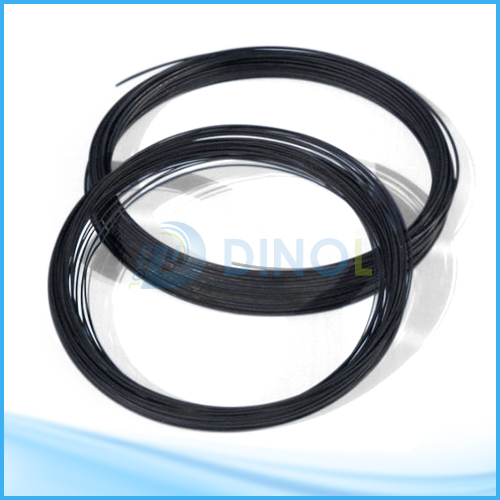
Linear anode systems are buried shallowly and run horizontally, parallel to the protected structure. They work well for long, uninterrupted pipeline parts where demand is spread out and entry is possible from the surface. Anodes made of flexible MMO ribbon or wire are often used in this situation. They provide a spread-out current source that keeps nearby underground utilities from interfering. According to NACE SP0169, linear groundbeds work best in places where the soil doesn't resist electricity very well and there are a lot of pipelines.
Where MMO Canister Anodes Fit In?
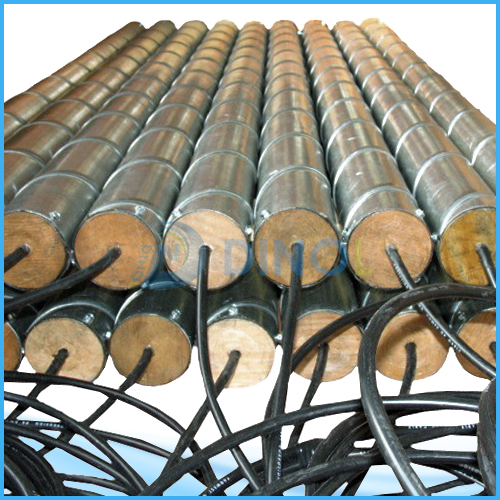
A mixed metal oxide-coated titanium base that meets ASTM B338 Grade 1 titanium standards is already packed inside a galvanized steel container that is full of calcined petroleum coke breeze (fixed carbon >98%, resistivity <0.1 ohm-cm). This is called an ICCP MMO canister anode for cathodic protection. This factory-controlled assembly gets rid of backfill variation in the field. Canister anodes can be used in both deep well and straight groundbed designs. The pre-packaged shape is especially useful in desert or mountainous project sites where quality control during installation is hard to ensure.
Performance Comparison: Deep Well Anodes vs Linear Anodes
Operational Efficiency and Current Output
In high-resistance surface soils, deep well groundbeds focus current supply through a narrow vertical shaft. This lowers the spreading resistance. Linear systems spread current along a horizontal axis, which works well for pipes where the coating wears away evenly. In either case, MMO-coated titanium anodes keep their consumption rate below 1 mg/Amp-year, which is much lower than alternatives like graphite (about 1,000 mg/Amp-year) or silicon iron. This low rate of usage directly supports a design life of 20 to 30 years when used continuously in ICCP.
Environmental Factors That Affect Anode Life
The amount of water in the soil, the amount of salt in the water, and the temperature all affect how well the anode works. It doesn't affect the Ir-Ta MMO coats when they are exposed to oxygen-evolving dirt or chlorine-evolving brackish water. On the other hand, graphite anodes break down quickly in acidic soils, and zinc sacrificial anodes stop working when the resistance of the soil goes above 1,000 ohm-cm. It is very helpful that an MMO titanium substrate is chemically stable for projects in the Arabian Peninsula or sub-Saharan Africa, where soil chemistry changes a lot along a single pipeline route.
Total Cost of Ownership vs. Upfront Price
It costs more up front to install a deep well—drilling a single 100-meter hole can cost between $20,000 and $60,000. But if the deep well anode fails and needs to be drilled again, that cost goes up right away. Linear systems are cheaper to place per unit, but they need more materials per kilometer of security. Over the course of a 25-year project, MMO canister anodes in a deep well setup have a lower total cost of ownership than graphite-based options. This is because they don't need to be replaced nearly as often during the design life window.
Key Factors in Selecting the Right Anode for Large ICCP Installations
Soil Resistivity and Current Density Requirements
A four-pin Wenner soil resistivity study must be done along the pipeline route by corrosion experts before any anode type is chosen. Deep well groundbeds are most likely to form in places where the average resistivity is above 3,000 ohm-cm. Flat or shallowly spread out anodes can be used in places with less than 500 ohms of resistance. The amount of current needed depends on the state of the coating, the diameter of the pipe, and how rough the dirt is. All of these factors are used in the NACE SP0572 groundbed resistance calculation.
Material Selection: MMO vs. Alternatives
These are the main differences in materials that affect how well they work over time:
- MMO titanium (Ru-Ir or Ir-Ta coating): Consumption rate <1 mg/Amp-year; stable in soil, seawater, and brackish water; design life 20–50 years; dimensionally stable under high current density.
- High-silicon cast iron: Consumption rate ~150 mg/Amp-year; brittle in rocky ground; limited to soil applications; lower upfront cost but shorter service life.
- Graphite: Consumption rate ~1,000 mg/Amp-year; suitable only for low-current, low-aggressiveness environments; not recommended for deep well service.
When a materials manager figures out how many times to repair something over a 25-year pipeline concession, these differences become very important. When the current load is low, MMO titanium anodes usually don't need to be replaced in the middle of their life. Graphite or silicon iron options, on the other hand, may need to be replaced every 8–12 years.
Procurement and Certification Requirements
Before bids are considered, most pipeline owners in India, the Middle East, and Central Asia want suppliers to be on the Approved Vendor List (AVL). Third-party testing by SGS or Bureau Veritas, NACE TM0108 accelerated life test data, XRF verification of MMO coating loading, and helium-pressure sealing tests on cable-to-anode connections are some of the most important steps in the certification process for an ICCP MMO canister anode for cathodic protection. To keep the factory acceptance test (FAT) on time, procurement managers should ask for these papers during the RFQ stage, not after the contract has been awarded.
Detailed Guide to Installing and Maintaining ICCP MMO Canister Anodes in Large CP Systems
Pre-Installation Assessment and Cable Specification
Before putting any canister anode into a finished borehole, the project team should compare the diameter of the shaft to the outer diameter of the canister (typical sizes: 80 mm, 100 mm, 150 mm OD; lengths of 1 m, 1.5 m, and 2 m), make sure there are no air holes in the coke breeze fill, and check the lead cable. For deep well service, HMWPE or dual-insulated PVDF/HMWPE wires are the norm because they can handle the toxic gasses that are made during the ICCP electrochemical process. Before fitting, the anode-to-cable link should be tested for micro-ohm resistance to make sure the connection is solid.
Monitoring and Troubleshooting After Commissioning
As per NACE SP0169, structure-to-electrolyte potential readings taken at test posts along the pipeline should show that the pipe-to-soil potential stays at or below –850 mV (CSE). If numbers go up within a year, it's most likely because of water getting into the cable joints, the backfill shifting around the canister, or an unstable rectifier output, not because the anode failed. Real-time potential tracking is now possible with remote monitoring units connected to rectifier panels. This means that physical field inspections in remote areas are done less often.
Bulk Procurement and Logistics for Remote Projects
For orders of 50 to 300 canister anode units for a single project, lead times from a reputable manufacturer are usually 6 to 10 weeks, which includes FAT. The export paperwork, like the certificate of origin, packing list, and SGS inspection certificate, should be checked when the order is placed, not when it is shipped. Deliveries to desert and mountain sites usually come in reinforced wooden crates with foam padding, since the last mile of road conditions can be very rough on freight. Make sure the supplier understands the packaging needs before production starts.
Future Trends in Large-Scale Cathodic Protection with MMO Anodes
Advances in MMO Coating Technology
According to a study published in the journal Corrosion Science in 2022, iridium-tantalum MMO coatings that are applied at higher loading densities (above 12 g/m²) on ICCP MMO canister anode for cathodic protection have accelerated life test results that are measurably longer without making the substrate heavier. Manufacturers are also trying coatings with less iridium that work just as well but cost less in raw materials. This is good for managing project budgets.
IoT Integration and Smart CP Monitoring
Operators of pipelines in Saudi Aramco's network and GAIL's Indian grid are gradually putting in place remote monitoring systems that send rectifier current output and pipe-to-soil potential readings over a cellular or satellite link. Corrosion engineers can use this real-time data to find groundbed resistance increases early, usually 6–12 months before the protection current drops below the NACE level. This lets them plan maintenance instead of having to act quickly in an emergency.
Custom Anode Configurations for Complex Projects
Non-standard anode shapes are becoming more and more necessary for projects in crowded urban utility routes or on offshore jetty settings. Titanium substrate anodes come in mesh, ribbon, disk, and rod shapes, and their sizes can be changed to fit your needs. Because of this, one approved provider can provide both the deep well canister anodes needed for a cross-country pipeline and the ribbon anodes needed for a floor protection system for an above-ground storage tank.
Conclusion
It's not as simple as picking between deep well and linear anode configurations. An engineering suggestion that can be defended is based on data on soil resistivity, limitations on land access, the length of the project, and the total cost of ownership. For both types of groundbed, ICCP MMO canister anode for cathodic protection are the best option from a technical point of view. They have low consumption rates (less than 1 mg/Amp-year), long design lives (20–50 years), and chemical stability in the harsh soil and water environments that are common in pipeline projects in the Middle East, India, and Central Asia. When choosing a vendor, procurement managers should put verified certification data and the ability to deliver in bulk at the top of their list. This way, they can avoid the expensive surprises that come up in the middle of a project with graphite or silicon iron alternatives.
FAQ
Why choose a pre-packaged canister anode over a bare anode in a deep well?
A pre-packaged canister ensures the anode operates in a controlled low-resistivity coke breeze environment from day one, regardless of field conditions. Loose backfill applied in the field often contains air voids that cause localized overheating and premature failure. The factory-packed format removes that installation variable entirely.
What design life should I specify for a pipeline cathodic protection project?
Industry practice under NACE SP0169 targets 20, 25, or 30 years depending on current output requirements and coating thickness. MMO titanium anodes with Ir-Ta coating at standard loading densities routinely support 25-year design life calculations at typical pipeline current densities.
Which cable type is correct for deep well MMO canister anodes?
HMWPE (High Molecular Weight Polyethylene) or dual-insulated PVDF/HMWPE cables are standard. These materials resist the oxidizing gases produced at the anode surface during normal ICCP operation. Standard PVC insulation degrades in this environment and should not be specified.
How do I verify MMO coating quality before shipment?
Request XRF analysis confirming coating weight and composition, accelerated life testing per NACE TM0108, micro-ohm resistance testing on all cable joints, and helium-pressure sealing tests on the junction. These four checks cover the most common failure modes.
Can MMO canister anodes be used in high-chloride desert soils?
Yes. Ir-Ta MMO coatings are electrochemically stable in both oxygen-evolving soil environments and chlorine-evolving conditions. They are the coating type of choice for saline desert soils common across the Arabian Peninsula and parts of Central Asia.
Request a Quote from Tianyi — Your Trusted ICCP MMO Canister Anode Supplier
Tianyi makes ICCP MMO canister anodes for cathodic protection that are built to ASTM B338 Gr1/Gr2 titanium standards. They come with Ru-Ir and Ir-Ta coating choices, can be inspected by a third party (SGS/BV), and come with all the paperwork you need to export them. Our production team can handle large orders of 50 to 300 or more units, and we can guaranty lead times that work with your drilling schedule. You can email our expert team at info@di-nol.comto get a datasheet, an AVL evaluation package, or a quote that is tailored to your project.
References
1.NACE International. SP0169: Control of External Corrosion on Underground or Submerged Metallic Piping Systems. NACE International, 2013.
2.NACE International. TM0108: Evaluation of Cathodic Protection Anode Materials. NACE International, 2008.
3.Peabody, A. W. Control of Pipeline Corrosion. 2nd ed. NACE International, 2001.
4.Lazzari, L., and Pedeferri, P. Cathodic Protection. Politecnico di Milano Press, 2006.
5.Baeckmann, W. von, Schwenk, W., and Prinz, W. Handbook of Cathodic Corrosion Protection. 3rd ed. Gulf Professional Publishing, 1997.
6.Bertolini, L., et al. "Performance of Mixed Metal Oxide Anodes in Impressed Current Cathodic Protection Systems." Corrosion Science, vol. 64, 2022, pp. 112–124.