




What Factors Affect MMO Titanium Anode Service Life and Performance?
Several interconnected factors determine how long MMO coated titanium anodes for cathodic protection last and how well they perform. These include the operating environment (salinity, temperature, pH), coating quality (oxide composition, thickness, adhesion), applied current density, substrate purity, and maintenance frequency. When any of these variables falls outside recommended ranges, anode degradation accelerates, protection efficiency drops, and replacement costs rise. Understanding each factor helps procurement managers and process engineers specify the right product, set realistic service expectations, and build a supply strategy that reduces total cost of ownership.
Understanding MMO Titanium Anode Technology and Working Principles
What Is an MMO Titanium Anode?
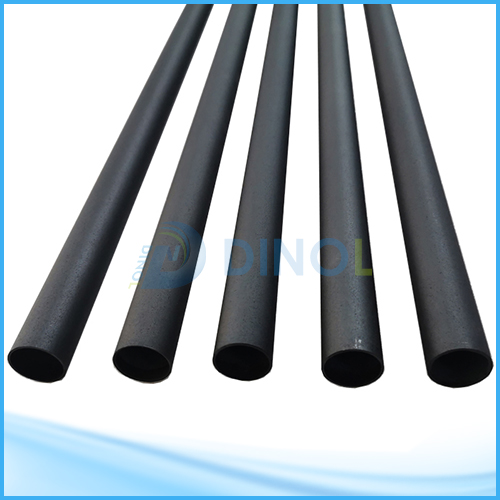
Mixed Metal Oxides are heated and applied to a commercially pure titanium substrate, which is usually Grade 1 or Grade 2 according to ASTM B265. This makes up the MMO titanium anode. Compounds of iridium, tantalum, or ruthenium are often found in the oxide layer. The anode's electrical activity comes from these noble metal oxides, while the titanium base gives it structure and protects it from inactive corrosion.
How the Electrochemical Mechanism Works
An outside DC power source sends current through the mmo coated titanium anodes for cathodic protection and into the electrolyte (which could be seawater, dirt, or concrete) when the ICCP is working. In oxidation reactions, the MMO coating is the active surface that gives off electrons with little self-consumption. The layer is dimensionally stable, so the anode shape and current distribution stay the same over the course of its service life. Graphite and sacrificial zinc anodes can't match this.
Coating Variants and Their Applications
The market is mostly made up of two coating systems: Ru-Ir MMO and Ir-Ta MMO. Ru-Ir coatings work well in chloride-rich environments like seawater and brine, which is why they are usually used on ship hulls, offshore platforms, and jetties. Ir-Ta coatings work really well in places where oxygen changes slowly, like dirt groundbeds and river systems. This is because they are more stable at higher potentials, which makes them last a lot longer.
Key Factors Influencing the Service Life of MMO Titanium Anodes
Environmental Conditions
The electrolyte type has the most significant effect on how long an anode lasts. High levels of chloride in seawater speed up the oxidation cycle at the anode surface, but Ru-Ir MMO coatings are designed to work in this setting. Higher working voltages are needed in freshwater systems with low conductivity. If the current density is not changed, this can put stress on the coating. Temperatures above 60 °C and pH levels not in the range of 2–12 both make coatings wear out faster.
Coating Quality and Substrate Integrity
When making something, the three factors that directly affect service life are coating thickness, oxide loading, and adhesion strength. An average commercial MMO anode has an oxide loading of 8 to 12 g/m², which is the same amount of iridium. When coatings are too thin or not applied properly, pinholes form quickly. This lets the electrolyte reach the titanium base and causes passivation failure. It's also important how pure the substrate is; impurities in lower-grade titanium can make micro-galvanic sites under the layer, which make it stick less well over time.
Applied Current Density
Each MMO coating has a rated current density, which is usually given in milliamperes per centimeter squared. If you go over this rating, even for a short time, oxide depletion speeds up. Most Ir-Ta MMO anodes used in soil can handle 50 to 100 mA/m³ of continuous current. Anodes in seawater with Ru-Ir coatings can handle up to 600 mA/m³. The easiest and least expensive way to extend the life of an anode is to keep it working within its rated limits.
Comparative Analysis: MMO Titanium Anodes vs Other Anode Types
MMO vs. Graphite and High-Silicon Cast Iron
It takes about 0.5 to 1 kg/A·year for graphite anodes to consume something, but less than 1 mg/A·year for mmo coated titanium anodes for cathodic protection. This is a huge difference. High-silicon cast iron is heavy, brittle, and can't be used in marine installations. MMO anodes are much lighter than their cast iron counterparts, make transportation easier, and need to be replaced much less often. This lowers the total cost of ownership even though each unit costs more.
MMO vs. Zinc and Aluminum Sacrificial Anodes
As time goes on, sacrifice anodes break down and need to be replaced from time to time. When replacing big offshore buildings or long-distance pipes, the cost of the work can be higher than the cost of the materials. This loop is broken by devices that use impressed current and MMO titanium anodes. In a marine ICCP system, a well-specified MMO anode can last for 20–25 years, but every 3–5 years, zinc sacrificial anodes on the same structure would need to be replaced.
MMO vs. Platinum-Coated Titanium
Titanium anodes coated in platinum have similar electrochemical stability, but they cost a lot more because platinum is so expensive. MMO coatings work just as well as other coatings in most cathodic protection situations, but they cost a lot less. Platinum anodes are still used in some high-purity lab electrolysis experiments, but MMO is a better choice for protecting pipes, storage tanks, or bridge decks in industrial ICCP systems.
Procurement Considerations for MMO Coated Titanium Anodes
Certifications and Supplier Qualification
If you're looking for MMO-coated titanium anodes, make sure they have proof that they meet ASTM B265 substrate compliance, ISO 9001 quality management approval, and RoHS/REACH environmental compliance. Suppliers who can do IATF 16949 show process control, which means that coatings are the same from batch to batch. This is a very important factor that QA teams look at closely when they check out new vendors. When you buy something, you should always ask for oxide loading test reports and adhesion pull-off data that are specific to the production lot you are buying.
Customization and Lead Time Planning
Standard anode shapes, like mesh, ribbon, and disk, are enough for most ICCP uses. But because of the needs of the job, special sizes or coating shapes are often needed. Reliable manufacturers can make coatings on either one or two sides, change the amount of oxide to meet different current density needs, and machine titanium substrates to very tight tolerances for size. For big projects, find out early on what the minimum order quantities are and how long it will take to make the items. Most business-to-business buyers in the marine and energy sectors sign framework agreements once a year. To avoid supply gaps, production plans should be aligned with project goals.
Total Cost of Ownership Analysis
The price per unit bought doesn't tell the whole story. Think about how long the MMO titanium anode is supposed to last, how often it needs to be replaced, the cost of installation, and the chance of downtime when looking at different providers. An anode that is 20% more expensive but marked for 25 years instead of 10 years has a much lower yearly cost. Ask your suppliers for lifecycle cost modeling. Reliable suppliers will give you this information based on real-world performance records, not just theoretical calculations.
Best Practices to Maximize Anode Performance and Longevity
Correct Installation Procedures
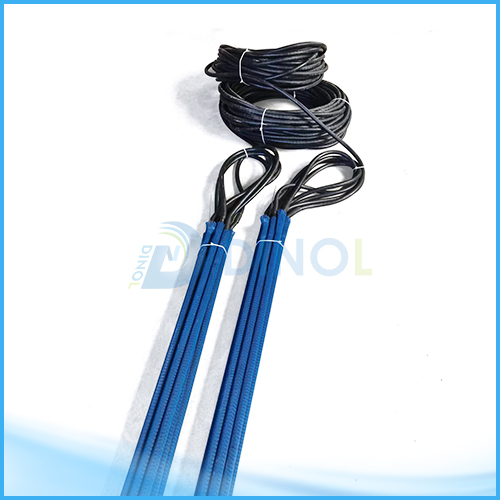
Secure electrical connections are non-negotiable. Loose connections cause localized heating and voltage spikes that degrade the mmo coated titanium anodes for cathodic protection coating rapidly. Anodes are typically welded to titanium conductor bars, bolted, or clamped, depending on the installation environment. Use only titanium hardware for connections in chloride environments — stainless steel fasteners introduce galvanic couples that accelerate corrosion at the joint.
Routine Monitoring and Maintenance
ICCP systems should include reference electrodes to monitor structure-to-electrolyte potential at regular intervals. Monthly readings are standard practice for offshore structures; quarterly checks are typical for buried pipelines. If potential readings drift outside protection criteria (typically -850 mV vs. CSE for steel), inspect the anode output current and check for coating damage or connection failure before assuming the anode itself has failed.
Avoiding Common Operating Errors
The three most frequent causes of premature MMO anode failure in the field are: current density overload (running the rectifier above rated output), reverse polarity events (incorrectly wired DC supply), and mechanical damage during installation. Implementing a pre-commissioning checklist, confirming rectifier polarity before energizing, and protecting anodes with slotted PVC covers in high-traffic marine zones each cost very little but measurably extend service life.
Conclusion
The service life of an mmo coated titanium anodes for cathodic protection is not set in stone; it depends on how well the anode is designed, built, installed, and used. Conditions in the environment, the quality of the coating, how the current density is managed, and the care routines all play a specific part. Instead of just looking at unit price, procurement teams that look at coating loading data, lifecycle cost, and quality certifications always get better protection and lower annualized costs. The two most important choices an engineer can make are choosing the right coating type (Ru-Ir for seawater and Ir-Ta for dirt) and staying within the rated current density limits.
FAQ
How long do MMO titanium anodes typically last in seawater?
Ru-Ir MMO anodes usually last 20 to 25 years in seawater ICCP applications that stay within the rated current density limits. Life depends on how much oxide is loaded, how much current is flowing, and how hot the water is. Higher chloride levels don't shorten life by themselves, but over-current operation that lasts for a long time will.
What maintenance does an ICCP system with MMO anodes require?
Using a reference electrode to measure the voltage once a month or three times a quarter is common. Every year, check the stability of the anode link. For installations that are far from land, check for damage after severe weather events. MMO anodes don't need to be cleaned or recoated during normal use. Compared to sacrificial systems, their major value lies in how little upkeep they need.
Can MMO titanium anodes be customized for specific project needs?
Yes, experienced MMO titanium anode makers can make custom forms (mesh, ribbon, disk, and tubular), oxide loadings that can be changed, coating patterns that are single- or double-sided, and exact size limits. Tell the manufacturer about your operating current density, the type of electrolyte you use, and how you plan to install the product so that you get the right one.
What causes premature MMO anode failure?
The three main reasons are using more current than the device can handle, connecting it in the wrong way during commissioning, and damaging the coating mechanically during installation.
Are MMO titanium anodes RoHS and REACH compliant?
Yes, iridium, tantalum, and ruthenium oxides are used in MMO coatings. These oxides are not on any REACH SVHC lists or RoHS banned chemical schedules. Because they don't have any hexavalent chromium, cadmium, or lead compounds in them, they can be used in projects that have to follow environmental rules.
Partner with Tianyi for Certified MMO Titanium Anode Solutions
Tianyi is a reliable producer of Mmo coated titanium anodes for cathodic protection. They have full production capacity for Gr1/Gr2 substrates, Ru-Ir and Ir-Ta coatings, and custom shapes for ICCP projects in the pipeline, infrastructure, and marine industries. Our goods follow the rules set by ISO 9001, RoHS, and REACH. You can email our engineering team at info@di-nol.comto get technical datasheets, oxide loading reports, or a quote that is tailored to your project.
References
1.Lide, D. R. (Ed.). CRC Handbook of Chemistry and Physics. CRC Press, 2005.
2.Baeckmann, W. von, Schwenk, W., & Prinz, W. (Eds.). Handbook of Cathodic Corrosion Protection. Gulf Professional Publishing, 1997.
3.NACE International. NACE SP0169: Control of External Corrosion on Underground or Submerged Metallic Piping Systems. NACE International, 2013.
4.Trasatti, S. "Electrocatalysis: Understanding the Success of DSA." Electrochimica Acta, 2000.
5.ASTM International. ASTM B265: Standard Specification for Titanium and Titanium Alloy Strip, Sheet, and Plate. ASTM International, 2020.
6.Covino, B. S., & Cramer, S. D. (Eds.). Corrosion: Fundamentals, Testing, and Protection — ASM Handbook, Volume 13A. ASM International, 2003.