




How Long Do MMO/Ti Anodes Last in Cathodic Protection Systems?
MMO/Ti anodes are engineered for long service—most quality products deliver a rated lifespan of 40 years or more under normal operating conditions. The MMO/Ti linear anode for cathodic protection achieves this through a catalytic Mixed Metal Oxide coating (typically iridium/tantalum oxides) applied over a Grade 1 or Grade 2 titanium substrate, which carries a consumption rate of only 1–6 mg/A·yr. When system design, current density, and backfill conditions are properly managed, these anodes consistently outlast graphite and zinc alternatives by decades.
Understanding MMO/Ti Anodes and Their Role in Cathodic Protection
To better understand how long these anodes last, let's first look at what they do and how they are put together.
Construction and Working Principle
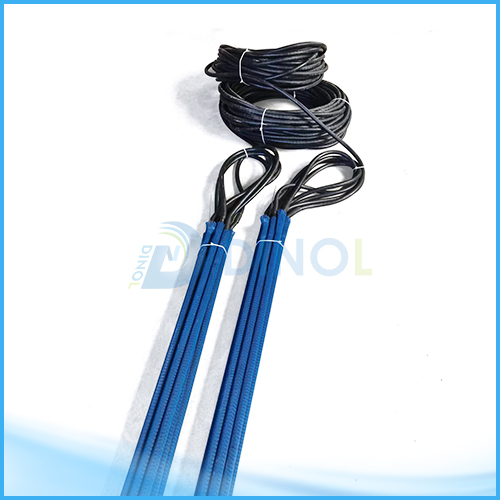
An MMO/Ti linear anode is made up of a titanium wire base that has a thin layer of Mixed Metal Oxides (usually iridium, ruthenium, or tantalum oxides) on top of it. The coating is about 6–10 μm thick. The mechanical strength comes from the titanium base (Ti content ≥ 99.6%), and the electrochemical oxidation process is powered by the MMO coating. In an impressed current cathodic protection (ICCP) device, the rectifier sends current through the anode and into the dirt or electrolyte around it. This current then runs onto the protected pipeline and stops corrosion at the cathode.
Key Performance Specifications
In Tianyi's MMO/Ti linear anode products, the anode outer diameter is 38–40 mm, the MMO/Ti wire diameters are 1.0 mm, 1.5 mm, and 3.0 mm, the output current is 328 mA/m (DN-15) or 656 mA/m (DN-30), the contact resistance is ≤ 0.0009 Ω, and the cable options are XLPE/PVC and EPR/CSPE. All of the products are made to meet ASTM standards and are certified by ISO 9001.
How MMO Anodes Compare to Graphite and Zinc
Graphite anodes rust about 10–20 times faster than MMO-coated titanium, so they need to be replaced more often and cost more over their lifetime. Zinc sacrificial anodes are made to break down on their own, but they do need to be replaced every 5–15 years, depending on how resistive the soil is. MMO/Ti linear anode for cathodic protection, on the other hand, don't react with regular working potentials and can handle current densities of up to 2,000 A/m². This makes them the best choice for long-term cathodic protection in buried pipelines and storage tanks.
Key Factors Influencing the Lifespan of MMO/Ti Anodes
A valued life of 40 years is possible, but only if the right factors are managed. These four things have the most direct effect on how long your anode system will work in the field.
Coating Quality and Substrate Purity
The MMO covering is what makes the anode work. The coating is put on by Tianyi using a thermal breakdown method that includes sandblasting, pickling, and applying multiple layers of coating. This makes an oxide layer that is smooth, thick, and sticks well. X-Ray Fluorescence (XRF) analysis is used to check the coating's load, and bending tests according to NACE TM0108 guidelines are used to make sure the batch sticks together. If the coating thickness isn't uniform or the titanium base isn't pure (below the Gr1/Gr2 standard), it directly speeds up consumption.
System Design: Current Density and Voltage
The operating current density is the most important factor that can be changed to affect the life of an anode. Running an MMO anode at current levels that are much lower than its rated maximum makes it last longer. For example, a DN-30 anode that is rated at 656 mA/m will last a lot longer in a well-designed dirt groundbed when it is run at 300–400 mA/m. In these linear systems, the low output voltage also lets the transformer-rectifier capacity be smaller, which lowers the heat stress on the circuit over time.
Installation Environment and Backfill
The resistivity of the soil has a direct effect on the current distribution curve and the resistance to grounding. Putting carbonaceous coke (with a carbon content of at least 99.5%) back into the anode trench lowers ground resistance and stops the titanium substrate from creating a passive oxide film that is not conductive. Proper coke backfill is required in high-resistivity soils, like the sandy or rocky land that is common in the Middle East and some parts of South America. Not using it could mean the difference between a 40-year and a 15-year service life.
Routine Inspection and Early Fault Detection
Even if a system is set up correctly, it needs to be checked on a regular basis. Potential surveys done once a year along the pipeline alignment can find problems like coating wear, failed joint seals, or current attenuation before they get worse. The internal Ti-wire-to-cable link of the MMO/Ti linear anode for cathodic protection should be tested for electrical continuity after installation and on a frequent basis after that. Small problems don't have to turn into expensive system failures if they are caught early. This is especially true for old pipes with coverings that are wearing off.
Comparative Analysis: MMO Anode Lifespan vs. Other Anode Types
When procurement teams evaluate anode materials, the upfront unit price often looks like the deciding factor. In practice, total cost of ownership tells a more accurate story.
Performance in Soil and Marine Environments
Graphite anodes in buried applications typically show consumption rates of 0.5–1.5 kg/A·yr, meaning a groundbed may need rebuilding within 8–12 years. Zinc and magnesium sacrificial anodes deplete at rates governed by Faraday's Law and rarely exceed 15 years in moderate-resistivity soils. MMO titanium anodes, with consumption rates of just 1–6 mg/A·yr, deliver continuous protective current for 40+ years without replacement. In seawater applications, the MMO coating formulation shifts toward chlorine evolution chemistry, and performance remains stable at temperatures up to 80°C.
Total Cost of Ownership
Consider a 10 km buried pipeline project. Using graphite anodes might require two full groundbed replacements over 40 years, each costing tens of thousands of dollars in materials, excavation, and downtime. A single installation of properly specified MMO linear anodes covers the same period with no replacement. The higher initial cost per meter is recovered within the first replacement cycle that the MMO system avoids. For system integrators managing multiple pipeline projects annually, this difference directly protects their installed-base reputation and reduces warranty claims.
Procurement Decision Summary
MMO titanium anodes carry a higher initial price than graphite or zinc alternatives, but they deliver a lower cost per year of protection, minimal field maintenance, and compliance with NACE SP0169 polarization criteria. For any buried pipeline or storage tank application with a design life exceeding 20 years, they represent the technically and financially sound choice.
How to Procure Reliable MMO/Ti Anodes for Your Projects?
Picking the right anode is important, but picking the right supplier is even more important. Here are some things to look for and how Tianyi meets each one.
Certifications and Quality Standards
Make sure that your provider is ISO 9001 certified and that their products meet ASTM standards. Both needs are met by Tianyi's MMO/Ti linear anode for cathodic protection goods. Before you place your first order, make sure you get XRF coating analysis reports and accelerated life test data (NACE TM0108). Electrochemical testing can be done on free samples, which is the right way to make sure that a new supply source is reliable.
OEM Packaging and Flexible Order Sizes
For small to medium-sized system designers, being able to choose the amount of products they want to buy is very important. Tianyi can take orders from 1 meter up to 10,000 meters or more. For sales under 10,000 meters, the standard lead time is 30 days, and standard stock items are shipped within 15–20 days of payment approval. You can get products with either OEM white-label packaging or Tianyi branding. Rolls come in lengths of 500 m and 1,000 m, and they can be cut to any length.
Logistics and Export Documentation
Tianyi ships by air, a full container, or less than a container load (LCL). For every package, standard export paperwork is made, such as certificates of origin. For customers in Brazil, Argentina, Turkey, and other places where customs clearance takes 4–8 weeks, we suggest that they place replenishment orders based on a framework agreement so that their project inventory stays steady.
Conclusion
The most long-lasting and inexpensive way to protect against long-term impressed current cathodic damage is to use MMO/Ti linear anode for cathodic protection. They last longer than any other standard option, with rated service lives of 40 years or more, consumption rates of 1–6 mg/A·yr, and proven performance in soil, seawater, and high-resistance environments. There are four things that decide how long your system lasts: the quality of the coating, how well you handle the current density, how well you backfill the system with coke, and how often you check on it. For any major CP project, the best place to start is with an ISO 9001-certified manufacturer that offers stable batch quality, flexible order sizes, and tried-and-true international services.
FAQ
How often should MMO/Ti anodes be inspected?
The standard in the industry is to do potential surveys once a year. After installation and every two to three years after that, you should make sure that the Ti wire and header cable are still connected electrically.
What environmental factors shorten anode life?
Too high of a working current density is the main reason why things fail too soon. If the MMO mixture isn't made for those conditions, chloride-rich soils or temperatures above 80°C can speed up the coating's breakdown.
Can MMO linear anodes be retrofitted into existing systems?
Yes. MMO linear anodes can replace broken graphite or zinc groundbeds with little civil work because the installation steps are the same as when laying cables: trench, coke bed, anode, coke cover, and backfill.
What wire diameter should I specify?
Φ1.5 mm wire (DN-15, 328 mA/m) is enough for most pipeline tasks. 3.0 mm wire (DN-30, 656 mA/m) is good for high-demand uses or the bottoms of big holding tanks.
Does Tianyi provide failure analysis reports?
Yes, Tianyi helps clients by providing failure analysis documentation when installed anodes behave in a strange way. This helps integrators handle liability with their end customers.
Request a Quote from Tianyi — Trusted MMO/Ti Linear Anode Supplier
Tianyi makes MMO/Ti linear anodes for cathodic protection that are ISO 9001-certified and have uniform coating quality. They also offer OEM packing choices and can accept orders starting from small trial runs. Our technical team will get back to you within 48 hours with a tiered pricing estimate, whether you need standard DN-15/DN-30 stock rolls or rolls that are made to your exact specs. You can email us at info@di-nol.comto get free samples and a full quote.
References
1.NACE International. NACE SP0169: Control of External Corrosion on Underground or Submerged Metallic Piping Systems. 2013.
2.NACE International. NACE TM0108: Evaluation of Internal Plastic Coatings for Corrosion Control of Tubular Goods by Autoclave Testing. 2008.
3.Impressed Current Cathodic Protection — Corrosion Engineering, Mars G. Fontana, McGraw-Hill. 1986.
4.Gabe, D.R. Principles of Metal Surface Treatment and Protection. Pergamon Press. 1978.
5.Peabody, A.W. Control of Pipeline Corrosion, 2nd Edition. NACE International. 2001.
6.von Baeckmann, W., Schwenk, W., & Prinz, W. Handbook of Cathodic Corrosion Protection, 3rd Edition. Gulf Professional Publishing. 1997.