




How do I select flexible linear anodes for harsh soil conditions?
Selecting flexible linear anodes for cathodic protection in harsh soil conditions requires evaluating material composition, current output capacity, corrosion resistance, and system compatibility. Engineers working with high-resistivity, saline, or acidic soils should prioritize MMO/Ti wire anodes with a pure titanium substrate (≥99.6% Ti), a proven design life of 40+ years, and ASTM-compliant manufacturing standards. Compatibility with impressed current cathodic protection (ICCP) rectifiers, appropriate wire diameter, and backfill strategy are equally decisive. Choosing the right product upfront prevents premature system failure and avoids costly mid-cycle replacements during tight maintenance windows.
Understanding the Challenges of Harsh Soil Conditions in Cathodic Protection
Soil isn't a passive thing. How well a cathodic protection system works is directly related to its chemistry, including its resistance, pH, chloride percentage, and moisture content. Any given season, the resistance of the soil can change from less than 10 ©·m in coastal processing zones like Shandong or Guangdong to more than 500 ³·m in dry Middle Eastern places. These swings put stress on regular anode systems and speed up the loss of metal.
Why Soil Aggressiveness Shortens Anode Life?
Soils with a lot of resistance make it less efficient for current to flow, so rectifiers have to work at high levels. Soils that are acidic or high in chloride speed up the electrolytic breakdown of anode surfaces. NACE International data shows that infrastructure breakdowns caused by rust cost the oil and gas industry around the world more than $7 billion every year. A big part of this cost is due to bad groundbed design in harsh soil conditions. In these conditions, rigid anodes have trouble with uneven current flow, hot spots, and faster usage at connection places. By delivering current in a distributed way and installing them close together, flexible linear anodes for cathodic protection can deal with these failure mechanisms.
Key Criteria for Selecting Flexible Linear Anodes for Harsh Soil Environments
When they are stressed, not all straight anodes work the same way. The process of choosing should be organized and take into account things like the quality of the materials, the output scores, and the needs for integration.
Material Composition and Coating Quality
The first things to look at are the substrate and coating. Titanium surfaces that are at least 99.6% pure (Grade 1 or Grade 2) don't fail through passivation when they are exposed to anodic circumstances. Mixed Metal Oxide (MMO) coatings, which usually have iridium, ruthenium, and tantalum oxides spread out over a thickness of 6 to 10 μm, have a low oxygen evolution overpotential and a usage rate as low as 0.5 to 5 mg/A·yr, whereas graphite options use several pounds of oxygen per ampere-year. Tianyi's MMO/Ti flexible linear anodes for cathodic protection are made by sandblasting, pickling, and applying a precise coating. They are certified by ISO 9001 and tested to meet ASTM standards. You can get free samples to try out before you buy.
Current Output and Wire Diameter Selection
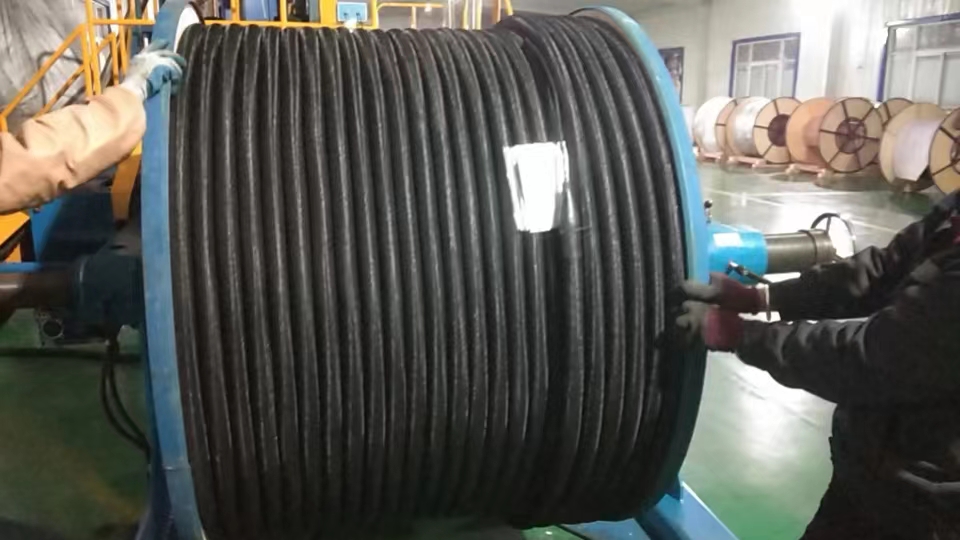
Engineers often don't think about how useful wire diameter is as a lever. The MMO/Ti wire sizes that Tianyi has are 1.0 mm, 1.5 mm, and 3.0 mm. DN-15 models with φ1.5 mm wire can send 328 mA/m, and DN-30 models with φ3.0 mm wire can send 656 mA/m. In areas with a lot of ground resistance, where the driving voltage needs to make up for it, the bigger wire diameter provides the steady current density needed to fully polarize tank bottoms and buried pipes. The contact resistance between the MMO/Ti wire and the internal cable is kept at 0.0009 Ω. This keeps the system working well for many years.
These requirements are not extras; they directly show if a cathodic protection system meets the safety requirements set out in GB 50393 and other foreign standards that are similar. Before you buy, you have to make sure that the wire diameter and output current match the data from your soil survey.
System Compatibility and Cable Selection
An anode that works alone is only as reliable as the connection between its cables. The linear anodes made by Tianyi have a 1x10 mm² internal conductor sheathed in XLPE/PVC, PVDF/HMWPE, or EPR/CSPE. This conductor connects reliably to most ICCP transformer-rectifier units. The outer diameter of 38–40 mm fits normal trench sizes and different configurations of coke breeze backfill. When engineers are updating old systems, they should make sure that the output ratings of the new anodes match those of the old rectifiers to avoid failures caused by incompatibility.
Installation and Maintenance Best Practices for Flexible Linear Anodes
Whether a system lasts the 40 years it is supposed to or breaks down within 10 years depends on how well the groundbed is built. The steps for installing MMO flexible linear anodes for cathodic protection are similar to the steps for laying cables:
- Dig a hole parallel to the building you want to protect. The depth should depend on where the frost lines are and how the soil is layered.
- Spread the first layer of calcined petroleum coke breeze (with a carbon content of at least 99.5%) and put the flexible anode in the middle of it.
- Put the rest of the coke backfill over the anode and pack it down with native soil. Then finish the trench backfill.
- Before starting, make sure the joint seals are good and that the electricity is still working.
In high-resistance soil, you have to use coke breeze backfill. It lowers the groundbed resistance and balances the electrochemical environment at the anode surface. For polymer-type flexible anodes, it can boost current output from 52 mA/m to 82 mA/m, which is a real improvement that directly extends the life of the system. Engineers can find current reduction before it becomes a compliance problem by doing annual potential distribution surveys and periodic close-interval potential profiling (CIPP) after the system is up and running.
Comparing Flexible Linear Anodes with Alternative Solutions
Traditional ribbon anodes and rigid deep-well anodes are still commonly used to protect pipelines, but they can fail in harsh or geometrically complex environments. Rigid anodes need to be placed precisely and can't be adjusted to fit uneven tank bottoms or crowded pipe corridors. Even though ribbon anodes are spread out, they don't corrode evenly and aren't strong enough for long-term underground work.
Flexible linear anodes for cathodic protection, especially MMO/Ti wire types, combine the benefits of ribbon systems for distributing current with the long life and stable dimensions of MMO-coated titanium. Their 500 mm bending radius lets them go around existing roots, utility lines that are too crowded, and retrofit situations where they can't dig very deep. In older tank farms where coating wear has increased the need for protection current, flexible anodes placed under the tank bottom plates provide even cathodic polarization that distributed point anodes can't match.
When polymer-type flexible anodes are chosen, the conductive polymer matrix slowly releases a protective current through its outer surface. This keeps the electric field constant even in soils with different levels of wetness. This "drip" release mechanism stops the buildup of current that breaks down regular impressed current systems in soil patterns that are not all the same.
Procurement Considerations: How to Choose the Right Supplier and Product?
The performance of engineering must lead to trust in buying. When comparing suppliers, the list should include more than just unit price. It should also include design help, documentation, and service after the installation.
A trustworthy supplier of flexible linear anodes for cathodic protection should be able to show material test certificates that prove the purity of the titanium and the MMO coating loading (which can be checked using XRF analysis), as well as ISO 9001 certification for the whole production process, written design life guaranties of at least 40 years, and either in-stock availability or stated lead times. For example, Tianyi ships within 15–20 days of payment confirmation, and rolls come in 500 m and 1,000 m lengths.
All of these things lower the technical and financial risk that procurement teams face when they choose buried infrastructure that can't be inspected. Price-only comparisons don't show the real value of suppliers who offer free samples, help with system commissioning, and documentation on compatibility for rectifier integration.
Conclusion
Choosing the right flexible linear anodes for cathodic protection system for tough soil conditions is a technical choice that will have long-lasting effects on business. The estimated service life of a system is affected by its material purity, the quality of its MMO coating, the width of its wires, how well they work with other cables, and its backfill strategy. Procurement experts can start with Tianyi's product line, which is approved to ISO 9001, made to ASTM standards, and comes with free samples. The most effective way to get a 40-year groundbed with little work is to match the right specification to your soil survey and security present needs.
FAQ
What is the typical service life of a flexible linear anode in high-resistivity soil?
MMO/Ti flexible linear anodes for cathodic protection can work continuously for up to 40 years if they are properly backed up with coke flow and their current density is managed correctly. It is very important to match the wire diameter to the output you need because operating above the rated current density speeds up the wear on the MMO coating.
Can flexible linear anodes be cut to length on-site?
Yes, Tianyi's linear anodes come on 500 m or 1,000 m reels and can be cut to length, which makes installation easier in tank farms with odd shapes or project plans that are spread out over time.
Is coke breeze backfill mandatory?
Coke breeze backfill is strongly suggested for soils with a high resistance. When I replace an old anode, how do I make sure the new one will work with my system? It lowers the groundbed resistance and increases the current flow from 52 mA/m to 82 mA/m for polymer types. It also modifies the anodic environment to lower coating wear.
How do I confirm system compatibility when replacing an existing anode?
Ask the seller for a cable specification sheet and make sure that the size of the internal wire and the material used for the sheathing match the output and trench configuration of the rectifier you already have. If you ask, Tianyi will give you full documentation on compatibility.
Are free samples available before committing to a full order?
Yes, Tianyi does give away free samples of its flexible linear anodes so that engineering teams can check the materials themselves before finalizing the specifications or putting in bids.
Partner With Tianyi for Proven Flexible Linear Anode Solutions
Tianyi offers manufacturing that is ISO 9001-certified, guaranties for design life of 40 years or more, and quick expert help for all of their projects. Our team can help you with flexible linear anodes for cathodic protection for a new tank farm or a supply for an existing one. We offer customized specs, quick lead times, and full commissioning advice. You can email our tech team at info@di-nol.comto get a free sample or project quote right away.
References
1.NACE International. Corrosion Costs and Preventive Strategies in the United States. NACE International, 2002.
2.Peabody, A. W. Control of Pipeline Corrosion. 2nd ed., NACE International, 2001.
3.Baeckmann, W. von, Schwenk, W., and Prinz, W. Handbook of Cathodic Corrosion Protection. 3rd ed., Gulf Professional Publishing, 1997.
4.ASTM International. ASTM G1: Standard Practice for Preparing, Cleaning, and Evaluating Corrosion Test Specimens. ASTM International, 2011.
5.NACE International. NACE TM0108: Evaluation of Internal Plastic Coatings for Corrosion Control of Tubular Goods in an Aqueous Flowing Environment. NACE International, 2008.
6.Gummow, R. A. "Cathodic Protection Considerations for Pipelines with AC Mitigation Facilities." Materials Performance, NACE International, 1999.