




What are MMO/Ti linear anodes used for in cathodic protection?
Corrosion costs the global economy an estimated $2.5 trillion annually, according to NACE International. For pipeline operators, tank farm managers, and infrastructure engineers, that number is not abstract — it shows up as leaks, shutdowns, and costly emergency repairs. Impressed current cathodic protection (ICCP) systems exist precisely to intercept that damage before it starts, and the anode at the heart of each system determines how well the entire circuit performs. This guide breaks down what MMO/Ti linear anode for cathodic protection systems are, where they work best, how to install them correctly, and what to look for when sourcing them — so procurement teams and systems integrators can make decisions grounded in real engineering data rather than supplier marketing copy.
Understanding MMO/Ti Linear Anodes and Their Role in Cathodic Protection
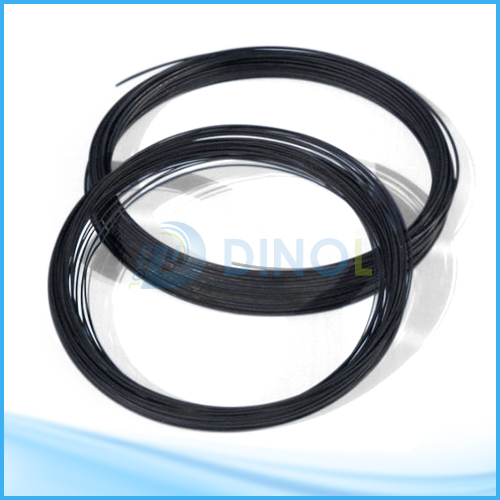
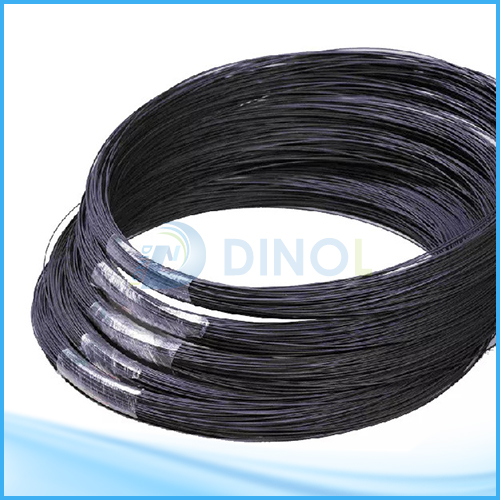
An MMO/Ti linear anode for cathodic protection is a Grade 1 or Grade 2 pure titanium wire (Ti content ≥99.6%) that has been coated with a catalytic Mixed Metal Oxide layer (usually iridium, ruthenium, and tantalum oxides). This is done through a controlled thermal decomposition process that includes sandblasting, acid pickling, and several layers of coating. Next, the finished wire, which comes in sizes of 1.0 mm, 1.5 mm, 2.0 mm, and 3.0 mm, is put into a carbonaceous backfill (with a carbon content of at least 99.5%) and wrapped in a porous fabric sheath to make a continuous cable-like structure with an outer diameter of 38–40 mm.
How the Electrochemistry Works
A rectifier in an ICCP circuit sends electricity from the positive terminal to the anode and then into the electrolyte (soil or water) around it. That current hits the protected metal structure at the negative end, changing its electrochemical potential into the immune zone set by NACE SP0169, which is either a polarization shift of 100 mV or a polarization shift of -850 mV. The MMO coating is very good at speeding up reactions that release oxygen and chlorine, and it only uses up 1–6 mg/A·yr. Graphite anodes usually use up about 1,000 mg/A·yr, but zinc sacrificial anodes run out of zinc in much shorter cycles. The only difference between the MMO/Ti design is that it has a different level of durability.
Key Performance Advantages
There are measured changes in performance that make this type of anode better than older materials. When a systems engineer sizes up an ICCP groundbed, these are the main factors that matter the most:
- Output current: DN-15 (φ1.5 mm wire) delivers 328 mA/m; DN-30 (φ3.0 mm wire) doubles that at 656 mA/m — both measured under standard soil conditions with coke backfill.
- Service life: ≥40 years under normal operating current density, confirmed by accelerated life testing per NACE TM0108.
- Contact resistance: ≤0.0009 Ω between the MMO/Ti wire and the header cable, meaning negligible voltage drop at junctions.
- Weight: 1.5 kg/m, supplied on 500 m or 1,000 m reels for convenient field deployment.
All of these benefits lower the total cost of installation, lower the capacity needs of the transformer-rectifier, and reduce the amount of stray current interference with nearby buried buildings. These are all problems that procurement managers at small ICCP installers face on almost every project. That is why the practical advantages of an MMO/Ti linear anode for cathodic protection show up not only in material performance but also in reduced rectifier sizing, simpler installation logistics, and fewer interference mitigation measures on congested sites.
Applications and Installation of MMO/Ti Linear Anodes in Industrial Settings
This technology is different from other point-source anodes because it has a straight shape. A single deep well anode makes a hemispherical current field, and a linear anode sunk parallel to a pipeline makes a protected potential that is almost the same all the way along the structure. This difference is what almost all application decisions are based on.
Where Linear MMO Anodes Are Deployed
Corrosion experts choose linear titanium MMO anodes for a lot of different types of structures. The most valuable deployments are the ones listed below:
- Aging pipelines with coating holidays: Deteriorated coatings concentrate current demand at defect points. A linear anode distributes current evenly, preventing overprotection at intact areas and under-protection at holidays.
- Aboveground storage tank (AST) bottoms: Installed in a grid or spiral pattern beneath the tank floor, the anode protects the steel plate in spaces often less than 300 mm high — geometry that makes conventional groundbeds impossible.
- Congested urban utility corridors: Where multiple metallic structures run in close proximity, a linear anode targets current precisely, reducing interference with neighboring pipelines or cables.
- High-resistivity soils: The pre-packaged conductive coke backfill maintains a low-resistance path to earth even in sandy, rocky, or frozen ground, sustaining protective potentials without requiring elevated supply voltages.
- Offshore platform jackets and complex steel structures: MMO flexible anodes with chlorine-evolution-optimized coatings protect submerged steel where geometry makes retrofit difficult.
Installation Steps
The installation process is similar to putting cables directly in the ground. Make a trench for the anode that runs parallel to the protected structure. Spread out half of the coke breeze bed and place the linear anode on it. Cover it with the rest of the backfill, pack it down with native soil, and finish the fill. Every 100–300 m, there is a power feed point to keep the energy steady over long runs. For field splicing, resin-filled T-joints or inline kits are used to keep the electrical integrity and the sealing to the environment. The type of wire (XLPE/PVC, PVDF/HMWPE, or EPR/CSPE) is chosen based on the chemistry of the soil and the working temperature (up to -80°C). Following this sequence is what ensures an MMO/Ti linear anode for cathodic protection performs as designed, since coke breeze coverage, feed point spacing, and splice sealing directly control current distribution and long-term reliability.
Choosing the Right MMO/Ti Linear Anode for Your Cathodic Protection System
Three technical factors are used to choose the right specification: the needed output current per meter, the expected service life, and the electrochemical environment, which includes the soil's resistivity, chloride content, and pH. The main thing that changes is the diameter of the wire. A diameter of φ1.5 mm works best for underground pipelines and tank bottoms, while a diameter of φ3.0 mm can handle higher current demands or longer anode strings with fewer feed points.
Besides the technical details, a project's ability to stay on plan depends on how reliable the suppliers are. Any potential manufacturer should be asked the following questions: Do they give results on XRF film loading? Do they do NACE TM0108 accelerated life tests and bending adhesion tests? Can they help you package OEM goods under your name so you can sell them locally? And most importantly, can they handle repeat orders for small amounts (less than 1,000 m) without charging extra, since installers in new markets tend to keep low stock and restock often?
For buried products, batch consistency can't be messed with. Even a difference of a few micrometers in coating thickness can change the rate of use and expected service life. This is why per-batch QC documentation is just as important as the test results from the first sample. That is especially true for an MMO/Ti linear anode for cathodic protection, where coating thickness variation across production runs directly affects consumption rate, current output, and the service life promised in the design specification.
Trusted Suppliers and Market Insights on MMO/Ti Linear Anodes
Based in the Baoji High-Tech Development Zone, Shaanxi Tianyi New Material Titanium Anode Technology Co., Ltd. makes MMO/Ti linear anodes that are approved to ISO 9001 standards and made to ASTM standards. At each step of the production process—sandblasting, acid cleaning, and thermal breakdown coating—ultrasonic flaw detection checks to make sure there are no problems. Titanium substrates are 99.6% pure, and the smooth, flaw-free surface finish is checked before they are put together.
Tianyi offers both the TianyiE brand and full OEM/ODM arrangements for linear anodes. Integrators who sell them in local markets can choose between neutral or customer-branded packaging. Orders up to 10,000 m can be shipped in standard export packaging within 15–20 days. For larger amounts, lead times can be negotiated. You can pay with T/T, L/C, PayPal, MoneyGram, or Western Union. Before an outline agreement is signed, free samples can be used to test their electrochemical quality. At the moment, the business sends goods to South Africa, Brazil, Argentina, Europe, the Middle East, Southeast Asia, and North America.
Conclusion
One thing that an MMO/Ti linear anode can do that point-source anodes can't is distribute current evenly and continuously along the whole length of a buried or submerged structure. With a consumption rate of 1–6 mg/A·yr, a service life of more than 40 years, and output options ranging from 328 mA/m to 656 mA/m based on wire thickness, it is the best choice for pipes, storage tanks, and complex infrastructure that needs to work in harsh conditions. Cost, lead time, and batch reliability are all things that procurement teams have to think about. The supplier's quality control and OEM flexibility are just as important as the product specification itself. That combination of continuous current distribution, low consumption rate, and customizable output is what makes an MMO/Ti linear anode for cathodic protection the preferred solution for long pipelines, tank bottoms, and congested infrastructure where point-source anodes cannot achieve uniform protection.
FAQ
How long does an MMO/Ti linear anode actually last in buried service?
Under normal conditions, the projected service life is 40 years, which was proven by accelerated life tests according to NACE TM0108. The actual lifespan depends on the current density that is applied; keeping the anode's output below its rated level increases its lifespan by the same amount.
Can this anode be used in seawater as well as soil?
Yes. Instead of the oxygen-evolution chemistry that is used in soil, the MMO coating formula has been changed to work with chlorine-evolution processes in salty settings. If you're buying something for naval or offshore use, make sure your provider confirms the coating standard (Ir/Ru/Ta ratios).
What happens if the coke breeze backfill is omitted during installation?
If there isn't any carbonaceous backfill, the titanium base can form an oxide film on top of the wire that isn't conductive. This makes grounding resistance much higher and current flow lower. Backfilling also lowers the resistance of the anode bed as a whole, which lowers the rectifier load directly.
How is voltage attenuation managed on long anode runs?
Long strings have a consistent potential because they have multiple power feed points and copper core conductors inside them, usually every 100 to 300 m. The normal 1x10 mm² size of the header wire is chosen to have the least amount of longitudinal resistance. It is a common tool for meeting the NACE SP0169 conditions for buried metallic structures, which say that the polarized potential must be -850 mV or the polarization change must be 100 mV.
Does this product meet NACE SP0169 compliance requirements?
Yes. It is a standard tool for achieving the −850 mV polarized potential or 100 mV polarization shift criteria specified in NACE SP0169 for buried metallic structures.
Get Your Custom MMO/Ti Linear Anode Quote from Tianyi
The engineers at Tianyi are ready to help you choose the best MMO/Ti linear anode for cathodic protection provider for your next project. We can produce DN-15 or DN-30 wire, OEM white-label packing, or a cable type and current output that are completely unique to your needs. We can handle both small repeat orders and yearly framework agreements with consistent group QC documentation. Get your free sample or graded price sheet right now. To begin the process of becoming qualified, please email us at info@di-nol.com.
References
1. \NACE International. Corrosion Costs and Preventive Strategies in the United States. NACE International, 2002.
2. Gummow, R.A. "Cathodic Protection: Past, Present and Future." Materials Performance, NACE International, 2010.
3. Baeckmann, W. von, Schwenk, W., and Prinz, W. Handbook of Cathodic Corrosion Protection. Gulf Professional Publishing, 1997.
4. NACE International. NACE SP0169: Control of External Corrosion on Underground or Submerged Metallic Piping Systems. NACE International, 2013.
5. Lide, D.R. (Ed.). CRC Handbook of Chemistry and Physics, 90th Edition. CRC Press, 2009.
6. Cotton, J.B. "Platinum Group Metal Oxide Coatings on Titanium: Electrochemical Behavior and Cathodic Protection Applications." Platinum Metals Review, Johnson Matthey, 1990.