




How Do You Install a Titanium Conductor Strap for Cathodic Protection?
Installing a titanium conductor strap for cathodic protection requires careful surface preparation, precise positioning, and a verified electrical connection between the MMO anode and the power supply. Start by cleaning the contact surface, then secure the commercially pure titanium (Gr1/Gr2) strip using welding, bolting, or clamping based on site conditions. Confirm IP68-rated sealing at all junctions before backfilling or immersion. Each step directly affects current distribution across the protected structure, so skipping any verification stage risks system failure in buried or submerged environments where access for repair is nearly impossible.
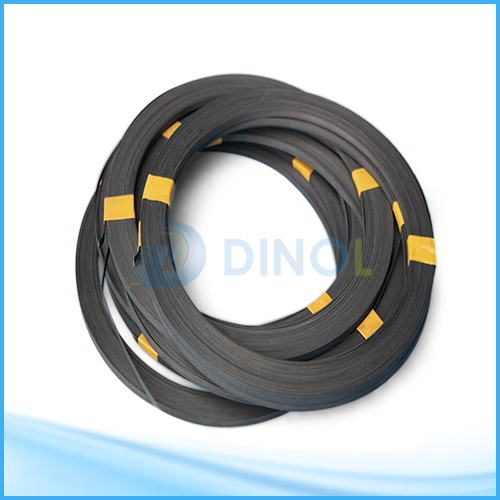
Understanding Titanium Conductor Straps in Cathodic Protection
What Is a Titanium Conductor Strap?
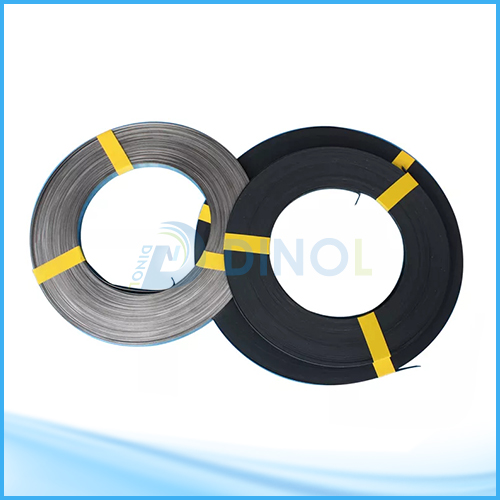
Titanium conductor straps are strips of commercially pure titanium (Gr1/Gr2) that are not covered and move current between MMO anodes, busbars, and rectifiers. The strap is not an electrical part of the process; the anode is. Its only job is to reliably carry electricity. Standard sizes are up to 6,000 mm long, 10 to 50 mm wide, and 1 to 5 mm thick. These sheets can be changed to fit the project's needs. They can be made into flat strips, bands, or sheets with any shape you want.
Why Titanium Over Other Materials?
Copper does rust and stainless steel can get pits in salty water, chloride-rich soil, or alkaline concrete. Titanium, on the other hand, does not rust in these places. Its conductivity stays the same over a built-in life of 20 to 50 years because it doesn't have a polarization layer. It has a tensile strength of more than 240 MPa (ASTM B265 Gr1), which means it doesn't break even when it's buried or the tide comes in and out. For these reasons, a titanium conductor strap for cathodic protection is the best material for conductors on high platforms, the bottoms of storage tanks, bridge decks, and underground pipes where it would be hard or too expensive to replace them.
Typical Application Environments
Many different ICCP situations can benefit from titanium conductor straps. When used in rough ocean water, the strap always works around barge legs and sheet piles. It lets even potential spread through soils with a lot of resistance, which is helpful for protecting underground pipes in places where normal groundbeds don't work well. It sends electricity to steel rebar that has been harmed by chlorides used to melt ice in reinforced concrete buildings like parking lots and bridge decks. Each environment needs something that won't rust and will stay the same size over many years, and titanium is the only metal that can reliably meet those needs.
Preparing for Installation: Technical Specifications and Pre-Installation Checks
Reviewing Technical Specifications
As part of their purchasing and planning process, the straps should be checked for compliance with ASTM B265, EN 12954, or NACE SP0169 before they are sent to the job site. They should also look at the material certificate (Mill Test Report) and size limits. Make sure the minimum tension strength is met and that the shape of the strap (straight length, coil, or pre-formed bracket) matches the anode module's design. Now, you should ask the seller for a Certificate of Conformance (CoC) to make sure the product meets the requirements for approval by the design school and for quality checks within the company.
Pre-Installation Quality Checks
When the package gets there, look at each titanium conductor strap for cathodic protection to see if it has any surface scratches, dents, or dirt that got on it during shipping. Titanium Gr1/Gr2 straps should be a matte silver color and be smooth. If they have any holes or spots, it could mean that rust has harm them. Calculated calipers should be used to compare the sample's width and thickness to the given sizes. The batch number and the COC should match up. The fitting should be stopped and the seller should be told before it can happen if there is a difference between the strap and the paperwork. Next time someone makes a guarantee claim, this step of proof will protect the worker.
Tools and Safety Requirements
With the right tools, you can keep the titanium surface from getting scratched and make sure the links are tight. The following things should be on-site before the installation begins:
- Titanium-compatible TIG welder with argon shielding gas, calibrated for Gr1/Gr2 substrate
- Torque wrench set to manufacturer-specified bolt torque values (typically 20–40 Nm for M8–M10 stainless fasteners)
- Electrical resistance meter (micro-ohmmeter) for post-connection testing
- IP68-rated waterproof sealant or heat-shrink joint kit for all cable terminations
- PPE: arc flash gear, insulated gloves, and eye protection per OSHA 29 CFR 1910.269
Step-by-Step Installation Guide for Titanium Conductor Straps
Site Preparation and Compatibility Check
How to clean the bonded surface on the anode module or busbar? Use a stainless steel brush made just for titanium work. When carbon steel and titanium tools are mixed together, iron is added, which speeds up rusting where the two metals touch. Make sure that the anode module's connections have the same shape as the strap width and bolt pattern shown on the design drawing. Make sure that the strap routing doesn't cross reinforcement bars before you turn on the ICCP system. This could lead to electrical shorts in embedded concrete applications.
Positioning, Securing, and Sealing
Place the strap in the direction you want the current to go. Welding joints that go all the way through and don't have any holes in them? Use GTAW (TIG) with ER Ti-1 filler wire and argon back-purge. Don't let two metals rust at the same time. For fixed links, use grade 316L stainless screws with titanium washers. After physically connecting each wire to the strap, cover each one with IP68-rated mastic or heat-shrink tubing. Underwater or underground, this seal is the most important part. If water gets into the junction, it will heat up slowly and break the link within a few months.
Final Electrical Inspection and Sign-Off
Before backfilling or washing, resistance should be checked from one end of the rectifier to the other and to each anode. Each link's joint resistance should be less than 0.01%. If the value is above this point, either the bolt isn't torqued enough or the weld doesn't go deep enough. Look to see if the weld and sealant coverage on the titanium conductor strap for cathodic protection have any cracks. Write down all the readings in an installation log and add them to the project's "as-built" paperwork. GB/T 50934 and NACE SP0169 both say that buried CP systems need to have records of inspections that can be found.
Titanium vs Other Conductor Straps: Making an Informed Procurement Decision
Performance Comparison Across Materials
Even though copper has a lower resistivity, it rusts quickly in chloride environments if it is not protected. This makes it hard to keep up in work at sea or underground. In general, stainless steel (316L) doesn't rust. However, it can rust in cracks and crevices where there are layers or low oxygen levels, like in the bottoms of tanks. Even though aluminum is very light, over time it can get rusty layers that make it harder to touch. It doesn't rust in salt water or soil, it doesn't form a big polarization layer, and its oxide film fixes itself. Titanium Gr1/Gr2 doesn't fail in any of those three ways. The starting cost of titanium is higher, but for projects that will last 20 years or more, the total cost of ownership is cheaper.
Evaluating Suppliers and Procurement Risk
Your design institute should be able to get full mill tracking, measurement inspection records, and CoC papers from a good titanium conductor strap source. These papers should include references to the EN 12954, NACE SP0176, or GB/T 50934 standards. For big pipeline or offshore projects, make sure the seller can handle batch deliveries over 6 to 18 months. A big order sitting in a warehouse is too risky for projects that need a lot of money. Check with the seller to see if their technical team can help you get the design school to approve the material. This function cuts the time it takes to check out a seller by several weeks.
ROI and Long-Term Cost Considerations
As shown in NACE's published case studies on pipeline protection, switching from high-silicon cast iron groundbeds to an ICCP system with titanium conductive parts can cut the number of active maintenance visits over the life of an asset from every 5–7 years to every 15–20 years. The strap doesn't look like it's been used much because it doesn't work as an anode. It's clear that titanium systems are better value over their entire lifetime when you consider that underground systems don't have to be dug up and put back in.
Optimizing Performance and Longevity Post-Installation
Scheduled Monitoring and Inspection
A close-interval potential study (CIPS) should be done on buried pipelines once a year, and marine structures should have an underwater check every other year. As you read the structure-to-electrolyte potentials, make sure they match the standard of –850 mV (CSE) set by NACE SP0169. Either the connection at the strap junction is breaking down or the anode is running out of power if the values move toward less negative ones. This damage gets worse over time if you don't cover a building for a long time. If you catch it early, you can stop it.
Troubleshooting Common Post-Installation Issues
High circuit resistance and uneven current flow are the two issues that come up most often in field reports. Most of the time, a lot of resistance means that a bolt is loose or a barrier has broken, letting water into the joint. Put the screws back in place and seal the joint again with an approved waterproof glue. The current flow isn't always even when a strap is pointed too far away from one anode section. The flow of current changes when a middle tap point is added to the strap, but the anode stays the same.
Retrofit and Life Extension Strategies
Titanium compression connectors can be used to connect titanium straps to existing anode circuits with out having to dig up the whole system. This can be done when an old CP system needs to be fixed. Owners of assets can make systems last 10 to 15 years longer with this way for a lot less money than it would cost to buy new ones. Keep the as-built plans up to date and write down where the splice is so that future repair teams can find it.
Conclusion
Making sure the quality of the material is checked before installing a titanium conductor strap for cathodic protection in an ICCP system is important. All connections must be made correctly, either mechanically or by welding with IP68 sealing at every junction. Finally, the system must be electrically tested before it is buried or submerged. Pure Gr1/Gr2 titanium strips that are sold in stores have stable conductivity, don't form polarization layers, and don't rust. They protect structures for longer than the structures they protect. These small details will have a direct effect on how long the CP system lasts (30 years vs. 3 years), whether it's for an offshore platform, the bottom of a holding tank, or a gas pipeline that runs across the country.
FAQ
What material grade is used in titanium conductor straps?
Titanium conductor straps are made from pure titanium Gr1 or Gr2 that is sold in stores and meets ASTM B265. Gr1 is the most bendable and doesn't rust, but Gr2 has a slightly higher tensile strength. You can join both types together, and you can put them in water or dirt for a long time.
Can titanium conductor straps be installed in concrete-embedded ICCP systems?
Yes. Along with MMO ribbon anodes, you can cut the strap into any shape you want. Titanium doesn't combine with the anode or the concrete, so it stays in shape and stays electrically stable for as long as the system is supposed to last. It also doesn't make any trash that breaks down the concrete around it.
What sealing standard should the cable-to-strap junction meet?
When ICCP systems are buried or submerged, all of their parts should have an IP68 seal on them. This lets them stay submerged for more than one meter at a time. Heat-shrink joint kits with polyethylene covers that are lined with glue work well for this most of the time.
How do I verify installation quality before backfilling?
Use a micro-ohmmeter that has been checked to make sure it works to find the point-to-point resistance across each strap joint. If the number is less than 0.01, it means the touch is fine. To follow NACE SP0169 and the project's rules, you need to write down all the numbers in the quality document.
What dimensions are available for custom projects?
It comes in lengths of up to 6,000 mm, widths of 10 to 50 mm, and thicknesses of 1 to 5 mm. Any size, pre-formed frames, or coil configurations are possible. When you place your order, you'll be told about the usual wait time.
Get a Certified Titanium Conductor Strap from Tianyi
Grade 1 and Grade 2 titanium wire straps that meet ASTM B265 standards are made by Tianyi for ICCP systems. They have all the paperwork you need to get a certificate of compliance, which includes EN 12954, NACE SP0176, and GB/T 50934 compliance packages. We sell titanium conductor straps that you can trust, and our batch supply plans work with long-term pipeline and ocean projects. Get in touch with our expert team to get a dimensioned selection plan for your next CP project. Email us at info@di-nol.comto get a price.
References
1.NACE International. NACE SP0169: Control of External Corrosion on Underground or Submerged Metallic Piping Systems.2013.
2.ISO. ISO 15589-1: Petroleum and Natural Gas Industries — Cathodic Protection of Pipeline Systems — Part 1: On-Land Pipelines.2015.
3.European Committee for Standardization. EN 12954: Cathodic Protection of Buried or Immersed Metallic Structures — General Principles and Application for Pipelines.2019.
4.ASTM International. ASTM B265: Standard Specification for Titanium and Titanium Alloy Strip, Sheet, and Plate.2020.
5.Brevoort, G. H., & Roberge, P. R. Corrosion Engineering: Principles and Practice.McGraw-Hill, 2008.
6.Goidanich, S., Lazzari, L., & Ormellese, M. "CP Monitoring in Reinforced Concrete Structures." Corrosion Science,2010.