




How Can Buyers Compare Titanium Electrolyzers for Electro-Chlorination?
When procurement managers evaluate a titanium electrolyzer for electro-chlorination, the comparison goes well beyond price. You need to weigh chlorine output, electrode coating durability, certification status, total operating cost, and after-sales support—all against your specific application. Whether you are sourcing equipment for a municipal water plant, a marine ballast water system, or a food-processing CIP circuit, understanding the right evaluation framework saves budget and prevents costly downtime. This guide walks through every layer of that decision with practical benchmarks and real product data.
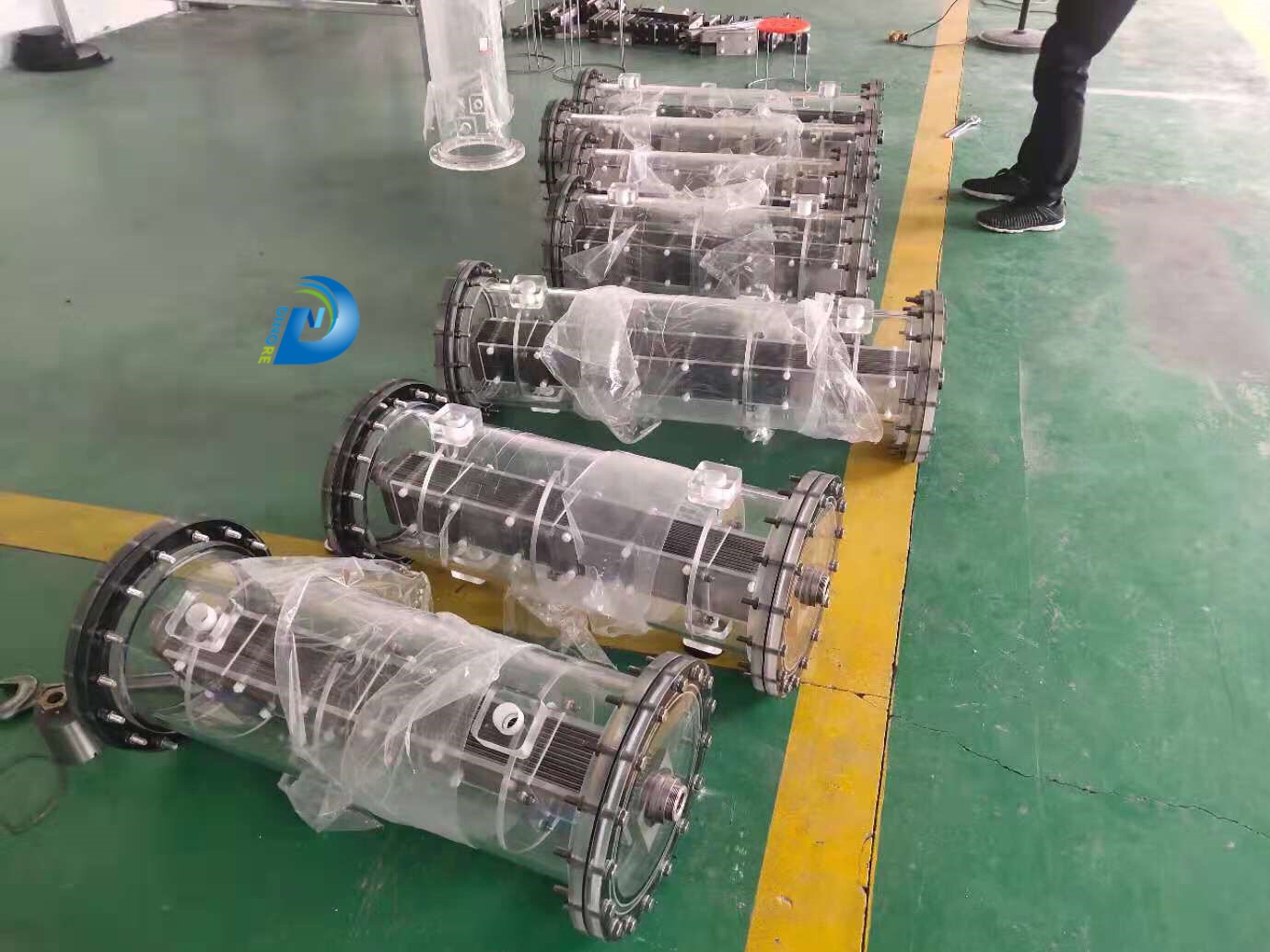
Understanding Titanium Electrolyzers in Electro-Chlorination
How the Electrochemical Reaction Works
Two processes at the electrodes run at the same time inside the electrolytic cell with direct current. When 2Cl⁻ → 2e⁻ happens at the anode, it turns into Cl₂. When 2H⁺ + 2e⁻ turns into H₂, it changes forms at the cathode. From a 2–5% saline feed, a sodium hypochlorite solution is made right there on the spot. In general, NaCl + H₂O → NaClO + H₂↑ happens. Like other chlorine chemicals, hypochlorite ion can break down things. Liquid chlorine doesn't have to be stored or moved, which is great for safety and following the rules at most places.
Why Titanium Anodes Outperform Other Materials?
When you put a mixed metal oxide of ruthenium and iridium (Ru-Ir) on a titanium base, chlorine production stays stable at low overpotential. Unlike graphite, it doesn't separate into the product stream. It doesn't get pitted by salt after thousands of hours of use like regular stainless steel does. The MMO layer also keeps the cell charge low over time. This makes it simple to figure out how much power to use for a titanium electrolyzer for electro-chlorination.
Key Technical Specifications to Review
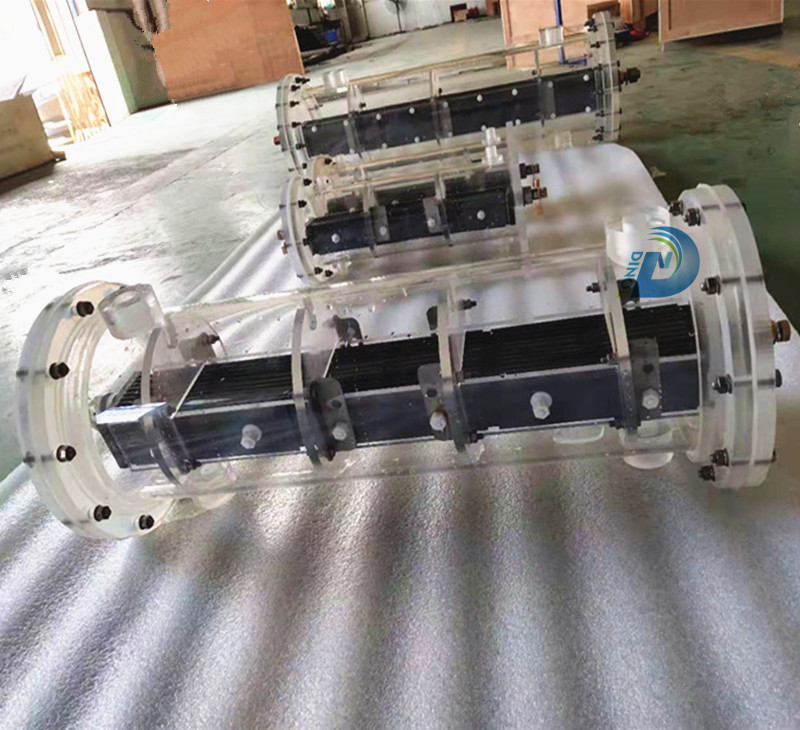
WL50B to WL2000B are the nine models in the Tianyi TY-WL series. They produce chlorine at rates ranging from 50 g/h to 2,000 g/h. The cell pressure stays at or below 0.2 MPa in all of them. It can work with voltages between 5 V and 40 V, and it can handle currents between 60 A (WL50B) and 460 A (WL1500B/WL2000B). The shells are between 100 mm and 270 mm wide, and the cells are between 310 mm and 1,200 mm long. The cells are now small enough to fit on ships but big enough to be used in plants in big cities.
Key Criteria for Comparing Titanium Electrolyzers
Chlorine Output and Electrolysis Efficiency
Based on your highest demand, find the model that can make the most chlorine. A WL300B at 300 g/h might be enough to clean a medium-sized aquaculture system. You might need a WL1500B or WL2000B if you need to remove salt from seawater first. Don't settle for round numbers; instead, ask providers for exact information on how much chlorine is made per kilowatt-hour.
Total Cost of Ownership
One line shows the first price of the item. In the real world, economics are based on ongoing costs like power, salt, cleaning the electrode with 15–18% hydrochloric acid to get rid of scale, and finally covering it again. A frame in the Tianyi WL series cuts down on stray current during electrolysis. This directly cuts down on energy waste. Electrode plates that are briefly exposed to air during maintenance can still work normally afterward. This means that there is less unplanned downtime and less need for labor.
Safety, Certifications, and Control Integration
You need a ship class license from the China Classification Society (CCS) or a similar group to use it on the water. For municipal projects, it is common for tools used with drinking water to need to be CE-licensed and meet local standards. Check to see if the control cabinet being sold is a standard design that has been written down. It costs more to keep cabinets that aren't standard, so the saves at first aren't worth it.
Titanium Electrolyzer vs. Alternative Electrode Materials
When you pick an electrode material, there are real costs and benefits. The three most common ways to buy water treatment are shown below side by side:
- Titanium with MMO coating operates efficiently in saline and low-salt seawater, tolerates low-temperature feeds (inlet water: 5–15 °C), and sustains consistent chlorine output across more than 10,000 operational hours. Its PMMA/PVC cell body resists chemical attack, and recoating services extend service life without full cell replacement.
- Graphite electrodes carry a lower purchase price but erode progressively under anodic current, contaminating the hypochlorite solution and demanding frequent replacements. Total cost over a three-year horizon typically exceeds that of titanium.
- Stainless steel electrodes handle some mild disinfection duties at low current density but are vulnerable to crevice and pitting corrosion in chloride-rich environments. They are unsuitable for seawater electro-chlorination without significant engineering mitigation.
The gap in skills gets bigger when things are tough. Titanium must be able to keep its coating stable and not rust for offshore drilling platforms, oceangoing ships, and food-grade CIP systems to work. Many places that switch from graphite to titanium MMO anodes see that the titanium electrolyzer for electro-chlorination lasts longer, up to years, and that the cell voltage and power draw go down by amounts that can be measured.
How to Select the Best Titanium Electrolyzer for Your Needs?
Match Capacity to Application
Cities with water systems and big factories with cooling loops should look at the WL1000B–WL2000B range. For marine ballast water systems and remote platforms, cells need to be small, able to handle vibrations, and approved by the right ship class. It is important for food and drink CIP circuits to have a stable hypochlorite level with few by-products. For this reason, Ru-Ir covered cells are usually the best choice.
Verify Supplier Credentials and Track Record
Find people in your field and ask them to write project names for you. It is clear that a seller is taking less of a technical and legal risk if they send certified units to shipyards that are part of big military engineering groups or to local utilities that are controlled. This is known as OEM/ODM capability when you can change the cell size, flange specifications, or coating chemistry. It shows that they know a lot about tech that other dealers can't match.
Evaluate Warranty, Recoating, and Remote Support
There should be a good warranty that covers both the cell body and the coating on the electrodes. Coating repair and electrode-plate recoating are part of Tianyi's service system and can be done on-site. People don't have to buy a whole new cell if only the layer that is being used is old this way. Because of remote diagnostics and settings that can be changed, it is less likely that important infrastructure will shut down without being watched.
Installation, Operation, and Support Insights
Installation Best Practices
Join the inlet and outlet fittings together using the threads that come with the model. Models from WL50B to WL2000B have G-type threads that are either inside or outside the case. If you want the maximum output from a titanium electrolyzer for electro-chlorination, keep the feed water between 5 and 15 °C and the salt level between 2 and 5%. In any case, make sure that the pressure inside the cell never goes above 0.2 MPa.
Ongoing Operational Monitoring
Check the voltage of the cells often. If the voltage rises at a certain current, it means that the electrode surface is getting rough. It's time for an acid-cleaning cycle with a 15–18% HCl solution. Because of how the WL series is made, stray current doesn't build up. However, for high-current models (460 A range), you should still check the electrical connections every once in a while.
After-Sales Support Options
Once the machine is up and going, Tianyi can change the settings, fix the first cell, and cover the electrode plates. These options mean that buying teams don't have to spend a lot of money every time electrode performance goes down. Over the life of the gear, this saves a lot of money.
Conclusion
You should use a structured lens to compare electro-chlorination equipment. This lens should include production capacity, coating durability, certification status, control system quality, and the amount of service provided after the sale. It is always better to use titanium MMO-coated cells in tough, high-demand environments than graphite or stainless steel ones. There are clear technical specs, good performance in the field, and a coating service program that makes the titanium electrolyzer for electro-chlorination last much longer than the insurance period. It can handle 50 g/h to 2,000 g/h. To get a cleaning system that works well and doesn't cost a lot of money, all you have to do is find the right model for your needs and the right seller of that model.
FAQ
How long does a titanium electrolyzer coating typically last?
With Ru-Ir MMO coating under normal operating conditions—correct current density, feed-water salinity of 2–5%, and periodic acid cleaning—electrode service life commonly exceeds 10,000 operational hours. Actual life depends on current load history and water chemistry.
Can these electrolyzers operate in seawater?
Yes. The material selection and MMO coating used in the WL series are specifically rated for low-salt seawater environments. The cells also function normally at low feed-water temperatures (down to 5 °C), which suits offshore and polar-route marine applications.
What maintenance does an electrolytic cell require?
Routine maintenance involves periodic acid washing with a 15–18% hydrochloric acid solution to remove scale deposits, inspection of electrical connections, and monitoring of cell voltage trends. No specialized tooling is required for standard cleaning cycles.
What certifications should marine buyers look for?
Marine procurement should confirm CCS certification at minimum. CE marking is standard for European-market equipment. Always request the original certificate documents and verify validity dates before finalizing a purchase order.
Is electrode recoating available after the warranty period?
Tianyi provides electrode-plate recoating and original cell repair services. This allows operators to restore performance without purchasing a replacement unit, which reduces long-term capital expenditure significantly.
Request a Quote from Tianyi — Titanium Electrolyzer for Electro-Chlorination Supplier
The TY-WL line is made by Tianyi in the Baoji High-Tech Development Zone. They keep a close eye on quality from the raw materials to the final tests. We are a verified manufacturer of titanium electrolyzers for electro chlorination, and we provide OEM setups, ship-class certifications, and recoating services for equipment that has already been used. To get a detailed data sheet and price quote right away, send an email to info@di-nol.com with the information about your application and how much power you need.
References
1.Kraft, A. (2008). Electrochemical water disinfection: A short review. Platinum Metals Review, 52(3), 177–185.
2.Bergmann, M. E. H., & Koparal, A. S. (2005). Studies on electrochemical disinfectant production using anodes containing RuO₂. Journal of Applied Electrochemistry, 35(12), 1321–1329.
3.International Maritime Organization. (2004). International Convention for the Control and Management of Ships' Ballast Water and Sediments (BWM Convention). IMO Publishing.
4.Martínez-Huitle, C. A., & Brillas, E. (2008). Electrochemical alternatives for drinking water disinfection. Angewandte Chemie International Edition, 47(11), 1998–2005.
5.World Health Organization. (2017). Guidelines for Drinking-Water Quality(4th ed., incorporating the 1st addendum). WHO Press.
6.Panizza, M., & Cerisola, G. (2009). Direct and mediated anodic oxidation of organic pollutants. Chemical Reviews, 109(12), 6541–6569.