




How Long Can Titanium Anodes Operate in Electrodialysis Systems?
Based on verified electrochemical performance data, a well-maintained titanium anode for electrodialysis can operate continuously for 2 to 10 years, depending on coating type, current density, and electrolyte chemistry. MMO-coated dimensionally stable anodes (DSAs) with iridium-tantalum or ruthenium-iridium formulations typically achieve 3–8 years of stable service life in brackish water desalination and industrial wastewater treatment. Under optimized conditions — current densities of 200–800 A/m² and consistent pH management — some installations have exceeded a decade of uninterrupted operation with minimal voltage drift.
Understanding Titanium Anodes in Electrodialysis Systems
How DSA Electrodes Work in ED Stacks
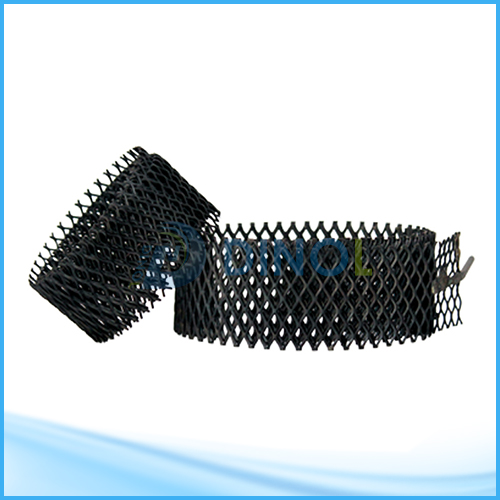
An MMO-coated titanium substrate works as a dimensionally stable anode (DSA) in electrodialysis systems. It starts oxidation reactions that move ions through selective ion-exchange membranes. Unlike graphite or lead-alloy electrodes, which slowly break down when exposed to electrical stress, titanium surfaces keep their shape over time. This dimensional stability keeps the electric field uniform across the ED stack, which is a detail that has a direct effect on the separation efficiency and integrity of the membrane.
Why MMO Coatings Define Performance
The real electrochemical work is done in the Mixed Metal Oxide layer, which is usually an Ir-Ta or Ru-Ir mix that is added by heating it up. The characteristic "cracked mud" shape that can be seen under SEM analysis increases the active surface area, which lowers the overpotential for oxygen or chlorine evolution. XRF analysis shows that a coating thickness of 8 to 12 microns gives both catalytic activity and mechanical longevity. On the other hand, graphite anodes produce carbon particles that clog membranes and need to be replaced every few months, which is an ongoing cost that titanium substrates get rid of.
Factors Affecting the Lifespan of Titanium Anodes
How long an electrode lasts in real life depends on a number of factors that are all related to each other. Engineers and procurement teams can make more accurate maintenance plans and total cost estimates when they know about each one.
Here are the critical parameters that govern electrode longevity:
- Coating thickness and deposition quality: Coatings smaller than 5 microns make breakthrough failure happen faster. Several stages of thermal breakdown create a strong crystalline structure that doesn't delaminate when the polarity changes in EDR systems. Before any anode leaves the production line, it is put through thermal shock testing (quenching from 500°C) and mechanical tape adhesion tests to make sure the bonding is strong.
- Operating current density: Continuous use above the allowed limit, which is usually 800 A/m² for normal MMO grades, speeds up the dissolution of the coating. By keeping the current density within the 200–800 A/m² design window, the catalytic layer stays intact and "hot spots" that cause early failure are avoided.
- Electrolyte composition and pH range: Titanium substrates that are ASTM B265 Grade 1 or Grade 2 can handle a pH range of 1 to 14. However, coatings are put through more oxidative stress when they are exposed to harsh chloride amounts or high-COD industry effluents. In brine settings, Ru-Ir formulations work best, and Ir-Ta layers are more stable in acid recovery and bipolar membrane electrodialysis (EDBM) uses.
- Maintenance discipline: Checking the coating for discoloration on a regular basis, checking the cell voltage for upward drift on a regular basis, and regularly removing calcium or silica deposits all add measurable service life to the anode. A 10–15% rise in cell voltage above baseline is a good early sign that coating activity is decreasing.
These factors don't work by themselves. Even if the coating is of good quality, it will still fail early if the current density is too high. This is why the system design and electrode specifications must match from the start.
Comparing Titanium Anodes with Other Electrode Materials
A lot of the time, procurement teams compare the initial unit cost to the total cost of ownership. Based on that calculation, titanium is always better than older materials.
In constant ED usage, graphite anodes usually need to be replaced every 6 to 18 months. Lead-alloy electrodes pose a chance of pollution that goes against RoHS and REACH rules. This is a big problem for places that make medicines, treat food-grade water, or make electronics. Titanium anode for electrodialysiss that are covered in platinum are very stable, but they are more expensive and should only be used in certain situations.
The best material for this job is MMO-coated titanium anodes, which lower cell voltage by 15–20% compared to other materials, work in all industrial pH ranges, and meet ISO 9001 and NACE TM0108 quality standards. For a Tier 1 water treatment plant that works more than 8,000 hours a year, the savings in replacement and downtime costs over five years usually cover the difference in electrode procurement. Ask sources for accelerated life test (ALT) data that was done in strong sulfuric acid or sodium chloride solution. This is the most accurate way to predict how long something will last under heavy industrial loads.
Procurement Considerations for Titanium Anodes
Technical Specifications That Matter
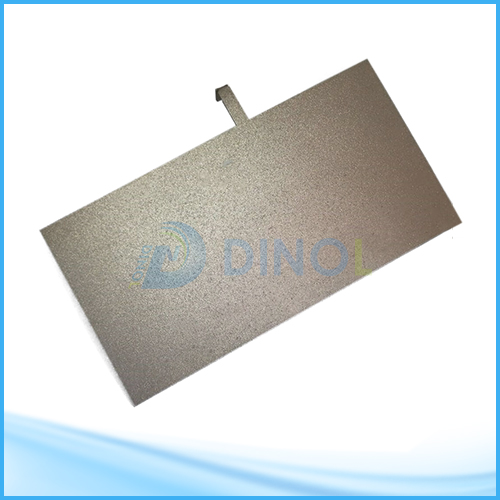
When looking for electrodes for an ED or EDR system, the specification sheet needs to say that the base is pure (>99.6%, ASTM B265), that the coating is between 5 and 15 microns thick, that the rated current density window is clear, and that the electrodes are compatible with the electrolyte. To fit the narrow frame specs of ED stacks, custom measurements and mesh configurations should be possible. Dimensional misfits cause uneven current distribution and shorten membrane life.
Evaluating Supplier Capabilities
A reliable titanium anode for electrodialysis supplier should have quality inspection protocols that are written down. These should include XRF coating verification, SEM morphology confirmation, records of dimensional tolerances, and third-party ALT results. For buying teams working in controlled industries, it is necessary to have certifications like ISO 9001 and environmental compliance paperwork (RoHS/REACH). Lead time predictability and batch consistency are both important. Suppliers with annual framework deals need to be able to show they can make a lot of products, not just prototypes.
At Tianyi, we use cutting-edge research and manufacturing to make MMO-coated titanium anodes that can handle harsh electrodialysis conditions. Our engineering team works directly with clients to make sure that the coating's chemistry, shape, and current density ratings are all right for the system. This is true whether the system is for desalinating brackish water, achieving zero liquid discharge (ZLD), or recovering acids and bases through EDBM.
Maximizing Titanium Anode Lifespan: Best Practices and Future Outlook
Operational Monitoring Practices
The most useful diagnostic tool is one that logs real-time cell voltage. For titanium anode for electrodialysis, this kind of monitoring helps operators detect coating degradation, scaling or current inefficiency early — before it turns into unplanned downtime or costly membrane damage.
A slow rise in voltage at a constant current means that the coating is wearing away. A sudden spike, on the other hand, usually means that there is localized delamination or electrolyte contamination. Visual inspections once a month and electrochemical efficiency checks every three months, along with a written cleaning routine for scale deposits, can add 20 to 30 percent to the service life of an anode compared to when it is not handled.
New coatings that use a mix of iridium and tantalum along with stabilizing oxide dopants are working well in test placements. They should last more than 12 years at normal industrial current levels. Improvements in controlling the thermal decomposition process are also making coatings more regular on a large scale. This is because batch-to-batch variation has made it harder to plan for long-term supplies for big ED installations in the past.
More and more, sustainability is being taken into account when planning the lifetime of an anode. By removing the worn-out oxide layer and reapplying a new MMO coating to the original titanium base, used MMO anodes can be recoated and get back about 80% of their original performance at a cost of about 40–50% of a new anode. Because it can be coated again, titanium is the most cost-effective material for circular electrodes in electrodialysis.
Conclusion
Titanium anode for electrodialysiswith MMO coatings are the most stable, cost-effective, and suitable electrode option for electrodialysis systems that are used in factories. With the right specifications, strict operating tracking, and a quality-checked supply chain, you can get a service life of 3–10 years. Adding a coating makes that value last longer. The scientific and economic case for MMO-coated titanium in ED systems is clear for procurement and engineering teams that care about consistent performance, RoHS compliance, and long-term supply security.
FAQ
How long do titanium anodes typically last in electrodialysis systems?
MMO-coated titanium anode for electrodialysiss usually last between 3 and 8 years in industrial settings with current densities of 200 to 800 A/m² and pH-controlled electrolytes. Installations that are well-optimized and get regular care have been used for more than 10 years.
Can a depleted titanium anode be recoated rather than replaced?
Yes, covering has been shown to work. The old MMO layer is chemically removed, the titanium base is checked to make sure it is still the same size, and a new layer of catalytic oxide is put on by breaking it down thermally. This brings back about 80% of the original performance at a much lower cost than replacing the whole thing.
What operational signs indicate that an anode needs replacement or recoating?
The main sign is a steady rise in cell voltage of 10–15% above the set average when current density stays the same. Some visual signs are changes in color, coating blistering, or substrate exposure that can be seen. Visual inspection alone doesn't give you as much of an early warning as tracking voltage changes over time.
Are titanium anodes compliant with RoHS and REACH requirements?
Titanium anodes that have been covered with MMO don't have any hexavalent chromium, cadmium, or other restricted chemicals in them. Because they are fully compatible with RoHS and REACH compliance frameworks, they can be used in regulated industries like making electronics, medical devices, and water treatment for food.
Partner with Tianyi for Certified Titanium Anode for Electrodialysis Solutions
Tianyi provides precisely designed MMO-coated titanium anode for electrodialysis that are made to last longer and cost less to own. As an experienced titanium anode for electrodialysis manufacturer, we offer custom sizes, coating specifications that have been checked, quality documentation that meets ISO 9001 standards, and quick engineering support for orders that come in large quantities. You can email our technical team at info@di-nol.comto get more information or a custom quote.
References
1.Strathmann, H. Ion-Exchange Membrane Separation Processes. Elsevier, 2004.
2.Trasatti, S. "Electrocatalysis: Understanding the Success of DSA." Electrochimica Acta, 2000.
3.Morimitsu, M. "Properties and Applications of IrO₂-Ta₂O₅/Ti Anodes." Journal of the Surface Finishing Society of Japan, 2012.
4.Xu, T. "Electrodialysis Processes with Bipolar Membranes — A Practical Guide." Journal of Membrane Science, 2005.
5.NACE International. NACE TM0108: Evaluation of Coatings for Anodic Protection Systems, 2008.
6.Panizza, M., and Cerisola, G. "Application of Diamond Electrodes to Electrochemical Processes." Electrochimica Acta, 2005.