




Where to Buy Flexible Linear Anodes for Industrial CP Projects
If you are sourcing flexible linear anodes for cathodic protection in petroleum storage, pipeline networks, or chemical facilities, Tianyi offers ISO9001-certified MMO/Ti and conductive polymer linear anodes manufactured in Baoji, China. With titanium substrate purity of 99.6%, outer diameters of 38–40 mm, and a documented service life exceeding 40 years, these products meet ASTM standards and align with GB 50393 requirements. Free samples are available. Procurement engineers can reach the team directly at info@di-nol.com or browse product specifications at dsa-anodes.com.
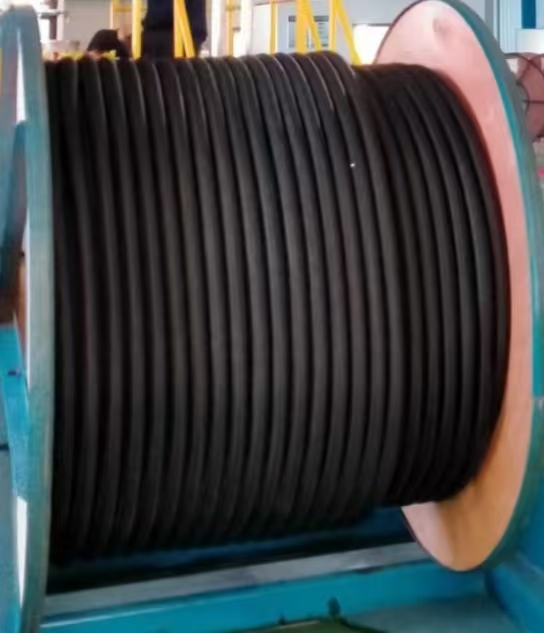
Understanding Flexible Linear Anodes and Their Role in Cathodic Protection
An impressed current cathodic protection device needs a strong extra anode, which is also known as an anode groundbed, to bring protected current from the power source into the electrolyte around it. The current moves toward the structure it's meant to reach, causing cathodic polarization on the metal's surface and stopping electrochemical decay. The auxiliary anode itself goes through oxidation, so the system's longevity is directly related to the materials it is made of and how stable its coating is.
MMO/Ti Linear Anodes
Mixed metal oxide titanium wire anodes have a pure titanium base (Gr1/Gr2, ≥99.6% Ti) that is covered with iridium, ruthenium, and tantalum oxides that are 6–10 μm thick. The MMO coating can handle current densities of up to 2,000 A/m² and temperatures up to 80°C. It uses only milligrams per ampere-year, which is a lot less than graphite alternatives that use pounds. MMO/Ti wires come in diameters of 1 mm, 1.5 mm, and 3 mm, and the outer width of the fully built anode is 38–40 mm.
Conductive Polymer Linear Anodes
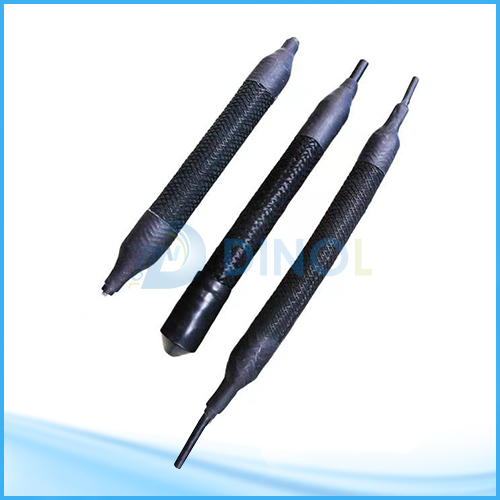
Anodes made of conductive polymer have a modified conductive polymer layer around stranded copper wire that acts as the internal conductor. The copper core keeps the longitudinal resistance low, and the polymer controls the crosswise resistance. This lets the current flow evenly along the length of the anode. Without coke backfill, the soil output current is 52 mA/m, and with coke backfill, it is 82 mA/m. The radius of bend is 500 mm, the outer width is 38 mm, and the weight is 1.5 kg/m. These are all useful measurements for tank farms that are already full. Forflexible linear anodes for cathodic protection, these specifications help engineers confirm that the anode can be routed through congested tank bottoms, deliver uniform current and meet the current output requirements of existing ICCP systems.
How to Choose the Right Flexible Linear Anode for Your Project?
To choose the right linear anode assembly, you have to make sure that the product parameters are right for the site's environment and structure. Engineers at refineries and storage depots often have to deal with soils that have a high resistance, coating systems that are getting old, and short maintenance windows of 30 to 60 days after cleaning a tank. Of course, these restrictions make the choice much smaller.
Some important decision factors to look at are:
- Soil resistivity: High-resistivity environments favor MMO/Ti configurations with coke breeze backfill, which lowers groundbed resistance and compensates for poor soil conductivity.
- Required output current: DN-15 (φ1.5 mm wire) delivers 328 mA/m; DN-30 (φ3.0 mm wire) delivers 656 mA/m. Match wire diameter to the polarization current density specified in your design drawings.
- Service life documentation: Request written confirmation of ≥40-year design life, third-party accelerated life test reports per NACE TM0108, and XRF coating loading data before committing to a supplier.
- Cable compatibility: Standard cable is 1×10 mm² XLPE/PVC. Alternatives include PVDF/HMWPE and EPR/CSPE for high-temperature or chemically aggressive environments. Confirm compatibility with your existing rectifier and junction box wiring before placing a bulk order.
Before making a decision on a supplier, make sure you have written proof of a design life of at least 40 years, as well as third-party accelerated life test results in line with NACE TM0108 and XRF coating loading data.
When procurement teams use these criteria, they can avoid the common mistake of buying based only on unit price. If a wrong anode assembly breaks early, a cleaning crew has to be called out again, which costs a lot more than the material savings in the first place.
Comparing Flexible Linear Anodes with Other Anode Technologies
For many years, rigid graphite and silicon-iron anodes were used in the industry. However, their shape makes it hard for current to flow through crowded pipes and curved tank bottoms. Sacrificial magnesium or zinc anodes don't need any extra power, but they run out of power quickly when there is a lot of current demand, and they can't be checked on or changed after they've been installed.
These holes are filled directly by flexible linear types. Installers can run them parallel to pipelines or under tank floors without having to dig rigid groundbed pits because they are shaped like cables. The even potential distribution reduces the effect of stray currents on buried structures next to each other. This is especially helpful in storage complexes with multiple tanks where separate CP circuits share the same soil volume. Low output voltage also lowers the needed capacity of the transformer and rectifier, which lowers the capital cost of the power supply side of the system.
Field evidence that has been recorded backs up these claims. Technical papers from NACE International (now AMPP) on cathodic protection in storage tanks always say that close-proximity linear anode systems are the best way to protect the outside of the tank, especially when the coating has been damaged during a retrofit. Forflexible linear anodes for cathodic protection, this industry consensus confirms that close-proximity installation delivers more uniform current distribution and more reliable protection than remote groundbed designs in tank bottom applications.
Where to Buy Flexible Linear Anodes: Reliable Suppliers and Manufacturers
A lot of the time, procurement engineers find possible sellers through suggestions from design institutes, industry events like the China International Corrosion Control Congress, and buying platforms run by big oil companies across the country. After the initial discovery, the evaluation process usually includes at least three rival quotes and a technical score grid (60% technical, 40% commercial).
Evaluating a Manufacturer's Credentials
Before placing an order, make sure that any potential seller has the following: ISO9001 certification, ASTM-compliant material test results, proof that the titanium is pure (≥99.6%), and written guarantee terms that cover the entire design life. Ask for coating adhesion test results, such as a bend test or a tape test, as well as SEM images that show the uniform mud-crack surface morphology that is typical of properly applied MMO coatings.
Tianyi's Supply Capability
The full range of MMO/Ti and conductive polymer linear anodes described in this guide are made by Shaanxi Tianyi New Material Titanium Anode Technology Co., Ltd., which is based in the Baoji High-Tech Development Zone. Orders from 1 m to over 10,000 m can be produced, and lead times are usually 30 days for volumes less than 10,000 m. Most shipments happen within 15 to 20 days of confirmation of payment. You can pay with T/T, L/C, PayPal, MoneyGram, or Western Union.
People in North America, the Middle East, Southeast Asia, Europe, and Australia buy from the company. For pre-qualification tests, you can get free samples. Forflexible linear anodes for cathodic protection, this global supply reach and sample availability make it easier for procurement teams to evaluate product quality and compatibility before committing to a full order.
Installation and Maintenance Tips for Flexible Linear Anodes in Industrial Settings
If a 40-year product really does protect for 40 years, it depends on how well it was installed. The process is similar to laying cables and doesn't need any special heavy equipment, but there are a few steps that must be taken that directly affect how well it works in the long run.
Create an anode trench that runs straight to the edge of the tank or duct. Put half of the calcined petroleum coke breeze in the trench. Then, put the flexible anode on top of it and cover it with the rest of the coke. Press down on the coke layer before adding the local dirt on top of it. Coke breeze lowers the groundbed resistance, spreads the current evenly, and keeps the anode wire from touching the soil directly, which could speed up wear and tear on the parts.
Once the system is up and running, test the tank bottom for potential spread to make sure the safety levels are correct. Record instant-off potentials at several measurement places to make sure that the polarization is the same all over the covered surface. Plan to do repeat surveys at regular intervals that work with your inspection program—once a year in areas with harsh soil conditions and less often in areas with stable soil conditions. If potential readings move outside the safety threshold (usually –0.85 V CSE), check the cable ends and rectifier output before assuming that the anode is breaking down.
Conclusion
The best way to protect tank bottoms, old pipes, and complicated underground structures from impressed current cathodic damage is withflexible linear anodes for cathodic protection. Instead of just looking at the unit price, you should use verified technical data like the MMO wire diameter, output current, cable type, and documented service life to choose a product. Working with a manufacturer that offers full customization, in-stock goods, and expert help after installation greatly lowers the risk of the project.
FAQ
What is the expected service life of an MMO/Ti linear anode?
The documented design life for Tianyi's MMO/Ti linear anode is ≥40 years under normal operating conditions. This figure is based on the extremely low MMO consumption rate (measured in milligrams per ampere-year) and accelerated life testing per NACE TM0108. Actual service life depends on current density, soil chemistry, and installation quality.
Are these anodes suitable for both soil and seawater environments?
MMO flexible anodes with Ir-Ru-Ta coatings perform reliably in seawater, offshore platform jackets, and high-chloride soils. Polymer flexible anodes are optimized for buried soil applications. Specify your environment when requesting a quotation so the correct coating formulation is selected.
What certifications should I verify before purchasing?
Confirm ISO9001 certification, ASTM-compliant material test reports, and third-party coating loading verification via XRF analysis. For projects governed by GB 50393, request documentation confirming the product meets the material composition and service life requirements specified in that standard.
Can the anode system integrate with existing rectifiers?
Tianyi's linear anodes use standard 1×10 mm² XLPE/PVC cable (or alternative cable types on request). Contact resistance between the MMO/Ti wire and cable is ≤0.0009 Ω. Confirm cable cross-section and connector type with your rectifier supplier before finalizing the order to ensure full system compatibility.
Partner with Tianyi for Certified Flexible Linear Anodes for Cathodic Protection
Tianyi sells flexible linear anodes that are ISO9001-certified for cathodic protection to procurement teams all over the world. Our MMO/Ti and conductive polymer anode kits can be sent out in 15–20 days, and you can get free trials to see if you qualify. No matter if you need a 500 m system or a system that is completely custom made just for you, our engineers will help you set it up and provide full technical documentation. To get a quote from a reliable flexible linear anode maker, email us at info@di-nol.com.
References
1.NACE International. Cathodic Protection of Aboveground Petroleum Storage Tanks. NACE SP0193. 2016.
2.AMPP (formerly NACE). Test Method: Evaluation of Anodes for Impressed Current Cathodic Protection. NACE TM0108. 2012.
3.ASTM International. Standard Practice for Preparation and Use of Direct Tension Stress-Corrosion Test Specimens. ASTM G49. 2011.
4.Brevoort, G. H., & Roebuck, A. H. "Cathodic Protection of Steel Storage Tank Bottoms." Materials Performance, Vol. 34, No. 5. NACE International, 1995.
5.Hamlin, A. W. "Flexible Anode Systems for Cathodic Protection of Tank Bottoms." Corrosion Engineering, Science and Technology, Vol. 40, Issue 3. 2005.
6.GB 50393-2008. Technical Code for Anti-Corrosion Engineering of Steel Petroleum Storage Tanks. Ministry of Housing and Urban-Rural Development of the People's Republic of China. 2008.