




How to Maintain MMO Titanium Anodes in Cathodic Protection Systems?
Maintaining MMO coated titanium anodes for cathodic protection requires a structured approach: conduct routine visual and electrical inspections, keep connection points clean and corrosion-free, monitor current output against baseline values, and remove biofouling with non-abrasive methods. Avoid mechanical scraping that damages the oxide coating. Track system voltage trends over time and schedule preventive interventions before performance degrades. When coating wear reaches critical thresholds, consult your supplier about recoating or replacement. A disciplined maintenance program directly extends anode service life and reduces total system cost.
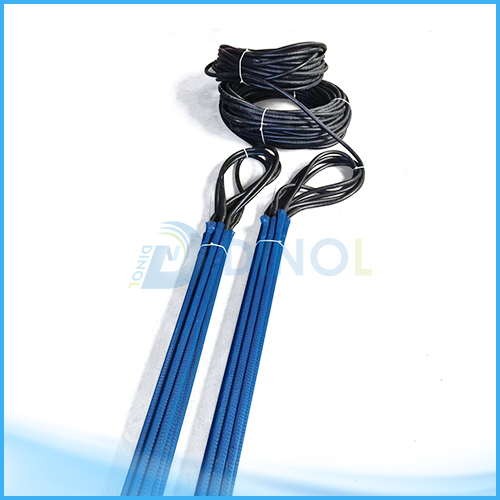
Understanding MMO Titanium Anodes and Their Maintenance Needs
Titanium anodes covered with Mixed Metal Oxide are now the most popular choice for Impressed Current Cathodic Protection (ICCP) systems all over the world. Their dimensionally stable anode (DSA) structure, which is made on a high-purity Grade 1 or Grade 2 titanium base that has been thermally coated with ruthenium-iridium or iridium-tantalum oxides, works the same way in seawater, dirt, and industrial settings.
Unlike sacrificial anodes, which wear out over time, MMO titanium anodes barely wear out at all. NACE International says that when properly kept, cathodic protection systems that use anodes that don't change shape can cut infrastructure corrosion costs by up to 90%. Because they last so long, they are usually used for offshore platforms, ship decks, jetties, bridges, storage tanks, and water treatment plants.
Why Maintenance Still Matters?
Even though MMO anodes are very resistant to rust, they still need to be maintained. Electrolytes that are dirty, overheating, or mechanical damage can wear down coatings, which can lower current efficiency and shorten service life. If you don't do regular checks, failure modes can hide and only show up during expensive unplanned outages. ForMMO coated titanium anodes for cathodic protection, a routine inspection and maintenance program is what protects coating integrity, maintains current output and avoids the high cost of unexpected system failure.
What You Are Actually Protecting
When you take care of an MMO anode system, you protect two layers at the same time: the active oxide coating and the titanium substrate. About 5 to 20 microns thick is the Ru-Ir or Ir-Ta MMO layer. If this thin layer gets damaged, it directly lowers the efficiency of the electrochemical reaction. The main goal of any maintenance program is to keep that coating safe by handling, cleaning, and keeping an eye on it.
Common Problems in MMO Titanium Anodes and Root Causes
Even though MMO titanium anodes are very strong, they fail in expected ways in real-world settings. Seeing these signs early on saves buying teams a lot of money on substitute costs.
These are some of the most common problems that are seen during field deployments. Each situation has a specific reason that you should know about:
- Voltage rise with stable current output — This pattern typically signals passivation of the titanium substrate at the anode-conductor junction, often caused by a loose or corroded connection at the weld point or busbar clamp. Titanium can form a resistive oxide layer at poorly sealed joints, causing localized potential drops.
- Abnormal current density distribution — Uneven current delivery across the anode surface points to partial coating delamination or localized damage from mechanical impact during installation or maintenance operations. This issue is particularly prevalent in mesh and ribbon configurations deployed in high-flow marine environments.
- Accelerated coating wear at edges — Overloading beyond the rated current density (typically above 600 A/m² for Ir-Ta systems in seawater) accelerates oxide breakdown at geometrically sharp edges where current concentrates. This is a design and operational parameter issue, not a manufacturing defect.
You can avoid these failure modes. Most of them are caused by bad fitting, connections that aren't sealed properly, or using the system outside of its recommended limits. It is cheaper to deal with the problems at their source early on than to repair everything all at once.
Best Practices and Principles for Maintaining MMO Titanium Anodes
Inspection Protocols
Visual checks should be done on submerged anodes at least once every six months and on buried groundbed installations at least once every three months. Check the visible anode surface, connection points, cable insulation, and any damage to the cable during each inspection for discoloration, pitting, or mechanical damage. According to NACE SP0169 rules, use a reference electrode measurement to make sure the protection potential stays between -850 mV (CSE) and -1,100 mV (CSE) for steel buildings. ForMMO coated titanium anodes for cathodic protection, following this inspection schedule and potential criteria is essential to confirm the system is delivering adequate protection and to catch coating or connection issues before they cause unplanned outages.
Cleaning Without Damaging the Coating
The MMO oxide layer doesn't react with chemicals but does react with mechanical forces. You should only use soft brushes or low-pressure water jets to get rid of mineral deposits or biofouling. Do not use rough pads, wire brushes, or high-pressure sand blasts close to the anode surface. Cleaning products that are acidic, like dilute hydrochloric acid at concentrations above 5%, can dissolve the oxide layer and should never be used.
Electrical Testing and Troubleshooting
Using an accurate DC clamp meter, check the circuit resistance and output current every three months. Keep track of all data to get a baseline of success. If the resistance stays higher than 15–20% above the average, all electrical connections should be checked right away. If the resistance returns to normal after re-torquing or resealing the connection, the anode can still be used. Replacement is only covered if the coating wear can be seen or tested for electrochemically.
All of these management rules work together to lower the total cost of the system over its entire lifetime and protect the investment that was made in high-quality ICCP infrastructure.
Case Studies: Maintenance Success Stories and Lessons Learned
Offshore Platform: Sustained Performance Through Scheduled Maintenance
Ir-Ta MMO titanium mesh anodes were put on the subsea jacket frame of an oil rig in the Gulf of Mexico. The operations team set up surveys of the reference electrodes every three months and diver inspections every six months. During eight years of operation, there was no need to replace the anode. Two cases of loose wire connections were found early by the regular maintenance plan and were fixed on-site without any system downtime.
Industrial Pipeline Network: Cost Savings Through Proactive Management
A company that runs a central pipeline with more than 300 miles of underground carbon steel pipeline switched from using high-silicon cast iron anodes to putting MMO titanium ribbon anodes in deep well groundbeds. Five years of proactive resistance tracking and yearly connection checks cut the number of unplanned repair visits by 60%, saving a lot of money on both labor and materials.
OEM Collaboration: Customized Anodes for Simplified Maintenance
A Tier 1 shipyard partner and an MMO anode maker worked together to make double-sided disk anodes with titanium conductor bar links that were already sealed, so there was no need for field welding. Standardized connection designs cut down on installation mistakes and made regular checks easy for engineers on board ships who didn't have special training in electrochemistry. ForMMO coated titanium anodes for cathodic protection, this kind of OEM co-development shows how pre-sealed connections and standardized geometry can reduce installation risk and simplify long-term maintenance in marine environments.
Summary of Key Points and Strategic Recommendations for Procurement
To get the best return on your MMO titanium anode investment, you need three things to work together: structured inspection, proper cleaning, and finding electrical problems early on. If you skip any of these, the risk will grow.
When buying things for big ICCP projects, procurement teams should look for suppliers that can give them batch-consistent products with coating thickness data and material certifications that can be tracked. Setting up yearly framework agreements with a qualified MMO anode manufacturer lowers the risk in the supply chain and lets the geometry, coating type, and connection configuration of the anode be changed to fit different installation environments.
When looking at different sources, make sure that the goods they sell meet the right standards, like ASTM B265 for titanium substrate, and that the company that makes them has quality certifications like ISO 9001 or IATF 16949. Environmental compliance, especially RoHS and REACH compliance for coating materials, is a must for projects in places where rules apply.
Conclusion
KeepingMMO coated titanium anodes for cathodic protectionin good shape isn't hard, but you have to be consistent. The three main things that keep the anode and the infrastructure it serves safe are regular electrical monitoring, careful cleaning without abrasives, and proactive connection maintenance. Maintenance goes from being a reactive task to a planned operation when you work with a manufacturer that offers expert help, quality data that can be tracked, and the ability to make changes. How you work with your provider is just as important as the goods itself.
FAQ
How often should MMO titanium anodes be inspected in seawater environments?
Diver or ROV checks are required every two years for submerged marine ICCP systems. These are paired with constant or quarterly remote tracking of the rectifier output and circuit resistance.
Can a damaged MMO coating be repaired in the field?
Sometimes, small mechanical damage at connection places can be fixed by resealing with glue that is compatible with titanium. Widespread coating delamination needs either a new anode or a new coating from the factory, depending on the condition of the substrate.
What environmental factors most accelerate MMO coating wear?
The three main things that speed up coating degradation in field deployments are operating above the rated current density, being exposed to fluoride ions, and mechanical wear from suspended sediment.
What coating types are available for different environments?
Ru-Ir MMO films work well in seawater that is high in chloride. Ir-Ta MMO coatings work better in industrial settings with higher voltages and acidic or mixed electrolyte conditions.
How does anode geometry affect maintenance frequency?
Biofouling builds up faster on mesh and ribbon anodes in high-flow areas than on disk anodes, so they usually need to be cleaned more often. Maintenance work is cut down by choosing a shape that works well in the installation area.
Partner With Tianyi — Your Trusted MMO Coated Titanium Anodes for Cathodic Protection Manufacturer
Tianyi provides well-thought-out ICCP solutions that are backed by strict quality control, ISO-certified production, and the ability to fully customize for OEMs. Our Mmo coated titanium anodes for cathodic protection, which are available in mesh, ribbon, and disc shapes as well as Ru-Ir and Ir-Ta configurations, are constructed on Gr1/Gr2 titanium substrates for dependable operation in buried, offshore, and industrial settings. To get specs, bulk prices, or a technical consultation, you can email our engineering team at info@di-nol.com.
References
1.NACE International — Cathodic Protection of Underground or Submerged Metallic Piping Systems, SP0169, 2013.
2.Shreir, L.L., Jarman, R.A., & Burstein, G.T. — Corrosion: Metal/Environment Reactions, Butterworth-Heinemann, 1994.
3.Angal, R.D. — Principles of Corrosion Engineering and Corrosion Control, Butterworth-Heinemann, 2010.
4.Lide, D.R. (Ed.) — CRC Handbook of Chemistry and Physics, CRC Press, 2005.
5.DNV GL — Cathodic Protection Design, Recommended Practice DNV-RP-B401, 2021.
6.Baeckmann, W., Schwenk, W., & Prinz, W. — Handbook of Cathodic Corrosion Protection, Gulf Professional Publishing, 1997.