




Top 5 Chlor Alkali Electrolyzer Benefits for Chemical Producers
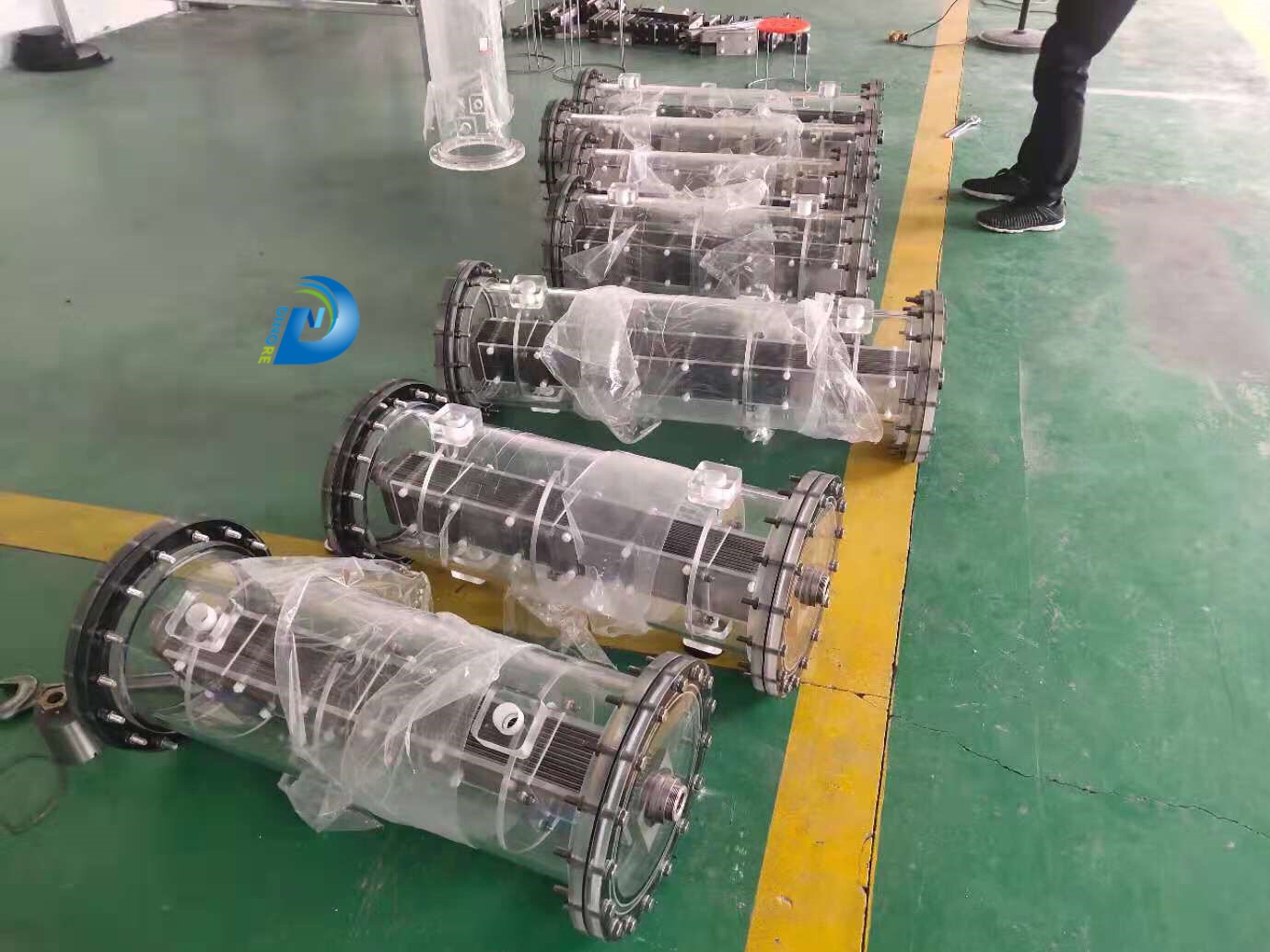
If you work in water treatment, marine systems, or food processing, you already know how much pressure there is to produce sodium hypochlorite safely and cost-effectively on-site. A well-designed chlor alkali electrolyzer converts brine solution into usable disinfectant through direct electrolysis — no liquid chlorine transport, no storage hazards. The TY-WL series from Tianyi, for example, covers effective chlorine output from 50 g/h all the way to 2000 g/h, offering a practical path from small municipal installations to large industrial operations. Here are five benefits that matter most to procurement teams.
Enhanced Energy Efficiency and Cost Savings
Power is one of the most expensive things that goes into brine electrolysis. Anodes made of graphite or lead from the past waste power because they have a high overpotential and bubbles stick to their surfaces. That equation changes a lot when you use titanium wires with DSA (Dimensionally Stable Anodes).
Lower Cell Voltage Across the Full Load Range
Tianyi's TY-WL line can work with cell voltages as low as -5 V (WL50B) and as high as -40 V (WL2000B). It can also handle 80 A to 460 A of power. Titanium coated with MMO has a low overpotential, which means that bubbles quickly separate from the electrode surface. That makes the resistance less strong and the power needed to make one gram of chlorine less.
Higher Current Density Without Proportional Energy Loss
The most current that graphite anodes can handle is 8 A/dm². DSA titanium anodes, on the other hand, can handle up to 17 A/dm². That means the same-sized cell can make twice as much energy without making the cost of energy twice as high. This is very helpful when adding on to a ship's bilge water system or a water treatment plant.
Reduced Operating Cost Over Equipment Lifetime
A smaller amount of salt is also used because the electrolytic reaction ends faster when 2% to 5% saline is added. All TY-WL types keep the cell working pressure at 0.2 MPa. So, the system stays inside a safe mechanical envelope that stops leaks or pressure-related losses that waste energy.
Lower monthly bills for things like food and energy are a direct result of these efficiency gains. In official bid reviews, the total cost of ownership, not just the buying price, is used to choose the winner. This is an important factor.
Superior Product Purity and Quality Control
There are strict rules about how much and what kind of sodium hypochlorite can be put into swimming pools, CIP lines for food processing, and water systems that provide drinking water. Impurities that come from electrode dissolution or side reactions are what make downstream compliance hard to handle.
MMO Coating Eliminates Electrode Dissolution
Unlike graphite or lead anodes, which dissolve into the electrolyte when covered with mixed metal oxides like iridium-tantalum or ruthenium-iridium, the anode inside a chlor alkali electrolyzer doesn't. Moving carbon or heavy metals into the hypochlorite solution is stopped because there is no longer a clear way for them to get there.
Consistent Chlorine Yield Across Operating Conditions
Both PMMA and PVC, which are chemically neutral, are used to make the TY-WL cell body. The WL500B, for example, goes at 65–85 L/h, which is the right amount of brine for that type. This keeps the residence time and conversion rate the same between shifts, which is exactly what a food plant's quality control team wants to see in a Factory Acceptance Test.
Certification-Ready Documentation
People in charge of buying things for the government or getting approvals from ship classification societies need quality records that can be kept track of. As part of Tianyi's making process, the raw materials and produced goods are always checked for quality. This makes it easier to fill out the forms needed to get CE, CCS, or other licenses.
Increased Operational Reliability and Reduced Downtime
Unplanned shutdowns cost more than the repair itself. When a municipal water plant's sodium hypochlorite generator goes offline, operators must scramble for emergency liquid chlorine supplies — which is precisely the safety scenario the on-site generation system was installed to avoid.
Structural Design That Tolerates Electrode Exposure
The TY-WL series uses a new internal connection architecture that reduces stray current during electrolysis. Critically, even if an electrode plate is momentarily exposed to air during a low-flow event, the cell continues to operate normally. That single design feature prevents a large share of nuisance shutdowns.
Corrosion-Resistant Materials for Long Service Intervals
The titanium substrate inside a chlor alkali electrolyzer resists chlorine and alkali attack far better than conventional materials. In diaphragm-cell applications, metal anodes withstand conditions that would degrade graphite within months. Routine maintenance for the TY-WL line centers on periodic acid washing using 15%–18% hydrochloric acid solution, a straightforward procedure that any maintenance technician can perform without specialized tooling.
After-Sales Support and Remote Adjustment
Tianyi provides on-call technical support covering cell repair, electrode plate recoating, and scheme adjustment. If a parameter needs changing after installation — for example, a ship's ballast system encounters lower-salinity water than specified — the supplier can modify the operating point remotely rather than requiring a service visit. These characteristics directly answer a common procurement concern: what happens five years from now when the original project engineer has moved on?
Environmental Sustainability and Compliance
Regulatory pressure on chlorine chemistry is not easing. The Minamata Convention has effectively ended new mercury-cell installations globally, and EPA and EU directives continue to tighten limits on chlorinated by-products in discharge streams.
Zero-Mercury Electrode Technology
All TY-WL models use MMO titanium anodes. There is no mercury in the process, no mercury-containing waste stream to manage, and no regulatory exposure under international conventions. For procurement managers preparing environmental impact sections of bid documents, this is a straightforward compliance win.
Lower Brine and Waste Volume Per Unit of Output
Because electrolytic efficiency is higher with DSA anodes, less brine is consumed per gram of effective chlorine. Reduced brine throughput means smaller volumes of spent electrolyte requiring neutralization or disposal — a benefit that shows up in both operating cost and environmental reporting.
Alignment With ESG Procurement Criteria
Many US municipal utilities and food manufacturers now require suppliers to demonstrate measurable environmental performance. On-site sodium hypochlorite generation using a chlor alkali electrolyzer already eliminates the carbon footprint of liquid chlorine transport. Pairing that with long-life titanium electrodes that require infrequent replacement reinforces the sustainability narrative in any ESG-focused procurement review.
Flexible Applications and Scalability for Diverse Production Needs
No two installations are identical. A 50-person aquaculture company and a 500-employee municipal waterworks have very different capacity, footprint, and certification requirements.
Nine Model Sizes to Match Actual Demand
The TY-WL product line runs from WL50B (50 g/h, total cell length 310 mm) to WL2000B (2000 g/h, total cell length 1200 mm). Here are key reference points across the range:
- WL100B — 100 g/h, shell diameter 150 mm, current 60 A ±20%, suitable for small pool circuits or compact food-plant loops
- WL500B — 500 g/h, shell diameter 200 mm, current 120 A, designed for mid-scale water treatment or vessel ballast systems
- WL2000B — 2000 g/h, shell diameter 270 mm, current 460 A ±20%, engineered for large municipal plants or industrial-scale operations
This graduated range means a procurement team can specify the exact model for the design flow without oversizing — and can plan a capacity upgrade by simply adding a parallel cell rather than replacing the entire installation.
Compatibility With Low-Salinity and Cold-Water Environments
The electrode coating selection and cell materials allow normal operation in low-concentration seawater and at water inlet temperatures as low as 5°C. That matters for ship applications in cold northern routes or for aquaculture facilities running recirculating seawater systems through winter months.
OEM and Custom Integration Support
Tianyi offers OEM and ODM services, meaning the electrolyzer can be specified as part of a larger packaged system built by a system integrator or OEM partner. This path is common in the shipbuilding sector, where a yard's engineering team designs the ballast water treatment skid and sources the electrolysis cell as a subsystem with agreed-upon interface dimensions, electrical specs, and classification society documentation.
Conclusion
There are clear advantages of modern salt electrolysis cells over older methods of making chlorine. They use less energy, make better chlorine, last longer, are better for the environment, and can grow. Lots of what makes a unit work is the coating on the electrodes, the materials used to make the cells, and how well the maker can keep the installation up and running for as long as it does.
The TY-WL series from Tianyi has clear specs, a line of nine models for the chlor alkali electrolyzer, and direct technical support that take all of these things into account. Being clear from the start lowers risk at every stage of a project that lasts between 3 and 9 months, from writing the specifications to the 30-day test run.
FAQ
What is a chlor alkali electrolyzer and how does it work?
A chlor alkali electrolyzer passes direct current through a brine solution to drive electrochemical reactions. At the anode, chloride ions are oxidized: 2Cl⁻ − 2e⁻ → Cl₂↑. At the cathode, hydrogen ions are reduced: 2H⁺ + 2e⁻ → H₂↑. The net reaction — NaCl + H₂O → NaClO + H₂↑ — produces sodium hypochlorite in solution. This on-site generation eliminates the need to store or transport liquid chlorine.
How long do titanium anodes last in continuous service?
With MMO (ruthenium-iridium) coatings, titanium anodes in brine electrolysis applications typically achieve service lives of five years or more under normal operating conditions. Tianyi's TY-WL series is designed with that target in mind. Routine acid washing with 15%–18% hydrochloric acid at prescribed intervals maintains coating performance between major service events.
What maintenance does a TY-WL electrolyzer require?
Day-to-day operation is largely automated. Scheduled maintenance involves periodic acid washing to remove scale from electrode surfaces, checking brine concentration (target: 2%–5% saline), and inspecting water inlet temperature (operating range: 5–15°C). Tianyi provides recoating services for electrode plates when a full refurbishment is needed, which avoids purchasing a replacement cell.
Which applications are best suited to the TY-WL product line?
Municipal drinking water plants, ship ballast water treatment systems, food manufacturing CIP circuits, swimming pool recirculation systems, and aquaculture facilities all align well with the TY-WL range. The nine available models cover effective chlorine outputs from 50 g/h to 2000 g/h, matching the scale of each application type.
Ready to Source a Chlor Alkali Electrolyzer Manufacturer With Proven Field Experience?
Tianyi designs and produces the TY-WL series at our facility in the Baoji High-Tech Development Zone. Our team supports you from specification through commissioning — including FAT documentation, electrode recoating services, and OEM integration for system builders. Contact us today to discuss your project requirements, request technical datasheets, or get a quotation. Reach our engineering team directly at info@di-nol.com or visit dsa-anodes.com to review full product specifications.
References
1. Handbook of Chlor-Alkali Innovation, Springer, 2005.
2. "Electrocatalysis: Understanding the Achievement of DSA," Electrochimica Acta, 2000.
3. Chlorine Sector Review, Euro Chlor-2022 Annual Report.
4. IMO BWM Convention Guidelines for Bad Water Management Systems, 2017.
5. The Chlorine Institute, Pamphlet 96: the United States Chlor-Alkali Industry Plants + Production Data, 2023.
6. Schmittinger et al., Chlorine: Principles and Commercial Practice, Wiley-VCH, 2008.