




How long do MMO coated titanium anodes last underwater in ICCP systems?
MMO-coated titanium anodes used in impressed current cathodic protection (ICCP) systems, namely iccp protected mmo coated titanium anodes for cathodic protection, can serve 15–25 years in subsea environments, and well-engineered installations may reach a 20-year service life. These cathodic protection anodes adopt commercially pure Grade 1 or Grade 2 titanium substrates thermally coated with mixed metal oxide layers such as Ru-Ir or Ir-Ta. Their low consumption rate (0.5–2.0 mg/A·yr) makes them more durable than high-silicon cast iron or graphite alternatives. Operating current density, water chemistry and coating thickness determine the final service life.
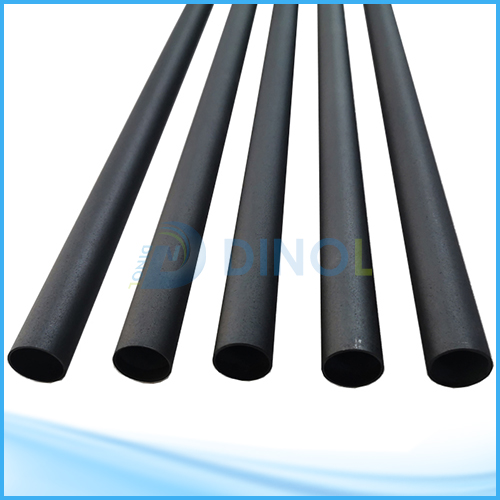
Understanding MMO Coated Titanium Anodes in ICCP Systems
What Is an MMO Coating?
On a base of pure titanium, layers of platinum-group metal oxides are pressed together to make mixed metal oxide (MMO) coatings. Most of the time, iridium-tantalum or ruthenium-titanium is used to make these layers. For the coating to do its job, electricity has to flow into the electrolyte around the anode. This is done by an electrocatalytic surface. These anodes are called Dimensionally Stable Anodes (DSA) because they don't change shape while they work.
Why Titanium Makes the Ideal Substrate
Titanium that is economically pure (ASTM B265 Gr1/Gr2) forms a natural oxide film that stops it from rusting in dirt, salt water, and seawater. When placed underwater, whether it's clamped in place, welded to conductor bars, or bolted to buildings, it can handle the mechanical stresses. It's strong for how light it is. The breakdown voltage of the substrate in seawater with a lot of chloride is about 8–10 V, which is enough for most ICCP settings.
How ICCP Technology Works Electrochemically
Electricity flows straight from a rectifier to the anode and then into the electrolyte in an ICCP system. This turns the metal's electric potential around from positive to negative. The copper anode gives the steel frame the electrons it would lose otherwise. The anode doesn't change form after decades of use because the MMO covering doesn't oxidize itself. Instead, it gives off oxygen (in dirt or concrete) or chlorine (in seawater) at its surface.
Lifespan of MMO Coated Titanium Anodes Underwater
Typical Service Life Range
If the current density is 100 to 600 A/m², the temperature is below 30°C, and the saltiness of the saltwater is 3.5%, the MMO titanium anodes usually last between 15 and 25 years. To find the design life, all you have to do is divide the coating loading (g/m²) by the rate of consumption at the operating current density. The lifespan goes up straight away as the MMO layer gets thicker.
Environmental Factors That Affect Longevity
In that 15–25 year window for iccp protected mmo coated titanium anodes for cathodic protection, the actual service life of an installation depends on a number of site-specific factors. Higher salinity accelerates chlorine evolution, which can make the coating degrade a little faster if the current density exceeds the recommended range. Long-term exposure to water above 40°C may weaken the oxide coating structure. Biological fouling does not damage the coating itself, but it can hinder current flow and create hot spots that accelerate degradation.
Voltage Exceedance as the Primary Failure Cause
The most common known reason why an MMO anode fails before it should is that it works above the substrate's breakdown voltage. The titanium passive film breaks when the voltage in seawater goes above 8–10 V. This lets the substrate below the coating corrode. When reverse polarity events happen, which can happen in systems that aren't well watched, the same thing takes place. You can stop both types of failure and protect the whole design life if you use the right size rectifier and watch it in real time.
Comparing MMO Coated Titanium Anodes with Alternative Anode Materials
MMO vs. High-Silicon Cast Iron and Graphite
High-silicon cast iron anodes can use up to 1,000 g/A·yr, which is 500 times faster than MMO coats. They are also fragile and heavy, which makes it hard to put them on remote platforms and move them around. The same things happen with graphite anodes when they get heavy and break. Titanium mesh or ribbon anodes, on the other hand, are much lighter, less likely to break, and need to be replaced much less often. This makes long-term projects cheaper overall.
MMO vs. Sacrificial Zinc and Aluminum Anodes
It is planned for zinc and aluminum anodes that are used as spares to break down. Offshore platform jackets and wharf steel piles are big structures that need a lot of extra anode mass. This makes them hard to build and move. ICCP systems with MMO titanium anodes can change the current very precisely. This means that the level of protection can be changed at any time. This can't be done with disposable systems, so MMO-based ICCP is the best choice for things that need to last at least 20 years.
Return on Investment Over the Project Lifecycle
For the first time, the higher upfront cost of iccp protected mmo coated titanium anodes for cathodic protection becomes worthwhile when comparing replacement cycles of traditional materials. Graphite anodes typically require replacement every five to seven years over a twenty-year project lifecycle, meaning three to four change-outs.
Each maintenance operation on submerged pipelines or structures brings heavy costs from mobilization, excavation and production downtime, far exceeding the initial price premium. Only one installation of this MMO anode system can avoid all those recurring expenses across the whole design life.
Selecting and Procuring MMO Coated Titanium Anodes for ICCP Systems
Matching Coating Type to Environment
You can't pick between Ru-Ir and Ir-Ta coatings. Ru-Ir coatings are great for seawater, brine, and marine mud, all of which change chlorine. This is because they lower the working voltage and make the coating last longer by being catalytically efficient. Soil, fresh water, and concrete backfill are all places where oxygen changes slowly and Ir-Ta layers work best. Most people who buy an ICCP system make the mistake of picking the wrong coating type for the working medium.
Verifying Certifications and Documentation
Before picking a supplier, procurement engineers should get a Certificate of Conformance (CoC) that shows the coating thickness and loading data, along with any necessary compliance references to EN 12954, NACE SP0176, or GB/T 50934. They should also ask for an ICP or XRF analysis to make sure that precious metals are present. When you need to get to buried or submerged installations after the fact, you need to use cable connection assemblies that are rated IP68 and have pull-out test results that can be shown.
Planning for Phased Delivery on Large Projects
A lot of different anode pieces need to be delivered over the course of 6 to 18 months for big ICCP projects like offshore wind farms, long-distance cable systems, and storage tank farms. The risk of buying is greatly reduced when suppliers can confirm production plans, the ability to ship parts of an order, and batch quality that stays the same across multiple deliveries. There won't be any quality loss between early and late deliveries as long as the purchase agreement lets you keep track of the production lot.
Maintenance and Optimization of MMO Coated Titanium Anodes
Routine Inspection Protocols
Annual inspection of iccp protected mmo coated titanium anodes for cathodic protection uses a calibrated reference electrode (silver/silver chloride for marine service or copper/copper sulfate for soil environments) to verify whether the protected structure maintains the target protection potential (typically −850 mV vs. CSE for steel). Deviation from the target potential may indicate coating failure, broken connections or rectifier malfunction. Regular potential surveys enable early fault detection and stop corrosion damage before the next scheduled inspection.
Cable Connection Integrity
Most ICCP systems, whether they are above or below ground, will break at the cable-to-anode junction. Even a small amount of water in this joint will make the resistance go up, the current flow go down, and substrate rust start at the interface. Node systems should all have an IP68 rating and a tensile pull-out strength that has been checked and shown to work. A heat-shrink seal with a glue liner and then epoxy potting are the best ways to put things together for long-term underwater installs.
Smart Monitoring for Long-Term Optimization
With remote monitoring systems that record rectifier output, anode-to-electrolyte resistance, and structure-to-electrolyte potential in real time, asset owners can get a sense of how healthy a system is ahead of time. As time goes on, readings of resistance rise. This means that either the coating is worn off or the links are getting worse before the whole system breaks. Based on data, this method helps sites schedule repair for set times so they don't have to fix issues as they happen.
Conclusion
Iccp protected mmo coated titanium anodes for cathodic protection have a long track record of reliable performance for subsea ICCP applications. They deliver a service life of 15 to 25 years with a low consumption rate as low as 0.5 mg/A·yr. This makes them superior to other conventional anode materials in both sustainability and long-term value.
To make sure a system lasts as long as it was meant to, you need to pick the right coating type, handle power properly, use approved connection kits, and do regular potential surveys. These anodes give engineering teams that need to protect marine platforms, pipes, jetties, or storage tanks from corrosion a way to track and measure their value over the life of the asset.
FAQ
How long do MMO titanium anodes last in seawater specifically?
In open seawater at standard current densities (100–600 A/m²), MMO titanium anodes typically last 15 to 25 years. Actual life depends on operating voltage, temperature, and coating loading.
Can MMO coated titanium anodes work in freshwater ICCP systems?
Yes. Ir-Ta coated anodes perform well in freshwater and soil, where oxygen evolution is the dominant reaction. Ru-Ir coatings are better suited to seawater and brine.
What indicates an MMO anode needs replacement?
Rising anode-to-electrolyte resistance, declining current output at constant rectifier voltage, or structure potentials drifting above the protection threshold all signal coating wear or connection failure.
Can a spent MMO anode be recoated?
Yes, provided the titanium substrate remains intact and undamaged. The old coating is removed by sandblasting and acid etching, and a fresh MMO layer is thermally applied. This can offer meaningful cost savings compared to purchasing new units.
What shapes are available for underwater ICCP installations?
MMO titanium anodes are available in mesh, ribbon, disc, tubular, and rod forms. All dimensions — length, width, diameter, and thickness — can be specified to match project design requirements.
Request a Quote from Tianyi — Your Trusted ICCP MMO Anode Supplier
Tianyi makes iccp protected mmo coated titanium anodes that can be changed to fit the needs of your project if you need cathodic protection. They have full CoC paperwork and standard compliance kits that cover GB/T 50934, EN 12954, and NACE SP0176. We are a well-known company that makes iccp protected mmo coated titanium anodes for cathodic protection. We help design institutes with technical choices for free and can support delivery schedules that are broken up into stages. You can email our tech team at info@di-nol.com or go to dsa-anodes.com to get a catalog of our products or a custom price.
References
1. NACE International. Cathodic Protection of Reinforced Concrete. NACE SP0290, 2021.
2. Shreir, L.L., Jarman, R.A., & Burstein, G.T. Corrosion: Corrosion Control. Butterworth-Heinemann, 2018.
3. Von Baeckmann, W., Schwenk, W., & Prinz, W. Handbook of Cathodic Corrosion Protection. Gulf Professional Publishing, 1997.
4. AMPP. Control of External Corrosion on Underground or Submerged Metallic Piping Systems. NACE SP0169, 2019.
5. British Standards Institution. Cathodic Protection of Steel in Concrete. EN 12696, 2016.
6. Lide, D.R. (ed.). CRC Handbook of Chemistry and Physics, 103rd edition. CRC Press, 2022.