




How Long Does a Lead Dioxide Anode Last in Chlorate Cells Under Load?
A titanium-based lead dioxide anode typically lasts between 1 and 3 years in chlorate cells under continuous industrial load, though well-maintained units operating at controlled current densities have exceeded this range. Service life depends on coating quality, electrolyte composition, and operating temperature.
The β-PbO₂ active layer—deposited over a tin-antimony interlayer on a titanium substrate—delivers current efficiencies of 93%–95% and withstands current densities up to 5,000 A/m². Compared to traditional lead alloy anodes, titanium-substrate PbO₂ electrodes last 1.5 to 2 times longer, making them a sound long-term investment for chlorate producers.
Understanding Lead Dioxide Anode Lifespan in Chlorate Cells
Procurement engineers can make better specs and avoid early replacements if they know what affects service life.
Typical Service Life Ranges
In a chlorate cell with normal conditions (current densities of 1,500–3,000 A/m², temperatures of 60–75°C, and a pH close to neutral), a good PbO₂/Ti anode will usually last for 12 to 36 months of nonstop use. When electrolyte chemistry is tightly managed, high-volume chlorate plants in North America have said they can run for up to 48 months.
How Electrochemical Reactions Drive Degradation
The anode surface is constantly attacked by oxygen while chlorate is being made. When oxygen is evolved at 1.75 V (compared to SCE), reactive oxygen species are made that wear away the PbO₂ coating over time. Electrolyte can reach the titanium substrate through tiny holes in the coating and turn it into non-conductive TiO₂. This is the main way that this type of electrode fails.
Why Manufacturing Quality Sets the Ceiling
Coating adhesion and interlayer density show how long the electrode can stop this from happening. A well-formed SnO₂-Sb₂O₃ barrier stops oxygen ions from moving toward the titanium surface, which greatly increases the active life. Some patented coatings with a gradient structure and nanoparticle doping (like CeO₂ and carbon nanotubes) have been shown to lower cell voltage by 0.3 V and improve adhesion by 30%.
Key Factors Affecting Lead Dioxide Anode Performance and Longevity
Performance isn't set when the cell is bought; it changes every day based on how it is used and cared for.
Current Density and Temperature
When you run the current density higher than what is recommended for the lead dioxide anode, the PbO₂ grains get bigger and microcracks form faster. When the temperature goes above 80°C, the titanium base corrodes faster and the solid ratio of α- to β-PbO₂ can change. The best way to make something last longer is to keep the temperature below 80°C and the current level within the stated limits.
Electrolyte Composition
Fluoride ions are especially bad for you. It can damage the SnO₂-Sb barrier even at levels below 500 ppm. Chlorate electrolytes that have heavy metals or organic impurities in them also speed up the wear of coatings. Electrolyte analysis should be done at least once a month so that problems can be fixed quickly before they get worse.
Maintenance and Inspection Protocols
Visual inspections done on a regular basis while the system is shut down can find early signs of coating blistering or edge delamination before they fail completely. Surface deposits that make cells less resistant are removed by gentle mechanical cleaning. Titanium substrates that have reached the end of their useful life can be cleaned, pickled, and recoated. A recoating cycle usually costs 30% to 50% less than buying a new anode, which protects the capital investment over the lifespan of the equipment.
Comparative Analysis: Lead Dioxide Anode vs. Alternative Anode Materials
A lot of buyers want to know how PbO₂/Ti electrodes compare to other options. Here is a fair comparison of four types of material.
Even though graphite and carbon anodes are cheap at first, they are mechanically weak and wear out quickly in chlorate ions. They add carbon particles to the product stream and need to be replaced often, which increases the total cost of ownership by a large amount over two years.
Mixed metal oxide (MMO) anodes on titanium are very resistant to corrosion. However, ruthenium-iridium formulations that are best for chlorine evolution are not the best for oxygen-evolving chlorate applications. Their ability to release oxygen is lower than that of PbO₂, which makes them less useful for oxidizing when strong organic breakdown is needed.
Platinum-coated titanium works well, but it costs more than lead dioxide anode, which is hard to justify for making a lot of chlorate. Platinized anodes are usually only used for precise electrochemical production in the lab or in the pharmaceutical industry.
In real life, the PbO₂/Ti electrode is in the middle. It has an oxygen evolution potential above 1.70 V (compared to SHE), a resistivity of 10⁻⁴ to 10⁻⁵ ©·cm, a titanium substrate that can be recoated, and a price that is 30% to 50% less than platinized titanium. There isn't another electrode on the market that offers this good of a performance-to-cost ratio for making chlorate and electrochemically oxidizing difficult organics.
Procurement Insights: Buying and Sourcing Lead Dioxide Anodes
It's cheaper to make expensive changes to the field later if you make sure the electrode specifications are correct before you send out a purchase order.
Clarify Your Operating Profile First
Write down your cell's current density range, electrolyte pH, fluoride content, and temperature profile before you call any lead dioxide anode suppliers. These four factors directly show if a standard coating specification is enough or if an interlayer modification or doped coating is needed.
OEM and Custom Geometry Options
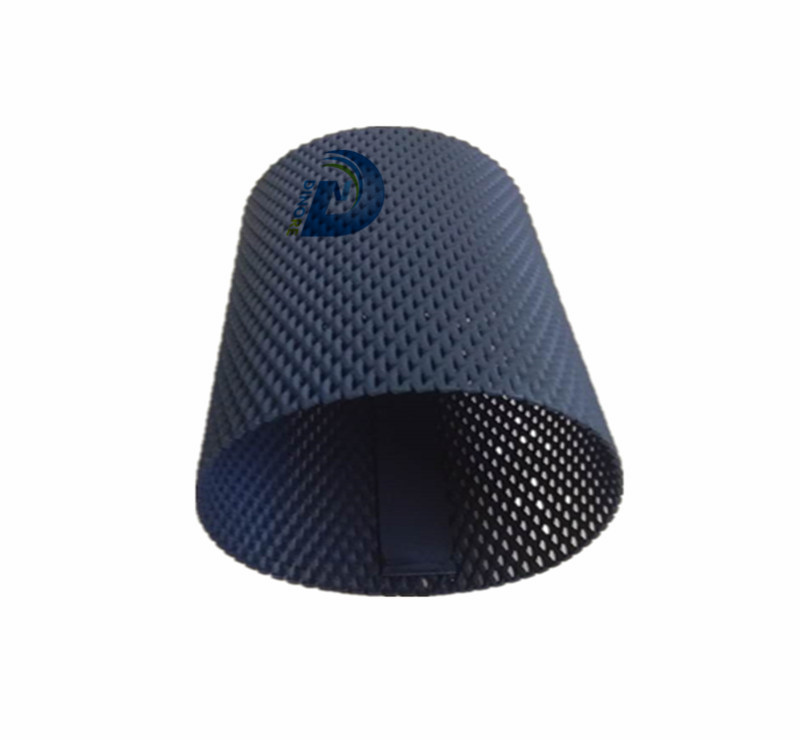
The design of chlorate cells varies a lot. Manufacturers you can trust offer PbO₂/Ti electrodes in plate, mesh, and tube shapes, with ASTM B265 Grade 1 or Grade 2 titanium as the base. Mesh configurations are useful for chlorate applications because they lower the electrolyte flow resistance and keep parts from getting too hot when there is a lot of current flowing through them.
Lead Times, Pricing, and Recoating Economics
Catalog sizes that are standard for the lead dioxide anode usually ship in 30 to 60 days. It could take 45 to 90 days for custom geometries. Recoat costs should be added to the five-year total cost estimate when figuring out the unit price. If a supplier has an in-house strip-and-recoat service, it cuts long-term costs by a significant amount and gets rid of the risk in the supply chain for substrate inventory.
Extending the Lifespan of Lead Dioxide Anodes: Best Practices
Longer service intervals are always achieved by operators who think of anode management as a process variable rather than an afterthought when it comes to maintenance.
These actions can be seen to make a real difference in how well people do in the field:
- Control current ramp-up at startup. Sudden high-current application to a cold electrode generates thermal stress at the coating-interlayer interface. A gradual ramp over 15–30 minutes during commissioning reduces micro-crack initiation.
- Monitor cell voltage trend, not just instantaneous readings. A rising cell voltage over weeks signals increasing coating resistance—an early indicator of substrate passivation. Catching this trend early allows planned replacement rather than emergency shutdown.
- Maintain electrolyte purity. Removing heavy metal contaminants and keeping fluoride below 200 ppm in standard formulations measurably slows coating degradation based on published accelerated-life test data.
- Schedule substrate recoating proactively. Waiting until the coating fails completely risks damaging the titanium mesh. Early recoating preserves substrate geometry and reduces reconditioning cost.
All of these steps can increase the active service life by 20% to 40% compared to unmanaged operation. This directly leads to lower annual electrode costs and fewer unplanned production stops.
Conclusion
A lead dioxide anode in chlorate cells doesn't have a set service life. Instead, it has a range that depends on the quality of the coating, how well the cells are run, and how well the liquid is managed. Under well-controlled conditions, a goal of 2–3 years of continuous service is reasonable and attainable, and some installations have gone beyond that time frame.
Because the titanium substrate can be recoated, the asset doesn't lose all of its value when its useful life is over. The PbO₂/Ti combination is a technically sound and cost-effective option for procurement engineers looking for electrodes for chlorate production or electrochemical oxidation. It is better than graphite, platinum, and most MMO alternatives.
FAQ
How often should I inspect a lead dioxide anode in an active chlorate cell?
Industrial chlorate cells should be checked visually every three to six months as a minimum.
What is the most common cause of premature coating failure?
The main way things fail is when electrolyte gets into the coating pores and makes the substrate passivate. This makes a layer of TiO₂ that is not conductive under the coating. This makes the voltage go up and the current efficiency go down.
Can the titanium substrate be reused after coating failure?
Yes. Chemical or mechanical methods can be used to remove the titanium base. It is then pickled and a new PbO₂ layer is added on top. This process of recoating keeps your initial capital expenditure low, which is one of the main economic reasons to use Ti-substrate electrodes.
Does lead from the coating contaminate the electrolyte?
The PbO layer doesn't dissolve in water when things are working normally. Trace amounts may be released by mechanical erosion in very rough conditions, but the levels of pollution are very low compared to solid lead alloy anodes. For uses that need ultrahigh purity, talk to your supplier about alternatives to MMO.
What current density range is safe for long service life?
Chlorate cells usually work nonstop at 1,500 to 3,000 A/m². Constantly running above 4,000 A/m² without enough electrolyte flow and cooling makes the covering last less long.
Get a Custom Lead Dioxide Anode Quote from Tianyi
Shaanxi Tianyi New Material Titanium Anode Technology Co., Ltd. makes PbO₂/Ti electrodes with plate, mesh, and tube shapes and offers full OEM and recoating services. Our electrodes are made with ASTM-grade titanium substrates and come with direct technical support. Our engineering team is ready to help you whether you need a standard chlorate-grade specification or a modified coating for hard to oxidize wastewater. To get a price from a reliable lead dioxide anode maker, email us at info@di-nol.com or go to dsa-anodes.com right now.
References
1. Pletcher, D., & Walsh, F. C. Industrial Electrochemistry. Springer, 1990.
2. Comninellis, C., & Chen, G. (Eds.). Electrochemistry for the Environment. Springer, 2010.
3. Trasatti, S. "Electrocatalysis: Understanding the Success of DSA." Electrochimica Acta, 2000.
4. Feng, J., & Johnson, D. C. "Electrocatalysis of Anodic Oxygen-Transfer Reactions: Oxidation at Boron-Doped Diamond Thin-Film Electrodes." Journal of The Electrochemical Society, 1994.
5. Correa-Lozano, B., Comninellis, C., & De Battisti, A. "Service Life of Ti/SnO₂-Sb₂O₅ Anodes." Journal of Applied Electrochemistry, 1997.
6. Chen, G. "Electrochemical Technologies in Wastewater Treatment." Separation and Purification Technology, 2004.