




Why Use Titanium Anodes in PCB Etching Solution Production Lines
When engineers evaluate electrode materials for PCB etching lines, one question comes up repeatedly: why choose a titanium anode for PCB etching solution systems over cheaper alternatives? The short answer is performance consistency under pressure. MMO-coated titanium anodes maintain dimensional stability, resist aggressive chloride-based etchants, and sustain high current efficiency across extended production cycles.
Unlike graphite or lead-based electrodes, they do not shed particles into the bath, which protects circuit trace definition and reduces reject rates. For procurement teams sourcing electrodes at scale, that combination of reliability and low total cost of ownership makes titanium the rational first choice.
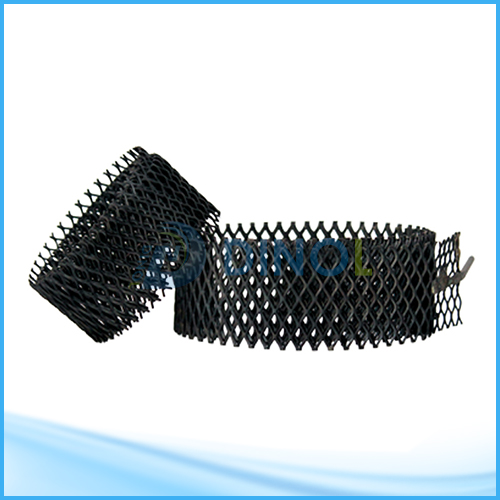
Understanding Titanium Anodes in PCB Etching
What Makes Titanium the Right Substrate
Copper chloride and ferric chloride solutions can't get close to titanium because of the natural oxide layer that blocks them right away. When anodic polarization happens, this passive film doesn't break down. This means that the substrate stays the same size for as long as it's used. In horizontal conveyorized etching lines, where the machine decides how far apart the electrodes should be, that level of stability is very important.
How MMO Coating Drives Electrochemical Performance
The Mixed Metal Oxide (MMO) layer truly does its job. It is usually made up of iridium-tantalum oxide or ruthenium-iridium oxide. The overpotential for oxygen evolution goes down. This makes the current work better and draws less energy. In lab tests, MMO-coated anodes show current efficiencies of more than 90%. Graphite electrodes, on the other hand, only show efficiencies of 70% to 75% when working in the same copper sulfate or acidic chloride baths.
Compatibility with Common Etching Chemistries
For MMO titanium electrodes to work, they need to be in both acidic cupric chloride renewal systems and basic ammoniacal etchants. It is not possible for metals to get into the solution because they are chemically inert. This is something that can happen with nickel or iron-alloy electrodes and is why they fail. When you use clean chemicals, you can directly control the line width better on fine-pitch PCB designs.
Titanium Anodes vs. Alternative Anodes: Making the Right Choice
Graphite Electrodes: Low Entry Cost, High Hidden Cost
Graphite is cheap when you first buy it, but it gets worn down over time. Carbon particles get into the etching bath and leave tiny flaws in the copper traces. This means that the bath needs to be changed more often. Three to six times as many steel parts need to be replaced as titanium parts over a five-year output window. This takes away the price edge very quickly.
Nickel and Stainless-Steel Anodes: Limited Chemical Tolerance
It is important to note that nickel and austenitic stainless steel anodes work well in coating baths that are only slightly alkaline. However, they break down when the chloride level is higher than about 0.5 mol/L. The titanium anode for pcb etching solution avoids this limitation. Products that cause corrosion add to the dirt in the bath and can scratch and stain copper surfaces, making it impossible for the next steps of lamination to stick.
MMO Titanium: The Performance Benchmark
- Corrosion resistance: The titanium substrate plus oxide coating withstands continuous immersion in CuCl₂ solutions at pH 0–2 without measurable weight loss over 12-month operational periods.
- Current efficiency: Sustained above 90%, reducing electricity cost per unit area of etched board.
- Service life: Properly maintained MMO anodes routinely last 5–10 years in PCB lines, versus 6–18 months for graphite.
- Deposition uniformity: Uniform current distribution across the electrode face produces even copper removal, critical for fine-line circuits below 75 µm.
- Weight advantage: Titanium's density (4.51 g/cm³) versus lead (11.3 g/cm³) reduces fixture load and simplifies handling during installation.
Operational Insights: Maintenance and Lifespan
Routine Inspection Protocol
At the points where two coatings meet, look for cracks, flaking, or a passivation film that has formed when inspecting the titanium anode for pcb etching solution. By finding localized coating wear early on, substrate corrosion can be stopped, and the electrode will last longer overall. Note down what you discover so you can make a replacement cycle baseline that is unique to the chemistry of your bath and the density of the current.
Cleaning Best Practices
The voltage goes up because of scale layers, which are mostly copper oxide and calcium salts. These layers reduce the cell's useful surface area. If you soak it in 5–10% hydrochloric acid at room temperature for 10–15 minutes, you can get rid of most of the crystals. The MMO layer is not hurt by this. Don't use rough mechanical ways to clean because they take away the catalytic oxide. Acid should be used to treat the anode. After that, rinse it with deionized water and use it again right away.
Factors That Extend Service Life
In order to protect the coating, it is best to stick to the current density range recommended by the manufacturer. For PCB etching, this range is usually 200–500 A/m². If you drive the current density above what it's supposed to be, the oxide breaks down faster and the life is cut short in a way that isn't proportional. Being below 55°C in the bath keeps the link between the coating and the titanium base strong over time.
Procurement Guide: Sourcing Titanium Anodes for PCB Manufacturing
Key Specifications to Confirm Before Ordering
Astm B265 Grade 1 or Grade 2 is the best grade for the titanium base. Procurement engineers should ask for proof of the following: the rated current density, the amount of valuable metal oxide (g/m²), and the covering make-up. Before you buy from a company, make sure they can give you these numbers in writing. A real company that makes titanium anode for pcb etching solution will give you a full product specification sheet if you ask.
MOQ, Lead Time, and Customization Options
Regular plate or mesh titanium anode for pcb etching solution ship in 15 to 25 business days for most stock sizes. Custom shapes like perforated plates, rod arrays, or contoured mesh for some equipment frames can be made in 4 to 6 weeks. The MOQ for most standard goods from reputable brands starts at one square meter of active space. Many sellers offer blanket order deals that lock in prices and let deliveries happen in stages when OEM equipment integrators place big orders.
Quality Certifications and After-Sales Support
Make sure the seller has ISO 9001 certification and can show you proof of how each batch was made. Ask for a sample or test piece before you place an order for the whole thing. After the delivery, find out if there is technical support available. This is especially important for coating reactivation services, which can make electrodes last longer for a lot less money than buying new ones.
Maximizing ROI: Why Titanium Anodes Are the Preferred Choice
Titanium is a good metal for PCB cutting lines because it use less energy, needs less maintenance, and lasts longer before it needs to be replaced. A separate electrochemical study that was published in the Journal of Applied Electrochemistry found that specific energy use dropped by 15–20% when MMO titanium anodes were used instead of graphite anodes in an acid copper soldering bath. The steps in this process are a lot like the steps in PCB etch regeneration.
Titanium electrodes help recover copper in a closed loop in more ways than one. Acidic CuCl₂ etchant can be electrolytically made again using the same anode. This puts very pure copper (>99.9%) on the cathode and makes the etchant work again. With the closed-loop method, less hazardous waste is made, chemicals are bought for less money, and the environment meets US EPA and international discharge standards. Once companies switch to MMO-coated titanium electrodes, they usually get their money back in 18 to 24 months because they spend less on chemicals, energy, and replacing electrodes.
Conclusion
In terms of both cost and technical value, titanium anode for pcb etching solution with MMO coatings are a good choice for PCB etching production lines. For production engineers, they are better in every important way than options made of graphite, nickel, or lead.
They don't rust, they use electricity more efficiently, they last longer, and the circuits work better. Work with a supplier that gives you clear specs, certified quality, and quick technical support. It's easy to go from researching to buying something. Whatever electrode you choose for a new line or a repair cycle, the data always points in the same direction.
FAQ
How long do MMO titanium anodes typically last in a PCB etching line?
Six months is the answer.
Can titanium anodes work in both acidic and alkaline etching solutions?
Yes, MMO titanium electrodes can be used with both cupric chloride systems that are acidic (pH 0–2) and ammoniacal systems that are basic (pH 8–10). Iridium-tantalum oxide should be used for alkaline baths that release oxygen and ruthenium-iridium oxide should be used for acidic baths that release chlorine. Make sure you know what kind of finish they offer before you place your order.
What causes premature coating failure?
Two of the most common reasons are using more power than the device can handle and damage from handling or cleaning. When the current density is too high, the precious metal oxide layer breaks down faster than it can stabilize. When the current density is too low, the catalytic surface is physically taken away.
Is it possible to recoat a worn titanium anode rather than replace it entirely?
Yes. Tianyi is one of many companies that offer recoating services. This process takes off the first MMO layer and puts it back on top of the titanium substrate. This saves about 30–50% of the cost of a new wire and makes it last longer. Because of this, it's a good choice for places that already have wire repair programs in place.
Partner with Tianyi for Your Titanium Anode for PCB Etching Solution Needs
Shaanxi Tianyi New Material Titanium Anode Technology Co., Ltd. sells certified MMO-coated electrodes to PCB makers, electroplating plants, and equipment OEMs in North America and around the world. The company Tianyi can help you find a titanium anode for your PCB etching option.
They can make anything you want, have quality control backed by ISO, and do finishing services that will protect your investment for a long time. Present a description and a sample of your item right now. You can email our expert team at info@di-nol.com or visit dsa-anodes.com to send an RFQ. There are no bothersome follow-up calls, just clear technical answers and a better price than anyone else.
References
1. Trasatti, S. Electrochimica Acta, 2000.
2. Beer, H. B. Journal of The Electrochemical Society, 1980.
3. Comninellis, C., & Chen, G. (Eds.). Electrochemistry for the Environment. Springer, 2010.
4. Xu, L., et al. Journal of Applied Electrochemistry, 2018.
5. Kirk-Othmer. Encyclopedia of Chemical Technology, 5th ed. Wiley, 2004.
6. IPC. IPC-6012E: Qualification and Performance Specification for Rigid Printed Boards. IPC, 2020.