




What Is a Titanium Tubular Anode for Swirl Electrolysis Systems?
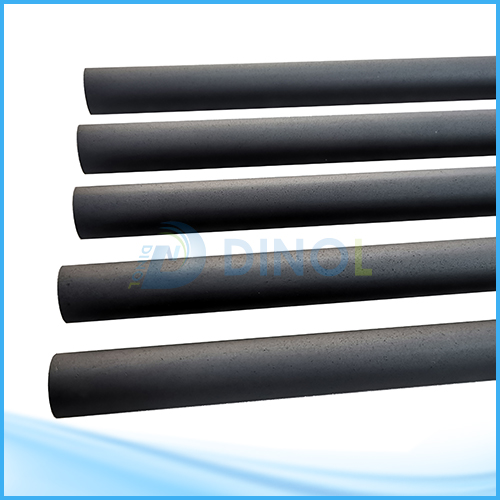
A titanium tubular anode for swirl electrolysis is a cylindrical MMO-coated electrode made from premium-grade titanium alloy, designed to perform in high-intensity electrochemical environments. The tubular geometry increases active surface area, which improves current distribution and reaction efficiency.
When installed in a swirl electrolysis cell, where rotating fluid dynamics intensify electrolyte contact, these anodes sustain stable current output while resisting chemical degradation. Industries ranging from water treatment to metal finishing rely on this electrode type for its durability, light weight, and low operating cost.
Introduction to Titanium Tubular Anodes in Swirl Electrolysis
Swirl electrolysis is an electrochemical process that moves fluids that spin faster between the electrode surface and the liquid. For this plan to work, the anode needs to be able to keep its shape and covering even after being hit with strong chemicals many times.
How the Tubular Structure Supports Swirl Flow
If the flow goes around in a circle, an anode in the shape of a cylinder works well. There is electrolyte fluid all over the tube, and the active covering works with it to mix the two. Flat plate anodes can make dead zones when there is spin. The electrochemical output is more stable because this shape doesn't have those.
The Role of MMO Coating in Electrode Stability
Heat is used to put mixed metal oxide coatings on top of the titanium base. Most of the time, these are iridium and tantalum or ruthenium and iridium mixes. With the coating, the overpotential for making oxygen or chlorine goes down, so it takes less energy to make one unit of those things. When the current loads are the same, a study in the Journal of Applied Electrochemistry confirms that oxide coatings on base metals don't stay on as long as MMO coatings on titanium substrates.
Why Titanium Is the Preferred Substrate
With the passive oxide layer of titanium, the base metal doesn't melt even if some of the MMO coating falls off. Because it is less dense (about 4.5 g/cm³ vs. 7.9 g/cm³), the system is lighter than stainless steel. It is still strong, though. Since these things are true, Ti is often used as the base for complicated swirl electrolysis setups.
Key Benefits and Chemical Properties of Titanium Tubular Anodes
What kind of anode material you choose affects how much it costs to run, how well it works, and how often it needs to be fixed. The titanium tubular anode for swirl electrolysis is better than other types of anodes when used in electrochemical service because:
- Strong corrosion resistance: The titanium base resists chloride, sulfate, and acidic electrolyte environments that would corrode graphite or iron anodes within months.
- High current efficiency: The MMO coating channels electrical energy into the intended reaction with minimal side losses, keeping energy consumption low per kilogram of product processed.
- Long service life: Under standard industrial current densities, well-maintained MMO tubular anodes typically achieve service lives measured in years rather than months, reducing replacement frequency.
- Good deposition uniformity: The tubular shape distributes current evenly across the electrode surface, which directly improves coating thickness consistency in electroplating and metal recovery applications.
- Low maintenance cost: Because the anode does not corrode structurally, routine service is limited to periodic inspection and electrolyte analysis rather than frequent physical replacement.
- Light weight and simple installation: The low mass of titanium tubes makes handling and positioning straightforward, cutting labor time during installation or changeover.
Over time, downtime and supply costs go down because of these benefits. It's possible for people who work in factories that process metal or plate things with metal to save enough money on materials and energy in one year to pay for the MMO tube anodes.
Titanium Tubular Anode vs. Other Anode Materials: A Comparative Analysis
In swirl electrolysis, different kinds of anodes don't work the same way. It's better for procurement engineers to give their managers good ideas when they know the pros and cons of common choices.
Titanium vs. Graphite
Even though graphite is cheap, strong ions take a long time to break it down. This damage makes the process bath dirty, and the size needs to be fixed a lot. Also, new parts need to be bought every two months. Titanium tubular anodes cost more up front, but they save you a lot of money when you remember how much it costs to hire new people and clean the water.
Titanium vs. Platinum-Coated Electrodes
This metal is very rare and costs too much to use in most industries. But it is very good at electrochemistry. Titanium tubular anode for swirl electrolysis with MMO coatings has almost as good of current efficiency as platinum, but it costs a lot less. In the fields of electroplating, hydrometallurgy, and treating water, they are the standard.
Key Comparison Parameters
When you make a selection grid for your own review, keep these four things in mind:
- Corrosion resistance rating in your specific electrolyte chemistry
- Operating current density range matched to your system design
- Coating lifetime expressed in ampere-hours per unit area
- Total cost of ownership over a five-year service period
Industrial Applications and Procurement Considerations
Titanium tubular anodes see active deployment across several industries where electrochemical precision matters.
Water Treatment and Environmental Protection
In water treatment systems, tubular anodes generate oxidants that neutralize organic contaminants and metallic ions. The environmentally friendly design of MMO anodes means no heavy-metal byproducts enter the treated stream, which supports regulatory compliance in markets with strict discharge limits.
Metal Processing and Electroplating
Electroplating lines depend on uniform current distribution to achieve consistent coating thickness. The tubular anode geometry supports this requirement directly, reducing reject rates and rework. Metal processing operations also benefit from the anode's temperature tolerance, which keeps performance stable even when bath temperatures rise during high-throughput production.
Cathodic Protection and Infrastructure
MMO tubular titanium anodes are used in cathodic protection systems for wharf steel piles, deep-sea platforms, above-ground storage tanks, and deep well installations. Their tubular profile integrates into complex structures, and they can be connected in strings for deep well deployments reaching depths where anode strings span 20 to 50 meters.
Procurement teams sourcing titanium tubular anode for swirl electrolysis should request certified material test reports, confirm available customization on outer diameter and active length, and clarify lead times before committing to a project schedule. Reputable suppliers provide documentation packages that support both internal technical review and regulatory audit requirements.
Maximizing Value: Installation, Usage, and Future Trends
You can tell how long the MMO tubular anode works best by how well it was put in place. Connections should be tightened up the way the maker says to, and the current density should stay in the right range so the coating doesn't wear off too fast.
Monitoring Current Density and Anode Wear
Every so often, the operators should write down the voltage and current of the cells. A slow rise in cell voltage at a steady current level is often a sign that the cover or links are wearing out. If this information is found early, it's better to plan backups for planned breaks than for shutdowns that have to happen quickly.
Advances in Coating Technology
More research is being done to find ways to make coatings that can hold even more ampere-hours. Thanks to new research on mixed-oxide ratios, the coating will last longer when the current is high. This is very important for swirl electrolysis cells that are small but have a lot of electrodes for their size.
Sustainable Design Direction
Businesses are changing how they make things so that they use less precious metal and still work well. This lowers the price per unit and the harm done to the earth by making anodes. This way of going fits with rules for buying things that take environmental concerns, technical needs, and financial concerns into account.
Conclusion
Titanium tubular anode for swirl electrolysis are the most popular choice for swirl electrolysis systems because they don't rust, use current well, and last a long time. To clean water, plate metal, and keep houses safe, people use them. With the MMO layer on top, they use little power, and the titanium base means that the structure won't break down after years of use.
Titanium tube anodes are always the most cost-effective electrode option that can be used on an industrial scale, as shown by performance data and proven use cases. These are the things that procurement engineers look for when they write a technical recommendation or make a short list of suppliers.
FAQ
How does a tubular anode improve swirl electrolysis efficiency?
The cylindrical surface exposes more active coating area to the rotating electrolyte than flat plate designs. This increases the reaction rate per unit volume of cell space, allowing the system to process more material at lower energy input.
What is the expected service life of an MMO tubular anode?
Service life depends on operating current density, electrolyte chemistry, and coating specification. Under typical industrial conditions, properly specified anodes deliver years of continuous service before coating renewal is needed.
Can these anodes be customized for specific cell dimensions?
Yes. Outer diameter, wall thickness, active length, and connection style are all adjustable parameters. Providing your cell drawings and current density requirements to the supplier allows them to confirm a compatible specification before production.
What coating types are available for different applications?
Common options include ruthenium-iridium for chlorine evolution applications and iridium-tantalum for oxygen evolution environments such as electroplating and cathodic protection. Your application chemistry determines the correct choice.
How do I start a sample evaluation?
Contact the supplier directly with your technical requirements and request a sample order. Most reputable manufacturers support sample testing before full-volume commitments.
Request a Quote from Tianyi — Trusted Titanium Tubular Anode for Swirl Electrolysis Manufacturer
Engineers are ready to help you with your next job at Tianyi. From Shaanxi Tianyi New Material Titanium Anode Technology Co., Ltd., you can make MMO tubular anodes that are exactly how you want them. Their paperwork for approved materials is clear, they can make OEM/ODM items, and you can change how many items you can order. Send your needs to info@di-nol.com by email or go to dsa-anodes.com to find out more or start an RFQ right away.
References
1. Journal of Applied Electrochemistry: Mixed Metal Oxide Films on Titanium Substrates: Efficacy and Durability, 2019.
2. In 2021, Electrochimica Acta published a study on the efficiency the coating stability of IrO-Ta-O-Ta anodes in industrial electrolysis.
3. Titanium Passive Layer Behaviour in Chloride and Sulphate Electrolytes, 2018.
4. Electrochemical Society Journal | Advances in MMO Anode Design with Cathodic Protection, 2020.
5. Materials Chemical and Physics—Precious Metal Loading and Oxygen Evolution Electrode Service Life, 2022.
6. NACE International Oxidation Conference Proceedings: Tubular MMO Anodes for Deep Well and Offshore Cathodic Protection, 2017.