




Canister Anode Import Guide: Specs, Costs, and Global Supply Tips
If you are sourcing a canister anode for cathodic protection on long-distance pipelines, storage tank floors, or offshore foundations, this guide covers everything you need to know — from technical specifications and pricing to supplier vetting and import logistics. Whether you are a project engineer preparing a material approval submission or a procurement manager building a qualified vendor list, the information here reflects real field requirements and current market conditions.
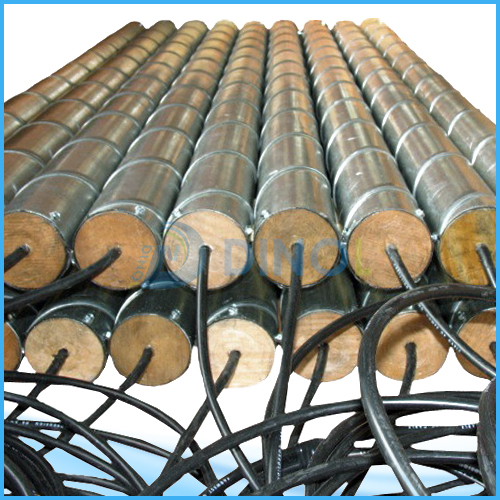
Understanding Canister Anodes for Cathodic Protection
What Is a Canister Anode?
A canister anode is an impressed current cathodic protection (ICCP) part that is already put together at the factory. It usually has a series of tubular Mixed Metal Oxide (MMO) titanium anodes surrounded by carbonaceous backfill, which is usually calcined petroleum coke, and it's all enclosed in a galvanized steel case. Along the anode string, a gas vent pipe lets electrolytic gasses escape while the system is working. The cable is already attached and sealed before shipping, so the unit can be put into a drilled well without any extra work on the job site.
How MMO Titanium Anodes Work
MMO anodes are made up of a Grade 1 pure titanium substrate (≥99.99% Ti, according to ASTM B338) that is covered in layers of precious metal oxides, most often Platinum, Iridium-Tantalum (Ir-Ta), or Ruthenium-Iridium (Ru-Ir). When 8–15 g/m² of the coating is put on, it lowers the anodic overpotential and keeps the current output stable for decades.
The titanium base is not easily deformed like high-silicon cast iron or graphite anodes, and it doesn't waste itself at a rate that can be measured during normal use. This means that the protection current stays the same from year one to year thirty-plus for the same unit.
Where They Are Deployed
Deep-well canister anode beds are set up vertically at depths greater than 20 meters. This shape keeps the anode groundbed away from the protected building. This makes the protection current flow more evenly and lowers the chance of stray currents interfering with nearby utilities or pipes. Underground oil and gas transmission pipes, large-diameter storage tank bottoms, port steel piling, city water supply networks, and offshore wind turbine foundations are all common places to put them down.
Comparing Canister Anodes: Making the Right Choice
MMO Titanium vs. Traditional Anode Materials
Anodes made of high-silicon cast iron or graphite were used in older deep-well systems. Both materials break down over time and need to be replaced often, which is a big problem for installations that are buried and hard to get to. The canister anode for cathodic protection, MMO titanium canister anodes have service lives of 30–50 years (with some configurations rated up to 70 years depending on coating loading and current density), while cast iron equivalents only last 10–15 years in real life.
Key Selection Parameters
To choose the right assembly for your project, you need to make sure that the product specs match the conditions on the site. These are the main technical factors that procurement managers and engineering teams usually look at:
- Coating chemistry: Ru-Ir coatings suit chloride-rich soils; Ir-Ta coatings are preferred for high-oxygen environments such as freshwater-saturated soils or offshore sediments.
- Anode dimensions: Standard tubular units measure 80 × 1,000 mm or 100 × 1,500 mm (ASTM B338 Gr.1 or Gr.2), with custom lengths available in 1 m, 2 m, 3 m, 5 m, and 6 m configurations.
- Cable insulation: Choose PVDF or HMWPE for chlorine-gas resistance in high-current applications; XLPE or HALAR for general buried service; KYNAR where chemical exposure is elevated.
- Canister weight and handling: Assembled units weigh 10–30 kg depending on well diameter and backfill volume, which directly affects crane requirements and installation labor cost.
The most important part of designing an anode bed is matching these parameters to data on the resistivity of the soil. This can be done by using Wenner tests done on-site or historical records from nearby ICCP systems. In low resistance zones, fewer wells are needed, which lowers the cost of building as a whole.
Regulatory and Standards Alignment
Projects that follow Chinese national standards use GB/T 50934 for cathodic protection of oil holding tanks and SY/T 0036 for underground pipeline systems. EN 12954 (the European pipeline CP standard) and NACE SP0169/SP0176 are often used in international bids. Buyers should ask sellers to give them a standards cross-reference document that lists the clauses that each product meets, along with a Certificate of Conformance (CoC) and test reports from the factory for each batch.
Global Procurement Guide for Canister Anodes
How to Evaluate Suppliers
The process of getting on the qualified vendor list (QVL) for ICCP anode makers usually takes between 4 and 12 weeks. Before any site visit or sample test, documents have to be looked over. Pay attention to the following when choosing a canister anode for cathodic protection:
- Does the manufacturer hold ISO 9001 certification and produce anodes under documented quality plans?
- Can they provide accelerated life test data (per NACE TM0108) and coating loading analysis (XRF, g/m²)?
- Do they hold ASTM B338 material certifications for the titanium substrate?
- Can they issue EN- and NACE-referenced technical datasheets to support design institute approval submissions?
The Baoji High-Tech Development Zone is home to Shaanxi Tianyi New Material Titanium Anode Technology Co., Ltd., which makes MMO titanium canister anodes by sandblasting, acid pickling, and high-temperature brush-coating Grade 1 titanium. The company ships from all of China's major ports and uses export-standard wooden crates with pearl cotton to protect the goods during transit.
Pricing, MOQ, and Lead Times
The price of an MMO canister anode depends on the type of coating, the number of anodes per string, the depth of the well, and the length of the cable. Most of the time, Ir-Ta or platinum-coated parts cost more than Ru-Ir coated units. The minimum order number is one unit, which makes it easy to get samples for new projects that need to be approved. Tianyi supports planning batch shipments that are in sync with the progress of building for big projects that need deliveries spread out over a period of time, like a 12-month moving supply schedule for a 200-well pipeline CP installation.
Import Logistics Considerations
As far as normal sea freight goes, canister anode assemblies are not considered dangerous goods because they are industrial electrochemical equipment. But the customs classification codes and import duty rates are different for each country. When buyers enter the U.S., they should check the HTS classification.
Cable terminations are kept dry during shipping by being packed in export-grade wooden crates and wrapped in moisture-barrier material. Asking for pre-shipment inspection reports and pictures of the crates being loaded adds to the quality guarantee before the goods leave the plant.
Best Practices for Importing and Managing Canister Anode Supplies
Supplier Due Diligence Checklist
Before putting in a purchase order for a big ICCP project, the engineering and procurement teams should make sure that any manufacturer of canister anode for cathodic protection can do the following:
- Batch-specific CoC with platinum group metal coating weight confirmed by XRF analysis
- Cable pull-out strength test results (minimum tensile load per IP68 seal specification)
- Bend test results confirming coating adhesion (ASTM B571 or equivalent)
- Electrical resistance measurement at the cable-to-anode connection (a common early-failure point in buried systems)
These papers explain in detail how to get material approval from design institutes and owner engineers.
Inventory Planning for Long-Duration Projects
Pipeline and tank farm ICCP projects usually take between one and three years to complete, from the first transport to the system going live. Keeping too much inventory on hand wastes money, but running out of stock during busy installation times delays project handover and leads to liquidated damages. You should talk to your canister anode provider about making a frame agreement that covers the whole project. This agreement should include issuing phased release orders every three or four months, based on confirmed installation dates.
Avoiding Quality Inconsistencies
The two main types of failure for deep-well MMO anodes that people report are coating delamination and water getting into the cable joint. It is expensive and takes a long time to fix a canister assembly that has been grouted into a deep well. This risk is greatly reduced by asking for approval of a pre-production sample and third-party review at the plant before each batch ships.
Conclusion
For deep-well ICCP groundbeds in the oil and gas, municipal infrastructure, and marine construction industries, MMO titanium canister anodes have taken the place of cast iron and graphite as the standard choice. Their stable current output, long service life, and factory-preassembled format cut down on both the time it takes to install and the cost of maintenance over their lifetime.
To successfully purchase a canister anode for cathodic protection, you need to match the coating chemical to the conditions of the site, get full standards paperwork for design approval, and set up a phased supply plan with a maker that can keep batch quality consistent over the course of a multi-year project timeline.
FAQ
What service life can I expect from an MMO canister anode?
Service life depends on coating loading (g/m²) and average operating current density. Titanium-based MMO assemblies are typically rated for 20–50 years; some configurations with platinum coatings are rated up to 70 years. Titanyi's standard product carries a 5-year warranty.
What cable insulation should I specify for buried deep-well applications?
PVDF and HMWPE are the industry-preferred choices where chlorine gas evolution occurs at the anode surface. For general buried service in non-aggressive soils, XLPE performs well and costs less.
Can the anode assembly be customized for non-standard well depths?
Yes. Anode string length and casing dimensions are configurable. Tianyi produces assemblies in lengths from 1 m to 6 m per segment, and full assembly dimensions are designed to your project specification.
What standards documents should I request before approving a supplier?
Request ASTM B338 mill certificates for the titanium substrate, XRF coating analysis reports, a CoC per batch, and a standards cross-reference table mapping product performance to EN 12954, NACE SP0169, and GB/T 50934 as applicable.
Is a single-unit trial order possible before committing to a full project volume?
Yes. The minimum order quantity is 1 unit, allowing engineering teams to perform independent testing and design institute approval before placing a project-volume purchase order.
Request a Quote from Tianyi — Canister Anode Manufacturer for ICCP Projects
Tianyi makes MMO titanium cylinder anodes for cathodic protection that can last up to 70 years, are fully certified by ASTM B338 and have IP68 ratings for wire seals. We are a direct manufacturer and supplier of canister anodes for cathodic protection. We offer design institute approval paperwork, phased batch delivery, and custom anode string configurations. You can get a datasheet or quote by sending your project details to info@di-nol.com or going to dsa-anodes.com.
References
1. NACE International. Cathodic Protection of Underground Storage Tank Systems. NACE SP0285, 2011.
2. British Standards Institution. Cathodic Protection of Buried or Immersed Metallic Structures. EN 12954, 2019.
3. ASTM International. Standard Specification for Seamless and Welded Titanium and Titanium Alloy Tubes for Condensers and Heat Exchangers. ASTM B338, 2021.
4. National Association of Corrosion Engineers. Control of External Corrosion on Underground or Submerged Metallic Piping Systems. NACE SP0169, 2013.
5. China National Standards Administration. Technical Code for Cathodic Protection Engineering of Petroleum Storage Tanks. GB/T 50934, 2013.
6. Gummow, R.A. Cathodic Protection Criteria — A Literature Survey. Materials Performance, NACE International, 1993.