




Top Uses and Benefits of Flexible Linear Anodes in CP Systems
Flexible linear anodes for cathodic protection have become a preferred solution for corrosion engineers managing buried pipelines, storage tank bottoms, and complex underground infrastructure. Unlike conventional rigid anodes, these cable-shaped systems distribute protective current evenly along their entire length, eliminating the localized "hot spots" that shorten asset life. Built around a titanium-based MMO wire core with an outer diameter of 38–40 mm and a design life exceeding 40 years, they address protection challenges that older impressed current methods simply cannot resolve in congested or high-resistivity environments.
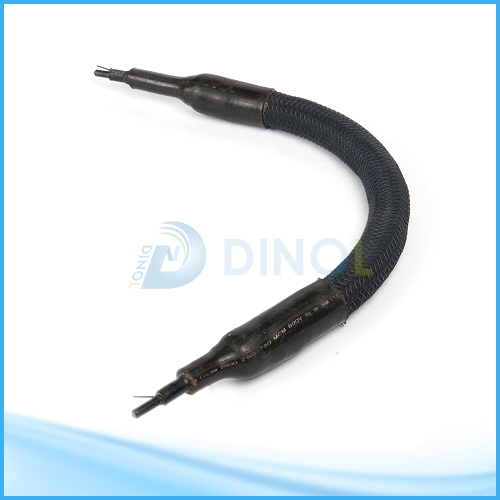
Understanding Flexible Linear Anodes in Cathodic Protection
As an extra anode in an impressed current cathodic protection (ICCP) system, a flexible linear anode is used. The power source sends current through the anode, into the soil or backfill around it, and then onto the target structure. This causes cathodic polarization, which stops the corrosion of the structure by electricity.
What Makes Them "Flexible"
The body of the anode looks like a wire. A copper conductor or MMO/Ti wire (which comes in 1.0 mm, 1.5 mm, 2.0 mm, and 3.0 mm sizes) runs inside a flexible sheath that surrounds carbonaceous backfill. Crews can bend, route, and cut the anode on-site to fit uneven tank bottoms or pipe corridors that are already full with other work.
Core Material: MMO-Coated Titanium
The titanium base is 99.6% pure titanium, and the anode's electrocatalytic stability comes from a Mixed Metal Oxide coating made of Ir, Ru, or Ta compounds that are put at a thickness of 6 to 10 μm. It has been approved under ISO 9001 and meets ASTM standards. The resistance at the point of contact between the MMO/Ti wire and the power line stays at or below 0.0009 Ω, which means that very little energy is lost.
Two Main Product Families
Different types of corrosion products are available to corrosion engineers. The first is the MMO/Ti linear anode, which releases the protective electric field through the titanium wire and is filled with carbonaceous material. The second is the conductive polymer flexible anode, which has a stranded copper conductor covered with a stable conductive polymer that slowly "drips" current into the ground to create a uniform electric field. The goal of both designs is the same: to make sure that the potential is spread out evenly across the whole protected structure.
Top Applications of Flexible Linear Anodes Across Industries
Flexible impressed current anodes appear across a wide range of industrial settings because their geometry fits where rigid anodes cannot.
External Bottom Surfaces of Steel Storage Tanks
Tank bottom corrosion is one of the highest-risk failure modes in petroleum storage. A network of flexible linear anodes for cathodic protection laid beneath the tank floor — following the grid pattern specified in GB 50393 and typical design institute drawings — delivers uniform cathodic protection potential across the entire plate. The system requires lower transformer-rectifier capacity because output voltage stays low, reducing capital cost for the rectifier unit.
Buried Pipelines in High-Resistivity Soil and Aging Coating Conditions
When a pipeline coating deteriorates, current demand rises sharply and bare metal points multiply. Flexible anodes installed in a parallel trench — filled with coke breeze to lower groundbed resistance — discharge current at up to 328 mA/m (DN-15 model) or 656 mA/m (DN-30 model), meeting demand even in high-resistivity soil environments. This makes them the standard choice for aging pipeline rehabilitation projects.
Complex Piping Networks, Offshore Structures, and Underground Facilities
In process plant environments, copper grounding grids and closely spaced buried structures make it hard to maintain electrical isolation. Close-proximity installation of flexible anodes reduces current losses and assures thorough current distribution on the target structure. MMO flexible anodes are also deployed on offshore platform jackets and complex steel structures in seawater, where they operate at current densities below 2000 A/m² and temperatures up to 80°C.
These three application categories cover the majority of scenarios where corrosion engineers call for a linear anode system. The cable-like form factor and cut-to-length capability make adaptation to project-specific geometry straightforward.
Flexible Linear Anodes vs Traditional Cathodic Protection Solutions
Engineers often weigh flexible linear anodes against conventional deep-well groundbeds or distributed sacrificial anode systems. The comparison matters for both technical performance and project economics.
Current Distribution and Dead Zones
Traditional deep-well impressed current systems concentrate current output at one point, creating potential gradients along a pipeline or tank bottom. Flexible linear anodes spread that output along their full installed length, removing unprotected dead zones. The cathodic protection potential decreases uniformly, and interference with adjacent structures stays minimal.
Installation Speed and Labor
Laying the flexible linear anodes for cathodic protection follows the same logic as laying a cable: dig a trench parallel to the structure, spread coke breeze, place the anode, cover with remaining coke breeze, compact native soil, and backfill. This process is faster and less disruptive than drilling deep-well groundbeds, which matters when a tank's inspection window is only 30–60 days after cleaning.
Service Life and Total Cost
The MMO/Ti linear anode carries a documented service life of 40 years or more, compared to sacrificial zinc or magnesium anodes that require periodic replacement. Over the asset lifecycle, lower anode consumption — measured in milligrams per ampere-year rather than pounds — translates to significantly lower replacement and excavation costs.
Installation and Maintenance Guidelines for Flexible Linear Anodes
When installing an underground system that can't be seen after backfilling, it's important to get it right the first time.
Surface Preparation and Trench Work
The anode trench should be lined up with the protected building at the distances shown on the engineer's plan. Spreading calcined petroleum coke breeze around and under the anode lowers the resistance of the ground, raises the current flow, and makes the anode last longer. The conductive polymer type can only be bent around a minimum radius of 500 mm. Tighter bends could damage the outer sheath.
Electrical Connectivity and Joint Sealing
All of the connections between cables and anodes need to be sealed with encapsulant that doesn't rust or age. It is suggested that the internal cable size be 1 × 10 mm² (XLPE/PVC, PVDF/HMWPE, or EPR/CSPE), which should match the output of the rectifier. After installation, checking the integrity by measuring the contact resistance at each joint node before backfilling is done.
Post-Installation Potential Surveys and Maintenance Criteria
Engineers should check the tank bottom potential distribution once the system with flexible linear anodes for cathodic protection is up and running to make sure that all zones meet the safety requirement (usually −850 mV CSE or more negative, according to NACE SP0169). If readings show that a zone isn't properly protected, the most common reasons are damaged sheaths, high-resistance joints, or low coke flow. Each of these has a specific way to fix it.
Procuring Flexible Linear Anodes: What B2B Buyers Need to Know
Picking the right supplier affects both the performance of the system and the risk of the purchase.
Certifications, Standards, and Documentation
Buyers should ask for material test reports that show the titanium is pure (>99.6%), that it meets ASTM standards, that it is certified by ISO 9001, and that it has an official design life commitment of 40 years or more. These papers support the technical scoring part of a competitive bid evaluation (usually 60% of the weight in China-market tenders) and meet the needs of the design institute and supervising engineer.
Customization, Lead Times, and Inventory
Most rolls come in lengths of 500 m or 1000 m. Lead time is 30 days for amounts up to 10,000 m; larger amounts are negotiated on an individual basis. Before placing a buy order, make sure that the seller has finished goods in stock for the wire diameter you specify (1.5 mm or 3.0 mm) for projects with tight inspection windows. This lowers the risk of being behind schedule.
After-Sales Technical Support
For underground work that is secret, a supplier that only gives supplies makes it hard to check the work. When buyers want to add anodes to an existing transformer-rectifier, they need a partner that can measure the current output on-site, test the potential distribution after the system is up and running, and confirm that the two systems will work together. Before committing to a full order, you can get free samples to make sure the material meets your needs.
Conclusion
Fixed-point impressed current systems aren't very good at protecting against corrosion in places like tank bottoms, aging pipeline corridors, high-resistance soils, and crowded underground areas. The flexible linear anodes for cathodic protection can handle these issues better. Their MMO/Ti design gives them a 40-year service life, even potential distribution, low rectifier power demand, and an easy mounting process that uses cables. As important as the anode specification itself is choosing a supplier with well-documented materials, quick stock availability, and real commissioning support for procurement engineers who are in charge of infrastructure that is hidden from view.
FAQ
What is the expected service life of an MMO/Ti linear anode?
Because of how little MMO coating is used (milligrams per ampere-year), the standard design life is 40 years or more. How long it lasts depends on the operating current density and the chemistry of the soil.
Do flexible linear anodes work in high-resistivity soil?
Yes. Putting calcined petroleum coke breeze back around the anode lowers the groundbed resistance and keeps the current flow high even when the resistivity of the local soil is high.
What wire diameter should I specify?
Standard is Φ1.5 mm MMO/Ti wire (DN-15, 328 mA/m output) for moderate current needs. For uses with more current, ¦3.0 mm wire (DN-30, 656 mA/m) increases power by two times. Diameters can be made to order.
Can the anode be cut to a specific length on-site?
Yes. The cut-to-length design and flexible construction make it possible to trim the material on-site to fit the exact measurements of a project without using any special tools.
How do I verify system performance after installation?
Check the protected surface for the distribution of the cathodic protection potential. Protected zones meet standard requirements if readings are less than 850 mV CSE.
Get Flexible Linear Anode Samples and a Technical Quote from Tianyi
Tianyi makes MMO/Ti and conductive polymer flexible linear anodes for cathodic protection that meet ASTM standards. They are ISO 9001 certified and have a design life of 40 years. We are a trustworthy company that provides flexible linear anodes for cathodic protection. We offer free samples, 500 m and 1,000 m stock rolls, and full operational support, which includes measuring on-site and checking the potential distribution. You can get a detailed technical proposal within 48 hours by sending your project details, the amount of current you need, and the diameter of the wire to info@di-nol.com or visiting dsa-anodes.com.
References
1. NACE International. Cathodic Protection of Underground Storage Tank Systems. NACE SP0285, 2011.
2. ASTM International. Standard Guide for Impressed Current Cathodic Protection of Internal Submerged Surfaces of Steel Water Storage Tanks. ASTM G158, 2015.
3. Peabody, A.W. Control of Pipeline Corrosion. NACE International, 2nd ed., 2001.
4. Morgan, J.H. Cathodic Protection. NACE International, 2nd ed., 1993.
5. Lazzari, L., and Pedeferri, P. Cathodic Protection. Politecnico di Milano Press, 2006.
6. Gummow, R.A. "Cathodic Protection Considerations for Pipelines with AC Mitigation Facilities." Materials Performance, NACE International, 2010.