




Cathodic Protection Guide: Choosing Titanium Conductor Straps
For an ICCP system provider or corrosion defence contractor, choosing the correct titanium conductor strap for cathodic protection might be the difference between a 20-year system and a 50-year system. This handbook addresses material qualities, installation techniques, procurement requirements, and supplier selection – providing engineering or procurement teams with the technical underpinning to make informed choices before the first bolt is turned.
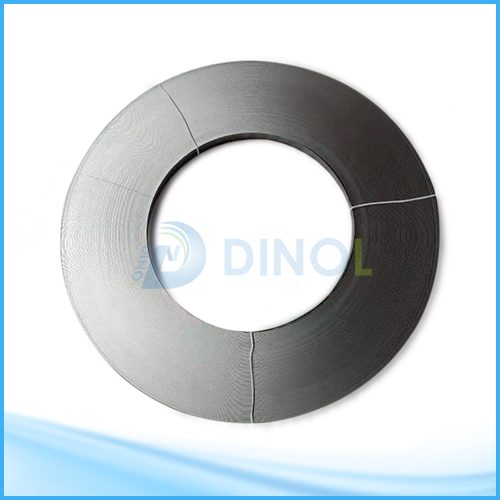
Understanding Titanium Conductor Straps in Cathodic Protection
A titanium conducting conductor strap is not an anode – it is the route for the current from your MMO anode, busbar and power source. It is made of commercially pure titanium (ASTM B265 Grade 1 or Grade 2) and will conduct impressed current in the ICCP circuit but will not participate in electrochemical processes at the anode surface. That 's important - the MMO coating on you're anode wears away slowly , but the titanium strap stays electrochemically passive.
Material Grade and Electrochemical Role
Grade 1 titanium has the highest ductility and is the material of choice when the strap has to be twisted around complicated geometries such as offshore platform bracings. Grade 2 has somewhat greater tensile strength (a minimum of 345 MPa against 240 MPa) and is designed for flat, straight applications such as a typical storage tank bottom safeguards. Neither grade generates a passivation barrier who impedes electron passage at typical operating current densities.
Industry Standards That Govern Selection
Procurement engineers need to check conformance to the ASTM B265 for strip/sheet form, ANSI SP0169 and ISO 15589-1 for underground pipeline cathodic protection design, as well as NACE SP0176 for offshore constructions. If the project is controlled by EN 12954 or GB/T 50934, check that the supplier can provide the cross-reference compliance documents. This is a frequent shortlist demand from Chinese petrochemical engineering organisations and multinational EPC contractors.
Typical Dimensions and Configuration Options
Tianyi supplies the titanium conductor strap for cathodic protection in widths from 10 mm to 50 mm, thicknesses from 1 mm to 5 mm, and lengths up to 6,000 mm, with coil and custom-formed profiles also available. These dimensions cover the majority of offshore, pipeline, bridge, and tank-bottom applications without requiring field modification.
Comparing Titanium Conductor Straps with Other Materials
There are still many jobs that need copper braids or metal connection pieces from older system designs. Titanium has replaced those materials in ICCP installations that will last for a long time because it is better in every way.
There are three main types of conductor strap material. When picking one, here are some important things to keep in mind:
- Copper conductor straps offer high electrical conductivity (~58 MS/m), but corrode aggressively in chloride-laden seawater and acidic soil environments. Copper oxides form at connection points, increasing contact resistance over time and eventually triggering system underperformance — a particularly costly problem in buried installations where remedial access is difficult.
- Because aluminum is amphoteric, it is responsive to both acidic and basic fluids. This means that aluminum bands are cheap and light. In concrete or dirt where the pH changes, aluminum connection pieces can lose their strength in five to ten years. By contrast, the titanium conductor strap for cathodic protection maintains stable performance. This is a lot less time than the 30 years that the ICCP design life says they should last.
- Titanium conductor straps maintain stable conductivity across the full service life, resist chloride corrosion without a protective coating, and do not develop deposit layers that raise contact resistance. Their tensile strength (240–345 MPa depending on grade) supports mechanical fixings — welding, bolting, or clamping — without risk of cold cracking.
Installation and Maintenance of Titanium Conductor Straps
How well a joint is installed directly affects how sound it is, even if it is buried and hard to get to.
Clean any parts that will come in contact with water with a non-chlorinated liquid before putting them together. Make sure that the busbar and the end of the MMO anode don't have any oxide scale on them where they touch. Make sure you have IP68-rated heat-shrink or cast-resin covering that you can use before you start working. Regular electrical tape shouldn't be used in environments where it will be submerged or buried.
Inspection and Long-Term Maintenance
ER Ti-1 or ER Ti-2 filler and the TIG process can be used to join titanium straps together. These can be joined with titanium or Monel bolts, or they can be clamped into anode module assemblies. The most reliable long-term waterproofing for buried pipeline installations is achieved with welded connections that are sealed with resin at the factory. When welding isn't a choice, bolted connections are a good way to add on to old offshore buildings.
Procurement Guide for Titanium Conductor Straps
Sourcing the wrong strap from an uncertified titanium conductor strap supplier introduces material substitution risk that no inspection at the point of arrival can fully eliminate.
Supplier Qualification Criteria
Request mill certificates traceable to ASTM B265 for every batch of the titanium conductor strap for cathodic protection. Verify that the manufacturer holds ISO 9001 quality management certification and can provide a Certificate of Conformance (CoC) with each shipment. For projects governed by Chinese national standards, confirm GB/T 50934 documentation support. Ask directly whether the supplier's technical team can assist your design institute with drawing review and material approval — this is a standard service expectation among major EPC contractors.
Lead Times, Batch Delivery, and Minimum Orders
Large pipeline or offshore projects may require phased delivery over 6 to 18 months. Confirm that the manufacturer can schedule batch shipments against a master purchase order rather than requiring separate orders each time. Tianyi accommodates phased delivery programs and custom packaging for international freight, reducing the risk of transit damage to precision-formed strap assemblies.
Evaluating Long-Term Partnership Value
A reliable titanium conductor strap manufacturer should offer more than product — they should provide dimensional customization, technical documentation aligned to project specifications, and responsive after-sales support. Evaluate this capability during the pre-award technical clarification stage, not after contract signature.
Conclusion
It is important to choose the right titanium conductor strap for cathodic protection because it will affect how well the system works for a long time. There is no way that copper or aluminum can stand up to Grade 1 and Grade 2 titanium in an ICCP setting for a long time. Good installation practices, regular resistance monitoring, and careful supplier qualification are the three things that separate ICCP systems that work as planned from those that need repairs that cost a lot of money and take a lot of time.
FAQ
Why does titanium outperform copper in marine ICCP applications?
Titanium forms a stable, self-repairing oxide layer that resists chloride attack without any protective coating. Copper corrodes in seawater, producing resistive oxide deposits at connection points. Over a 30-year design life in an offshore or tidal zone environment, titanium connections remain stable while copper connections degrade progressively.
What IP rating should a strap connection achieve for buried installations?
IP68 is the accepted standard for direct-burial and immersion applications. Connections sealed below this rating risk water ingress at the joint, which accelerates galvanic corrosion at the titanium-to-cable interface and can cause system failure in a location that is extremely difficult to excavate and repair.
What dimensions are typically available for titanium conductor straps?
Standard commercial sizes range from 10 mm to 50 mm in width and 1 mm to 5 mm in thickness, with lengths up to 6,000 mm. Custom dimensions, coil forms, and pre-formed profiles are available from manufacturers who offer OEM fabrication.
How do I verify titanium grade authenticity at goods receipt?
Request the mill certificate and match the heat number on the certificate to the marking on the material. Third-party XRF analysis can confirm elemental composition if your project specification requires independent verification.
Partner with Tianyi for Your Next ICCP Project
Tianyi makes approved Grade 1 and Grade 2 titanium conductor bands that are made to be used in ICCP systems for a long time in pipelines, offshore, and public infrastructure. It is safe to buy titanium conductor straps from Tianyi, and they can also do OEM work. They offer custom sizes, paperwork packages that meet standards, and batch delivery programs that are carried out in stages. Get in touch with our tech team at info@di-nol.com or dsa-anodes.com to get a project price or an information on material compliance.
References
1. NACE International. NACE SP0169: Control of External Corrosion on Underground or Submerged Metallic Piping Systems. 2013.
2. ISO. ISO 15589-1: Petroleum and Natural Gas Industries — Cathodic Protection of Pipeline Systems — Part 1: On-Land Pipelines. 2015.
3. NACE International. NACE SP0176: Corrosion Control of Steel Fixed Offshore Structures Associated with Petroleum Production. 2007.
4. ASTM International. ASTM B265: Standard Specification for Titanium and Titanium Alloy Strip, Sheet, and Plate. 2020.
5. European Committee for Standardization. EN 12954: Cathodic Protection of Buried or Immersed Metallic Structures — General Principles and Application for Pipelines. 2019.
6. Baboian, R. (Ed.). Corrosion Engineer's Reference Book, 3rd ed. NACE International. 2002.