




How Do ICCP MMO Coated Titanium Anodes Protect Marine Steel Pipelines?
Marine steel pipelines face constant electrochemical attack from seawater, making corrosion prevention a non-negotiable engineering priority. ICCP MMO coated titanium anodes for cathodic protection work by supplying a controlled DC current to the steel surface, shifting its electrochemical potential into a protected range where oxidation reactions slow to negligible rates. Built on a high-purity titanium substrate (Gr1/Gr2) and coated with Mixed Metal Oxides such as Ru-Ir or Ir-Ta formulations, these anodes deliver stable, long-term current output in aggressive chloride environments—without significant anode consumption or system downtime.
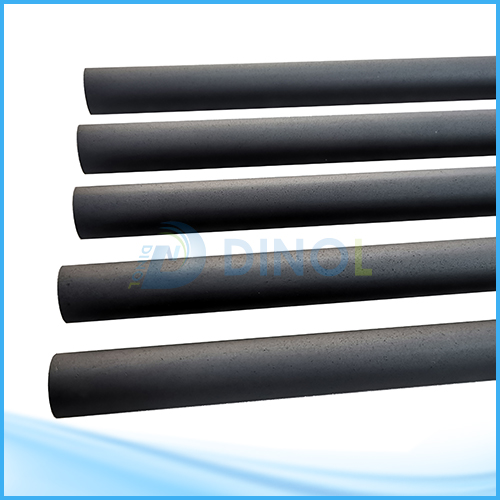
Understanding ICCP MMO Coated Titanium Anodes
What Is an ICCP System?
When steel structures are submerged in an electrolyte, like seawater, soil, or brackish water, impressed current cathodic protection applies an outside DC voltage to the structures. Electrons are pushed toward the steel by a power supply. This stops the anodic dissolution that causes rust and wall-thinning. ICCP is better than sacrificial anode systems because engineers can change the level of protection at any time. This is very important for large-diameter pipelines that go through areas with changing soil resistivities or high tides.
What Makes MMO Coating Different?
The titanium foundation is covered with heated Mixed Metal Oxide. Typically, soil and freshwater contain IrO₂/Ta₂O₅, whereas saltwater has RuO₂/IrO₂. This creates a dimensionally stable anode (DSA) with a low consumption rate (milligrams per ampere-year). However, graphite anodes wear out, need to be changed, and leak carbon particles. High-silicon cast iron anodes are delicate and hefty, making them difficult to transport or bury.
Key Technical Specifications
Tianyi makes MMO-covered titanium anodes from ASTM B265 Grade 1 or 2. Mesh, ribbon, disc, and custom geometries are possible. Project-specific length, breadth, diameter, and thickness may be modified. The coating can withstand current rates of 100 A/m³ in soil and 600 A/m³ in saltwater. The anodes perform best at pH 1–12. Each device satisfies NACE TM0108 and TM0294 testing requirements and comes with a CoC.
How ICCP MMO Coated Titanium Anodes Protect Marine Steel Pipelines
The Electrochemical Mechanism
The saltwater electrolyte transfers an impressed current from the iccp mmo coated titanium anodes for cathodic protection to the steel piping (cathode). This current opposes natural corrosion. In salty water, steel naturally anodes and rusts. Steel becomes a cathode in the ICCP device. Instead of breaking down titanium, the MMO layer generates oxygen and chlorine at the anode surface. This preserves geometry throughout time.
Performance in Saline and Dynamic Marine Conditions
Seawater is more harmful due to chloride ions and currents and tides. Ru-Ir MMO formulations are for these conditions. The coating's electrocatalytic activity is maintained even at high current density, and the titanium substrate's passive oxide layer can repair itself if damaged, unlike graphite and cast iron. Field data from offshore platform installations shows that well-designed MMO anode systems may survive 20 years or more without maintenance.
Maintenance Considerations and Common Pitfalls
The cable-to-anode connection is what makes the long-term performance reliable. The most common way for buried or submerged ICCP installations to fail is for moisture to get in at the termination point. This is because those joints are hard to get to once the system is up and running. Tianyi solves this problem by covering all the connections in premium epoxy resin.
This gives the product waterproofing up to IP68 level and mechanical pull strength above normal project requirements. Checking the system's output current, pipe-to-soil potential, and rectifier voltage on a regular basis makes sure that it meets the protection standards set by NACE SP0169 and EN 12954.
Comparing ICCP MMO Coated Titanium Anodes with Alternatives
Selecting the right anode type directly affects project economics and long-term reliability. The table below summarizes how MMO coated titanium anodes compare against commonly specified alternatives.
Here is a direct comparison across the four most common anode types used in marine cathodic protection:
- MMO Coated Titanium: Consumption rate near zero (< 1 mg/A·yr in seawater); design life 20–50 years; lightweight and available in mesh or ribbon for flexible installation; environmentally inert by-products; suitable for high current density applications up to 600 A/m² in chloride-rich water.
- Graphite Anodes: Moderate consumption rate; design life typically 5–15 years; carbon shedding creates minor environmental concerns; lower upfront cost but higher total lifecycle cost due to replacement frequency and system downtime.
- Platinized Titanium Anodes: Very low consumption rate; higher precious metal cost than MMO; well-suited for localized high-intensity applications but less economical at scale for long pipeline runs or large offshore structures.
- Zinc Sacrificial Anodes: Zero energy cost but finite and non-adjustable; suited to small structures or where power supply is unavailable; impractical for long pipelines or structures requiring precise potential control.
Each option carries a different cost-performance profile, and the best choice depends on electrolyte resistivity, required design life, installation method, and budget structure. For most large marine infrastructure projects—offshore wind foundations, jetty piles, and subsea pipeline corridors—iccp mmo coated titanium anodes for cathodic protection deliver the strongest total-cost justification over a 25-year asset horizon.
Procurement Insights for ICCP MMO Coated Titanium Anodes
OEM Customization and Specification Alignment
Current demand, burial depth, soil or water resistivity, and geometric constraints are some of the things that make each marine pipeline project unique. Tianyi offers anode shapes that can be fully customized, such as mesh, ribbon, tube, or disk, and can make sure that production matches the exact size requirements listed in a project's technical specification sheet. Our engineering team helps design institutes and project managers get materials approved. For projects that need to meet Chinese national standards, they make data sheets that reference EN 12954, NACE SP0176, and GB/T 50934.
Lead Times, Logistics, and Quality Assurance
Tianyi can schedule batch shipments to match on-site installation milestones for big projects that need to be delivered in stages over 6 to 18 months. This lowers the inventory pressure in the warehouse without putting supply gaps at risk during key construction times.
A valuable metal loading report checked by XRF, rapid life test certificates according to NACE TM0108 standards, and adhesion test records are all included in every package. The packaging is designed to keep the coating from wearing off during ocean freight, which is a common reason why customers complain about the quality of rival goods.
Long-Term Cost-Benefit Breakdown
When total lifetime cost, not just buying price, is looked at, the economic case for MMO-coated titanium anodes becomes clear. While graphite or cast iron anodes may be cheaper per unit at first, the total cost can go up by three times or more over the course of a 30-year pipeline life due to replacement cycles, mobilization costs for offshore maintenance, and production interruptions. On the other hand, MMO titanium anodes usually don't need to be replaced during their rated service life if they are installed and checked properly.
Ensuring Long-Term Performance and Brand Trust
Certifications and Third-Party Validation
Tianyi's manufacturing process is in line with ISO quality management standards, and our iccp mmo coated titanium anodes for cathodic protection meet the requirements set by classification bodies like ABS and DNV for marine use. Testing by a third party, using SEM to look at the surface's shape and XRF to check the coating's weight, shows that the product is consistent across production runs.
Transparency Through Technical Data
When an order is placed, we give full technical data packages to procurement teams and design engineers. These packages have information about the coating's make-up, its current density, the results of an accelerated life test, and reference project documentation. Being clear during the design stage lowers technical risk and speeds up the time it takes to qualify suppliers.
Global Service Network and Client Confidence
Tianyi provides ICCP anode systems for projects in the offshore Asia-Pacific, the Middle East, and Southeast Asia. The company is also becoming more visible in the North American and European markets. Our customers know that if they have any questions during installation or commissioning, they will get timely, technically correct answers from our after-sales engineering help, which is available until the project is finished.
Conclusion
Electrochemistry is always a threat to marine steel pipelines, and only a well-designed cathodic protection system can keep it at bay for the long term. Titanium anodes treated with MMO have a stable impressed current flow, almost no consumption, and design lives that are good for 20 to 50 years in seawater service.
It is well known that iccp mmo coated titanium anodes for cathodic protection perform better than alternatives like graphite, cast iron, and sacrificial zinc in offshore and pipeline infrastructure around the world. Getting the right anode and manufacturing partner is important for making a system that lasts and avoiding one that fails quietly in a joint that can't be reached.
FAQ
How long do MMO coated titanium anodes last in seawater?
When operated within rated current density limits (up to 600 A/m² for Ru-Ir formulations), MMO coated titanium anodes typically achieve design lives of 20–50 years in marine environments. The titanium substrate's self-healing oxide film prevents substrate corrosion even under high-chloride exposure, and the MMO coating's consumption rate remains below 1 mg/A·yr under standard seawater operating conditions.
Are MMO titanium anodes more efficient than graphite anodes?
Yes. Graphite anodes erode during normal operation, gradually losing geometric stability and output consistency. MMO coated titanium anodes are dimensionally stable, meaning current distribution remains uniform across the full service life. This reduces the risk of under-protection zones forming along pipeline corridors—a significant operational safety advantage.
Can these anodes be customized for unusual pipeline geometries?
Tianyi manufactures anodes in mesh, ribbon, disc, tubular, and fully custom shapes. Dimensions—including length, width, and coating configuration (single-sided or double-sided)—are adjustable to match project-specific design requirements. Engineering support is available to assist with anode selection, spacing calculations, and documentation for design institute approval.
Partner with Tianyi for Your Next Marine Pipeline Protection Project
Tianyi makes professional-grade Iccp mmo covered titanium anodes for cathodic protection supplier-grade supply chains that serve clients around the world in the oil and gas, pipeline, port, and infrastructure industries. Our anodes are made to meet the standards set by NACE, EN, and GB.
They also come with full quality paperwork and can be made in any way that fits the technical needs of your project. Contact our engineering team right away to get a product datasheet, ask for a sample, or get a quote that is tailored to your project. To begin, go to dsa-anodes.com or send an email to info@di-nol.com.
References
1. NACE International. NACE TM0108: Test Method for Evaluation of Coatings Used in Offshore Platforms and Structures in Simulated Splash Zone Conditions. 2008.
2. NACE International. NACE SP0176: Corrosion Control of Steel Fixed Offshore Platforms Associated with Petroleum Production. 2007.
3. British Standards Institution. EN 12954: Cathodic Protection of Buried or Immersed Metallic Structures — General Principles and Application for Pipelines. 2001.
4. Lide, D. R. (Ed.). CRC Handbook of Chemistry and Physics. CRC Press, 2005.
5. Shreir, L. L., Jarman, R. A., & Burstein, G. T. Corrosion: Metal/Environment Reactions, Vol. 2. Butterworth-Heinemann, 1994.
6. Baeckmann, W. V., Schwenk, W., & Prinz, W. Handbook of Cathodic Corrosion Protection. Gulf Professional Publishing, 1997.