




A Buyer’s Guide to Importing Tubular Anodes for Swirl Electrolysis
If you're sourcing a titanium tubular anode for swirl electrolysis, this guide is written specifically for you. Whether you're a plant engineer, OEM equipment designer, or procurement specialist, you already know that selecting the wrong anode material costs time, money, and production uptime. This guide walks you through what these anodes actually are, why titanium with MMO coating outperforms alternatives, and how to import them without common pitfalls. By the end, you'll have enough technical clarity to evaluate suppliers confidently and bring a solid recommendation to your decision-maker.
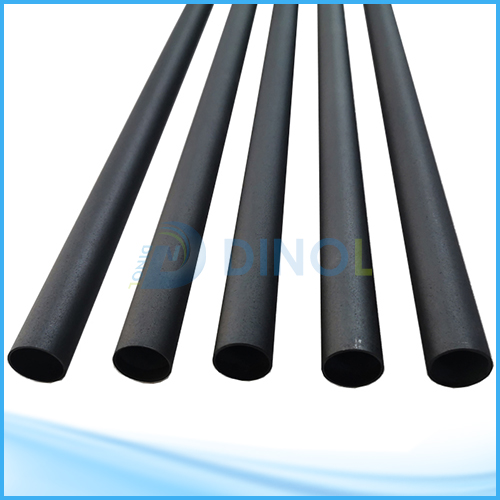
Understanding Titanium Tubular Anodes in Swirl Electrolysis
You can make the movement of ions and reaction rates better inside an electrolytic cell by slowly spinning a fluid. This is called swirl electrolysis. For this design to work, the electrodes must be able to last for a long time in environments with high current densities, rough media, and chemicals that are harmful to them.
How Tubular Anodes Function in Swirl Systems
As a result of its cylindrical shape, an electrolyte can flow around and through its surface. The active contact area gets bigger, and the current flows more evenly across the whole electrode. This is very helpful in swirl-type cells, where the flow patterns aren't all the same.
Why MMO Coating Matters
When Shaanxi Tianyi wants his tube anodes to work, he puts an MMO layer on top of a Grade 1 or Grade 2 titanium base. The actual surface that does the chemical work is the MMO layer, which is generally made of iridium-tantalum oxide or ruthenium-iridium oxide. A lot of electricity flows through it, and the titanium base keeps it strong and stops corrosion.
Real-World Operating Conditions
A lot of the time, titanium tubular anode for swirl electrolysis and these anodes are used to work with metals and clean water. Between 100 and 500 A/m² of current flow through them, in solutions with pH levels between 1 and 13, and at temperatures up to 60°C. Even though the MMO coating is almost worn out, the base doesn't break down because of the inactive oxide layer on titanium.
Comparing Anode Materials: Why Choose Titanium Tubular Anodes?
It is not always the case that all anode materials work the same in tough industrial settings. Find out how titanium compares to other materials on the market before you order it.
Titanium vs. Graphite
Graphite anodes are cheap at first, but they get dirty with use and need to be replaced often because they wear away all the time. In swirl electrolysis systems, the particles that form when graphite breaks down can change the shape of the cell and make the flow less even. Surfaces of titanium that have MMO coats don't make these wastes.
Titanium vs. Stainless Steel
Anodes made of stainless steel can dissolve actively in solutions that contain chlorine. During electroplating and water cleaning, this happens a lot. Tin, on the other hand, forms a strong passive oxide film that chloride can't get through. Because of this, MMO-coated titanium anodes last longer and cost less to maintain. When used normally, they last between 5 and 10 years.
Selection Criteria That Actually Matter
Here are the most important things to think about when picking an anode material for your process:
- Current efficiency: MMO-coated titanium anodes deliver high current efficiency with low energy consumption per unit output, reducing operating costs over time.
- Coating type: Ruthenium-iridium coatings suit chlorine evolution; iridium-tantalum coatings perform better in oxygen-evolving environments like sulfuric acid.
- Dimensional tolerance: Tubular anodes must fit your cell geometry precisely. Titanium can be machined and welded to custom lengths and diameters.
- Weight: Titanium's low density makes installation straightforward, especially in suspended or vertical-electrode configurations.
Iridium-tantalum coatings work better in places where oxygen is being made, like sulfuric acid, for the titanium tubular anode for swirl electrolysis. Ruthenium-iridium coatings, on the other hand, work better in places where chlorine is being made.
A Step-by-Step Guide to Importing Titanium Tubular Anodes
Before you talk to buyers, make sure the specs are right. This is the most important part of buying. This is a good order to follow.
Step 1 — Define Your Technical Specification
Before you ask for a price, write down the full length, the type of coating (iridium-tantalum or ruthenium-iridium), the base grade (Gr1 or Gr2 titanium), and the amount of power your system can handle. Providers are more likely to give correct information if you ask them these questions first.
Step 2 — Evaluate Supplier Credibility
Look for makers that have ISO 9001 approval, proof that they can make what you need, and case studies you can look at. There is a company called Shaanxi Tianyi New Material Titanium Anode Technology Co., Ltd. in the Baoji High-Tech Development Zone that can make both OEM and ODM items. They have a quality control process that includes checking the raw materials and testing the finished goods. Before you take a sample, you should get information about the product and a report on what's in the coating.
Step 3 — Manage Sampling, Lead Time, and Logistics
Before you order a lot of something, you should ask to see some samples. When you buy handmade tube anodes, you may have to wait anywhere from 15 to 30 days. However, this can change depending on the finishing needs and the number of orders. If you want to bring something into the U.S., make sure you know the HS code (which is usually 8543.70 or 8548.00, depending on the form) and that the seller gives you export paperwork like a material test report and proof of conformance.
Optimizing the Use and Maintenance of Titanium Tubular Anodes
Even the best titanium tubular anode for swirl electrolysis won't work as well if you don't take care of it or put it in the right place. You can protect both the electrode and the process product when you properly connect the electrode to your swirl electrolysis system.
Installation Best Practices
To protect the contact point from galvanic rusting, make sure that the metal clamps you use to connect wires are made of platinum- or titanium-group metals. Do not make the mechanical seals around the tube body too tight. They often fail early because of stress building up near the connection points. Based on how your cell was designed, keep the flow rates of electrolytes steady.
Routine Inspection and Cleaning
Every six months, check the state of the MMO coating when there is a lot of power. You can tell that the covering is breaking down early on when the cell voltage goes up at a steady current and when the oxide surface gets darker or pitted and gas evolution is less even. Soaking in a weak acid (5–10% HCl) that doesn't hurt the MMO layer can get rid of scale layers.
Extending Anode Service Life
It makes sense that working with less current than the maximum rated density would make the coating last longer. Do not go to events with reverse polarity. MMO coats can be taken off by even short changes from anodic to cathodic. If the power goes out, use a diode safety circuit to stop the flow of reverse current when the system first turns on.
Conclusion
Picking the right titanium tubular anode for swirl electrolysis is a technical choice that has direct effects on the bottom line. It is good that MMO coats are deposited evenly on titanium surfaces. These surfaces also protect well against rust and last longer than both graphite and stainless steel. To keep the process on schedule and protect your investment, be clear on what you need, look at providers based on what they say they can do, and do installation and maintenance the right way.
FAQ
How long do MMO-coated titanium tubular anodes typically last?
Under normal operating conditions — current densities below 300 A/m² and pH within design range — MMO-coated titanium tubular anodes typically last between 5 and 10 years. Service life depends heavily on coating loading (g/m² of precious metal oxide), operating current density, and electrolyte composition. Higher noble metal loading generally extends lifespan proportionally.
What certifications should I request from a titanium anode supplier?
Request ISO 9001 quality management certification, a material test report (MTR) confirming titanium substrate grade, and a coating composition analysis. For U.S. import, ask for a certificate of conformance and check whether the supplier can provide RoHS compliance documentation if your application involves consumer-related end products.
Can tubular anodes be customized for non-standard cell geometries?
Yes. Titanium's machinability allows tubular anodes to be produced in custom outer diameters, wall thicknesses, and active lengths. Tianyi provides fully customizable dimensions with OEM/ODM capability, which is particularly useful for equipment manufacturers building proprietary swirl electrolysis cells.
What makes swirl electrolysis more efficient than conventional electrolysis?
Swirl electrolysis uses rotational fluid motion to reduce the diffusion layer thickness at the electrode surface. This increases mass transport of ions to the electrode, improving reaction rates and deposition uniformity. The result is higher current efficiency and more consistent output — provided the anode geometry and material are matched to the flow conditions.
Request a Quote from Tianyi — Trusted Titanium Tubular Anode Supplier
Tianyi knows how to precisely make MMO-coated titanium tubular anodes that can be used for swirl electrolysis and other electrochemical tasks. To meet your specific needs for size, covering, and current, we make our anodes. In every step of the production process, they are checked for quality. You can get product datasheets, read application cases, and send us your RFQ by emailing our engineering team at info@di-nol.com or visiting dsa-anodes.com. We answer without feeling rushed or having to make a lot of calls to follow up.
References
1. Trasatti, S. — Electrochimica Acta, 2000. "The Absolute Electrode Potential: An Explanatory Note."
2. Comninellis, C. & Chen, G. — Electrochemistry for the Environment, Springer, 2010.
3. Kirk-Othmer — Encyclopedia of Chemical Technology, 5th Edition, Wiley, 2004. "Electrochemical Processing."
4. Pletcher, D. & Walsh, F.C. — Industrial Electrochemistry, 2nd Edition, Blackie Academic, 1993.
5. Chen, G. — Separation and Purification Technology, 2004. "Electrochemical Technologies in Wastewater Treatment."
6. Kraft, A. — Platinum Metals Review, 2008. "Doped Diamond Electrodes and MMO Anodes in Electrochemical Water Treatment."