




Can a Sodium Hypochlorite Electrolytic Cell Replace Chlorine Dosing?
Yes — a sodium hypochlorite electrolytic cell can genuinely replace traditional chlorine dosing in most industrial water treatment applications. Instead of storing and injecting hazardous liquid chlorine or chlorine gas, these systems produce sodium hypochlorite on-site by electrolyzing a dilute salt solution. The result is a continuous, controllable supply of active chlorine with equivalent oxidation capacity. For facilities ranging from municipal water plants to food processing lines and marine vessels, on-site generation addresses both safety regulations and operational reliability simultaneously.
Understanding Sodium Hypochlorite Electrolytic Cells
How the Electrochemical Process Works
When electricity passes through an electrolytic cell, a weak salt solution (2% to 5% NaCl) moves through it. At the anode, the chloride ions turn into chlorine gas: 2Cl⁻ − 2e⁻ → Cl₂↑. 2H⁺ + 2e⁺ → H₂↑ changes water at the cathode. If you mix sodium chloride and hydrogen peroxide, you get sodium chlorite oxide and hydrogen peroxide. This solution's hypochlorite ions kill germs and break down things just as well as other chlorine species.
Cell Design That Minimizes Stray Current
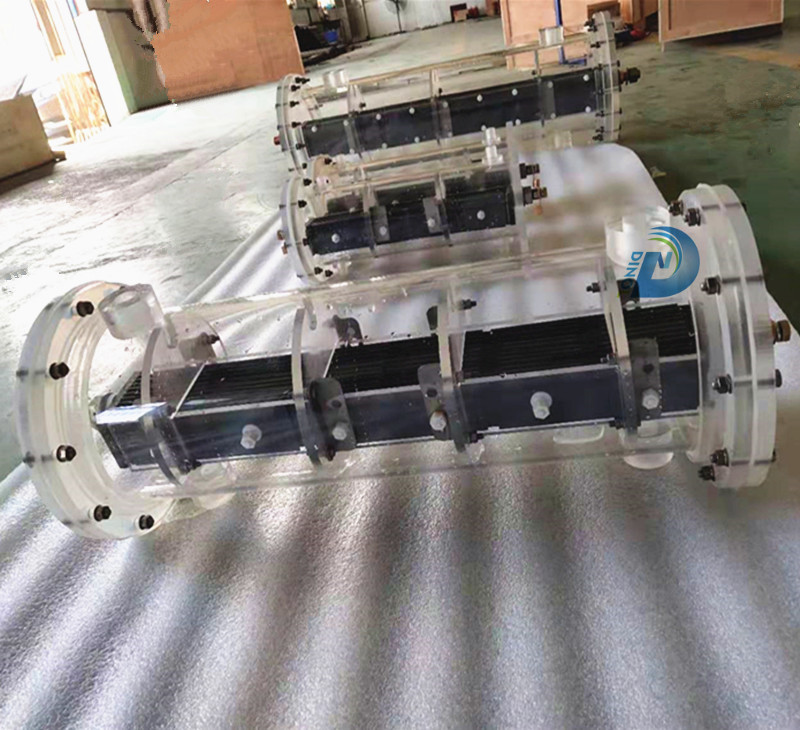
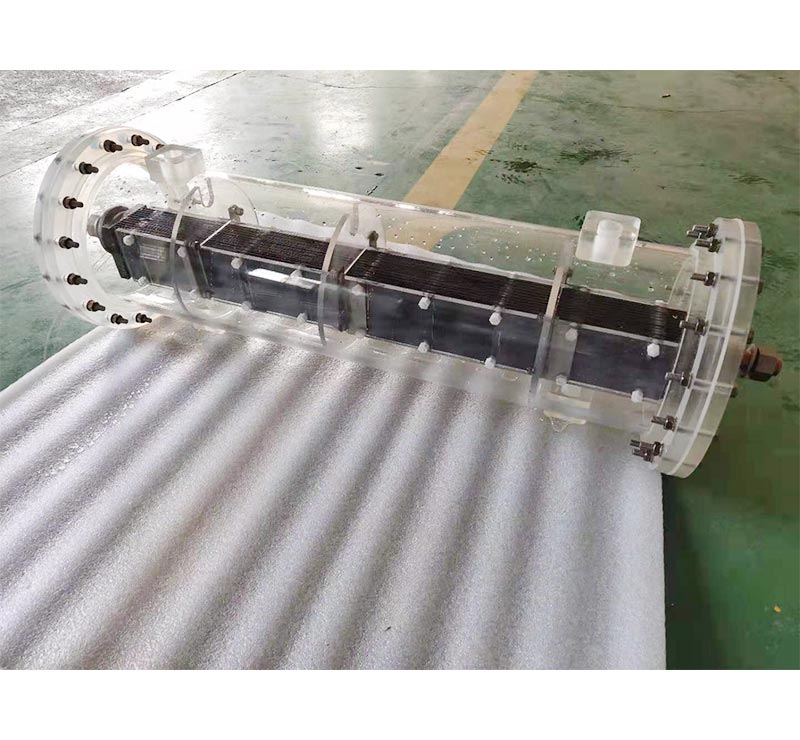
There is a better structural link in Tianyi's TY-WL line that actively lowers stray current during electrolysis. From the small WL50B (50 g/h) to the large WL2000B (2,000 g/h), this keeps the electrolytic efficiency high. Not even chemicals can hurt PMMA or PVC tanks, and the working pressure stays at 0.2 MPa all the way through the range.
Where These Systems Are Deployed
In many areas, making chlorine on-site has worked well. In water treatment plants for cities, pressurized chlorine tanks are not used at all anymore. The tech is built into food processing plants' CIP (clean-in-place) cycles. Marine operators treat ballast water with electrode configurations that work with seawater. Commercial pool operators, on the other hand, use automated systems that dosing 24 hours a day, seven days a week without delivering chemicals.
Comparing Electrolytic Cells with Traditional Chlorine Dosing
Energy Use and Output Consistency
Liquid chlorine and sodium hypochlorite bulk delivery both degrade during storage — active chlorine concentration can drop 30–50% within weeks at ambient temperature (White, Handbook of Chlorination, 2010). Electrolytic generation via the sodium hypochlorite electrolytic cell eliminates this variability. The TY-WL cells accept 2%–5% saline feed at 5–15 °C, and the MMO-coated titanium electrodes maintain stable chlorine conversion efficiency over long duty cycles.
Total Cost of Ownership
Capital expenditure for an on-site generator is higher than a simple dosing pump, but operational economics shift quickly. There are no chemical procurement contracts, no hazmat transport fees, and no concentration-loss waste. A WL500B unit running at 500 g/h effective chlorine output consumes roughly 120 A at ≤30 V — well within standard industrial power budgets. Facilities typically see ROI within 18–36 months depending on chlorine consumption volume.
Safety and Regulatory Fit
The U.S. EPA and OSHA list chlorine gas as an Extremely Hazardous Substance under 40 CFR Part 355. Shifting to on-site hypochlorite generation removes chlorine gas cylinders from site entirely, reducing Process Safety Management (PSM) obligations and insurance exposure. CCS and CE certifications — available on Tianyi TY-WL units — satisfy ship classification requirements and international equipment standards for export projects.
Design and Maintenance Considerations for Optimal Operation
Electrode Material and Coating Durability
Tianyi's TY-WL electrodes have ruthenium-iridium (Ru-Ir) nanoparticles on top of MMO titanium anodes. This is the same kind of material that has been talked about in peer-reviewed electrochemical papers as being better at handling rust and chlorine evolution (Trasatti, Electrochimica Acta, 1984). The way it was made means that the coating should last at least five years at full current. It's not important for the cells to be in salty water or cold places for them to work.
Routine Maintenance Protocol
Maintenance that is done on time is easy to do. Here are the most important steps that providers should take for their businesses:
- Periodic acid wash: Use 15–18% hydrochloric acid solution to dissolve scale deposits from electrode surfaces; this restores chlorine output without electrode replacement.
- Flow and pressure checks: Verify inlet flow rates match the rated range for each model (e.g., 65–85 L/h for WL500B) to prevent dry-run damage.
- Current and voltage monitoring: Compare real-time readings against rated parameters; a rising voltage at constant current signals early scaling.
Before you start a dry run, make sure that the inlet flow rates are within the range recommended for each model of the sodium hypochlorite electrolytic cell. For WL500B, this would be 65–85 L/h. Compare real-time readings of the current and voltage to the set numbers to keep an eye on them. If the voltage rises while the current stays the same, this means that the scaling is starting to happen early.
Automation and Remote Monitoring
The cell will keep running close to its maximum power if you always follow these steps. Most of the time, performance drops too quickly because acid washing isn't done. Scheduling it every three months saves long-term investment.
How to Choose the Right Electrolytic Cell for Your Facility
Match Capacity to Your Chlorine Demand
Find out how much chlorine you need in grams per hour at its peak, and then choose the type that is just above that number. The standard limits of the TY-WL line range from 50 g/h to 2,000 g/h. So, they are a good match without being too big. A city plant needs to make about 833 g/h to treat 10,000 m³/day with a chlorine residual goal of 2 mg/L. This points to a WL1000B unit.
Evaluate Supplier Certifications and Project References
When picking a company to make a sodium hypochlorite electrolytic cell, make sure it has both CE certification for regular business uses and CCS certification for installs on ships. Site acceptance tests (SAT) and factory acceptance tests (FAT) from projects like yours should be written down and given to you. There are references for installations in the food, marine, and city governments that Tianyi keeps track of.
Procurement and Customization Options
As an OEM and ODM service, Tianyi can make unique flange sizes, control cabinet specs, and whole systems built around the sodium hypochlorite electrolytic cell that can be put on a skid. For electrolysis of saltwater, purchasing managers can ask for electrodes that aren't standard or control screens that are already wired up and meet local electrical codes. This cuts down on the time and money that is needed for installation by a third party expert.
Installation, Support, and After-Sales Services
Step-by-Step Commissioning Checklist
Before you turn on the unit, check that the pipe connections are correct and meet the model's inlet/outlet thread standard, such as G3/4 internal for the WL500B. Also, make sure that the power source is at its recommended voltage and current and that the saline concentration has been checked between 2% and 5%. Do a short test with less current before running at full load to check flow rates and look for leaks.
Troubleshooting Common Issues
A lot of the time, low chlorine output is caused by anode scale or not enough salt. If the flow rate falls below what is recommended, it can cause some areas to get too hot and the covering to wear out faster. Any current draw that is very different from the acceptable range of ±20% means that either the electrodes are broken or there is an issue with the electricity in the control circuit. The tech support team at Tianyi can fix either of these issues.
Warranty and Technical Support
If the machine is used regularly, Tianyi will guaranty the stability of the electrode coating for five years. If the electrode plates need to be recoated, they can do it on-site. The engineering team can either change how the system is set up from away or send out experts to fix it if something goes wrong during setup or use. People don't have to pay for expensive third-party service contracts, which saves them time and money.
Conclusion
It has been shown to work well in municipal, marine, food processing, and pool settings to use the sodium hypochlorite electrolytic cell for on-site electrolytic chlorine generation instead of traditional chlorine dosing. Most business buyers will be able to find the right size in the TY-WL line. It also comes with CE and CCS standards, a covering guaranty that lasts for five years, and long-lasting MMO electrode technology. Changes that facilities make make them safer, keep their costs stable, and let them run without being watched. Today's economy is strong, technology has come a long way, and following the rules really does pay off.
FAQ
What salt concentration does the electrolytic cell require?
The TY-WL series operates on a 2%–5% sodium chloride solution. This range suits both prepared brine feeds in land-based plants and diluted seawater configurations for marine applications. Maintaining concentration within this band is important for consistent chlorine output.
How long do the electrodes last?
Under normal operating conditions and proper maintenance — including periodic acid washing with 15–18% hydrochloric acid — the Ru-Ir MMO-coated titanium electrodes are rated for a minimum of five years. Titanyi also offers electrode recoating services to extend service life further.
Can the system run without an operator on site?
Yes. When paired with the standard PLC control cabinet, the TY-WL units support fully automated, unattended operation with fault detection, automatic shutdown, and remote alarm outputs compatible with SCADA systems.
Is certification available for marine installations?
Yes. CCS (China Classification Society) certification is available for marine-grade units, meeting the documentation requirements for vessel equipment procurement and class society surveys.
What is the typical lead time and procurement process?
Standard models carry a production lead time of 4–6 weeks. Custom configurations or OEM builds may require additional time. The typical project cycle from inquiry to site acceptance runs 3–9 months depending on project scope.
Get a Custom Quote from Tianyi — Trusted Sodium Hypochlorite Electrolytic Cell Manufacturer
Tianyi is very good at making high-performance MMO titanium anodes for systems that make chlorine on-site. Speeds in our TY-WL line range from 50 g/h to 2,000 g/h. The electrodes are covered by a five-year warranty, the machine is CE/CCS certified, and you get special engineering help after the sale. No matter how many cells you need or how many units you need, our team will size and set up the right system for your building. Send us an email at info@di-nol.com or visit dsa-anodes.com right now to get expert help.
References
1. White, G. C. Handbook of Chlorination and Alternative Disinfectants. 5th ed. John Wiley & Sons, 2010.
2. Trasatti, S. "Electrocatalysis in the Anodic Evolution of Oxygen and Chlorine." Electrochimica Acta, Vol. 29, No. 11, 1984.
3. U.S. Environmental Protection Agency. Sodium Hypochlorite Use and Handling: Water Treatment Manual. EPA 816-R-07-002, 2007.
4. World Health Organization. Guidelines for Drinking-Water Quality. 4th ed. WHO Press, 2011.
5. Kraft, A. "Electrochemical Water Disinfection: A Short Review." Platinum Metals Review, Vol. 52, No. 3, 2008.
6. National Institute for Occupational Safety and Health (NIOSH). Chlorine: Occupational Health Guidelines for Chemical Hazards. DHHS (NIOSH) Publication No. 81-123, 1981.