




Anode Groundbed Design: How to Select the Right ICCP Anode Type
Selecting the right anode for an impressed current cathodic protection system is one of the most consequential decisions in any pipeline or infrastructure project. Get it wrong, and you may face a failed deep well groundbed — and re-drilling a single well can cost tens of thousands of dollars. The ICCP MMO canister anode for cathodic protection has become the preferred choice for long-distance pipeline engineers precisely because it eliminates the most common failure points: inconsistent backfill compaction and cable joint moisture ingress. This guide walks through how to design a reliable groundbed and choose the right anode type for your specific conditions.
Understanding ICCP Anode Groundbed Design Fundamentals
It's helpful to know what a groundbed does and why the anode material is so important before comparing them.
What Is an ICCP Groundbed?
A groundbed for ICCP is the set of electrodes that completes the electrical connection between the rectifier and the secured structure. The anode sends current to the pipeline through the dirt or liquid around it. This turns around the electrochemical process that causes corrosion. How well that current gets to the pipe depends on the shape, depth, and material of the anode in the groundbed.
How MMO Canister Anodes Work?
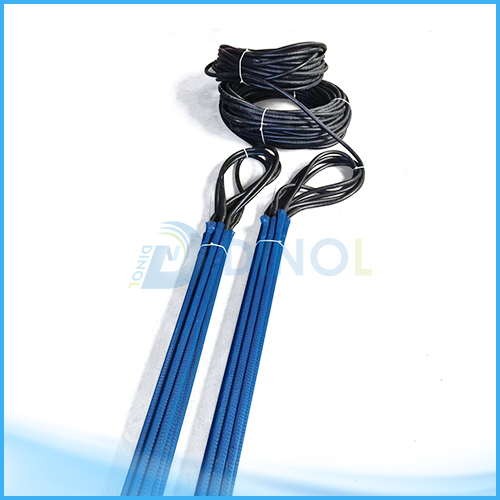
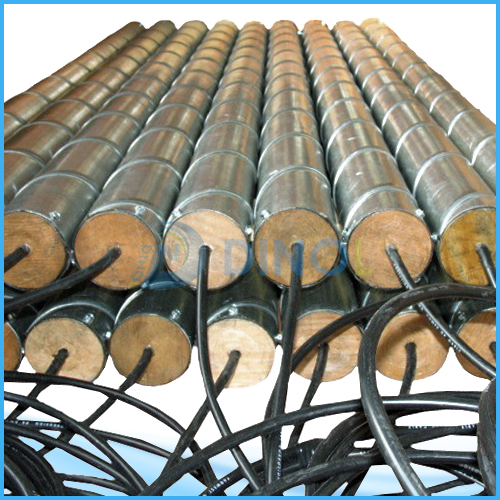
A Mixed Metal Oxide-coated titanium substrate, usually Grade 1 or Grade 2 commercially pure titanium, is put inside a galvanized steel canister full of calcined petroleum coke breeze (fixed carbon >98%, resistivity <0.1 ohm-cm) to make an MMO canister anode. From the first day, the coke breeze makes an area around the anode that is stable and has low resistance. The MMO layer, which can be either Ru-Ir or Ir-Ta, uses less than 1 mg/Amp-year. This means that these systems are designed to last 20 to 50 years according to NACE SP0169 and TM0108 guidelines.
Why the Pre-Packaged Design Matters?
It is well known that field compression of loose backfill is very variable. Air holes lead to localized current overload and anode burnout before it should. The ICCP MMO canister anode for cathodic protection uses a factory-controlled jar that gets rid of that uncertainty for good. This difference in dependability is not just a matter of taste; it is also a matter of safety for projects in desert or mountain areas where moving a drill rig is very expensive.
Comparing ICCP Anode Types: MMO Canister vs. Alternatives
Not all types of anodes are good for all uses. This is how the main choices for underground pipeline and deep well groundbed use compare.
Graphite Anodes
Graphite has been used for decades to protect against cathodic damage, and it is still easier to get and costs less up front. It does, however, consume between 0.5 and 1 kg/Amp-year in normal soil, which is many times more than MMO titanium. When it comes to the cost of repair and re-excavation for a pipeline project with a 20-year design life, graphite is usually not a good choice.
Zinc and Magnesium Sacrificial Anodes
Zinc and magnesium anodes are good for short structures because they don't need a rectifier and work well in low-resistivity soils. They don't care about current anodes at all; instead, they rust to protect the target. Their current output is just not enough for long-distance pipes that go through high-resistance dry soils. ICCP with MMO canister anodes is the right choice from an engineering point of view.
MMO Titanium Canister Anodes: The Performance Case
MMO titanium anodes work very well and stay the same size over time. During operation, the titanium base (ASTM B338 Grade 1) does not corrode. Only the MMO covering is worn away, and only very slowly. They come in cylinder lengths of 1 m, 1.5 m, and 2 m, and their outside widths are 80 mm, 100 mm, or 150 mm. These sizes fit standard deep well boreholes. The Ir-Ta coating type works well in groundwater with a lot of chloride and a lot of salt, while Ru-Ir coats work well in normal soil situations.
Because of these differences in performance, the lifecycle cost is lower. Standardized sizes allow for batch production and reliable delivery schedules for projects that need 100 to 300 anodes per installation. This is a big help for contractors who are trying to meet tight construction deadlines.
Step-by-Step Guide to ICCP MMO Canister Anode Groundbed Design
Step 1 — Soil Survey and Current Demand Calculation
The electrical setting that the groundbed has to work in is set by soil resistivity studies (Wenner 4-pin method per ASTM G57). The total current output is based on the pipe surface area, the coating condition factor, and the target protection potential, which is usually -850 mV CSE according to NACE SP0169. The number of ICCP MMO canister anode for cathodic protection and well depth are set directly by these inputs.
Step 2 — Groundbed Configuration Selection
For cross-country pipes in high surface resistivity areas, deep well groundbeds (usually 30–150 m depth) are the norm. There are a lot of small horizontal groundbeds that work well in urban areas where digging deep isn't allowed. The already-packaged MMO container is dropped straight into the finished borehole. There is no field mixing and there is no doubt about the compaction. The right distance between wells keeps anodes from interfering and makes sure that the pipe is protected evenly along its path.
Step 3 — Cable Selection and Connection Integrity
The cable connection is the most likely place for a deep well groundbed to fail, according to statistics. HMWPE or dual-insulated PVDF/HMWPE wires can handle the acidic gas environment that is made when they are used. Before they are shipped, all factory connections should be checked for micro-ohm resistance and high-pressure gas seals. A factory check by a third party, like SGS or Bureau Veritas, gives most owner PMCs the proof they need for material clearance.
Procurement and Supply Chain Insights for ICCP MMO Canister Anodes
It's not enough to just find the cheapest unit price when buying things for a pipeline ICCP job. The big picture of risk is much more important.
Supplier Qualification and AVL Entry
Most pipeline owners keep an Approved Vendor List that all anode suppliers must enter before they can bid. In order to be qualified, a company usually needs to show proof of factory audits, test reports from a third party (such as XRF coating analysis and accelerated life testing per NACE TM0108), and project references that can be tracked down. The AVL approval process goes much faster if the supplier can provide evidence of a Factory Acceptance Test (FAT) that was watched by SGS or BV.
Lead Time and Batch Delivery Planning
It is normal to buy between 50 and 300 ICCP MMO canister anode for cathodic protection for a single job. For delivery to happen right after the end of the borehole drilling, so that the anode doesn't have to be stored on-site in very hot or humid conditions, the manufacturer needs to provide a clear production schedule. Before you finalize the buy order, make sure that the company can meet your needs in terms of production capacity, container size, coating type, and wire length.
Documentation for Export and Customs Clearance
For projects in India, the Middle East, Central Asia, or Africa, you must have all of the export paperwork. This includes a Certificate of Origin, a packing list with the weights of each unit, material test certificates, and inspection reports from a third party. Suppliers who have worked on international pipeline projects before know what these needs are and usually put together sets of paperwork to meet them.
Best Practices and Environmental Considerations
Modern ICCP design takes into account more than just meeting basic safety standards. It also takes into account the full service setting and long-term viability.
Advances in MMO Coating Technology
Recent improvements in the deposition methods for Ir-Ta coatings have made the coatings stick better and be more regular, which has increased their service life in harsh salt environments. Double-sided coating designs spread the current output from the titanium substrate surface more evenly, which lowers localized coating fatigue over many years of use.
Environmental Advantages Over Sacrificial Systems
MMO titanium anodes don't release heavy metals into the soil. On the other hand, zinc and magnesium sacrificial anodes keep releasing metal ions into the world. For projects that need to go through environmental impact assessments, especially those that are close to groundwater resources, impressed current systems with MMO anodes have a cleaner operational profile.
Field Performance Verification
Measurements of output current and groundbed resistance should be made before the project starts and compared to the design model. If the difference is more than 10%, it needs to be looked into before backfilling. Closed-interval potential surveys (CIPS) done after installation confirm the level of pipe protection along the whole route and give long-term monitoring programs their starting point.
Conclusion
Picking the best anode type for an ICCP groundbed in a deep well is an engineering and purchasing choice that will have 20–30 year effects. The failure modes that make groundbed replacement so expensive can be fixed with ICCP MMO canister anode for cathodic protection that have coke breeze backfill that is controlled at the factory, confirmed cable joint sealing, and consumption rates below 1 mg/Amp-year. Standardized measurements help with buying in bulk and planning for transportation. If you have the right soil survey data, setup design, and supplier approval, an ICCP groundbed done right will protect your pipelines without any maintenance during the whole project lifetime.
FAQ
Why use a pre-packaged canister anode instead of a bare MMO anode?
The pre-packaged design eliminates field compaction errors and ensures the anode operates in a consistent low-resistivity environment immediately after installation, removing one of the most common causes of premature groundbed failure.
What design life should I specify?
Industry practice targets 20, 25, or 30 years depending on coating thickness and operating current density. Accelerated life testing per NACE TM0108 validates these projections before delivery.
Which coating type suits high-chloride soils or brackish groundwater?
Ir-Ta MMO coatings are formulated for both oxygen-evolving (soil) and chlorine-evolving environments. Ru-Ir coatings perform well in standard soil conditions without elevated chloride.
What cable specification is correct for deep well groundbeds?
HMWPE or dual-insulated PVDF/HMWPE cables are standard. They resist the acidic oxidizing gases generated at the anode surface during normal ICCP operation.
How do I verify anode quality before shipment?
Request XRF analysis for MMO coating loading, micro-ohm resistance testing on all cable connections, helium seal testing on cable joints, and backfill compaction density records. Third-party witness by SGS or BV provides the documentation most owner PMCs require.
Partner with Tianyi for Your Next ICCP Project
Tianyi provides ICCP MMO canister anode for cathodic protection directly from the factory in Baoji, China. They can also do full SGS/BV third-party inspections and provide full export paperwork as standard. It is safe for NACE SP0169 and TM0108 to use our Gr1/Gr2 titanium substrates with Ru-Ir or Ir-Ta MMO coatings. We help with AVL qualification by keeping audit records for factories and project references that can be tracked. For your next groundbed project, you can email our technical team at info@di-nol.comto get specifications, batch pricing, or a FAT arrangement.
References
1.NACE International. NACE SP0169: Control of External Corrosion on Underground or Submerged Metallic Piping Systems. 2013.
2.NACE International. NACE TM0108: Evaluation of Internal Plastics Linings for Oilfield Tubular Goods and Accessories. 2008.
3.ASTM International. ASTM G57: Standard Test Method for Field Measurement of Soil Resistivity Using the Wenner Four-Electrode Method. 2020.
4.ASTM International. ASTM B338: Standard Specification for Seamless and Welded Titanium and Titanium Alloy Tubes for Condensers and Heat Exchangers. 2021.
5.Peabody, A.W. Control of Pipeline Corrosion, 2nd ed. NACE International. 2001.
6.Gummow, R.A. "Cathodic Protection Design." Corrosion: Fundamentals, Testing, and Protection, ASM International. 2003.
