




MMO/Ti Linear Anode vs Polymer Anode: Key Selection Differences
When sourcing anode materials for an impressed current cathodic protection (ICCP) system, the choice between an MMO/Ti linear anode and a polymer anode carries real consequences for system longevity, project cost, and maintenance burden. The MMO/Ti linear anode for cathodic protection uses a Grade 1/2 titanium substrate coated with mixed metal oxides — typically iridium and tantalum — pre-packaged in carbonaceous backfill inside a porous sleeve. Polymer anodes rely on a conductive polymer layer over a copper core. Both are flexible, linear solutions, but their electrochemical behavior, service life, and suitability across environments differ substantially. This guide breaks down exactly where each technology wins — and where it doesn't.
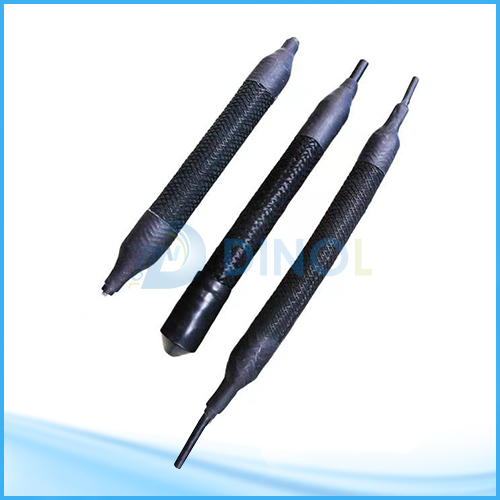
Understanding MMO/Ti Linear Anode and Polymer Anode
Material Composition: What Each Anode Is Made Of
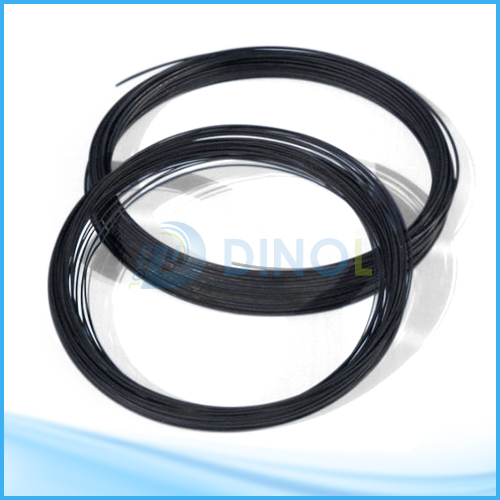
The MMO/Ti linear anode starts with a titanium wire base that has a 99.6% Ti content and is treated by sandblasting, pickling, and applying a covering that breaks down at high temperatures. It's 6–10 μm thick and has an MMO coating layer made of Ir, Ru, and Ta oxides. This layer helps oxygen and chlorine escape. The usual wire sizes are 1 mm, 1.5 mm, and 3 mm. The finished anode's outer diameter should be 38–40 mm, which is what ASTM says. The whole process of production is covered by ISO 9001 approval.
How Polymer Anodes Are Built
Stranded copper wire covered with a conductive polymer material acts as the current conductor in a MMO/Ti linear anode for cathodic protection. The copper core keeps the lengthwise resistance low, and the polymer layer controls the flow of current across the core and into the dirt. The outside width is also 38 mm, and the weight is about 1.5 kg/m. Putting coke backfill around the anode lowers the resistance to grounding and makes the device last longer. According to the ASTM D-543 chemical exposure test, the polymer layer loses less than 1% of its weight each day.
Operating Principle: How Each Releases Protective Current
In an MMO/Ti device, the cable only sends current. The titanium MMO wire releases the protected electric field into the conductive backfill around it and then into the ground. This system keeps the cable conductor and the electrolyte from coming into direct contact with each other. The copper core slowly "drips" current through the polymer covering layer and into the earth in a polymer anode. Both designs are able to spread current in a straight line, but the titanium-based system can handle much higher current levels and rougher electrochemical conditions.
Performance Comparison: MMO/Ti Linear Anode vs Polymer Anode
Service Life and Consumption Rate
For buying workers, the difference is most clear in the service life. The MMO/Ti linear anode is said to have a service life of 40 years or more under normal ICCP operating conditions. This is backed up by accelerated life testing according to NACE TM0108. The MMO coating uses between 1 and 6 mg/A-yr, which is a very small amount that means stable output for decades. In general, polymer anodes have shorter service times. This is especially true in aggressive or high-resistance soils, where polymer breakdown happens more quickly.
Current Output and Electrical Efficiency
These are the most common output numbers that system experts compare:
- DN-15 (φ1.5 mm Ti wire): 328 mA/m output current; contact resistance to cable ≤ 0.0009 Ω
- DN-30 (φ3.0 mm Ti wire): 656 mA/m output current; same contact resistance specification
- Polymer anode (with coke backfill): 82 mA/m in soil; 10 mA/m in water
Input current of 328 mA/m; contact resistance to cable = 0.0009 Ω for DN-15 (φ1.5 mm Ti wire)656 mA/m output current for DN-30 (φ3.0 mm Ti wire); same contact resistance specs
The MMO/Ti linear anode for cathodic protection gives off four to eight times more current per meter than a regular polymer anode in soil, as shown by these numbers. When engineers are making protection systems for long pipelines or storage tank floors, that gap has a direct effect on the size of the rectifier and the total length of the installation that needs to be done.
Environmental Suitability
The MMO/Ti option has a higher output, which makes it the best choice for places with high current demand, like old pipes with worn-out coatings, crowded urban utility routes, and high-resistance sandy or rocky soils.
Installation and Maintenance: What B2B Clients Should Know?
Standard Installation Procedure
The steps for installing both types of anodes are the same and are done in a ditch. For the MMO/Ti straight anode:
- Dig a trench parallel to the protected structure
- Lay half the coke breeze bed in the trench
- Place the anode on top and cover with remaining coke breeze
- Compact with native soil and complete backfill
The Tianyi MMO/Ti product comes with a carbonaceous backfill that is already packed. This makes the process a lot easier. The backfill lowers grounding resistance and stops the titanium base from making an oxide film that is not conductive. XLPE/PVC, PVDF/HMWPE, and EPR/CSPE cables are all available to meet the needs of different types of earth and temperatures.
Maintenance and Troubleshooting
Once they are set up, MMO/Ti systems don't need much regular maintenance. At test stations, readings of the potential every so often show that the safety levels meet the requirements of NACE SP0169, which are either the -850 mV polarized potential standard or the 100 mV polarization shift standard. Resin-filled straight or T-joint kits are used in field joining to keep the environment sealed and the electricity flowing. In soils with changing temperatures or lots of chemicals, polymer anodes may need to be checked more often.
Failure Analysis Support
Determining who is responsible for failure is important for underground infrastructure. When asked, Tianyi gives failure analysis reports that include information about the coating's condition, the machine's current output history, and the soil's chemistry. This clears things up for clients who need to show their end customers how well a product works.
Procurement Considerations: Making the Right Choice
Pricing Structure and MOQ Flexibility
Small system designers that work on a lot of projects each year need a source that can handle both stock-and-resell orders and custom project runs without charging too much for the minimum order. Tianyi's standard MMO/Ti linear anode for cathodic protection products, DN-15 and DN-30 in 500 m and 1000 m reels, can be bought in bulk or one at a time for a project. You can get clear wait times for custom specs like current flow, wire diameter, cable type, and reel length. Standard orders ship within 15–20 days of payment proof.
OEM Packaging and Export Documentation
Tianyi offers full export documentation, including certificates of origin, neutral export packaging with your own brand on it, and white-label packaging with your own brand on it. We accept L/C, T/T, PayPal, MoneyGram, and Western Union as forms of payment. With the flexibility that integrators in Brazil, Argentina, Turkey, Poland, India, and the Middle East need to meet customs deadlines, goods can be shipped by sea freight (full container or LCL), air freight, or courier.
Certifications and Quality Assurance
The whole production process is controlled by ISO 9001 certification, from checking the raw titanium to applying the finish and finally testing for electrical safety. XRF coating stress analysis, bending adhesion tests for the MMO layer, electrical continuity tests for every Ti-wire-to-cable link, and permeability tests for the fabric sleeve are some of the quality control steps that are done. You can get free samples to test the electrical increased life before making a decision.
Why MMO/Ti Linear Anode Is Often the Preferred Solution
For integrators looking to build long-term ties with suppliers, the MMO/Ti linear anode makes the most sense from a technical and business point of view. These are output consistency, service life, and system design freedom.
With a service life of 40 years or more, infrastructure projects planned today will not need to replace the anode during the asset's operational period. With output rates between 328 and 656 mA/m, engineers can meet safety standards with fewer meters of fixed anode, which saves money on materials and labor. Because the design can be changed (wire diameter, cable type, reel length, and current flow), one source can meet all of the needs of a project without having to look for others.
For low-demand, short-duration uses, polymer anodes are still a cost-effective choice. However, the MMO/Ti system is the safer and more cost-effective option for areas like pipeline corridors, storage tank bottoms, and offshore structure protection where failure would mean a lot of money needed to fix. This is because it is electrochemically stable and has been shown to last a long time.
Conclusion
Picking between an MMO/Ti linear anode and a polymer anode is a technical choice that will have long-lasting effects on business. Integrators have a reliable, high-performance choice with MMO/Ti products that are backed by ISO 9001 quality systems, NACE TM0108 test compliance, and service rates of 40 years or more. Polymer anodes work well for some low-demand uses. We need the MMO/Ti linear anode for cathodic protection for most buried pipeline, storage tank, and complicated infrastructure projects because it has the right amount of output capacity, durability, and supplier flexibility for procurement professionals.
FAQ
How long does an MMO/Ti linear anode last compared to a polymer anode?
The MMO/Ti linear anode carries a rated service life of 40+ years under standard ICCP conditions, validated through NACE TM0108 accelerated life testing. Polymer anodes typically have shorter operational periods, particularly in chemically aggressive or high-resistivity soils.
Can an MMO/Ti linear anode be used in seawater environments?
Yes. The MMO coating formulation is adjusted for chlorine evolution reactions in seawater, making it suitable for offshore platform jackets and marine steel structures. Operating parameters allow current densities up to 2000 A/m² at temperatures up to 80°C.
What wire diameter should I specify for my project?
Wire diameters of 1.5 mm and 3.0 mm are standard (DN-15 and DN-30 models), delivering 328 mA/m and 656 mA/m respectively. Custom diameters and output specifications are available. Provide your required current output, service life, and cable type when requesting a quotation.
Does Tianyi support small, frequent orders without significant MOQ penalties?
Yes. Standard 500 m and 1000 m reels support stocking orders, and project-specific cuts with custom specs are accommodated. Lead times for standard orders run 15–20 days from payment.
Are free samples available before placing a bulk order?
Free samples are available for pre-purchase electrochemical testing and accelerated life evaluation.
Request a Quote from Tianyi — Trusted MMO/Ti Linear Anode for Cathodic Protection Supplier
Tianyi's factory in Baoji, China, makes MMO/Ti linear anodes for cathodic protection. Our products are ISO 9001 certified, meet ASTM standards, and come with full OEM packaging support. We can help you whether you need to stock normal DN-15/DN-30 reels or need a custom anode setup for a job. You can email our expert team at info@di-nol.comto get a tiered price list, product samples, or a quote that is tailored to your project.
References
1.NACE International. NACE TM0108: Evaluation of Coatings Used in Immersion Service. NACE International, 2008.
2.NACE International. NACE SP0169: Control of External Corrosion on Underground or Submerged Metallic Piping Systems. NACE International, 2013.
3.Peabody, A. W. Control of Pipeline Corrosion. 2nd ed., NACE International, 2001.
4.Baeckmann, W. von, Schwenk, W., and Prinz, W. Handbook of Cathodic Corrosion Protection. 3rd ed., Gulf Professional Publishing, 1997.
5.ASTM International. ASTM D-543: Standard Practices for Evaluating the Resistance of Plastics to Chemical Reagents. ASTM International, 2014.
6.Shreir, L. L., Jarman, R. A., and Burstein, G. T. Corrosion: Volume 2 — Corrosion Control. 3rd ed., Butterworth-Heinemann, 1994.
