




OEM Cathodic Protection Anodes: What Industrial Buyers Should Ask
When sourcing OEM cathodic protection anodes, buyers face a direct question: does this product meet the technical demands of real-world buried infrastructure? A polymer flexible anode for cathodic protection is one of the most practical answers available today. Designed as a cable-shaped auxiliary anode, it delivers uniform current distribution along buried pipelines and storage tank floors—areas where conventional point anodes fall short. Before placing an order, buyers must ask the right questions about specifications, documentation, batch consistency, and customization capability. This guide walks through exactly that.
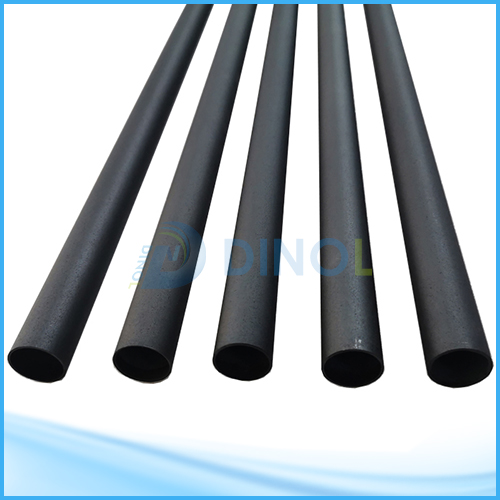
Understanding Polymer Flexible Anodes for Cathodic Protection
One main way that a flexible linear anode is different from a traditional buried anode is that the current output is spread out along the whole length of the anode body instead of being concentrated in one place. Because of this, it can be used in old pipelines, tank bottoms, complicated pipe networks, and high-resistance dirt areas where point-source systems don't cover everything.
How the Current Distribution Works
Stranded copper is used in the anode to get low lengthwise resistance. A layer of conductive polymer on the outside has a high transverse resistance to ground. This makes the current slowly flow out of the cable along its entire length. This makes an even electric field that protects without any hot spots.
Key Construction Details
Tianyi's MMO/Ti linear anodes have a core made of titanium wire and an MMO covering with Ir, Ru, and Ta oxides. Sandblasting, pickling, and coating are used to get the Ti percentage of the cathodic protection wire up to 99.6%. At an outer diameter of ¥39.5 ± 0.5 mm, the smooth outer surface ends.
When Coke Backfill Applies
Putting calcined petroleum coke back into the anode trench lowers ground resistance and makes the service last longer. In dirt, current flow is about 52 mA/m without coke backfill. With coke, it rises to 82 mA/m. In order for polymer-based bendable anodes to keep their conductivity over time, the carbon level in the backfill must stay at ≥99.5%.
Comparing Polymer Flexible Anodes with Traditional Cathodic Protection Solutions
People who have bought magnesium or high-silicon cast iron galvanic anodes before often ask if a polymer flexible anode for cathodic protection is worth the switch. In real life, the answer lies in mathematics and the range of applications.
Rigid anodes need deep vertical groundbeds or horizontal installations that are spaced out. They make the potential distribution uneven along long structures, which is a big problem on the bottoms of tanks or in parallel pipelines that are very close to each other. Along the protected structure, a flexible cable anode runs, making sure that the potential drop is the same all the way through the protection zone.
When it comes to the most important parts of project procurement, these are how the two approaches compare:
- Installation flexibility: Flexible anodes can be cut to project-specific lengths from 500 m or 1,000 m rolls. Installers lay them like cable—trench, coke bed, anode, cover, backfill. Rigid anodes require pre-drilled groundbed locations and cannot be adapted on site.
- Current density range: Tianyi's MMO linear anodes output between 328 mA/m (DN-15, φ1.5 mm Ti wire) and 656 mA/m (DN-30, φ3.0 mm Ti wire), covering standard ICCP design requirements without oversizing the rectifier.
- Service life: Both product categories (DN-15 and DN-30) carry a rated service life of ≥40 years under standard operating conditions, verified against ASTM test standards.
- Maintenance load: Because the anode runs close to the protected structure, interference to adjacent pipelines stays minimal. This matters in congested piping corridors where stray current is a compliance concern.
Tianyi's MMO linear anodes produce current densities between 328 mA/m (DN-15, φ1.5 mm Ti wire) and 656 mA/m (DN-30, φ3.0 mm Ti wire), meeting standard ICCP design requirements without the need for a bigger rectifier.
Critical Questions to Ask When Procuring Polymer Flexible Anodes from OEM Suppliers
Sourcing decisions for buried anode systems carry long-term consequences. Once the material is in the ground, inspection is not practical. Here are the questions every purchasing manager should ask before committing to a supplier.
What Technical Documents Can You Provide?
Request the English-language Technical Data Sheet (TDS), Certificate of Conformance (COC), and factory test report for each batch of polymer flexible anode for cathodic protection. Verify that the test report covers contact resistance (≤0.0009 Ω), output current per meter, and carbon content (≥99.5%). ISO 9001 certification confirms the quality management system behind those documents.
How Consistent Is Batch Quality?
Batch-to-batch variation is a known concern in anode procurement. Ask for a first-article inspection report and whether third-party sampling is available. Tianyi's production process applies advanced ultrasonic flaw detection at the manufacturing stage, reducing internal defects before shipment.
What Customization Is Available?
Project specifications vary. Confirm the supplier can match your MMO/Ti wire diameter (φ1.0, φ1.5, φ2.0, or φ3.0 mm), cable type (XLPE/PVC, PVDF/HMWPE, or EPR/CSPE), cable cross-section (1×10 mm² standard or custom), and roll length (500 m or 1,000 m). Free samples are available for pre-qualification testing before bulk orders.
How to Evaluate and Select the Best Polymer Flexible Anode Solution?
The design engineer's safety current need and earth resistivity data are the first things that are used to make the choice. The product design then goes in a clear direction.
Match Wire Diameter to Current Requirement
The DN-15 type (φ1.5 mm MMO/Ti wire) of polymer flexible anode for cathodic protection sends out 328 mA/m and can be used for normal pipeline repair jobs. The DN-30 category (φ3.0 mm wire) doubles the output to 656 mA/m and is used to cover the bottom of tanks or for setups that need to handle a lot of power. Each has an outside diameter of 38 mm and weighs 1.5 kg/m, which makes logistics calculations easier.
Verify Environmental Ratings
Most underground infrastructure situations in North America, Southeast Asia, and the Middle East can be covered by the flexible polymer anode for cathodic protection, which has a rating of 7 MPa constant pressure and a minimum storage temperature of 18°C. With a folding radius of 500 mm, it is possible to place around corners without affecting the structure.
Confirm Documentation Against Owner Standards
Owner-side corrosion engineers usually need material submittals that are in line with NACE/AMPP. Make sure that the supplier's test methods follow ASTM guidelines. For example, Tianyi's weight loss rate is tested according to ASTM D-543 and gives results of less than 1% in chemical immersion tests.
Installation Process and Best Practices for Polymer Flexible Anodes
If the product actually lasts 40 years, it depends on how well it was installed. The steps are similar to those used for laying cables, but they are changed to fit the needs of building an anode groundbed.
Trench Preparation and Coke Placement
At the planned distance, dig the anode tunnel parallel to the pipeline. Before you put the anode down, spread the first half of the calcined coke breeze across the trench floor. Because of this, there is no direct touch with the dirt, which would raise ground resistance and shorten the service life.
Anode Placement and Connection
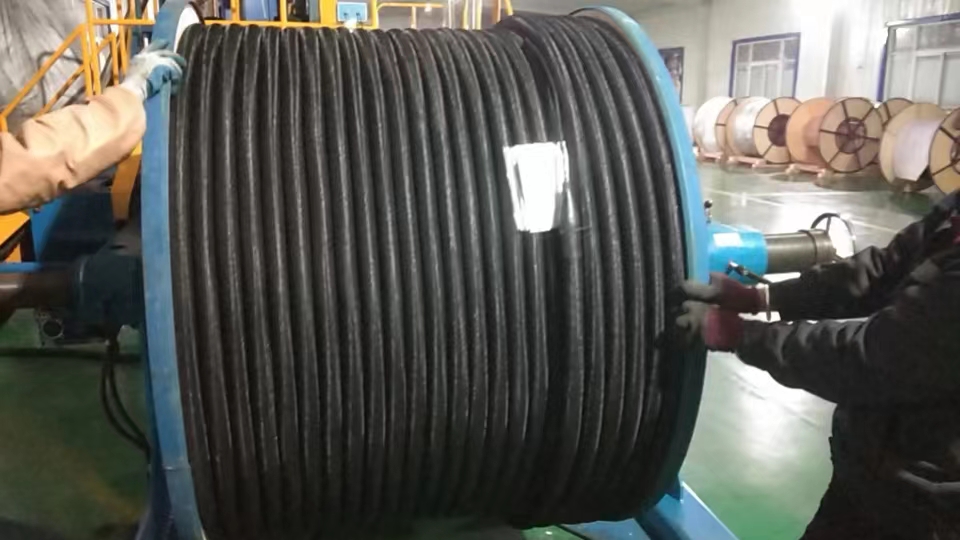
Put the bendy anode on top of the coke bed. Check that the materials used for joint seals at cable connections are resistant to rust and aging. For example, Tianyi's connection nodes use sealing compounds that were chosen to last for a long time when they are buried. One of the main reasons anode systems fail too soon is that the joints aren't sealed well, so check every connection point before you backfill.
Backfill and Compaction
Cover the anode with the rest of the coke breeze, pack it down with native soil, and then finish the backfill. Make sure that the anode sheath doesn't come into touch with any sharp objects or debris. If the outer jacket gets damaged mechanically, it can affect how the current flows and leave the wire open to chemical attack.
Conclusion
Choosing an OEM polymer flexible anode for cathodic protection device to protect underground infrastructure is a business and technical choice that will have effects for ten years. The right supplier will have specifications that have been checked, production that is consistent from batch to batch, documentation in English, and the ability to match project drawings exactly. These standards are met by Tianyi's MMO/Ti flexible anodes, which come in DN-15 and DN-30 sizes and have ISO 9001 approval, ASTM-referenced test data, and cable specs that can be changed. Before agreeing to a large order, ask for a free trial to make sure it fits the needs of your project.
FAQ
How long does a flexible linear anode last in buried service?
It is said that Tianyi's MMO/Ti linear anodes will last for more than 40 years when used in normal ICCP settings. This is based on the idea that the coke backfill was installed correctly and that the current density was within the range given.
What makes the contact resistance specification important?
The MMO/Ti wire and the cable have a contact resistance of ≤0.0009 Ω, which keeps the voltage drop in the anode assembly very small. Higher resistance wastes rectifier voltage and lowers the current that actually gets to the protected structure.
Can the anode be cut on-site to match the project length?
Yes. 500 m and 1,000 m rolls are cut to length at the factory, and they can also be cut on-site while they are being installed. This cuts down on waste and lets the hole fit its size without having to order special lengths ahead of time.
What cable jacket options are available?
Most cables are 1x10 mm XLPE/PVC. PVDF/HMWPE or EPR/CSPE can be chosen for projects that will be exposed to chemicals or high temperatures. You can also get custom cable cross-sections if you ask for them.
Does the supplier provide third-party test reports?
Each order comes with a batch test record that references ASTM standards. For new projects that need to be qualified, first-article inspection and third-party sampling plans are possible.
Partner with Tianyi for Your Next Polymer Flexible Anode for Cathodic Protection Project
Tianyi sells MMO flexible anodes that are ISO 9001-certified and come with verified ASTM test data, TDS and COC documentation in English, and full OEM customization, from wire diameter to cable type. Tianyi is a reliable company that makes polymer flexible anodes. They can ship 500 m and 1,000 m rolls in as little as 15–20 days. For pre-qualification, you can get free samples. To get specifications and a quote for your specific project, email the technical team at info@di-nol.com.
References
1.NACE International. Cathodic Protection of Pipelines — Design and Application. NACE SP0169. 2019.
2.ASTM International. Standard Test Method for Resistance of Plastics to Chemical Reagents. ASTM D543. 2020.
3.ISO. Quality Management Systems — Requirements. ISO 9001:2015. 2015.
4.AMPP (formerly NACE). Control of External Corrosion on Underground or Submerged Metallic Piping Systems. AMPP SP0169. 2021.
5.Peabody, A.W. Control of Pipeline Corrosion. 2nd ed. NACE International, 2001.
6.Baeckmann, W., Schwenk, W., and Prinz, W. Handbook of Cathodic Corrosion Protection. 3rd ed. Gulf Professional Publishing, 1997.
