




Why Choose a Powered Water Heater Anode Rod for Longer Tank Life?
If you manage a plumbing parts brand or distribute water heater components across the U.S. or Canada, you already know that anode rod quality directly affects your product reputation. A powered water heater anode rod for cathodic protection solves the core problems that traditional sacrificial rods cannot — it does not dissolve, does not produce hydrogen sulfide odor, and delivers consistent electrochemical protection that can last 20 or more years. For procurement teams sourcing OEM or private-label SKUs, this technology represents a stable, high-margin product category worth serious attention.
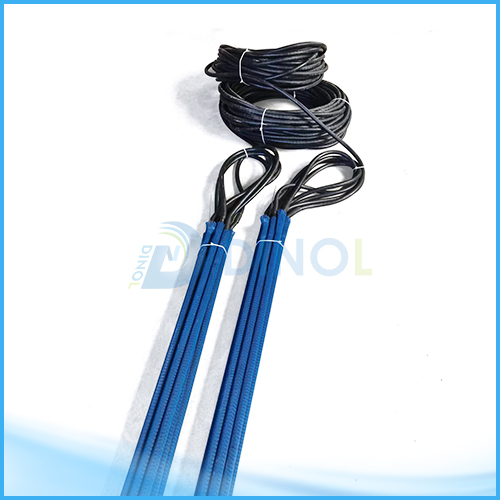
Understanding Cathodic Protection in Water Heaters
Corrosion is the main reason why water heater tanks in homes and businesses break down early. To pick the right cathodic protection solution for your line, you must first understand how it works at the electrical level.
How Electrochemical Corrosion Occurs Inside a Tank
When iron atoms are exposed to oxygenated water, they lose electrons. This is what causes steel tanks to rust. This process goes faster in systems with anaerobic bacteria, hard water, or water with a lot of total dissolved solids (TDS). If you don't do anything about it, tank walls will thin out and leak within 8 to 12 years.
How a Powered Anode Rod Interrupts Corrosion
An external low-voltage DC power source is connected to a driven anode rod. This supply usually changes 110V or 220V AC to less than 3.5V DC. It sends a controlled electrical current through the water to the wall of the tank. This stops the loss of electrons that leads to rust. The rod doesn't wear out over time because it's made of a non-sacrificial MMO-coated titanium substrate; it just keeps the protective current going.
Why Impressed Current Outperforms Galvanic Sacrifice?
Regular magnesium rods work by sacrificing a charge, which means that the rod corrodes while the tank stays intact. But magnesium rods lose their effectiveness in 12 to 18 months in water that is soft or highly conductive. A powered water heater anode rod for cathodic protection using impressed current cathodic protection (ICCP) adapts to the resistivity of the water, so protection stays the same no matter what the water is made of. Independent testing referred to in NACE TM0108 confirms that ICCP anodes keep the current density uniform a lot more reliably than galvanic systems do when the water conditions change.
Comparing Powered Anode Rods with Traditional Sacrificial Rods
It's not just a technical choice between a driven rod and a regular magnesium or metal rod; it also affects your return rate, customer reviews, and the cost of buying the rod.
Material Properties and Longevity
A normal magnesium rod lasts between 2 and 4 years, depending on how hard the water is. That lifespan gets even shorter in places where the water is softened or where iron bugs live. It is said that an MMO-coated titanium powered rod with a Grade 1 or Grade 2 titanium base and an IrO₂-Ta₂O₅ layer will last for 20 years or more. Not only does it not lose mass, but it also does not make sulfur gas or leave sediment in the tank.
Cost Analysis Over the Product Lifecycle
It costs more to buy a powered rod at first than a magnesium rod. The math changes, though, after 10 years. If a homeowner or facility manager replaces a magnesium rod every three years, they will have to pay for parts, work, and possibly tank fixes. With the driven stick, you won't have to buy or call for service as often. This longer replacement cycle helps B2B buyers who are making a private-label product line charge more at retail and make more money.
Performance in Challenging Water Conditions
Hard water, well water with sulfur, and high-TDS industrial systems all speed up the loss of galvanic anodes. This is where powered rods really shine. A lot of different types of water don't affect how well powered rods work. They do not react with sulfate-reducing bacteria, which is what gives things that "rotten egg" smell that gets one-star reviews on Amazon. For procurement managers, this means fewer returns and less damage to the brand's reputation from complaints about water quality.
Key Factors to Consider When Selecting a Powered Anode Rod
A driven anode rod is not always made the same way. The following things have a direct effect on product quality and compliance when looking at suppliers for a new SKU or OEM program.
Technical Specifications and Compatibility
It is necessary for the powered water heater anode rod for cathodic protection to have standard 3/4" NPT threads and be able to fit 40, 50, and 80-gallon domestic tanks. For the U.S. market, make sure the power module works with 110V AC. Electrical features like output current density (mA/m²) and the ability to automatically adjust based on water resistivity show that the design is made to work in different environments, not just labs.
Certifications and Compliance Requirements
For products to be sold in stores like Home Depot or Amazon, they must have NSF/ANSI 61 approval for drinking water contact safety. Electrical safety is covered by UL or ETL listing if the rod has a power source section. Suppliers who have these certifications and can provide test documentation lower your risk of not meeting regulations and speed up the time it takes to launch a product. For ICCP anode performance standards, you should always ask for NACE TM0108 compliance statistics.
Supplier Reliability and OEM Flexibility
In addition to the rod itself, check to see if the seller can provide retail-grade packing, such as a color box with a barcode and an instruction sheet, and if they offer different prices for larger orders. Category managers who want to see how well a product sells before committing to a full container need to make sure that the MOQ is flexible. There is a lower chance of defects with suppliers who can coat the goods themselves and keep track of quality control at every stage of production.
Installation, Testing, and Troubleshooting of Powered Anode Rods
It should be easy to set up a well-designed powered rod. But the difference between reliable long-term protection and early failure is proper setup and regular checks.
Pre-Installation Checks and Setup
Check the tank's pin size and port position before installing a powered water heater anode rod for cathodic protection. Clear the silt out of the tank to make sure the contact is clean. The rod's power cord should be connected to an outlet nearby so that it doesn't get tangled or strained. A socket wrench and thread sealant are all that's needed to work on most residential units.
Testing for Active Protection
On higher-end models, the control module has an LED light. The circuit is complete when there is a solid green light, which means the tank is getting protective current. Check the plug and connection if the light isn't there or is flashing red. A simple voltmeter test at the end of the stick can show that current is flowing. For future reference, technicians should write down the first reading they get when they install something.
Troubleshooting Common Issues
Loss of continuity is the most common problem in the field. This is usually caused by a broken link at the rod's hex fitting or a circuit that has tripped. If the tank starts to smell after moving from magnesium to a powered rod, it's only temporary and will go away after the first water wash. For industrial tanks that hold more than 100 gallons of water, make sure that the controller's output current is rated for that amount of water. Systems that aren't powered enough leave parts of the tank vulnerable.
Leading Brands, Suppliers, and After-Sales Support
It is just as important to choose the right production partner as it is to write the product specifications. Based in the Baoji High-Tech Development Zone, Shaanxi Tianyi New Material Titanium Anode Technology Co., Ltd. makes MMO-coated titanium anodes with high-purity Gr1/Gr2 titanium and Ru-Ir or Ir-Ta MMO coatings. These anodes serve ICCP systems in water heaters, industrial storage tanks, offshore platforms, pipes, and water treatment facilities. They come in mesh, ribbon, disk, and custom shapes, and their sizes can be changed to fit any need.
Tianyi's manufacturing process includes checking the quality of the raw materials, applying the coatings precisely, and testing the final performance before shipping. The company works with OEM and ODM programs and can make custom retail packaging with barcodes. This makes it a good choice for private-label procurement programs in the North American market. It is normal for suppliers to offer sample availability before the first order, handle logistics for large orders, and charge different prices for different quantities.
Conclusion
One of the most important things a plumbing parts brand or distributor can do for their product line is switch from traditional sacrificial rods to a powered water heater anode rod for cathodic protection system. The technology has been tested and shown to improve performance. The drop in customer complaints is reason enough to make the switch. Powerful titanium anode rods with ICCP technology and the right licenses are the best category investment for procurement managers who want to make a long-lasting, low-return SKU that stands out as a quality product.
FAQ
How does a powered rod eliminate the rotten egg odor?
The smell comes from magnesium anodes reacting with bacteria that break down sulfate to make hydrogen sulfide gas. The MMO titanium rod is chemically inert, which means it doesn't mix with water or germs. This means that gas production stops.
How much electricity does the unit consume?
The device uses between 10 and 50 kWh of electricity a year, which is a very small amount (a few dollars a year). It uses low-voltage DC power that is changed from a regular wall plug.
Is the rod compatible with all residential tank sizes?
A common 3/4" NPT thread lets most units fit tanks that hold 40 to 89 gallons. For commercial tanks bigger than 100 gallons, you need controls with higher outputs and longer rod configurations to make sure the current flows properly.
How do I confirm the rod is working?
The control module's LED light shows that the security is on. It's complete when there is a green light. A fault is shown by a red or moving light. A regular voltmeter can also be used to check the current flow.
What is the expected service life compared to magnesium?
Most magnesium rods last between 2 and 4 years. In normal home conditions, an MMO-powered titanium anode rod is made to last 20 years or more, which is often longer than the water heater tank itself.
Request a Sample or Bulk Quote from Tianyi — Trusted Powered Anode Rod Supplier
Plumbing brands and wholesalers all over North America receive powerful water heater anode rod for cathodic protection from Tianyi. Our goods are compliant with NSF/ANSI 61 and NACE TM0108 standards, and we offer full OEM packaging plans with flexible order sizes. To get a sample kit or a tiered price sheet, email your requirements to info@di-nol.com. Within one work day, our team gets back to you.
References
1.NACE International. NACE TM0108: Evaluation of Internal Plastic Coatings for Corrosion Control of Tubular Goods in an Immersion Service— NACE International, 2008.
2.NSF International. NSF/ANSI Standard 61: Drinking Water System Components — Health Effects— NSF International, 2023.
3.Shreir, L.L., Jarman, R.A., & Burstein, G.T. Corrosion: Metal/Environment Reactions— Butterworth-Heinemann, 1994.
4.Baeckmann, W., Schwenk, W., & Prinz, W. Handbook of Cathodic Corrosion Protection— Gulf Professional Publishing, 1997.
5.Pérez, T. Electrochemistry and Corrosion Science— Kluwer Academic Publishers, 2004.
6.U.S. Department of Energy. Water Heating: Energy Saver Guide— U.S. Department of Energy, Office of Energy Efficiency & Renewable Energy, 2022.
