




Best ICCP MMO Canister Anode for Tanks and Buried Structures
When engineering teams and procurement managers search for the most dependable corrosion protection solution for oil and gas pipelines, storage tanks, and buried steel infrastructure, the ICCP MMO canister anode for cathodic protection consistently ranks at the top. This pre-engineered groundbed system pairs a Mixed Metal Oxide (MMO) coated titanium anode with factory-compacted carbonaceous backfill inside a galvanized steel canister, delivering a controlled, low-resistance current path from day one of installation. For projects in arid deserts, congested urban corridors, or remote mountain terrain, this design eliminates field variables and gives engineers confidence that the protection system will perform exactly as designed.
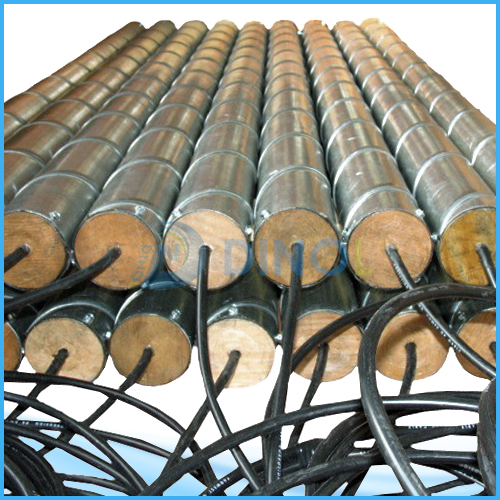
Understanding ICCP MMO Canister Anodes and Their Role in Cathodic Protection
What Goes Inside the Canister?
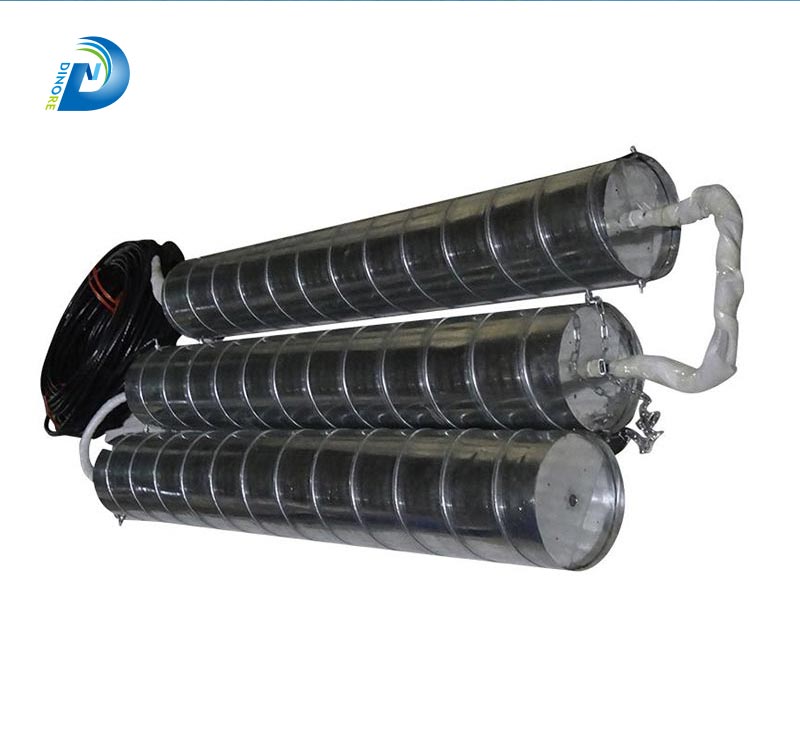
The anode body is made from Grade 1 or Grade 2 commercially pure titanium, according to ASTM B338. It is then coated with either Ru-Ir MMO or Ir-Ta MMO, depending on the chemistry of the soil and the amount of chloride it is exposed to. There is calcined petroleum coke air (fixed carbon above 98%, resistivity below 0.1 ohm-cm) inside the cylinder. This spreads the current out evenly and lets the gas escape without pressure building up. The lead wire is usually made of HMWPE or dual-insulated Kynar/HMWPE. This is done so that it can handle the acidic gasses that are made at the anode surface during ICCP operation.
How the ICCP System Works
A cathodic protection device with impressed current pushes DC current from an outside rectifier through the anode, into the dirt or electrolyte around it, and onto the steel structure that needs protection. The electrochemical contact is made up of the MMO layer. Titanium isn't very active on its own, so most of the current comes from the catalytic oxide layer. This means that MMO anodes use less than 1 mg/A-year, which is a lot less than options like graphite or cast iron.
Why the Pre-Packaged Format Matters?
Field-installed loose backfill often has holes, isn't packed down well, and has uneven density. These problems make high-resistance areas that make the ICCP MMO canister anode for cathodic protection work harder in some places, which speeds up early wear. This risk is completely eliminated by the factory-sealed canister. Engineers at large pipeline EPC companies have found that installing pre-packaged groundbed kits takes 30–40% less time than installing loose-fill deep wells.
Why Choose MMO Canister Anodes for Tanks and Buried Structures? — Performance and Benefits
Longevity That Justifies the Investment
If you want to drill a well in a deep well groundbed, it can cost tens of thousands of dollars. If the anode in that well fails, it will cost a lot to drill again. MMO canister anodes are made to last 20, 25, or even 30 years, which has been proven by extended life tests according to NACE TM0108. They have the lowest total cost over the lifetime of a project, even when the unit price is higher than other options. This is because they last longer.
Performance Across Harsh Environments
The Ir-Ta coating type works reliably in both soils that release oxygen and brackish or salty environments that release chlorine. This means that the same product specification can be used in a wide range of project locations, such as the Saudi desert, Indian coastal refineries, the steppes of Central Asia, and pipeline corridors in Sub-Saharan Africa. Titanium's structural stability stops the physical breakdown that shortens the life of graphite anodes, so the current flow stays the same over the full design life.
Because they perform better than other anodes, these are the best choices for tough infrastructure projects:
- Consumption rate below 1 mg/A-year: This extremely low consumption rate means the anode body changes negligibly over decades, preserving the current distribution geometry throughout the entire design life and eliminating the need for scheduled replacements.
- Stable output in high-chloride environments: The Ir-Ta MMO coating withstands aggressive chloride concentrations without coating dissolution, making it suitable for coastal storage tank farms and offshore pipeline landfalls where other coating types degrade within a few years.
- Zero-maintenance groundbed operation: Once installed and backfilled, the system requires only periodic surface-level electrical checks via test stations — no excavation, no mechanical servicing, and no consumable parts to stock or replace in remote project locations.
These benefits directly deal with the most common ways that long-distance pipeline ICCP MMO canister anode for cathodic protection systems fail, especially in places where it's not possible or affordable to drill a new deep well anode groundbed.
How to Select the Best MMO Canister Anode for Your ICCP System — A Decision Support Framework
Match Anode Geometry to Groundbed Type
Standard sizes for canister anodes used in deep wells are 1.0 m, 1.5 m, and 2.0 m in length, and 80 mm, 100 mm, or 150 mm in diameter. The right size is chosen by looking at the available borehole width, the current flow per anode needed by the groundbed design, and the number of anodes that will be placed in either a series or parallel string. Oversizing costs more without giving you any more benefits, and undersizing makes hot places.
Evaluate Soil Resistivity and Coating Type
Soils with a resistance above 5,000 ohm-cm, like those in a sandy desert or a rocky mountain range, need the coke column to have as much touch surface area with the nearby formation as possible. Longer canisters and housings with a bigger diameter are better in these situations. The Ir-Ta coating is better than the Ru-Ir coating for coastal or salty groundwater areas because tantalum oxide protects the covering from chlorine attack.
Verify Supplier Quality Documentation
Ask for XRF analysis results that confirm the MMO coating loading weight, micro-ohm resistance test data for the anode-to-cable joint, and high-pressure seal test records for the cable entry point before you place an order. The wire link is where deep well anodes fail most often, according to statistics. If suppliers can give procurement teams third-party inspection reports from SGS or Bureau Veritas, NACE TM0108 certificates for accelerated life tests, and NACE SP0169 conformance statements, they have the paperwork they need to get owner PMC approval.
Installation, Operation, and Maintenance of MMO Canister Anodes
Installation Best Practices for Deep Wells
To keep the cable entry seal of the ICCP MMO canister anode for cathodic protection from getting damaged, lower each canister assembly slowly into the hole using the lead cable and never by the canister body. Keep a space of at least 25 mm between the outside diameter of the canister and the wall of the opening so that coke fines can fill in any holes. Before backfilling the top part of the well, make sure that all penetrations are sealed with heat-shrink tubing that is rated for disposal. Also, make sure that the splice connections are spaced out above ground.
Performance Verification After Commissioning
Measure the pipe-to-soil potential at each test station along the protected segment after the rectifier is turned on. Target potentials should have a polarized potential of –850 mV or more negative compared to a Cu/CuSO₄ reference electrode, which is what NACE SP0169 says should happen. As a starting point, write down the anode-to-remote-earth resistance when the system was first turned on. If this number goes up in the future, it means that either the coating is wearing away or the coke column is no longer solid.
Routine Monitoring and Troubleshooting
We check the rectifier output current and voltage once a year and do close-interval potential studies every three to five years. This lets us know right away if there are any safety gaps. If the current output from a certain anode string drops for no reason, check the connections at the cable splice and header cable before you assume the anode is broken. Most of the time, early system faults are caused by cable seal degradation at the wellhead, not the anode body itself.
Procurement and Supplier Considerations for ICCP MMO Canister Anodes
What to Expect from a Qualified Manufacturer
A good ICCP MMO canister anode provider should let you change the size of the anode, the type of coating, the type of cable, and the length of the canister to fit your groundbed design plans. They should be certified in ISO 9001 quality management and be able to support factory acceptance testing (FAT) with a third party present. To get 50 to 300 units in bulk, the maker usually needs 6 to 10 weeks from the time the order is confirmed, as long as they have titanium base in stock.
Export Documentation and Logistics Support
For foreign projects in Africa, the Middle East, or India, the supplier must give a packing list, a business invoice, a certificate of origin, material test certificates (MTCs) that can be linked to a canister's serial number, and inspection reports from SGS or BV. Individual foam-lined wooden crates with moisture-desiccant sachets are usually used for this purpose. They protect the anodes and wires from damage caused by vibrations while being shipped long distances to remote places.
Pricing and Total Cost Perspective
An MMO canister anode costs more per unit than a graphite or silicon cast iron alternative, but this is not what the total project cost calculation shows. When you consider that MMO canister anodes have a service life of 20 years or more, don't need any maintenance, and don't need to be redrilling wells, which is an expensive process, they offer much lower cost per year of protection. If a procurement manager shows this lifetime study to owner PMC reviewers, they always get budget approval at the higher unit price.
Conclusion
When you choose the right ICCP MMO canister anode for cathodic protection system for a deep well groundbed or buried storage tank, you'll be protecting against corrosion for the next twenty to thirty years. They are made of ASTM B338 Grade 1 titanium, coated with Ir-Ta or Ru-Ir MMO, and filled with high-carbon coke breeze at the plant. These MMO canister anodes offer the most reliable and low-maintenance way to meet NACE SP0169 protection requirements. When purchasing teams are in charge of several pipeline projects at the same time, they can lower the risk of all of them by sticking to a single qualified source with proven FAT skills and experience in export logistics.
FAQ
Why use a pre-packaged canister anode instead of a bare MMO anode rod?
The pre-packaged format guarantees consistent coke backfill compaction around the anode body, eliminating air voids that cause localized overheating and premature wear. It also reduces field installation time significantly.
What design life should I specify?
Standard industry targets are 20, 25, or 30 years. The achievable design life depends on the MMO coating thickness and the specified current output per anode. Your groundbed design engineer can calculate the required coating loading based on these parameters.
Is Ir-Ta coating compatible with high-chloride soils?
Yes. The Ir-Ta formulation is electrochemically stable in both oxygen-evolving and chlorine-evolving environments, making it the specified choice for coastal, brackish, and saline groundwater conditions.
What cable type should I specify for the anode lead wire?
HMWPE or dual-insulated Kynar/HMWPE cables are standard. These materials resist the acidic gases generated at the anode surface and maintain insulation integrity throughout the design life of the groundbed.
What quality certificates should I request before shipment?
Request XRF coating analysis, micro-ohm resistance test data for the anode-to-cable joint, helium high-pressure seal test records, NACE TM0108 accelerated life test results, and a third-party inspection report from SGS or Bureau Veritas.
Get a Bulk Quote from Tianyi — ICCP MMO Canister Anode Manufacturer
For cathodic protection systems in pipelines, tanks, and buried infrastructure projects around the world, Tianyi makes ICCP MMO canister anodes. We have Ir-Ta and Ru-Ir coated titanium anodes that meet NACE SP0169 and TM0108 standards. We also offer full export documentation, SGS/BV third-party inspection, and AVL qualification packages. Send your groundbed design plans and quantity needs to info@di-nol.com. Our expert team will get back to you within 24 hours with a quote that fits your needs.
References
1.NACE International. NACE SP0169: Control of External Corrosion on Underground or Submerged Metallic Piping Systems. NACE International, 2013.
2.NACE International. NACE TM0108: Evaluation of Internal Plastic Coatings for Corrosion Control of Tubular Goods in an Aqueous Environment. NACE International, 2008.
3.ASTM International. ASTM B338: Standard Specification for Seamless and Welded Titanium and Titanium Alloy Tubes for Condensers and Heat Exchangers. ASTM International, 2021.
4.Peabody, A.W. Control of Pipeline Corrosion, 2nd ed. NACE International, 2001.
5.Baeckmann, W. von, Schwenk, W., and Prinz, W. Handbook of Cathodic Corrosion Protection, 3rd ed. Gulf Professional Publishing, 1997.
6.DNV GL. DNV-RP-F103: Cathodic Protection of Submarine Pipelines. DNV GL, 2016.
