




How Does MMO Coating Improve Titanium Anode Durability?
MMO coating improves titanium anode durability by forming a chemically stable, electrochemically active oxide layer directly bonded to the titanium substrate. This layer dramatically reduces surface oxidation and material consumption during impressed current operations. In ICCP systems, mmo coated titanium anodes for cathodic protection maintain consistent current output over decades because the mixed metal oxide film—typically composed of iridium, ruthenium, or tantalum oxides—acts as a dimensional stabilizer. Unlike sacrificial or graphite anodes, the titanium base experiences negligible dissolution, resulting in service lives frequently exceeding 20 years under standard operating conditions.
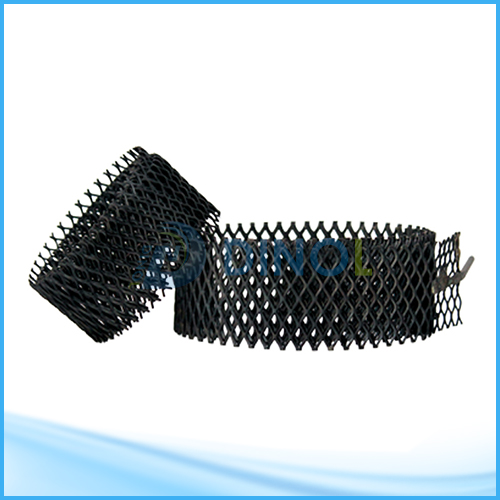
Understanding MMO Coated Titanium Anodes and Their Durability
What the Titanium Substrate Contributes
The structure is made of high-purity titanium (Grade 1 or Grade 2 according to ASTM B265). Its native oxide film protects against corrosion in acidic and chloride-rich environments. But raw titanium quickly stops being active at higher anodic potentials without an active layer, so it can't carry current. For long-term electrical performance, the base by itself is not enough.
How the MMO Layer Changes the Picture
The heat breakdown process attaches mixed metal oxides—mostly iridium-tantalum (Ir-Ta) or ruthenium-iridium (Ru-Ir) mixtures—straight to the surface of titanium. This makes a dimensionally stable mmo coated titanium anodes for cathodic protection with a low overpotential for chlorine generation and a high catalytic activity. The coating keeps the base from passivating, which means that electricity will always flow through the anode as long as it is in use. Published electrochemical tests show that the oxide layer stays stable for more than 10,000 hours of constant anodic polarization in seawater.
Why Durability Matters for B2B Buyers?
Replacement of anodes is both a capital cost and a disruption to operations for procurement managers in the new energy, marine, and building sectors. An anode system that breaks down in three to five years puts pressure on schedules and costs for repairs that weren't planned for. The total cost of ownership goes down directly with MMO-coated designs that are expected to last 20 to 25 years. This is a factor that is given a lot of weight when yearly framework buying decisions are made.
Core Principles Behind MMO Coating Enhancing Anode Durability
Electrochemical Stability Under Load
The electrical resistivity of the Ru-Ir and Ir-Ta oxide systems is low, and the exchange current density is high. This means that the anode sends the needed protective current at lower driving voltages. This keeps the coating from getting too hot and putting too much stress on it. Lower working overpotential leads to slower oxide consumption. This is why independent accelerated life testing always shows consumption rates below For good MMO anodes, it costs 1 mg/A·yr.
Outperforming Graphite, Zinc, and Platinum Alternatives
Graphite anodes wear down over time due to oxidation and spalling, so they need to be replaced often. Zinc sacrificial anodes break down on purpose, releasing metal ions into the environment and needing to be replaced every so often. Even though platinum-coated anodes work very well, they are very expensive to make and can't be used on a big scale because of the cost. It is possible for mmo coated titanium anodes for cathodic protection compounds to have as good or better electrical performance than platinum at a much lower cost, and they are not as fragile as graphite.
Manufacturing Process and Quality Assurance
How well a coating sticks to a surface depends on how well the surface is prepared and how precisely the heat is applied. Titanium substrates that have been properly prepared are etched with acid and then coated several times while the sintering temperature is kept between 400°C and 500°C. Each layer is checked to make sure it sticks together, is even, and doesn't short out electrically. Following ISO 9001 or IATF 16949 quality systems helps manufacturers keep track of the thickness and make-up of the coating at every stage. This gives quality assurance teams the records they need for incoming inspections and long-term performance checks.
Practical Applications and Case Studies Demonstrating MMO Coated Titanium Anode Durability
Marine and Offshore Infrastructure
Ship hulls, offshore platforms, and subsea pipes all work in chloride-rich conditions that are very harsh, and regular anodes fail after only a few years. According to field data from sites in the North Sea, ICCP systems with MMO ribbon or mesh anodes on offshore jacket structures have been able to work continuously for more than 15 years without replacing the anodes. The anodes' structure stability under high-velocity water flow gets rid of the problems with mechanical degradation that come with options that are more brittle.
Pipeline and Storage Tank Protection
Deep-well groundbeds with tube MMO anodes are used for cross-country gas and oil pipes. With their small width and high current density, they make it easy for engineers to get to layers of low-resistivity earth. Field reports from operators in North America say that switching from high-silicon cast iron to MMO titanium anode strings cut annual cathodic protection running costs by 20%. This is mostly because the anode strings last longer between replacements and use less power from the transformer-rectifier.
Water Treatment and Concrete Rehabilitation
Two areas that are seeing more use are water treatment plants and bridge deck cathodic protection programs. When concrete is fixed, titanium mesh anodes glued to bridge decks stop chloride-induced rebar corrosion. This makes the structure last for decades longer. Because MMO coatings are non-toxic and fully comply with RoHS and REACH standards, they can be used on structures for drinkable water, where following the rules is a must.
Comparing MMO Coated Titanium Anodes with Alternative Anode Options
MMO vs. Sacrificial Zinc and Aluminum Anodes
Sacrificial anodes dissolve over time and require replacement on fixed schedules, regardless of actual protection status. They also lack the ability to adjust output in response to changing environmental conditions. Impressed current systems with mmo coated titanium anodes for cathodic protection allow engineers to dial in precise current levels, providing measurable protection verification. For large structures, the lifecycle cost advantage of MMO-based ICCP over sacrificial systems becomes clear within the first five years of operation.
MMO vs. Graphite and High-Silicon Cast Iron
Graphite anodes are fragile and lose mass continuously through oxidation. High-silicon cast iron anodes are heavy, difficult to install in confined spaces, and brittle in fluctuating temperature conditions. Neither option offers the combination of low weight, high current efficiency, and environmental compliance that titanium-based anodes provide. For procurement teams managing large project volumes, the handling and logistics advantages of lightweight titanium ribbon and mesh forms also reduce installation labor costs.
Selecting the Right Configuration
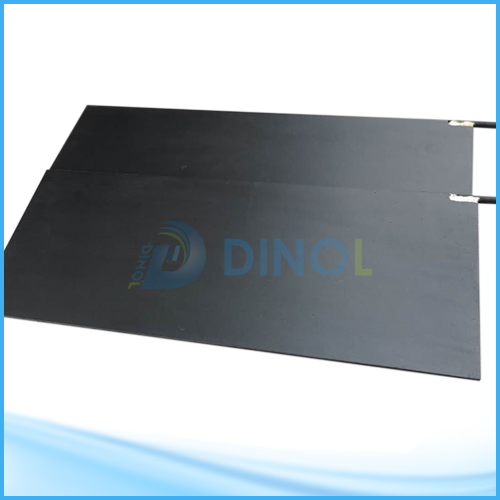
Tianyi supplies MMO anodes in mesh, ribbon, disc, and fully custom shapes with single-sided or double-sided coating options. Dimensions—including length, width, and thickness—are produced to design specifications, supporting direct integration into existing ICCP system designs. Installation by welding to titanium conductor bars, bolting, or clamping accommodates diverse field conditions without requiring specialized tooling.
Procurement Insights: Buying and Sourcing MMO Coated Titanium Anodes
Supplier Evaluation Criteria
When assessing a potential mmo coated titanium anodes for cathodic protection supplier, procurement teams should request documentation covering raw material certifications (ASTM B265 Gr1/Gr2 mill test reports), coating composition analysis, and accelerated life test results. Suppliers operating under ISO-certified quality management systems provide the traceability documentation that QA departments require. Verify that the supplier can demonstrate batch-to-batch coating consistency through electrical resistivity and adhesion test data.
Lead Times, Pricing, and Order Quantities
Standard configurations typically carry lead times of two to four weeks for moderate volumes. Custom geometries may require four to six weeks depending on tooling requirements. Pricing is influenced by coating type (Ir-Ta formulations carry higher precious metal content costs than Ru-Ir), coating surface area, and order volume. Annual framework agreements with concentrated batch releases generally offer the most favorable unit economics and supply continuity for production operations managers.
Customization and Long-Term Partnership Value
The ability to specify coating type, geometry, and installation interface means that a capable manufacturer functions as a process partner rather than a transactional vendor. Suppliers offering engineering liaison support—including rapid prototyping for new anode designs and application testing—reduce development cycles for R&D teams working on next-generation electrolysis or ICCP equipment. Long-term supplier relationships built on consistent quality and responsive technical support generate measurable value beyond the initial purchase price.
Conclusion
A titanium base that has been coated with mmo coated titanium anodes for cathodic protection becomes a long-lasting, dimensionally stable anode that can provide reliable cathodic protection for at least twenty years. As a result of their low consumption rates, high current economy, ability to work with different materials, and mechanical freedom, these anodes are the best choice for challenging industrial uses, both technically and financially. A good protection plan starts with the right MMO anode specification, which should be tailored to your environment and current needs. This is true whether you are protecting offshore infrastructure, buried pipelines, or water treatment assets.
FAQ
How long do MMO coated titanium anodes typically last?
In normal ICCP operating conditions, where current densities stay within the design limits, good MMO anodes last 20 to 25 years in salt water and 15 to 20 years in soil. How long something lasts relies on the working current density, the chemistry of the electrolyte, and the coating specifications. Ir-Ta formulations usually last longer than Ru-Ir variants in acidic or high-chlorine environments.
What maintenance steps extend anode service life?
Visual inspections to look for physical harm once a year, checking the integrity of the connection, and watching the rectifier output are all normal procedures. Biofouling needs to be cleaned off of anode surfaces on a regular basis in marine settings to keep the current distribution working well. Keeping the operating current density within the design range is the best thing that can be done to keep the coating's integrity over time.
Why choose MMO coating over platinum for high-performance applications?
While platinum is very stable electrochemically, it requires a lot more material to produce the same amount of current. It is much cheaper for MMO coatings to achieve the same exchange current densities through catalytically active oxide systems. This makes them the standard choice for large-scale ICCP deployments where cost per protected surface area is a main design constraint.
Request a Quote from Tianyi — Trusted MMO Coated Titanium Anode Manufacturer
In naval, pipeline, water treatment, and industrial settings, Tianyi creates and makes Mmo-coated titanium anodes for cathodic protection. Our Ru-Ir and Ir-Ta anode systems are made with strict quality controls and full material tracking. We can handle large orders, unique shapes, and quick wait times. You can email our tech team at info@di-nol.comto get pricing and specs for your next ICCP project.
References
1.Trasatti, S. (1991). Physical electrochemistry of ceramic oxides. Electrochimica Acta, 36(2), 225–241.
2.Hayfield, P. C. S. (2002). Development of the Noble Metal/Oxide Coated Titanium Electrode. Royal Society of Chemistry.
3.NACE International. (2016). Impressed Current Cathodic Protection Systems: Design and Application, NACE SP0169-2013 (Revised). NACE International.
4.Beer, H. B. (1980). The invention and industrial development of metal anodes. Journal of the Electrochemical Society, 127(8), 303C–307C.
5.Loto, R. T., & Loto, C. A. (2019). Cathodic protection of mild steel in seawater: A review of electrode materials and system design. Journal of Materials and Environmental Science, 10(4), 312–325.
6.ASTM International. (2019). ASTM B265-20: Standard Specification for Titanium and Titanium Alloy Strip, Sheet, and Plate. ASTM International.
