




Best Polymer Flexible Anode for Complex Underground CP Projects
When engineers ask which anode system works best for tank bottoms, aging pipelines, and high-resistivity soils, the polymer flexible anode for cathodic protection consistently comes out on top. Unlike rigid point anodes, this cable-shaped system distributes protective current evenly along the entire buried structure, eliminating "hot spots" and gaps that accelerate corrosion. Tianyi's MMO linear anode lineup — with output currents from 300 to 1,000 mA/m and a designed service life exceeding 40 years — gives procurement teams a technically sound, cost-competitive alternative to legacy Western brands.
Understanding Polymer Flexible Anodes in Cathodic Protection
What the Anode Actually Does Underground?
An impressed current cathodic protection (ICCP) device pushes electricity from a rectifier into the dirt or electrolyte around it through an extra anode. The current then runs onto the metal structure that is attached to the negative terminal. This polarizes the surface of the metal cathodically and stops electrochemical corrosion. Instead, the anode oxidizes, which means that the choice of material directly affects how long the system works without any help.
Construction of a Conductive Polymer Linear Anode
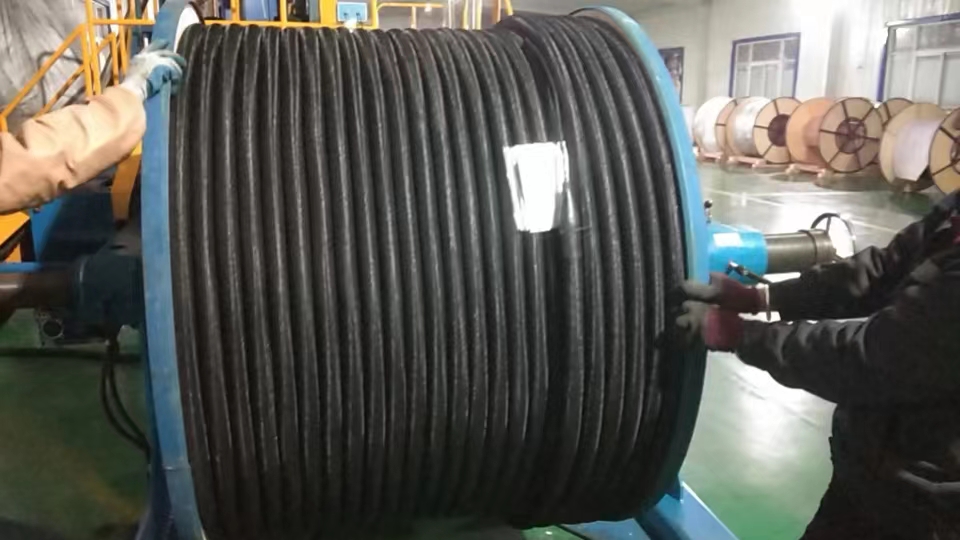
Stranded copper wire is at the center of Tianyi's polymer bendable anode. It is surrounded by an electrical polymer layer that is full of carbon filler (≥99.5%). There is low longitudinal resistance because of the copper core, and high crosswise resistance because of the polymer. This lets the current "drip" slowly and evenly into the dirt along the whole length of the anode. The outside diameter is Φ39.5 ± 0.5 mm, it weighs 1.5 kg/m, and the smallest radius of bending it is 500 mm. These are all useful measurements for trench installation.
Why Uniform Current Distribution Matters?
Point anodes focus the flow on a single area, which can protect local areas too well while leaving areas farther away unprotected. That imbalance is fixed by putting a polymer flexible anode for cathodic protection next to a pipeline or under the floor of a tank. Field data from NACE-referenced projects show that linear anode systems keep nearby structures from being affected by interference by spreading voltage drop evenly. This is something that is specifically asked for in AMPP SP0169 for pipeline CP design.
Polymer Flexible Anode vs. Traditional and Other Anode Types
Performance Gap Against Magnesium and Zinc Sacrificial Anodes
There is no need for a rectifier with a sacrifice anode because its main voltage is set by electrochemistry. High-resistivity soils (above 10,000 Ω·cm), which are common in dry places in the Middle East and Southeast Asia, make it impossible for them to push enough current to meet the −850 mV (CSE) safety requirement. The ICCP linear anode's output can be changed. The DN-15 model from Tianyi delivers 328 mA/m, and the DN-30 model gives 656 mA/m. This means that the anode hardware doesn't have to be changed to work with different types of dirt.
MMO/Ti Wire Core vs. Plain Graphite Anodes
Graphite anodes break down quickly when there is a lot of current flowing through them, and they also break when the backfill is packed down. Tianyi's MMO/Ti wire core comes in three different sizes: 1.0 mm, 1.5 mm, and 3.0 mm. It has a Mixed Metal Oxide coating (Ir, Ru, and Ta) on a 99.6% pure titanium substrate that has been sandblasted, pickled, and precision coated according to ASTM standards. It has a contact resistance of 0.0009 Ω between the MMO/Ti wire and the internal cable, and the coating thickness is between 6 and 10 μm, which is well within the standards set by ASTM B265 Grade 1/2.
Lifecycle Cost Comparison
With a design life of 40 years, most storage tanks and pipelines will only need to be installed once. When you add up the cost of work, drilling, and downtime for systems made of graphite or high-silicon cast iron that may need to be replaced every 10–15 years, a polymer flexible anode for cathodic protection is a lot cheaper per year. The rate of weight loss in ASTM D-543 chemical plunge tests is less than 1%, which shows that the chemical is stable in harsh soil chemistry.
Installation and Best Practices for Polymer Flexible Anodes
Site Preparation and Trench Layout
Before putting down the anode, the trench needs to be lined up with the protected structure at the right distance from it, as shown on the CP drawings. The depth and width of the trench rely on how resistive the dirt is in that area and how much current is needed. To protect the bottom of the tank, the anode is usually run under the sand pad in a grid pattern that is decided by the corrosion engineer.
Here are the main steps for putting in a trench-type groundbed:
- Dig the anode trench to the specified depth and width alongside or beneath the target structure.
- Spread the first half of the coke breeze backfill evenly across the trench bottom — this lowers grounding resistance and extends anode life.
- Place the flexible anode on the coke bed, keeping it straight and free of kinks that exceed the 500 mm minimum bending radius.
- Cover the anode with the remaining coke breeze, then compact with native soil before final backfill.
When you follow these steps, you will always get a low-resistance anode bed that meets the design current flow from the start and protects the structure reliably for decades.
Joint Sealing and Cable Connections
Most underground linear anode systems fail at the point where the joints aren't strong enough. Tianyi uses sealing materials that are resistant to rust and aging over a long period of time. The type of cable used is based on the temperature and chemistry of the soil. The normal cable type is 1×10 mm² XLPE/PVC, but PVDF/HMWPE and EPR/CSPE can also be requested. All joints come with sealing already done by the factory; field splices must exactly match that standard.
Post-Installation Verification
Once the soil is back in place, check the pipe-to-soil potential several times along the polymer flexible anode for cathodic protection run to make sure the −850 mV (CSE) requirement is met. Note down the voltage and current at the rectifier's output. If a part doesn't have enough polarization, it means that either a joint has failed or there isn't enough coke backfill. This should be looked into before the trench is totally closed.
Procurement Considerations for Polymer Flexible Anodes
Technical Documents Your Owner's Engineer Will Require
Business owners and site inspectors who follow NACE/AMPP standards will ask for a Technical Data Sheet (TDS) in English, a Certificate of Conformance (COC), and factory test reports that include information on the output current, contact resistance, and carbon content. As standard, Tianyi gives you all three documents, as well as ISO 9001 certification and test data that is linked to ASTM standards. Before agreeing to a full buy, you can get free samples to look at first.
Ordering Structure and Lead Times
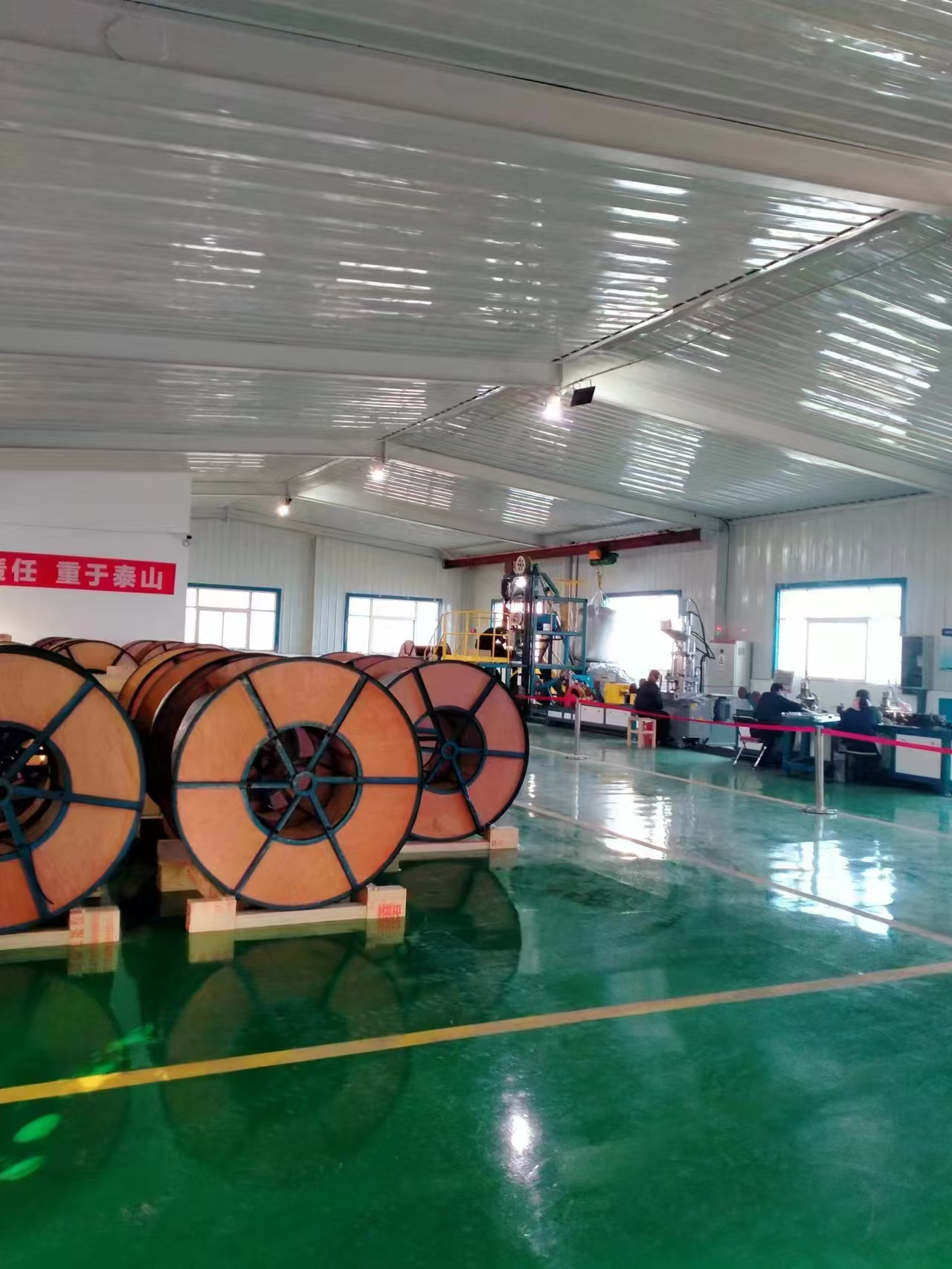
Tianyi comes in 500 m and 1,000 m reels and can be cut to length, so field crews can cut it to exact design lengths without any waste. The normal lead time for orders up to 10,000 m is 30 days from the time the order is confirmed. For bigger orders, the lead time is discussed on an individual basis. Stock things usually take 15–20 days to arrive after payment. You can pay 30% up front and the rest when you get a copy of the bill of lading.
Customization Options That Affect Your Bill of Materials
When procurement managers choose Tianyi anodes, they can change the MMO/Ti wire diameter (¦1.0, ¦1.5, ¦2.0, ¦3.0 mm), cable insulation type, reel length, and output current to make sure they perfectly fit project plans. Labeling for OEM is possible. This level of flexibility cuts down on waste on the job site and makes it easier to get material approval from the owner's corrosion engineer.
Future Trends and Innovations in Polymer Flexible Anodes
Smart Monitoring Integration
On big tank and pipeline projects, remote tracking systems that record rectifier current, pipe-to-soil potentials, and anode-bed resistance in real time are becoming the norm. Linear anodes work well with this method because their spread-out shape lets many test-point taps happen along a single run. This gives operators detailed information on protection levels without having to do any extra digging.
Advances in MMO Coating Formulations
Studies in the journals Corrosion and Journal of the Electrochemical Society show that work is still being done on Ir-Ta and Ru-Ir mixed oxide ratios that lower the oxygen evolution overpotential, which makes the rectifier use less energy. These changes mean that the layer will last longer with the same working current density, which directly meets the 40-year design-life requirements.
Regulatory and Environmental Drivers
It is required by US pipeline safety rules (49 CFR Part 192/195), Gulf Cooperation Council standards, and ISO 15589-1 for buried pipes that cathodic protection can be shown. Retrofit projects are being driven by stricter rules and higher fines for coating holidays on old infrastructure. This is exactly the kind of situation where a linear flexible anode works best, since it can be put without shutting down the pipeline.
Conclusion
Polymer flexible anode for cathodic protection used to be a specialty product, but now they are the standard for underground ICCP projects that need to be done in difficult conditions, like tank bottoms, retrofitting old pipelines, high-resistance soils, and complicated pipe networks where point anodes can't provide even protection. AMPP-aligned corrosion engineers need products from Tianyi that have an output current of 300 to 1,000 mA/m, a contact resistance of less than 0.0009 Ω, a carbon content of more than 99.5%, and a 40-year service life backed by ASTM test data and ISO 9001 certification.
FAQ
How long does a polymer flexible anode last in buried service?
The MMO linear anodes made by Tianyi are made to last at least 40 years. This number assumes that the rectifier output is correct, the coke breeze backfill is correct, and the joints are firmly sealed. Chemical immersion tests according to ASTM D-543 show that the anode loses less than 1% of its weight each year, which means it will stay stable in harsh soils for a long time.
Can the anode be cut to a custom length on site?
Yes, reels come in 500 m or 1,000 m lengths, but they can be cut to fit. Field crews can cut to the exact design size, which cuts down on waste and makes installation easier on projects where the length of the anodes varies from segment to segment.
What wire diameter should I specify for a tank bottom project?
The Υ1.5 mm MMO/Ti wire (DN-15) at 328 mA/m is usually used to cover the bottom of an external tank. If the dirt has a high resistance or the tank diameter is bigger, the 3.0 mm (DN-30) at 656 mA/m may be needed. The technical team at Tianyi can look over your CP design drawings and make sure you're following the right rules.
Does Tianyi provide third-party test reports?
Yes, every order comes with a factory test record that lists the output current, contact resistance, and carbon content. Before production starts, first-piece inspection samples are available, and if needed, third-party verification can be set up.
What cable insulation options are available?
1x10 mm² XLPE/PVC cable is used for standard supply. PVDF/HMWPE and EPR/CSPE are both options for projects that need to be resistant to certain chemicals or temperatures. It is also possible to make custom wire cross-sections.
Get a Quote from Tianyi — Your Polymer Flexible Anode Supplier for ICCP Projects
Tianyi makes MMO linear anodes that meet ASTM standards. They come with full ISO 9001 quality documentation, TDS and COC in English, and flexible reel lengths that range from 500 m to 1,000 m. If you need a polymer flexible anode for cathodic protection on a tank retrofit in Saudi Arabia or a pipeline job in Malaysia, our expert team can check the details, look over your plans, and send you a full quote within 48 hours. You can get a free sample or project price right now by emailing us at info@di-nol.com.
References
1.AMPP (formerly NACE International). SP0169: Control of External Corrosion on Underground or Submerged Metallic Piping Systems. AMPP, 2013.
2.Baeckmann, W., Schwenk, W., & Prinz, W. Handbook of Cathodic Corrosion Protection. Gulf Professional Publishing, 1997.
3.Gummow, R. A. "Cathodic Protection Considerations for Pipelines with AC Mitigation Facilities." Corrosion, NACE International, 1999.
4.ISO. ISO 15589-1: Petroleum, Petrochemical and Natural Gas Industries — Cathodic Protection of Pipeline Systems — Part 1: On-Land Pipelines. ISO, 2015.
5.Peabody, A. W. Control of Pipeline Corrosion, 2nd ed. NACE International, 2001.
6.Shreir, L. L., Jarman, R. A., & Burstein, G. T. Corrosion: Metal/Environment Reactions, 3rd ed. Butterworth-Heinemann, 1994.
