




How do I choose polymer flexible anodes for difficult soil conditions?
Choosing the right polymer flexible anode for cathodic protection in difficult soil starts with understanding your site's soil resistivity, pH level, and moisture content. In high-resistivity or acidic soils, standard anodes often fail to deliver adequate protective current. A conductive polymer flexible anode — featuring an MMO/Ti wire core, carbon backfill compatibility, and output current between 300–1000 mA/m — distributes current uniformly along the protected structure. Match the MMO/Ti wire diameter (φ1.5 mm or φ3.0 mm) to your design current demand, and confirm a contact resistance of ≤0.0009Ω before ordering.
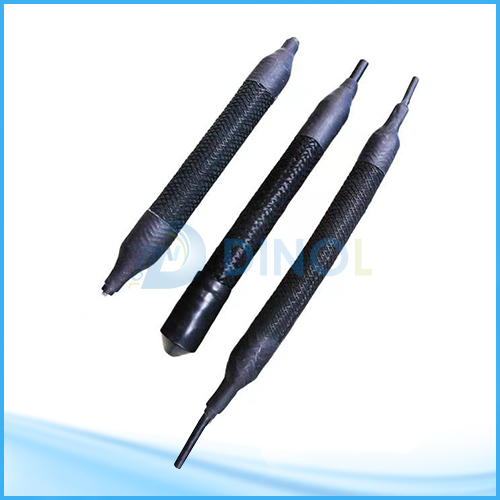
Understanding the Challenge of Difficult Soil Conditions
It's not all soil that can protect against corrosion the same way. ICCP systems depend on electrical processes that can be slowed down or stopped by certain ground conditions.
How Soil Resistivity Affects Current Delivery
When the resistivity of the soil is more than 10,000 ©·cm, there is a lot of electrical resistance between the anode and the protected structure. In dry places like Saudi Arabia or Southeast Asia, where clay is common, this resistance makes it harder for the protected current to reach underground pipes and tank bottoms. Point anodes that are used today can't spread current far enough to cover the whole building.
The Role of Acidic and Waterlogged Soils
Soils with a pH below 5 speed up the breakdown of anode materials, greatly reducing the service life. Soils that are wet in coastal Malaysia or the delta zones of Indonesia cause electrochemical conditions to change. The amount of moisture in the air changes with the seasons, which makes the local resistivity change. This makes the current flow change, which is a big problem for protecting assets over the long term without a flexible, spread anode system.
Why Standard Anodes Fall Short?
In resistant or violent soils, magnesium or zinc galvanic anodes run out of power very quickly. Installing rigid impressed current anodes in fixed groundbeds makes the current flow unevenly, which means that some parts of the bottom of a pipeline or tank are not properly secured. These holes cause localized corrosion hotspots that aren't seen until the structure breaks. A polymer flexible anode for cathodic protection solves these problems by providing even current distribution across the entire protected surface.
Core Criteria for Selecting Polymer Flexible Anodes in Harsh Soils
Once you know what the problem is with the dirt, the next step is to match the product's specs to the site's conditions. When things get tough, these are the most important technical criteria.
Material Composition and Electrical Conductivity
A good linear anode has a titanium base (Ti content ≥99.6%) and a covering of Ir, Ru, and Ta mixed metal oxides that are put on by sandblasting, pickling, and precise coating. Low lengthwise resistance is made possible by the internal wire, which is usually 1×10 mm² XLPE/PVC. A carbon filler content of at least 99.5% in the polymer sheath keeps the transverse conductance stable into the soil around it.
Output Current and Design Life
For tough soils, choose an anode with an output current range of 300 to 1000 mA/m to make sure there is enough cathodic polarization even when the resistance changes. DN-15 model from Tianyi (φ1.5 mm MMO/Ti wire) gives 328 mA/m, and DN-30 model (φ3.0 mm wire) gives 656 mA/m. Both are made to last at least 40 years and meet ASTM standards, which are what NACE/AMPP needs for material approval.
Mechanical Flexibility and Installation Adaptability
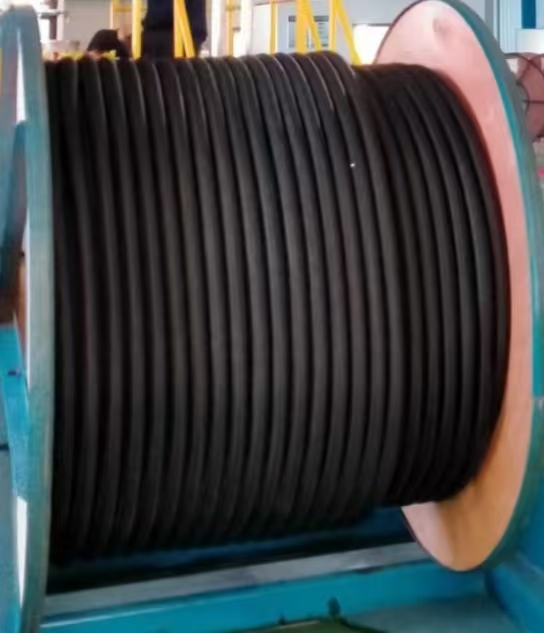
The anode has an outer diameter of 38 mm and a minimum bending radius of 500 mm, which means it can bend around tank bottoms and curved pipeline routes. Cut-to-length reels of 500 m or 1000 m cut down on waste on the job site. The weight of 1.5 kg/m makes it easy for field teams working in rural or limited excavation areas to move.
Comparing Polymer Flexible Anodes with Traditional Cathodic Protection Solutions
Knowing when flexible anodes work better than other options helps owner engineers and AMPP-certified inspectors who are looking over your submission understand why you chose the material you did.
Magnesium and zinc galvanic anodes work well in low-resistance soils but run out of power in 5 to 15 years in acidic or high-resistance soils. They also can't produce the amount of current needed for large tank bottoms or coating systems that are wearing down on old pipelines. To replace them in underground or tank-floor uses, you have to dig up the old ones, which takes time and costs a lot of money. A polymer flexible anode for cathodic protection avoids these drawbacks with a longer service life, higher current output, and no need for excavation during replacement.
Rigid impressed current groundbeds focus the flow of current on set places. This makes a big difference in the voltage along the protected structure. Parts that are close get extra current, while parts that are far away don't get enough protection. This also causes stray current disturbance on buildings next to closely spaced parallel pipes.
If you put a conductive polymer bendable anode parallel to the pipeline or under the bottom of a tank, the current flows evenly along its whole length. Current can flow along the copper core with little resistance, then "drip" outward through the conductive polymer layer and into the coke breeze backfill. This makes a steady electric field that protects instead of separate areas with high current. This makes regular, measured cathodic polarization that meets the safety standards of NACE SP0169 and ISO 15589-1.
Practical Guide to Procurement: What Purchasing Managers and Engineers Should Know?
Getting flexible anodes for buried applications comes with real project risk. If the anode fails after backfilling, it has to be dug up and put back in, which causes delays in the schedule. It is better for the project margin and the client relationship to judge suppliers based on technical documentation rather than just price.
Before you place an order, here are the most important things to check when buying something:
- Technical Data Sheet (TDS) in English: Confirm MMO/Ti wire diameter options (φ1.0, φ1.5, φ3.0 mm), outer diameter (Φ39.5 ± 0.5 mm), contact resistance (≤0.0009Ω), and carbon content (≥99.5%).
- Quality certificates: ISO 9001 certification and ASTM-compliant test reports are the baseline. Request a Certificate of Conformance (COC) and factory inspection report for each production batch.
- First-article inspection and third-party sampling: For initial orders, request a first-piece inspection report. For orders above 500 m, arrange independent sampling to verify batch consistency.
- Customization capability: Confirm the supplier can deliver custom cable types (XLPE/PVC, PVDF/HMWPE, EPR/CSPE), reel lengths, and junction sealing per project drawings.
- Lead time and shipping terms: Standard production lead time is 15–30 days. For time-critical projects, confirm stock availability for 500 m or 1000 m reel sizes.
These steps look at the technical, quality, and practical aspects of making a good purchase choice. Verified suppliers usually accept payment terms of 30% down and 70% upon receipt of a copy of the bill of lading.
Case Studies and Real-World Applications in Difficult Soil Conditions
Field performance data from comparable projects gives procurement managers evidence that a material will work — not just a manufacturer's claim.
Tank Bottom Protection in High-Resistivity Desert Soil
In arid Middle Eastern tank farm projects, ground resistivity frequently exceeds 50,000 Ω·cm. Linear MMO anodes laid beneath the sand cushion layer of storage tank bottoms, backfilled with coke breeze, have achieved uniform polarization across the full tank floor as part of a polymer flexible anode for cathodic protection system. The distributed current output eliminates the shielding effect that point anodes face in dry, sandy ground.
Aging Pipeline Rehabilitation in Acidic Clay Soils
On pipeline rehabilitation projects where coating deterioration exposes bare steel, the current demand per meter increases sharply. Flexible anodes installed in parallel trenches with coke breeze backfill compensate for coating holidays by maintaining 82 mA/m output (with backfill) continuously, without requiring rectifier output increases that could damage adjacent coated sections.
Waterlogged and Marine-Adjacent Environments
In coastal Southeast Asian installations, fluctuating water tables create seasonally variable soil resistivity. The ≤7 MPa pressure rating and -18°C minimum storage temperature of Tianyi's polymer flexible anode make it suitable for saturated soil conditions without mechanical degradation or polymer delamination.
Conclusion
To choose the best polymer flexible anode for cathodic protection in tough soil, you need to make sure that the diameter of the MMO/Ti wire, the output current rate, and the carbon content are all right for the site's resistance and safety design. Before you agree to a provider, make sure that their written test results back up their claims about contact resistance, service life, and batch consistency.
FAQ
What soil resistivity range suits a polymer flexible anode?
Polymer flexible anodes perform well across a wide resistivity range, including high-resistivity soils above 10,000 Ω·cm. Coke breeze backfill further reduces grounding resistance, making them effective where traditional anodes fail. Always request a site soil survey before finalizing anode spacing and output current design.
How do I verify batch consistency from a Chinese manufacturer?
Request a Certificate of Conformance and factory test report for each production batch. For orders above 500 m, arrange third-party sampling of contact resistance (≤0.0009Ω) and carbon content (≥99.5%). Suppliers holding ISO 9001 certification operate under documented quality management systems that support traceability.
Can the anode be cut to length on site?
Yes. Reels of 500 m and 1000 m are designed for field cutting. The junction sealing materials at cut points must use corrosion-resistant, aging-resistant compounds specified in the installation guide to prevent moisture ingress at cable terminations.
What cable types are available for different soil environments?
XLPE/PVC suits most buried pipeline applications. PVDF/HMWPE and EPR/CSPE options are available for chemically aggressive or high-temperature environments. Custom cable cross-sections beyond the standard 1×10 mm² are available on request.
Get Your Project-Specific Quote from Tianyi — Trusted Polymer Flexible Anode Supplier
Polymer bendable anodes work well in a wide range of resistivities, even in soils with a resistance of more than 10,000 ©·cm. Coke breeze backfill lowers grounding resistance even more, which means they work where regular anodes don't. Before deciding on anode spacing and output current design, you should always ask for a site dirt study. You can get a free sample or project price right now by emailing us at info@di-nol.com.
References
1.NACE International. Cathodic Protection of Underground Storage Tank Systems. NACE SP0285, 2011.
2.ISO. Petroleum and Natural Gas Industries — Cathodic Protection of Pipeline Systems — Part 1: On-Land Pipelines. ISO 15589-1, 2015.
3.ASTM International. Standard Test Methods for Chemical Resistance of Plastics. ASTM D543, 2014.
4.Peabody, A. W. Control of Pipeline Corrosion. 2nd ed., NACE International, 2001.
5.von Baeckmann, W., Schwenk, W., and Prinz, W. Handbook of Cathodic Corrosion Protection. 3rd ed., Gulf Professional Publishing, 1997.
6.AMPP (formerly NACE). Design of Galvanic Anode Cathodic Protection Systems for Underground Storage Tanks. AMPP SP0285-2021, 2021.
