




ICCP MMO Titanium Anodes vs Traditional Anodes: Which Is Best?
When choosing between anode types for an impressed current cathodic protection system, the answer is rarely one-size-fits-all — but the data points strongly in one direction. Based on measurable performance metrics, iccp protected mmo coated titanium anodes for cathodic protection consistently outperform conventional options across service life, current efficiency, and total cost of ownership.
Traditional anodes — including high-silicon cast iron, graphite, and sacrificial zinc — carry real limitations in demanding environments. This article breaks down exactly where each technology stands and why MMO titanium anodes have become the preferred specification for pipelines, offshore structures, storage tanks, and marine infrastructure worldwide.
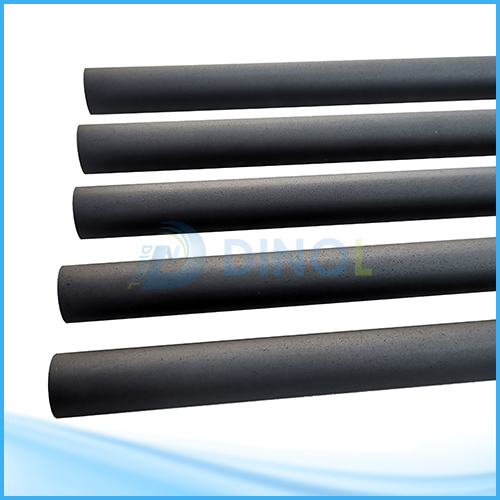
Understanding ICCP MMO Coated Titanium Anodes and Traditional Anodes
What Are MMO Coated Titanium Anodes?
MMO coated titanium anodes are made of a commercially pure titanium substrate (Grade 1 or Grade 2 according to ASTM B265) that has been heated and covered with mixtures of mixed metal oxides, most often Ru-Ir or Ir-Ta. Dimensionally Stable Anode (DSA) is made this way. It keeps its shape even after decades of being used in electrochemistry. These anodes are made to spread DC current widely in places like seawater, dirt, and industrial fluids. They can be made in mesh, ribbon, disk, or any other shape you need.
What Are Traditional Anodes?
Some of the most common anodes used for cathodic protection are graphite, platinum-coated titanium, high-silicon cast iron, and metals that are meant to be used as sacrifices, such as zinc and aluminum. High-silicon cast iron anodes have been the standard for deep pipeline groundbeds for a long time.
The conductivity of graphite anodes is about normal, but they are very easy to break. Anodes made of zinc and aluminum that are meant to be thrown away work without any extra power, but they break down all the time and need to be changed, which can be hard to do in places where they are buried deep or underground.
Key Structural Differences
There is a big difference between normal anodes and MMO titanium anodes in terms of how they are built. Cast iron anodes with a lot of silicon lose between 500 and 1000 grams of silicon every year. If you look at MMO titanium anodes, they only use 0.5 to 2.0 mg/A·yr when they're working right, which is five times less. This is why the design engineers are sure that the anode will last 20 to 50 years. This is something that no other type of anode can do in toxic underground or underwater service.
Performance and Efficiency Comparison: MMO Coated Titanium Anodes vs Traditional Anodes
Current Output and Density Capacity
Up to 100 A/m² of current can flow through the iccp protected mmo coated titanium anodes for cathodic protection, MMO titanium anodes that are in soil or mud. They can handle 600–1,000 A/m² in seawater without passivation or surface damage. Most of the time, high-silicon cast iron anodes can only handle 10–20 A/m² before they start to rust more quickly. There is more output, so engineers can use fewer anode strings per job. Putting it in is easier now, and the legal costs that go along with it are cheaper.
Resistance to Scaling, Fouling, and Environmental Stress
Traditional graphite and cast iron anodes can get scaled and biofouling in carbonate-rich soils and marine settings. This makes them less effective over time at conducting electricity. MMO titanium anodes can't be used with either method. The titanium layer can handle being pushed and pulled without breaking, and the oxide covering keeps the electrochemical activity going even when the temperature or chloride level is high. This is a great way to protect platforms in the ocean and clean water.
Maintenance Frequency and System Reliability
It has been shown over and over again in offshore and pipeline ICCP installations that systems made with MMO titanium anodes need a lot less maintenance work than systems made with cast iron or graphite. For a new cast iron anode string to be put in, the system has to be taken apart, dug up, and then put back together. It takes 30 years and costs a lot of money to finish. This is a lot easier to do with MMO anodes because they last a lot longer before they need to be changed.
Cost and Procurement Considerations for B2B Clients
Upfront vs. Lifecycle Cost Analysis
It costs more per unit for titanium anodes with MMO layer than for graphite or cast iron anodes. But LCA paints a different picture. When you think about how often they need to be changed, how much it costs to keep them in good shape, how much it costs to dig up buried systems, and how much time is lost during production, MMO anodes have a much lower total cost of ownership over a 20–30 year project timeline. When it comes to money, this difference is very important for big projects like jetty pile protection, long-distance pipeline groundbeds, or storage tank farms.
Evaluating Suppliers and OEM Credentials
Procurement teams shouldn't just look at the unit price when they choose providers. Some of the most important things that need to be met are batch-specific Certificates of Conformance (CoC), being able to trace the coating back to ASTM B265 substrate standards, and making sure that the project specs are in line with EN 12954, NACE SP0176, or GB/T 50934. For longer projects, it's helpful to have suppliers who can help design institutes with technical issues, send standard-aligned documentation packages, and work with delivery schedules that are spread out over 6 to 18 months.
Order Logistics and Supply Chain Risk
For big infrastructure projects, the anode supply needs to match the stages of installation. Buyers need to make sure that the company selling their iccp protected mmo coated titanium anodes for cathodic protection can handle scheduled delivery, such as sending shipments every month over a 12-month building window, without changing how regularly the batches are sent. Anode cable terminations and IP68-rated connections should be packed so that they don't get broken during shipping. This is because fixing cable joints that are underground or flooded in the field is expensive and can't always be done without digging up the system.
Applications and Industry Use Cases for MMO Coated Titanium Anodes
Offshore Platforms, Ship Hulls, and Marine Infrastructure
All over the world, disk- and mesh-shaped MMO titanium anodes have been used on ship decks, offshore platform legs, wharf steel piles, and buildings that are underwater. Seawater has a lot of chlorine evolution, which makes Ru-Ir MMO films work really well there. With almost no anode mass loss, these installations can be used for more than 15 years. Similar sacrificial zinc anode systems, on the other hand, need to be completely replaced on the same structures every 5–8 years.
Buried Pipeline Groundbeds and Storage Tank Floors
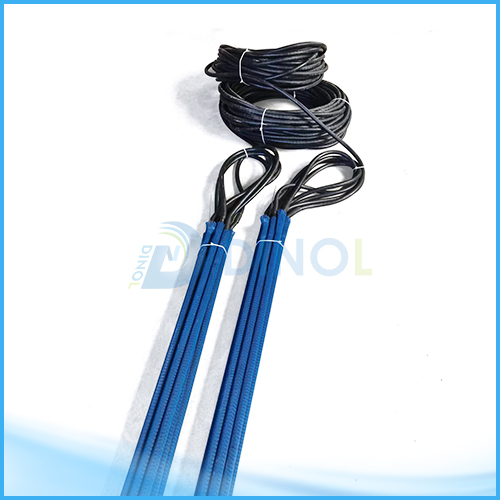
Deep-well groundbed setups are often used to protect parts of dirt pipelines with a high resistance. In these plans, vertical boreholes are used to lower tube MMO titanium anode lines. Anodes made of MMO ribbon are put under the base of a storage tank to protect the floor. They provide a steady flow of cathodic current across the whole floor plate. Soils and freshwater that change the amount of oxygen are good places for Ir-Ta coatings because they don't wear off too quickly.
Reinforced Concrete and Civil Infrastructure
When put into concrete parking lots, bridge decks, and tunnels, MMO titanium mesh and ribbon anodes stop rebar rust that is caused by chloride from de-icing salts or the air at sea. Because these ICCP methods are built in, structures last for decades longer. When steel-based impressed current methods are used, the anode can eat away at the concrete around it, but the titanium layer doesn't react with the alkaline environment of concrete, so the anode doesn't do that.
Making the Right Choice: Why MMO Coated Titanium Anodes Are Often the Preferred Solution
When MMO Titanium Anodes Are the Clear Choice
In terms of both technology and cost, the iccp protected mmo coated titanium anodes for cathodic protection are better for projects that need to last a long time, have hard-to-reach installation sites, or need a lot of current. Ir-Ta coatings are best when you're working with dirt, freshwater, or concrete backfill that lets oxygen escape. You should use Ru-Ir coatings for seawater and brine, where chlorine generation is the main process. This is because the titanium base doesn't change shape, so the current flow stays the same for the whole design life.
When Traditional Anodes May Still Apply
Small, low-current jobs, like boat hulls, small dock buildings, or short-span pipes, can still use anodes made of zinc or aluminum. This is because the low cost and ease of use are more important than how long the system lasts. Some project specs from the past may still list high-silicon cast iron anodes. It's hard to explain why you should use traditional materials for a new project that will last 20 years or more, though.
Practical Guidance for Engineering and Procurement Teams
Talk to your source as soon as possible after you create the plan. You can get technical information from a good manufacturer before you bid. They can tell you about the best coating type based on data from soil or water resistivity tests and give you standard-aligned data sheets that the design institute will accept.
For each batch of production, ask for a CoC report, and make sure that the cable-to-anode terminations meet IP68 standards for waterproofing. When ICCP systems are buried or submerged, this one detail stops the most common way for them to fail in the field.
Conclusion
In terms of science, the iccp protected mmo coated titanium anodes for cathodic protection are the best choice for most of the things that are used with ICCP today. They last longer, don't wear out as quickly, and can handle a lot of current. This makes them better than graphite, cast iron, and sacrificial options in terms of speed and cost over time.
For easy, low-cost setups, you can still use traditional anodes. But for projects that need to last more than 15 years, be buried deeply, or be immersed, you should use MMO titanium. It's important to find the right coating chemistry (Ir-Ta or Ru-Ir) for your surroundings and work with a source who can back up their claims with paperwork that can be tracked and who can deliver in stages.
FAQ
Can MMO titanium anodes be recoated after the coating wears out?
Yes. If the titanium substrate remains structurally intact, the spent coating can be removed through sandblasting and acid etching, and a fresh MMO layer applied. This extends the anode's functional life at a fraction of new procurement cost.
How do I select between Ir-Ta and Ru-Ir MMO coatings?
Select Ru-Ir for seawater and high-chloride brine where chlorine evolution dominates. Select Ir-Ta for soil, freshwater, and concrete applications where oxygen evolution is the primary anodic reaction. Using the wrong formulation accelerates coating failure.
What is the primary cause of premature MMO anode failure?
The most common cause is operating above the recommended voltage limit, which breaks down the titanium passive oxide layer. Reverse polarity events cause the same damage. Both are preventable through proper rectifier configuration and system monitoring.
What design life can I specify for MMO titanium anodes?
Design life is calculated from the coating loading in g/m² divided by the consumption rate at the operating current density. A heavier coating loading directly extends the specified lifespan, with 20–50 year designs achievable under normal operating conditions.
Do these anodes comply with international cathodic protection standards?
Yes. Quality-certified MMO titanium anodes can be supplied with documentation aligned to EN 12954, NACE SP0176, and GB/T 50934. Always request batch-specific Certificates of Conformance before product acceptance.
Get a Custom MMO Titanium Anode Quote from Tianyi
A company called Tianyi makes iccp protected mmo coated titanium anodes for cathodic protection. They use Grade 1/Grade 2 titanium plates with Ru-Ir and Ir-Ta MMO coatings. You can get these coverings in mesh, ribbon, disk, and unique shapes. It has been around for a long time and makes iccp protected mmo coated titanium anodes for cathodic protection.
For big infrastructure projects, they offer full CoC paperwork, detailed data sheets that are matched to standards, and release on time. Email our technical team at info@di-nol.com or go to dsa-anodes.com to get a selection guide and quote that are tailored to your project.
References
1. NACE International. Impressed Current Cathodic Protection — Design Criteria and Application. NACE SP0572, 2018.
2. Hayfield, P. C. S. "Development of the Noble Metal/Oxide Coated Titanium Electrode." Platinum Metals Review, 1998, Vol. 42, No. 2.
3. Lide, D. R. (Ed.). CRC Handbook of Chemistry and Physics, 85th Edition. CRC Press, 2004.
4. British Standards Institution. Cathodic Protection of Buried or Immersed Metallic Structures — General Principles and Application for Pipelines. BS EN 12954:2019.
5. NACE International. Corrosion Control of Steel Fixed Offshore Structures Associated with Petroleum Production. NACE SP0176-2007.
6. Shreir, L. L., Jarman, R. A., & Burstein, G. T. (Eds.). Corrosion, Volume 2: Corrosion Control. Butterworth-Heinemann, 1994.
