




Best ICCP MMO Ribbon Anodes for Pipelines and Large Storage Tanks
When it comes to protecting buried pipelines and large aboveground storage tanks from corrosion, the right anode system makes a significant difference in both performance and long-term cost. ICCP MMO ribbon anodes for cathodic protection have become the preferred choice among infrastructure rehabilitation engineers across the United States, replacing older sacrificial anode systems that simply cannot match their precision, longevity, or design flexibility. This guide walks through what makes these anodes technically superior, how to select and install them correctly, and what to look for when sourcing a reliable supply partner.
Understanding ICCP MMO Ribbon Anodes and Their Role in Cathodic Protection
What Makes MMO Ribbon Anodes Different from Conventional Anodes?
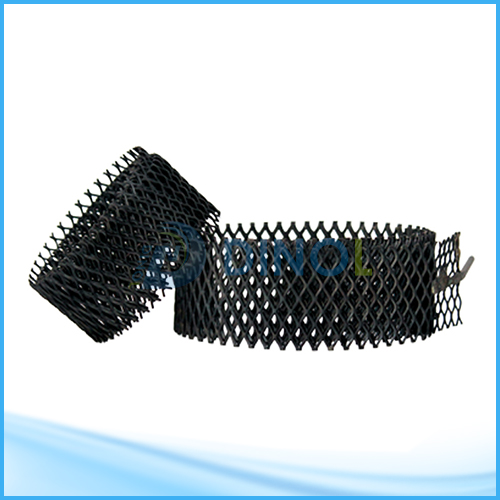
ICCP MMO ribbon anodes for cathodic protection are made up of a commercially pure titanium substrate (Grade 1 or Grade 2, according to ASTM B265) that is covered with a layer of Mixed Metal Oxides. For concrete and soil applications, this layer is usually Iridium/Tantalum (Ir/Ta), while for seawater and chloride-rich environments, it is Ruthenium/Iridium (Ru/Ir). Unlike zinc or magnesium sacrificial anodes, which lose their power over time, these impressed current anodes get their power from an outside DC source and discharge current without losing any material. As long as the titanium substrate is used, its shape doesn't change. This is because it is designed to last between 20 to 50 years, but under NACE TM0108 accelerated life testing protocols, critical infrastructure designs can last up to 75 years.
It is possible to measure how well ICCP MMO ribbon anodes for cathodic protection work as electrochemical elements. The electrical resistance is about 0.05 ohms per meter, and the current output can go up to 100 mA/m² in systems with embedded concrete and 600 mA/m² in systems with soil or coke breeze. Engineers can use these numbers to include accurate estimates of current density in their submission packages. This is needed for almost all state and local building projects in the US.
Comparing MMO Ribbon Anodes with Other Anode Types for Marine and Industrial Use
How MMO Ribbon Outperforms Zinc, Titanium Mesh, and Sacrificial Systems
Zinc anodes are good for protecting small areas, but they wear out quickly and need to be replaced often, which can be a problem on bridge decks and tank floors where access is limited. Titanium mesh anodes use the same MMO coating chemistry, but they work best for large overlay systems. They don't work as well for narrow trench installations next to underground pipes or under tank floors, where a thin ribbon shape is better from a mechanical point of view.
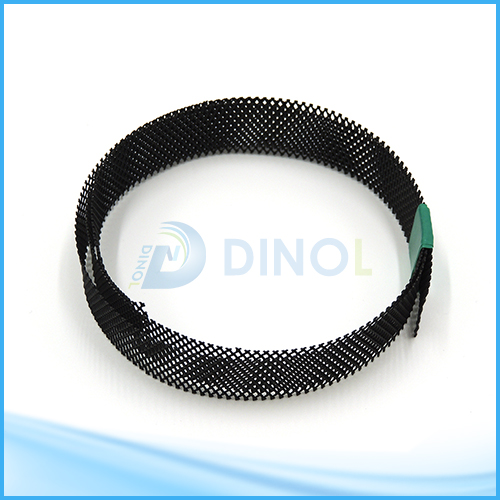
ICCP MMO ribbon anodes for cathodic protection fill a specific need. Because they are thin (6.35 mm to 12.7 mm wide and 0.5 mm to 0.635 mm thick), they can be put between reinforced bars in concrete without weakening the structure, or they can be put in a small sand cushion under the floors of storage tanks to make sure that the current flows evenly. When titanium conductor bars are used at grid intersection points, voltage drop over long distances is kept to a minimum. This keeps the safety potential even across the whole building. Total cost of ownership over a 20-year project lifecycle always favors ICCP MMO ribbon anodes for cathodic protection because installation work is a one-time cost and upkeep is much less than with other options.
Designing and Installing ICCP Systems with MMO Ribbon Anodes for Pipelines and Storage Tanks
Key Design Principles and Installation Guidelines
To make a good system design, you need to do accurate estimates of the current demand based on the structure geometry, the electrolyte resistivity, and the goal protection potential as described in NACE SP0169 for pipes or NACE SP0193 for storage tank exteriors. ICCP MMO ribbon anodes for cathodic protection are usually put out in a grid pattern, with parallel runs spread out based on how much current needs to be distributed. They are then connected to titanium conductor bars at regular intervals to keep the voltage from dropping along the length of the anode.
Here are the basic rules that engineers use to make sure that installations and designs work well:
- Grid spacing and current density calibration: To get even polarization in steel, the distance between the anodes must match the design current density. Before shotcrete or a layer is put on top of concrete, ICCP MMO ribbon anodes for cathodic protection are put in holes that have already been cut or tied to the rebar. When used in tank floor systems, the ribbon is inserted into a cushion of sand or fine soil at exact intervals to cover the whole base plate.
- Connection integrity: All connections between ICCP MMO ribbon anodes for cathodic protection and power feed wires are made with resistance spot welding or mechanical crimping, and they are encased in high-quality resin or dual-wall heat-shrink covers to keep moisture out, which is a major reason why connections fail early on.
- Monitoring provisions: Reference electrodes are placed along with the anode system to allow potential verification after installation in line with NACE acceptance standards. These are Copper/Copper Sulfate (CSE) for soil uses and Silver/Silver Chloride for marine environments.
Damage to the coating during installation is a real risk to operations. The MMO layer can be damaged locally by abrasion from rebar contact or gravel during the concrete setting process. This risk can be greatly reduced by asking for factory-coiled packaging with protective interleaving and including installation handling instructions in the submittal package.
Procurement and Supply Chain Considerations for ICCP MMO Ribbon Anodes
Evaluating Supplier Credentials and Securing Reliable Supply
When the government pays for infrastructure projects, making decisions about where to get ICCP MMO ribbon anodes for cathodic protection requires a lot of paperwork. For submissions, you need to include EN 10204 3.1 material test certificates for the titanium substrate, XRF coating composition reports that show the amount of noble metal oxide, and NACE TM0108 accelerated life test data. Consulting engineers are asking for third-party verification from labs like Intertek or SGS more and more on projects where the owner has specified performance warranties that last 20 years or more.
Aligning lead times with the plans for the building season is also very important. Most of the United States' bridge deck and parking structure rehabilitation work happens from spring to fall. This means that buying decisions are usually made in the winter so that goods can be delivered 4 to 8 weeks before they are needed. A good supplier should be able to handle small-batch customization, since most projects only need a few hundred to a few thousand meters, and they should also be able to handle larger, multi-phase orders as the project grows.
Why Choose Tianyi MMO Ribbon Anodes for Your Pipeline and Storage Tank Cathodic Protection Needs?
In the Baoji High-Tech Development Zone, Shaanxi Tianyi New Material Titanium Anode Technology Co., Ltd. makes high-performance ICCP MMO ribbon anodes for cathodic protection that can be fully customized. The ribbon anodes made by Tianyi use either Grade 1 or Grade 2 titanium substrates that are in line with ASTM B265. The coatings can be either Ru-Ir or Ir-Ta, and they can be single- or double-sided. The width, thickness, and length of the spool are all customized to fit the needs of each project.
The company's production process has strict quality control at every step, from XRF testing of the raw materials to SEM surface shape analysis to prove the mud-crack structure that is needed for electrochemical activity. Titanyi also sells full system packages that include titanium conductor bars, connection hardware, and technical submittal paperwork. This makes it easier for technical directors who are handling multiple projects at the same time to coordinate with multiple suppliers, which is something that technical directors often say is hard about buying.
Conclusion
ICCP MMO ribbon anodes for cathodic protection are a mature technology that is also affordable for protecting pipes, storage tanks, bridges, and marine buildings from impressed current cathodic damage. Their 20–75-year design life, ability to stay the same size, and precise control of current output make them the best choice for long-term asset protection programs backed by government maintenance budgets. A skilled manufacturing partner can handle the paperwork needs, customization needs, and building season timelines, making the switch from old anode systems easy instead of risky.
FAQ
What is the typical service life of MMO ribbon anodes in pipeline applications?
Service life is estimated to be between 20 and 50 years under normal conditions, depending on the coating load and working current density. For critical infrastructure, 75-year designs are possible using NACE TM0108 accelerated life test procedures for ICCP MMO ribbon anodes for cathodic protection.
Why are titanium conductor bars used alongside ribbon anodes?
The ribbon's thin cross-section makes resistance that can be measured over long distances. At places where two grids meet, conductor bars shift current and stop voltage drop, keeping the protection potential the same over a large area when using ICCP MMO ribbon anodes for cathodic protection.
What coating type is recommended for seawater versus concrete applications?
Ruthenium/Iridium (Ru/Ir) compounds make chlorine generation more efficient in saltwater. Iridium/Tantalum (Ir/Ta) coatings work best in places where oxygen is changing, like concrete and dirt, because they are resistant to acid at the anode contact for ICCP MMO ribbon anodes for cathodic protection.
How is anode performance verified after installation?
Structure-to-electrolyte potential is measured by reference electrodes, which are CSE for soil and Ag/AgCl for marine. Readings are checked against the acceptance standards set by NACE SP0169 or SP0193 to make sure the protected structure has enough polarization.
What certifications should a qualified supplier provide?
XRF coating composition reports, EN 10204 3.1 material certificates, NACE TM0108 life test data, and ASTM B265 substrate compliance should all be sent with the project for ICCP MMO ribbon anodes for cathodic protection. For owner-reviewed submittals on public infrastructure projects, third-party verification from Intertek or SGS is the norm.
Partner with Tianyi — Trusted ICCP MMO Ribbon Anode Manufacturer for Infrastructure Projects
Tianyi provides approved, project-ready ICCP MMO ribbon anodes for cathodic protection systems in pipes, storage tanks, bridges, and marine structures. As a supplier with a lot of experience in ICCP MMO ribbon anodes for cathodic protection, Tianyi offers full submittal documentation, small-batch customization, and short lead times. Get in touch with our technical team to talk about the details of your project and get a custom proposal. You can email us at info@di-nol.com.
References
1.NACE International. NACE SP0169: Control of External Corrosion on Underground or Submerged Metallic Piping Systems. NACE International, 2013.
2.NACE International. NACE TM0108: Evaluation of Anodes for Use in Impressed Current Cathodic Protection Systems. NACE International, 2008.
3.ASTM International. ASTM B265: Standard Specification for Titanium and Titanium Alloy Strip, Sheet, and Plate. ASTM International, 2020.
4.Broomfield, John P. Corrosion of Steel in Concrete: Understanding, Investigation and Repair. 2nd ed., Taylor & Francis, 2007.
5.Chess, Paul, and John Broomfield. Cathodic Protection of Steel in Concrete and Masonry. 2nd ed., CRC Press, 2014.
6.NACE International. NACE SP0290: Impressed Current Cathodic Protection of Reinforcing Steel in Atmospherically Exposed Concrete Structures. NACE International, 2007.