




MMO/Ti Linear Anode OEM Options for Custom CP System Designs
If you run a cathodic protection equipment business and source anodes from overseas, you already know the challenge: local manufacturers can build rectifiers and control cabinets, but high-performance MMO/Ti linear anode for cathodic protection components must be imported. Choosing the right OEM supplier shapes your system quality, your margins, and your project timeline. This guide walks through everything you need to evaluate — from electrochemical fundamentals to procurement logistics — so you can make a confident, informed decision.
Understanding MMO/Ti Linear Anodes in Cathodic Protection
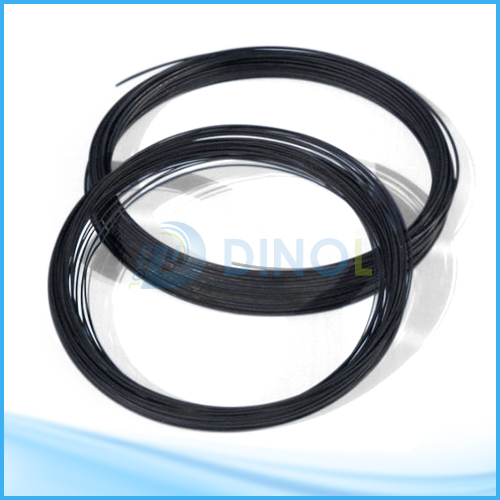
A mixed metal oxide titanium linear anode is an impressed current auxiliary anode consisting of a Grade 1 or Grade 2 pure titanium wire substrate coated with catalytic oxides — typically combinations of iridium, ruthenium, and tantalum — through a thermal decomposition (pyrolytic deposition) process. The titanium substrate carries a Ti content of 99.6%, processed through sandblasting, pickling, and coating application to achieve a smooth, uniform surface.
The anode body is pre-packaged in carbonaceous backfill within a porous flexible sheath, forming a complete groundbed assembly. Titanyi's standard outer diameter runs at Φ39.5 ± 0.5 mm, with MMO/Ti wire diameters available at 1.0 mm, 1.5 mm, 2.0 mm, and 3.0 mm. The internal cable — typically 1 × 10 mm² XLPE/PVC — transmits current to the header connection, while the protective electric field radiates uniformly from the MMO/Ti wire into surrounding soil or backfill.
How the Protection Mechanism Works
Protective current flows from the rectifier through the anode into the electrolyte (soil or water), then onto the pipeline surface, inducing cathodic polarization that halts electrochemical corrosion. The auxiliary anode itself undergoes oxidation — it corrodes sacrificially — while the pipeline remains in a chemically reducing state. The carbonaceous backfill reduces grounding resistance and prevents the titanium substrate from forming a non-conductive passive oxide layer, which would otherwise interrupt current flow and shorten service life.
Performance Benchmarks Worth Knowing
Tianyi's DN-15 model (φ1.5 mm wire) delivers 328 mA/m output current, while the DN-30 model (φ3.0 mm wire) reaches 656 mA/m. Contact resistance between the MMO/Ti wire and the cable measures ≤0.0009 Ω. Carbon content in the backfill holds at ≥99.5%. Expected service life exceeds 40 years under standard operating conditions, with a current density ceiling of 2,000 A/m² and a maximum operating temperature of 80°C. These figures align with ASTM standards and ISO 9001 quality certification. For MMO/Ti linear anode for cathodic protection, these verified specifications give procurement teams a clear basis for comparing models, sizing the system and confirming long-term reliability.
OEM Customization Options for MMO/Ti Linear Anodes
Not every CP project uses the same soil resistivity, current demand, or physical layout. That is precisely why OEM flexibility matters. Tianyi offers full customization across every critical parameter, giving integrators a genuine engineering advantage when assembling tailored ICCP systems.
Here are the core dimensions you can specify when placing an OEM order:
- MMO/Ti wire diameter: φ1.0 mm, φ1.5 mm, φ2.0 mm, or φ3.0 mm — each yielding a different linear current output matched to your rectifier capacity and protection zone length.
- Coating formulation: Choose from Ir/Ta, Ir/Ru, or multi-oxide blends depending on whether the deployment environment favors oxygen evolution (buried soil) or chlorine evolution (seawater and marine structures).
- Cable type: XLPE/PVC for standard burial, PVDF/HMWPE for chemical-resistance applications, and EPR/CSPE for high-flexibility requirements.
- Reel length: Standard rolls of 500 m or 1,000 m, with cut-to-length options for project-specific quantities.
- Packaging: Neutral white-label packaging or custom branded packaging, supporting seamless resale under your own brand identity.
These options give system integrators in markets like Eastern Europe, South America, and the Middle East a straightforward path to building fully differentiated product lines without operating an anode manufacturing facility. Titanyi also supports free sample dispatch for electrochemical accelerated life testing before any volume commitment.
Comparing MMO/Ti Linear Anodes with Alternative Anode Materials
Procurement engineers routinely evaluate graphite, zinc, silicon-cast iron, and conductive polymer alternatives against titanium MMO technology. The comparison is not purely academic — it directly affects system design, rectifier sizing, and long-term maintenance budgets. For MMO/Ti linear anode for cathodic protection, the key differentiators are higher current output per meter, lower consumption rate, longer service life and more uniform current distribution than conventional anode materials.
Graphite anodes carry a consumption rate of roughly 500–1,000 g/A-yr, making long-term buried applications costly and logistically intensive to service. Zinc sacrificial anodes are passive — they require no rectifier — but their driving voltage limits effectiveness in high-resistivity soils above 10,000 Ω·cm. Silicon-cast iron performs acceptably in moderate conditions but becomes brittle under mechanical stress during installation in congested piping corridors.
MMO/Ti technology addresses all three limitations simultaneously. The consumption rate on a titanium MMO wire anode runs between 1–6 mg/A-yr — orders of magnitude lower than graphite. The catalytic coating generates current actively, independent of soil chemistry, maintaining protective potentials that comply with NACE SP0169 criteria (−850 mV polarized potential or 100 mV polarization shift). The flexible geometry allows installation in trench configurations parallel to pipelines, storage tank floors, or congested utility corridors where point anodes would create shielding and interference problems.
Conductive polymer flexible anodes deliver a competitive 52–82 mA/m in soil (without and with coke backfill respectively) and suit lower-current, distributed applications. However, for projects requiring sustained outputs above 300 mA/m with a 40-year design life, the MMO/Ti linear architecture remains the technically superior choice.
OEM Procurement and Supply Chain Considerations
Small and mid-sized CP integrators face a recurring dilemma: large anode manufacturers prefer high-volume orders, while project-driven businesses need flexible MOQs and reliable short-run replenishment. Tianyi addresses this directly by accommodating orders from 1 to 10,000 meters with a 30-day lead time, and negotiating timelines for larger volumes.
Standard export packaging meets international freight requirements, and shipments move via courier, LCL sea freight, or full container depending on order size. Export documentation — including certificates of origin and commercial invoices — is prepared routinely for customs clearance in regions where port processing times extend 4–6 weeks. This matters particularly for South American markets where pre-planned logistics buffers protect project schedules. For MMO/Ti linear anode for cathodic protection, this export readiness and documentation support help ensure that critical anode materials arrive on site without customs delays or project disruption.
Payment methods include T/T, L/C, PayPal, MoneyGram, and Western Union, providing flexibility for businesses managing currency exposure in volatile markets. Tianyi also offers annual framework agreements with tiered volume pricing, allowing integrators to lock in unit costs and stabilize procurement budgets across a full project year.
For quality assurance, every production batch passes through XRF coating loading verification, bending adhesion testing, electrical continuity checks on Ti-wire-to-cable joints, and fabric sleeve permeability evaluation. This multi-stage inspection protocol supports failure analysis reporting when buried product performance questions arise — a critical supplier capability for integrators whose field warranty obligations extend to end clients.
Best Practices for Integrating OEM Linear Anodes into CP Systems
Proper installation determines whether a well-specified anode groundbed delivers its rated service life or fails prematurely. The installation sequence for a buried linear anode groundbed follows a straightforward cable-laying approach:
- Excavate a trench parallel to the protected pipeline or around the tank perimeter.
- Spread approximately half the coke breeze volume across the trench floor and position the anode on top.
- Cover the anode completely with the remaining coke breeze before compacting native soil over the assembly.
- Complete backfilling in lifts to avoid mechanical damage to the sheath.
Field splice connections use resin-filled T-joint or inline junction kits that maintain environmental sealing and electrical integrity. Power feed points every 100–300 meters prevent voltage attenuation across long runs, ensuring a uniform potential profile along the entire protected structure. For storage tank bottoms, a grid or spiral layout distributes current uniformly beneath the floor plate within confined vertical clearances of less than one meter.
Routine inspection should include annual pipe-to-soil potential surveys and periodic rectifier output verification. Early detection of coating degradation or joint seal failure allows targeted repair before a protection gap develops — significantly extending overall system life and reducing remediation costs for end clients.
Conclusion
Selecting the right titanium MMO anode partner shapes the technical credibility and commercial competitiveness of every CP system you build. Tianyi's linear anode range — certified to ISO 9001, manufactured to ASTM standards, and available with full OEM white-label support — gives integrators in demanding markets a reliable, cost-effective supply foundation. With service lives exceeding 40 years, flexible customization across wire diameter, coating chemistry, and cable type, and logistics experience across four continents, Tianyi is positioned to serve as a long-term manufacturing backbone for your product portfolio. For MMO/Ti linear anode for cathodic protection, this combination of certified quality, design flexibility and global supply capability makes Tianyi a dependable partner for integrators serving tank farms, pipelines and complex underground infrastructure.
FAQWhat wire diameters are available for MMO/Ti linear anodes?
Tianyi produces MMO/Ti wire in φ1.0 mm, φ1.5 mm, φ2.0 mm, and φ3.0 mm. The DN-15 (φ1.5 mm) outputs 328 mA/m and suits standard buried pipeline applications, while the DN-30 (φ3.0 mm) doubles output to 656 mA/m for high-demand groundbeds.
Can the anodes be used in seawater environments?
Yes. The MMO coating formulation is adjusted for chlorine evolution chemistry in marine and brackish water deployments, covering offshore platform jackets and complex subsea steel structures.
How does carbonaceous backfill affect performance?
Coke breeze backfill lowers the anode-to-soil grounding resistance, prevents titanium passive film formation, and improves current distribution uniformity — directly extending anode service life.
What quality certifications apply?
Products carry ISO 9001 certification and meet ASTM dimensional and material standards. Batch inspection includes XRF coating verification and electrical continuity testing on every production run.
Does Tianyi support OEM white-label packaging?
Yes. Neutral packaging and custom-branded labeling under your company identity are both available, supporting direct resale to end clients without supply chain disclosure.
Partner with Tianyi — Your Trusted MMO/Ti Linear Anode for Cathodic Protection Supplier
Tianyi delivers what integrators genuinely need: consistent coating quality, flexible MOQ structures, and full OEM packaging support. As an experienced MMO/Ti linear anode for cathodic protection manufacturer, we offer tiered annual pricing, ISO 9001-certified production, and export logistics tailored to your regional clearing timelines. Free samples are available for electrochemical testing before any volume commitment. Reach our technical team directly at info@di-nol.comto request a customized quotation today.
References
1.NACE International. NACE SP0169: Control of External Corrosion on Underground or Submerged Metallic Piping Systems. NACE International, 2013.
2.Baeckmann, W. von, Schwenk, W., & Prinz, W. Handbook of Cathodic Corrosion Protection. Gulf Professional Publishing, 1997.
3.ASTM International. ASTM G8: Standard Test Methods for Cathodic Disbonding of Pipeline Coatings. ASTM International, 2016.
4.Shreir, L. L., Jarman, R. A., & Burstein, G. T. Corrosion: Metal/Environment Reactions, Vol. 2. Butterworth-Heinemann, 1994.
5.Peabody, A. W. Peabody's Control of Pipeline Corrosion, 2nd ed. NACE International, 2001.
6.Jones, D. A. Principles and Prevention of Corrosion, 2nd ed. Prentice Hall, 1996.