




Best MMO Coated Titanium Anodes: Benefits, Uses, and Costs Explained
If you are sourcing anodes for an Impressed Current Cathodic Protection (ICCP) system, you have likely encountered MMO coated titanium anodes for cathodic protection as the dominant specification in most engineering documents. This article walks through the technology, real-world performance data, application scenarios, and procurement factors to help your team make a well-grounded decision before the next bidding cycle.
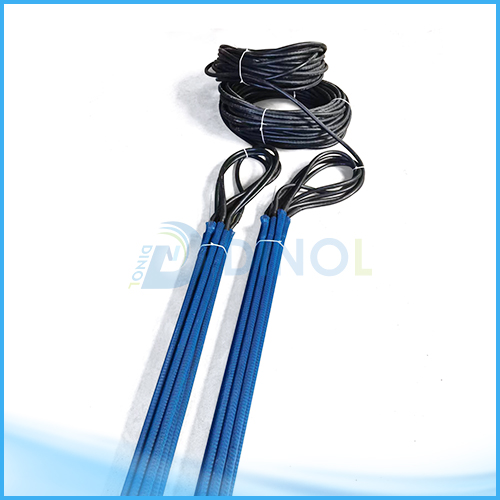
Understanding MMO Coated Titanium Anodes and Their Technology
What the Material Actually Is
A mixed metal oxide layer is heated and put on a commercially pure titanium base (Grade 1 or Grade 2 according to ASTM B265) to make an MMO titanium anode. The coating sticks to the crystals, making a dimensionally stable anode (DSA) that uses up energy at a rate as low as 0.5 to 5 mg/A·yr, which is a lot less than alternatives like high-silicon cast iron or graphite.
Coating Chemistry and Formulations
There are two main coating chemicals that are used in most ICCP standards. Because they have a low chlorine generation overpotential, Ru-Ir MMO films work well in seawater that is high in chloride. When oxygen evolution is the main reaction, Ir-Ta MMO coatings are best used in freshwater, soil, and concrete. With either setup, you can use it on one side or both sides, based on the shape: mesh, ribbon, disk, or custom shapes.
How Current Distribution Works
The MMO layer lowers the overpotential of the anode, which means that the system can drive safe current at a lower voltage. This makes the use of power more efficient and lets one anode string cover a wider tank floor or a longer pipeline reach. In carbonaceous backfill in deep-well groundbeds, current outputs can reach up to 100 A/m². Offshore anodes can reach up to 600 A/m³ in seawater, according to NACE TM0108 testing protocols.
Benefits and Performance of MMO Coated Titanium Anodes
Service Life That Justifies the Investment
MMO coated titanium anodes for cathodic protection including titanium mesh and ribbon anodes are meant to last between 20 and 50 years if they are used at the recommended current density. For a pipeline or tank floor project with a 30-year asset life, this means that the anode will never need to be replaced. This is a big cost savings compared to systems that use zinc or magnesium as spare parts and need to be changed out every so often.
Here are the main performance benefits that engineering buyers always look for:
- Negligible consumption rate: At 0.5–5 mg/A·yr, the anode geometry remains stable throughout the system's life, preventing the current distribution shifts that occur when sacrificial anodes deplete unevenly.
- High current efficiency: The low overpotential coating converts nearly all supplied DC power into protective current, reducing rectifier energy costs over multi-decade operation.
- Chemical stability: The titanium substrate and oxide coating resist dissolution in acidic micro-environments generated at the anode-electrolyte interface, a condition that degrades graphite and cast iron anodes within a few years.
These performance qualities directly address the maintenance load that ICCP workers have to deal with when working on buried and submerged assets that are hard or expensive to get to in order to repair.
Maintaining Peak Performance
The most important maintenance job is to check the link between the wire and the anode on a regular basis. The junction must keep its IP68-rated sealing. Any water getting in at this point, not the anode itself, is what usually breaks systems in buried installations. For most onshore uses, once a year electrical continuity checks and an eye review after any mechanical disturbance are enough.
Applications and Industry Use Cases
Oil and Gas Pipelines and Storage Tanks
When MMO ribbon or tubular anodes are put in deep-well groundbeds for cross-country pipelines, they send a protective current through high-resistance soil formations. When mesh anodes are laid under the base of an above-ground storage tank, they cover the whole bottom plate evenly. For both uses, the current flow must be stable and reliable over the 30–40 years that the tank or pipeline is in use.
Offshore Platforms, Jetties, and Marine Structures
Most anodes materials break down quickly in seawater, but MMO coated titanium anodes for cathodic protection, Ru-Ir covered titanium mesh anodes can handle the chloride-rich climate. This type of anode can handle a lot of current, which is good for steel piles for jettys, steel for bridge substructures, and steel for offshore platform jacket legs. It's easy to install—you can either weld to titanium conductor bars, bolt them to the frame, or clamp them on.
Concrete Rebar and Water Infrastructure
When put into or on top of concrete bridge decks and coastal structures, titanium ribbon and expanded mesh anodes stop chloride from getting in and corroding the rebar. MMO anodes are also used in water treatment plants and municipal supply pipelines for ICCP systems because lead-based alternatives aren't allowed because they are too toxic.
Cost Factors and Procurement Considerations
Pricing Benchmarks
While MMO titanium anodes cost more per unit than sacrificial zinc or magnesium anodes, the overall cost savings are much greater for projects that last longer than 10 years. Prices per unit depend on the type of coating, the weight of the substrate, and the number of units ordered. When buying in bulk for a big pipeline project—500 meters of ribbon anode or more—you can usually get better prices and have it delivered over 6 to 18 months, which makes your working capital easier to handle.
What to Verify Before Placing an Order
When working on hidden-work projects, it's a buying risk to choose a supplier without first checking the paperwork. Before making a promise, your team should make sure:
- Coating loading certificate: XRF analysis confirming precious metal content (g/m²) against design specification.
- Accelerated life test report: Conducted per NACE TM0108, confirming the anode meets its rated life expectancy.
- Standards compliance documents: EN 12954, NACE SP0176, or GB/T 50934 alignment documents are frequently required for design institute approval on large infrastructure contracts.
- Connection integrity rating: IP68-rated cable-to-anode encapsulation with documented pull-out strength.
Report on the accelerated life test for MMO coated titanium anodes for cathodic protection, which was done according to NACE TM0108 and shows that the anode meets its rated life expectation.- papers that show agreement with standards: Alignment papers in EN 12954, NACE SP0176, or GB/T 50934 are often needed for design institute approval on big infrastructure projects.
Comparison of MMO Coated Titanium Anodes With Other Anode Types
MMO vs. Zinc and Magnesium Sacrificial Anodes
Anodes made of zinc and magnesium burn up to protect themselves. They need to be replaced every so often, make anode waste, and can't provide enough current for large or high-current-demand structures without using an excessive number of units. When MMO titanium anodes are paired with an external rectifier, they provide constant, customizable current with no loss in usage.
MMO vs. High-Silicon Cast Iron and Graphite
High-silicon cast iron anodes are bulky and break easily. They lose about 0.25 to 1 kg/A·yr, which is 50,000 times faster than MMO coats. Graphite anodes are also very fragile and can't be used in deep-well or offshore applications today. Both options raise the cost of long-term maintenance and increase the chance of mechanical failure during installation in tight spaces.
Operating ICCP systems on offshore sites and cross-country pipes has shown over and over again that anodes coated with MMO have a lower total cost of ownership after 20 years. It's easy to decide on the specifications for any project where the asset life supports a 30-year security horizon.
Conclusion
MMO coated titanium anodes for cathodic protection have become the standard for ICCP systems in pipeline, offshore, storage, and infrastructure applications. This is because they have low consumption rates, a service life of 20–50 years that has been verified, and a documentation trail that meets the requirements of the design institute.
The cost up front is higher than alternatives that could be used instead, but the total cost over the lifetime of any asset that will be used for many years is always lower. It is just as important to choose the right supplier with full test paperwork as it is to have the right anode standard.
FAQ
How long do MMO titanium anodes last in seawater?
Most Ru-Ir MMO anodes have design lives of 20 to 25 years in ocean ICCP systems with normal working current densities. Some offshore platform sites have been used for more than 25 years without any coating damage that can be seen. How long something is expected to last depends on how dense the current is and how well the coating was applied in the first place.
Can MMO anodes be customized for specific project geometries?
Yes. Titanium surfaces can be made into mesh, ribbon, disk, tube, or plate shapes, and their sizes can be changed to fit the needs of the design. Both the Ru-Ir and Ir-Ta covering chemicals come in single-sided and double-sided options. For tank floor structures and concrete bridge deck systems, custom forms are often made.
What is the most common failure mode in the field?
Most ICCP system breakdowns are caused by connection failure at the cable-to-anode joint, not coating degradation. Loss of electricity happens when moisture gets in through poor sealing. This risk can be avoided by specifying IP68-rated encapsulation with documented pull-out strength during the procurement stage.
What standards should procurement teams reference?
Some important standards are NACE SP0176 for offshore cathodic protection, EN 12954 for buried pipeline protection, NACE TM0108 for anode testing, and ASTM B265 for titanium substrate. Whatever standard your project is based on, suppliers should give you clause-by-clause compliance documentation.
Request a Quote From Tianyi — Trusted MMO Coated Titanium Anode Manufacturer
Tianyi gives ICCP contractors and building companies around the world MMO-coated titanium anodes for cathodic protection. Full CoC paperwork, XRF coating analysis, and NACE TM0108 test reports are sent with every order. We support big infrastructure projects with phased delivery plans and offer expert help for design institute applications. To get a specification review and project price, email our tech team at info@di-nol.com or go to dsa-anodes.com.
References
1. NACE International. Corrosion Control in the Refining Industry (NACE Course Book). NACE International, 2015.
2. Baeckmann, W. von, Schwenk, W., & Prinz, W. Handbook of Cathodic Corrosion Protection. Gulf Professional Publishing, 1997.
3. Shreir, L. L., Jarman, R. A., & Burstein, G. T. Corrosion: Metal/Environment Reactions. Butterworth-Heinemann, 1994.
4. ASTM International. ASTM B265: Standard Specification for Titanium and Titanium Alloy Strip, Sheet, and Plate. ASTM International, 2020.
5. NACE International. NACE TM0108: Test Methods for Evaluation of Anodes for Use in Deep Anode Groundbed Systems. NACE International, 2008.
6. Peabody, A. W. Peabody's Control of Pipeline Corrosion, 2nd ed. NACE International, 2001.