




Best MMO/Ti Linear Anode for High-Current Cathodic Protection
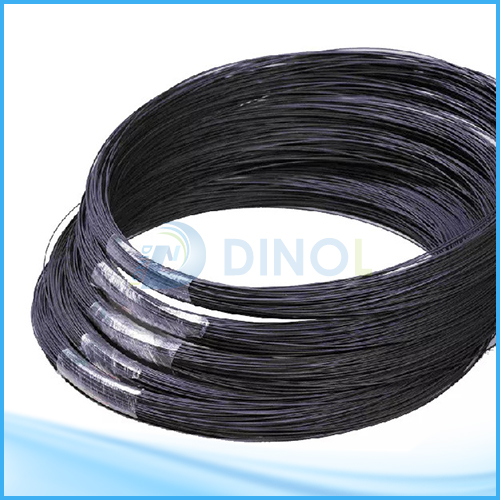
When it comes to protecting buried pipelines, storage tank floors, and complex steel infrastructure from electrochemical corrosion, choosing the right impressed current anode is not a minor detail—it determines whether your system performs for 5 years or 40. The MMO/Ti linear anode for cathodic protection stands out as the most technically reliable and cost-efficient solution available today. Built on a Grade 1/2 titanium substrate and coated with catalytic mixed metal oxides (Ir, Ru, Ta), this linear anode delivers continuous, uniform current output across the entire length of a structure—something conventional point anodes simply cannot achieve.
Understanding MMO/Ti Linear Anodes for Cathodic Protection
What Makes This Technology Work?
An MMO/Ti linear anode works as an extra anode in an ICCP system (impressed current cathodic protection). When it is connected to the rectifier's positive input, it sends a protective current through the soil or liquid around it. The current moves toward the tank or tunnel that is attached to the negative terminal. This makes the metal surface cathodic, which stops electrochemical corrosion in its tracks.
With a Ti percentage of 99.6%, the titanium substrate is very strong mechanically and chemically neutral. The mixed metal oxide coating is 6–10 μm thick and acts as a catalyst for both oxygen and chlorine evolution. This keeps the consumption rate very low, at just 1–6 mg/A·yr. This means that the product has been tested and proven to last longer than 40 years under normal use.
Key Performance Parameters
Tianyi's MMO/Ti linear anode is designed to work well in harsh field situations because of the way its structure is set up. The outside diameter of the product is 38–40 mm (¥39.5 ± 0.5 mm), and the MMO/Ti wire diameters are 1.0 mm, 1.5 mm, 2.0 mm, and 3.0 mm. The DN-15 version (¦1.5 mm wire) has an output current of 328 mA/m, and the DN-30 version (¦3.0 mm wire) has an output current of 656 mA/m, which is enough for high-current ICCP needs. The cable inside is made of 1×10 mm² XLPE/PVC, and the contact resistance between the MMO/Ti wire and the cable is kept at 0.0009Ω. The carbonaceous backfill (with a carbon content of at least 99.5%) that comes in the fabric sleeve lowers grounding resistance and stops the titanium from making an oxide film that isn't conductive.
Comparing MMO/Ti Linear Anode with Alternative Anode Types
A lot of procurement engineers want to know how MMO/Ti linear anodes stack up against graphite, zinc, or platinum-coated titanium options. There are three parts to the answer: present effectiveness, service longevity, and total cost of ownership. That comparison is exactly why an MMO/Ti linear anode for cathodic protection is increasingly favored over graphite, zinc, or platinum-coated titanium alternatives, since it combines high current output, stable dimensions, and predictable long-term performance in a single anode format.
When there is a lot of power flowing through a graphite anode, it breaks down quickly and needs to be replaced often, which makes the lifetime costs much higher. Passive zinc sacrificial anodes can't be changed once they're in place and can't be used in soils with a high resistance. Platinum-coated titanium anodes work about as well electrochemically, but they cost a lot more per unit, which makes them hard to justify for long-distance underground pipeline projects.
The main problem with all point-source anodes is that the current doesn't flow evenly. The MMO/Ti linear design fixes this problem. It gets rid of cathodic protection gaps in crowded utility areas and old pipeline networks by providing a continuous linear current source that runs parallel to the protected structure. This is done in places where deep-well groundbeds cause stray currents to interfere with nearby infrastructure. NACE SP0169 says that the −850 mV (CSE) polarized potential requirement can always be met with linear anode devices that are properly built.
Installation and Maintenance of MMO/Ti Linear Anodes
Step-by-Step Field Installation
Installation is a simple process that is similar to putting cables. Along the pipeline, an anode trench is dug out, and half of the coke breeze backfill is spread out on the tunnel floor. The flexible anode is then put on top, covered with the rest of the coke breeze, pressed down with native soil, and finally the hole is filled back up. This method makes an anode bed with low resistance, which helps keep the current flowing smoothly throughout the system's lifetime.
Maintaining Long-Term Reliability
Regular maintenance includes checking the rectifier output voltage, making sure the pipe-to-soil potential readings at test stations are correct, and looking for signs of water getting into the connections or mechanical damage on the ends of the cables. To keep the voltage from dropping too low on long runs, power feed points should be put every 100 to 300 meters. For field joining, resin-filled T-joints or inline kits are used to keep the surroundings sealed and the electricity flowing. Tianyi's goods use joint sealing materials that are very resistant to rust and aging. This makes sure that no weak spots form after being buried for decades.
Procurement Considerations: How to Choose and Buy MMO/Ti Linear Anodes?
Purchasing choices for ICCP parts have real effects on operations and finances. If you pick the wrong anode diameter, cable type, or backfill configuration, the system may not last as long and will need expensive repairs. Here are the main factors that should guide your choice about where to source: this is where evaluating a supplier's track record with MMO/Ti linear anode for cathodic protection projects becomes a procurement risk decision, not just a price comparison, because anode diameter, cable specification, and backfill design all determine whether the system reaches its design life.
- Wire diameter and current output: Match the MMO/Ti wire diameter to your required output current. Φ1.5 mm delivers 328 mA/m; Φ3.0 mm delivers 656 mA/m. High-resistivity soil environments or aging pipelines with deteriorated coatings typically demand the higher-output DN-30 specification.
- Cable jacket selection: Choose from XLPE/PVC, PVDF/HMWPE, or EPR/CSPE based on soil chemistry and temperature exposure. PVDF/HMWPE suits aggressive hydrocarbon environments; EPR/CSPE handles elevated temperatures up to 80°C.
- Reel length and MOQ flexibility: Tianyi supplies reels in 500 m and 1,000 m standard lengths, with cut-to-length options available. Small-batch orders and mixed specifications are accommodated without surcharges—critical for integrators managing multiple concurrent projects.
- Lead time and logistics: Standard production lead time runs 15–30 days depending on order volume. Export documentation, including certificates of origin, is handled routinely. Sea freight in LCL or FCL configurations is available, with packing customized to export standards or client branding requirements.
Together, these factors describe a system that works in the same way for decades. When procurement teams sign yearly framework agreements with a qualified MMO/Ti linear anode supplier, they get guarantyd schedules and stable prices, which are very helpful in markets where fluctuating local currencies make it hard to make a profit.
Why Choose Tianyi's MMO/Ti Linear Anodes for Your Cathodic Protection Projects?
Tianyi—Shaanxi Tianyi New Material Titanium Anode Technology Co., Ltd.—works out of the Baoji High-Tech Development Zone, which is one of the most important places in China for processing titanium. Every anode that is made goes through a proven process of grinding, acid pickling, and precision coating application using thermal breakdown (pyrolytic deposition). The end result is an MMO surface that is smooth and even, and it meets ASTM and ISO 9001 quality standards.
To check the quality, the coating is loaded with XRF to see how much precious metal is in it, it is put through accelerated life testing according to NACE TM0108, it is bent to see if it stays on during handling, and every header cable connection is checked for electrical continuity. Clients get test paperwork that is specific to their batch, and failure analysis reports can be requested. This is a very important support tool for integrators whose systems are hidden and the liability conditions aren't clear.
We can do both OEM and white-label packaging. Products can be shipped under the TianyiE brand or the client's own brand name. Re-sale markets can get products in neutral packaging. You can get free samples to check the electrochemical performance before placing a trial order. There are different ways to pay, such as L/C, T/T, PayPal, and wire transfers.
Conclusion
The MMO/Ti linear anode for cathodic protection is the most reliable way to protect underground pipes, storage tank floors, and complicated steel structures over service times of many decades. Its low consumption rate, ability to work with standard ICCP rectifiers, and ability to provide a steady flow of current make it a smart choice to replace older anode materials. System integrators in Eastern Europe, South America, the Middle East, and India can rely on Tianyi as a long-term supply partner because of its manufacturing infrastructure, ISO 9001 certification, and ability to meet OEM support needs.
FAQ
How long do MMO/Ti linear anodes typically last?
The MMO/Ti linear anodes made by Tianyi are expected to last at least 40 years when used in normal ICCP settings and with the right amount of coke breeze backfill. How long something lasts depends on the temperature, the applied current density, and the resistivity of the soil. As long as the temperature stays below 80°C and the rated current density stays below 2,000 A/m², the coating will stay in good shape for the whole design life.
Can these anodes operate in both soil and seawater?
Both settings work well with MMO/Ti linear anodes. The coating's formula is changed for use on dirt (oxygen evolution) and saltwater or marine environments (chlorine evolution). When you request a quote, be sure to include the location where the coating will be used so that the right coating chemical is chosen.
What wire diameter should I specify for my project?
Choose based on the output current needed per meter of anode. At 328 mA/m, Φ1.5 mm (DN-15) is good for moderately demanding buried pipeline applications. At 656 mA/m, Φ3.0 mm (DN-30) is best for high-demand situations like tank floor grids, old pipelines with coating holidays, or high-resistance soils. You can ask for custom lengths and current rates.
Does Tianyi support small batch and mixed-specification orders?
Yes. There are no set minimum order quantities, and different specifications can be sent in the same shipment. Because of this, Tianyi is a good supply partner for integrators who are working on several projects at once, each with its own set of technical needs.
Partner with Tianyi for Reliable MMO/Ti Linear Anode Supply
ISO 9001-certified MMO/Ti linear anode for cathodic protection is available from Tianyi in both standard and OEM configurations. They offer flexible minimum order quantities, batch consistency checks, and quick export logistics. Our expert team is ready to help you whether you need a trial example, a tiered price agreement, or a specification that is specifically made for your needs. To get your sample kit or framework quote right away, email us at info@di-nol.com.
References
1. NACE International. NACE SP0169: Control of External Corrosion on Underground or Submerged Metallic Piping Systems. NACE International, 2013.
2. NACE International. NACE TM0108: Evaluation of Internal Plastic Coatings for Corrosion Control of Tubular Goods in an Aqueous Salt Environment. NACE International, 2008.
3. Peabody, A. W. Peabody's Control of Pipeline Corrosion. 2nd ed., NACE International, 2001.
4. Baeckmann, W. von, Schwenk, W., and Prinz, W. Handbook of Cathodic Corrosion Protection. 3rd ed., Gulf Professional Publishing, 1997.
5. Revie, R. W., and Uhlig, H. H. Corrosion and Corrosion Control: An Introduction to Corrosion Science and Engineering. 4th ed., Wiley-Interscience, 2008.
6. ASTM International. ASTM G8: Standard Test Methods for Cathodic Disbonding of Pipeline Coatings. ASTM International, 2016.