




Powered Water Heater Anode Rod vs Sacrificial Anode: Which Wins?
When it comes to protecting your water heater tank from corrosion, the choice between a powered water heater anode rod for cathodic protection and a traditional sacrificial anode rod is more consequential than most procurement managers realize. The short answer: powered MMO titanium rods win on lifespan, odor elimination, and total cost of ownership. Sacrificial magnesium or aluminum rods win on upfront cost and zero-installation complexity. Understanding the gap between these two technologies determines which SKU deserves shelf space in your product line—and which one your customers will reorder for decades.
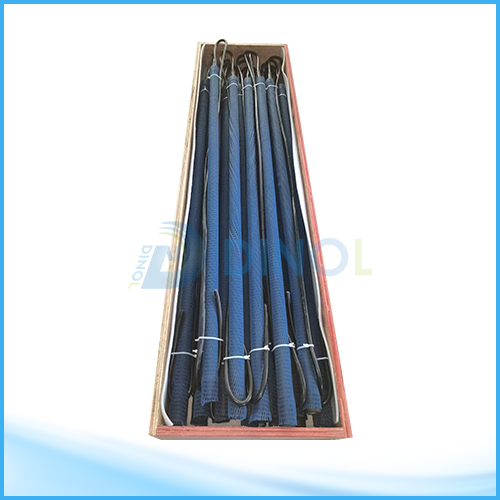
Understanding Cathodic Protection in Water Heaters
Why Do Steel Tanks Corrode Without Protection?
A home water heater tank is basically a steel container that is constantly being hit by electricity. Potable water has dissolved oxygen, chlorides, and salts that form galvanic cells on the inside of the tank's wall, slowly oxidizing it. The Water Quality Association says that hard-water areas can shorten the useful life of an unprotected tank by 40–60% because of faster corrosion. Cathodic protection stops this process by turning the steel surface into a cathode instead of an anode. This changes the electrical balance so metal ions move away from the tank wall instead of toward it.
Galvanic sacrifice (a reactive metal corrodes instead of the steel) and impressed current (an outside power source continuously flows protection current into the tank) are the two different ways this is done. Both methods are valid; the difference in how they work decides which one is best for a given situation.
Powered vs. Sacrificial Anode Rod: Core Differences and Mechanisms
Material Composition and Electrochemical Principles
Magnesium or aluminum-zinc alloys are used to make sacrificial rods. It is naturally electronegative, with a potential of about -2.37 V vs. SHE. This means that magnesium can protect steel without any extra energy. Ions are released into the water as the rod breaks down. This is a silent process that doesn't need any wires but does use up mass over time. In 18–24 months, hard water can wear down a magnesium bar to the core wire. Forpowered water heater anode rod for cathodic protection, this contrast is important: sacrificial rods deplete and need replacement, while powered titanium anodes use an external current to protect the tank indefinitely without being consumed.
A powered anode rod, which is also known as an impressed current cathodic protection (ICCP) anode, works in a completely different way. It is made of Grade 1 or Grade 2 commercially pure titanium that has been covered with Mixed Metal Oxides (MMO), which are usually an IrO₂-Ta₂O₉ mix. When the rod is connected to a low-voltage AC/DC source (usually changed to less than 3.5 V DC), it sends a controlled current density into the water. This stops rusting at the tank wall. The rod doesn't lose mass because titanium doesn't change shape and the MMO coating doesn't wear away. According to lab tests that are in line with NACE TM0108, MMO-coated titanium anodes keep their electrochemical efficiency for a lot longer than ten years of continuous use.
Lifespan and Compatibility
A normal magnesium rod lasts between 2 and 4 years, based on the type of water and the size of the tank. An MMO driven rod is built to last 20 years or more, often longer than the tank itself. Both types of rods use the standard ¾" NPT thread, which means they will work with most water heater brands. For industrial storage tanks that hold between 50 and 500 gallons, you need a controller with a higher output and a longer rod to make sure that the current density is spread out evenly across the whole area of the tank.
Evaluating Benefits and Limitations: Which Anode Rod Fits Your Business Needs?
Powered Anode Rods: Core Advantages for B2B Buyers
The difference in performance between these two technologies is big for wholesalers and brand owners who work with hotels, hospitals, laundromats, or people who get their water from wells at home. Here are the main reasons why MMO driven rods are a great addition to your store:
- Odor elimination: Magnesium anodes react with sulfate-reducing bacteria in anaerobic water to produce hydrogen sulfide (H₂S)—the source of the notorious "rotten egg" smell. The MMO titanium substrate is chemically inert and does not trigger this reaction, making it the definitive solution for well-water remediation complaints.
- Non-sacrificial operation: Because the rod maintains its physical mass, there is no sediment or sludge accumulation from dissolving anode material, which is a documented contributor to water heater efficiency loss over time.
- Consistent protection in challenging water chemistry: In softened water or water with elevated Total Dissolved Solids (TDS), sacrificial rods deplete anomalously fast. The ICCP approach delivers a constant, adjustable protective current regardless of water resistivity.
- Reduced maintenance intervals: While a magnesium rod demands inspection every 1–2 years and replacement every 2–4 years, a quality MMO powered rod requires only periodic visual checks of the control module's LED indicator—a green light confirms active protection.
Because of these benefits, there are fewer guarantee claims, fewer returns on e-commerce sites, and more brand loyalty among plumbers and do-it-yourselfers who can see changes in the water quality. Forpowered water heater anode rod for cathodic protection, these outcomes translate directly into lower after-sales costs, stronger channel relationships and a measurable competitive advantage in the North American replacement market.
Where Sacrificial Rods Still Hold Ground
It's not outdated to use sacrificed anodes. They don't need to be connected to electricity, cost less per unit, and every qualified plumber in North America knows how to use them. Magnesium and aluminum rods are still a useful, high-speed product for brand owners who sell products in the value-price range or for new construction projects where the water chemistry is safe. Quality control is the most important part of procurement. Cracking magnesium rod and thread leaks are two of the main reasons why people leave bad reviews on Amazon and Home Depot product pages, so full-inspection sourcing has to be done.
Procurement Considerations: How to Choose, Buy, and Maintain Your Anode Rods
Total Cost of Ownership and Sourcing Strategy
Powered rods are clearly the better choice for commercial and semi-commercial use when you look at the total cost of ownership over five years. Every two years, a hotel property has to replace the magnesium anodes in 30 water heaters, which costs a lot of money in work and parts. When spread out over 20 years, a single MMO-powered rod placement per tank brings down that ongoing cost for just the anode to almost nothing.
A useful sourcing strategy for procurement managers making a balanced SKU portfolio has the following parts:
- Tiered SKU structure: Stock both magnesium/aluminum rods for the value channel and MMO powered rods for the premium or problem-solving segment.
- Certification verification: NSF/ANSI 61 approval is non-negotiable for any anode contacting potable water. For powered units, the supply module requires UL or ETL listing. Confirm that your supplier can provide third-party test reports, not just declarations of conformity.
- MOQ and replenishment flexibility: Sacrificial rods suit high-volume, regular sea-freight replenishment. Powered rods carry a higher unit value, making smaller, more frequent orders more capital-efficient.
- Private label packaging: Retail-ready color boxes with barcodes and installation instructions are table-stakes for Home Depot and Amazon channels. Confirm that your supplier supports OEM artwork and custom length configurations to ¾" NPT standard.
When you work with suppliers who have experience with ICCP manufacturing and can customize MMO coating types (Ru-Ir or Ir-Ta), rod geometry, and controller output, you can build a strong technical partnership that protects your brand in the aftermarket. Forpowered water heater anode rod for cathodic protection, this level of customization ensures the anode matches the tank's water chemistry, capacity and expected service life — reducing warranty risk and strengthening your product position in the replacement market.
Future Trends and Innovations in Water Heater Anode Rod Technology
Smart, interconnected systems are becoming more popular in the corrosion protection market. New powered anode controls have resistivity monitors that automatically change the output current in real time. This keeps the best protection levels even when the water chemistry changes with the seasons. Some commercial systems use low-power wireless methods to connect to building control platforms and warn of anode problems before the tank fails. On the materials side, new MMO coating formulas are making anodes last longer than current standards, while still meeting NSF/ANSI 61 standards for contact with potable water. For procurement professionals, these changes mean a shift in the market: powered cathodic protection is moving from being a niche upgrade to being the standard in high-end water heater maintenance, which is good for distributors who got there first.
Conclusion
Sacrificial anodes are still a good choice for simple uses and SKUs that are based on volume. However, the MMO powered anode rod provides clearly better safety, a much longer service life, and a stronger value story for the end user in any situation involving high sulfur content, softened water, industrial tank volumes, or luxury brand placement. Adding powered rods to the offering is becoming more and more attractive as a way to increase margins, lower complaints, and keep customers for a long time. Forpowered water heater anode rod for cathodic protection, this positioning makes it a compelling upgrade path for brands targeting premium, high-durability or problem-water segments of the market.
FAQ
How do I verify that a powered anode rod is actively protecting the tank?
The more expensive ones come with a control box that has an LED light. If you see a steady green light, it means the circuit is complete and electricity is flowing. A fault light means there is a problem with the wires or the water isn't moving through it properly. This needs to be fixed right away.
Is an MMO powered anode rod compatible with all water heater brands?
Most of them have a standard ¾" NPT thread and are made to fit tanks that are 40 to 89 gallons. This means they can be used with most big brand domestic water heaters. For commercial tanks bigger than 100 gallons, you need controls with more power and rods that are longer.
How much electricity does a powered anode rod consume?
Since it runs at very low power, the device uses between 10 and 50 kWh per year. Electricity costs almost nothing a year—usually less than a few dollars, based on the rates in your area.
What certifications should I require from my supplier?
Make sure that the anode itself has NSF/ANSI 61 for potable water contact and that the power supply module has a UL or ETL listing. Ask for real test reports from a third party instead of self-declarations.
What is the realistic service life compared to magnesium rods?
Most magnesium rods last between 2 and 4 years. An MMO titanium driven rod is made to last 20 years or more, which makes it a real long-term investment for any water heater system.
Partner with Tianyi for Reliable Powered Water Heater Anode Rod Supply
Tianyi makes certified MMO-coated titanium anodes that are designed to work well in tough ICCP situations. We are a reliable supplier of powered water heater anode rod for cathodic protection. Our products are fully customizable, made with materials that are NSF/ANSI 61-compliant, and come in a range of MOQ structures designed for North American distribution. You can email our expert team at info@di-nol.comto get product specs, samples, or a tiered bulk quote.
References
1.Water Quality Association. Corrosion and Water Heater Performance: Industry Technical Review. WQA, 2021.
2.NACE International. TM0108: Test Method for Evaluation of Cathodic Protection Anode Materials. NACE, 2020.
3.NSF International. NSF/ANSI Standard 61: Drinking Water System Components — Health Effects. NSF, 2022.
4.Revie, R. Winston, & Uhlig, Herbert H. Corrosion and Corrosion Control: An Introduction to Corrosion Science and Engineering. Wiley-Interscience, 2008.
5.Baeckmann, W. von, Schwenk, W., & Prinz, W. Handbook of Cathodic Corrosion Protection. Gulf Professional Publishing, 1997.
6.Perez, Nestor. Electrochemistry and Corrosion Science. Springer, 2004.