




Best MMO Titanium Canister Anode Supplier: Buyer’s Guide for Projects
Choosing the right MMO titanium canister anode for cathodic protection can determine whether a buried pipeline lasts 20 years or fails within five. This guide is written for project managers, corrosion engineers, and procurement teams who need clear, technical answers before committing to a supplier. We cover what these anodes actually are, how to evaluate them against international standards, what to look for in a supplier, and how to manage the sourcing process without delays or budget surprises.
Understanding MMO Titanium Canister Anodes and Their Applications
What Is an MMO Titanium Canister Anode?
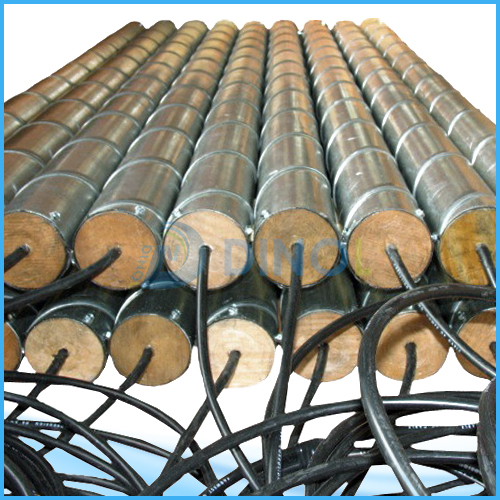
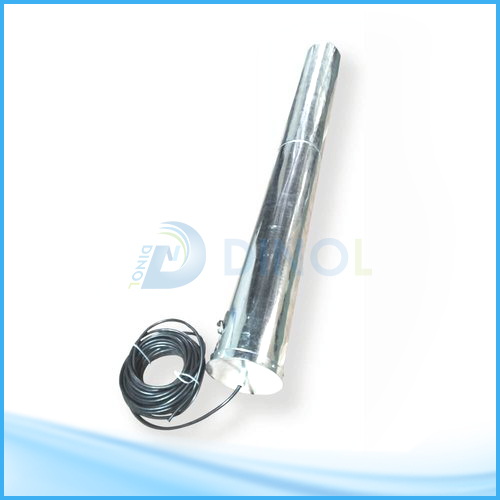
An MMO titanium cylinder anode is an impressed current cathodic protection (ICCP) part that is already put together at the factory. It has tubular Mixed Metal Oxide-coated titanium elements, a gas vent pipe, calcined petroleum coke backfill, and a galvanized steel casing. Everything is already packed up and ready to be put in place. The MMO coating, which is usually Ru-Ir or Ir-Ta, is broken down by heat on a Grade 1 or Grade 2 titanium base that meets ASTM B338 standards. This pre-packaged design gets rid of the need for any backfilling to be done on-site, which cuts down on mistakes and work time.
Core Industrial Applications
These anodes are useful for protecting a lot of different kinds of equipment. This technology stops electrochemical corrosion at the metal-soil interface, which is used by engineers working on long-distance pipelines, above-ground storage tank (AST) floors, port steel piling, and municipal water distribution networks. Most of the time, deep wells are installed vertically at depths of more than 20 meters. This type of well works best in urban areas with high soil resistivity or limited surface space.
Why Projects Are Moving Away From Traditional Anodes?
It is known that high-silicon cast iron and graphite anodes are more likely to break and wear out faster. When MMO titanium anodes work, they use less than 1 mg/Amp-year, while graphite uses several hundred mg/Amp-year. According to NACE SP0169, choosing anode materials with low usage rates directly stretches groundbed service intervals and lowers lifecycle costs. This is a reason why many oil and gas, port, and city infrastructure projects are using them, and why the MMO titanium canister anode for cathodic protection has become a preferred specification.
Evaluating MMO Titanium Canister Anodes: Features, Benefits, and Lifespan
Technical Properties That Matter
The titanium layer gives the structure strength and prevents passive corrosion over a wide pH range (1–12). The electrocatalytic noble metal oxide coating makes sure that the dimensions stay stable and the current output stays the same. Tianyi's canister anodes come with Ru-Ir, Ir-Ta, or platinum coats and can be loaded with 8–15 g. Their design lives vary from 20 to 70 years, based on the coating chosen and the current density used. Chlorine and oxygen released at the anode surface can't damage standard PVC insulation, but they can damage PVDF or HMWPE insulation.
Performance Advantages Over Graphite and Zinc
These are the main changes in performance that purchase engineers should write down in technical specifications:
- Service life: MMO canister anodes achieve 30–50 years in standard soil conditions; graphite anodes typically reach 5–10 years before replacement is needed.
- Current output: Each canister delivers 5A to 50A, maintaining stable output even in soil resistivity conditions above 100 Ω·m when calcined petroleum coke backfill is present.
- Weight and footprint: At 10–30 kg per unit, these canister anodes are significantly lighter and easier to handle than cast iron alternatives, which regularly exceed 50 kg per element.
These differences directly lead to fewer system shutdowns for upkeep, lower lifecycle costs, and more predictable system behavior over project spans of decades.
Lifespan Factors and Maintenance Expectations
The design life is mostly determined by the thickness of the MMO layer and the working current density. Tianyi's standard tubular anodes are made to work nonstop for 20 years or more at 100 A/m². Annual potential surveys, cable integrity checks, and regular checks of the rectifier output should all be part of routine maintenance. The most common place for failure is the link between the wire and the anode. For underground or deep-well installs, this connection must be sealed with epoxy encapsulation and heat-shrink tubing to meet IP68 standards, an essential practice when deploying an MMO titanium canister anode for cathodic protection.
How to Choose the Best MMO Titanium Canister Anode Supplier for Projects?
Certification and Standards Alignment
If a supplier wants to work on important infrastructure projects, they need to show that they follow EN 12954, NACE SP0176, ISO 15589, and GB/T 50934. Ask for a Certificate of Conformance (CoC) and be clear about whether the seller can provide XRF test results that prove the coating's makeup and loading. Accelerated life testing according to NACE TM0108 is another piece of data that can be checked to tell the difference between makers who really control their processes and those who are making claims that can't be proven.
Customization and Technical Support Capability
Soil resistivity, burial depth, current demand, and available surface area are all very different between projects. A reliable provider should let you change the sizes. For example, Tianyi makes canister anodes that are 80x1000 mm to 100x1500 mm in size, and they come in lengths of 1, 2, 3, 5, and 6 m. They also offer different types of cables, such as PVDF, HMWPE, HALAR, XLPE, and KYNAR. It's also important to know if the seller can help get design institute approval by giving papers like selection calculations, current distribution models, and technical clarification letters for bids.
Supply Chain Reliability for Long-Duration Projects
Projects to protect pipelines and tanks usually last between one and three years, and deliveries need to be spread out over several building stages. Check to see if the source can promise to making batch deliveries every month or every three months based on a master purchase order. For example, Tianyi ships in pearl cotton-lined wooden crates that are built to export standards. You can also check the supplier's track record with customs paperwork for the country where the goods are going.
Procurement Process: Sourcing MMO Titanium Canister Anodes Efficiently
Identifying Qualified Suppliers
Start by looking at the source lists that AMPP (formerly NACE International) or the Chinese Corrosion and Protection Society recommend. Check against lists of qualified vendors that big engineering firms use. Tianyi is based in the Baoji High-Tech Development Zone in Shaanxi Province and has both OEM and ODM capabilities. It has a large foreign client base in the oil and gas and urban infrastructure sectors.
Managing Lead Times and Bulk Orders
For catalog configurations, standard lead times for canister anodes that are already packed up are between 4 and 8 weeks. 10 to 14 weeks may be needed for custom sizes or coatings. For large orders that are tied to project milestones, you should negotiate a frame agreement that spells out delivery windows, unit prices at different volume levels, and how the goods will be inspected for quality before they are sent out. It makes sense and is generally understood to ask for a third party to check the plant before exporting, especially when the order involves an MMO titanium canister anode for cathodic protection.
Documentation Required for Project Approval
Most engineering and construction companies (EPCs) and design firms need: material certification (that meets ASTM B338), cable insulation test results, coating composition reports (XRF), and a signed copy of the contract (CoC). Tianyi offers a complete set of documents that helps get technical specifications approved during the design phase, which cuts down on the amount of back-and-forth during the bidding process.
Installation and Maintenance: Ensuring Optimal Performance of MMO Titanium Canister Anodes
Pre-Installation Site Assessment
Do a soil resistivity survey using the Wenner four-pin method according to ASTM G57 before putting in a deep-well canister system. The resistivity data tells us exactly how many anode wells we need, as well as their diameter and depth. Putting the anode in areas with low resistance lowers the operating power needed and makes the rectifier last longer. If the resistivity is higher than 200 ohms, the placement needs to be lower, and the backfill needs to be made of petroleum coke, which has a higher conductivity.
Step-by-Step Installation Notes
The anode string, backfill, vent pipe, and covering all come together as a single unit because they are factory-prepackaged. Lower the whole thing vertically into the well that was dug, use rated waterproof connections to connect the header cable to the anode cable, and then seal the wellhead. Before filling in the annular space above the casing, make sure there is electrical continuity. A common mistake in installation is forgetting to put the cap on the gas vent tube after it has been turned on. This lets water from the surface in, which raises the groundbed resistance over time.
Ongoing Performance Monitoring
During the first year of operation, test stations should measure the pipe-to-soil potential every three months. Check the data against the NACE SP0169 safety standards (–850 mV CSE for steel). Monthly, write down the rectifier's current and voltage. A higher voltage need at the same current level usually means that the groundbed resistance is going up. This is an early sign of gas blocking or backfill compaction loss that needs to be checked out before the system fails.
Conclusion
MMO titanium canister anode for cathodic protection are a good choice for long-lasting cathodic protection systems because they are both technically sound and cost-effective. They are better than old cast iron or graphite systems because they are pre-assembled in the plant, last 30 to 50 years, and work with international standards. For procurement teams, the most important decisions are about the coating specifications, the completeness of the documentation, and the reliability of the supplier's delivery over the course of a multi-year project timeline. A smooth project is different from an expensive one because the manufacturer needs to have real technical knowledge and be able to get approval from design institutes.
FAQ
What determines the design life of an MMO canister anode?
The MMO covering thickness (usually 8–15 g loads) and the current density have the most impact on the design life. Tianyi's standard products are made to last 20 years or more at 100 A/m². Higher coating loads and lower operating current densities make the service life longer, up to about 70 years.
Why is carbonaceous backfill necessary inside the canister?
By making the electrode surface area bigger, calcined petroleum coke backfill lowers the resistance between the anode and the earth. It also lets oxygen and CO2 gas, which are made at the anode, escape upward. This keeps the gas from blocking, which would raise system resistance and lower current output.
How is the cable-to-anode connection sealed?
Tianyi uses a two-step process to seal things: first, epoxy resin is encapsulated at the connection point, and then dual-layer heat-shrink tubing is used. This part meets the standards for IP68 entry protection and is made to handle the chlorine and oxygen atmosphere that is created at the anode surface while it is working.
What cable types are available?
Standard cables are made of HMWPE and PVDF/HMWPE, which are chosen because they don't react chemically with chlorine and oxygen. For projects that need to follow certain rules or protect the environment, you can also choose HALAR, XLPE, or KYNAR.
Can these anodes be customized for unusual project dimensions?
Yes, Tianyi lets you change the size, type of coating, length of the wire, and packing to your exact specifications. Because the minimum order quantity is only one unit, it is possible to order samples to test before committing to a full project quantity.
Request a Quote From Tianyi — MMO Titanium Canister Anode Manufacturer
Tianyi is an expert in the use of MMO titanium cylinder anode for cathodic protection in pipes, storage tanks, port buildings, and city networks. Our goods are compliant with ASTM B338, NACE, EN, and GB/T standards, and come with all the paperwork needed for design institute approval. Our technical team is ready to help you whether you need a single sample or a large shipment spread out over 18 months. You can email us at info@di-nol.comto get product details and a price that fits your needs.
References
1.NACE International. NACE SP0169: Control of External Corrosion on Underground or Submerged Metallic Piping Systems. NACE International, 2013.
2.NACE International. NACE SP0176: Corrosion Control of Steel Fixed Offshore Structures Associated with Petroleum Production. NACE International, 2007.
3.ASTM International. ASTM B338: Standard Specification for Seamless and Welded Titanium and Titanium Alloy Tubes for Condensers and Heat Exchangers. ASTM International, 2021.
4.European Committee for Standardization. EN 12954: Cathodic Protection of Buried or Immersed Metallic Structures — General Principles and Application for Pipelines. CEN, 2019.
5.Peabody, A. W. Control of Pipeline Corrosion. 2nd ed., NACE International, 2001.
6.von Baeckmann, W., Schwenk, W., and Prinz, W. Handbook of Cathodic Corrosion Protection. 3rd ed., Gulf Professional Publishing, 1997.