




Top Uses of Canister Anodes for Cathodic Protection in Pipelines
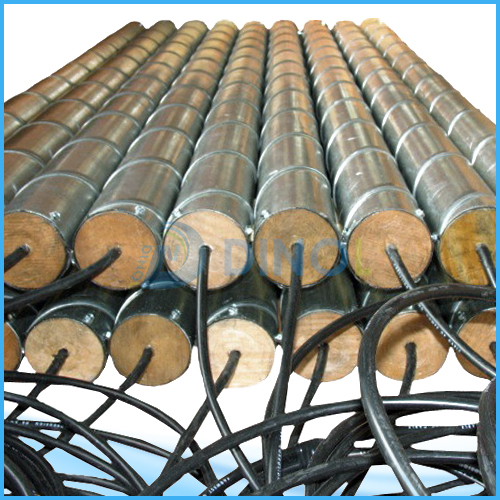
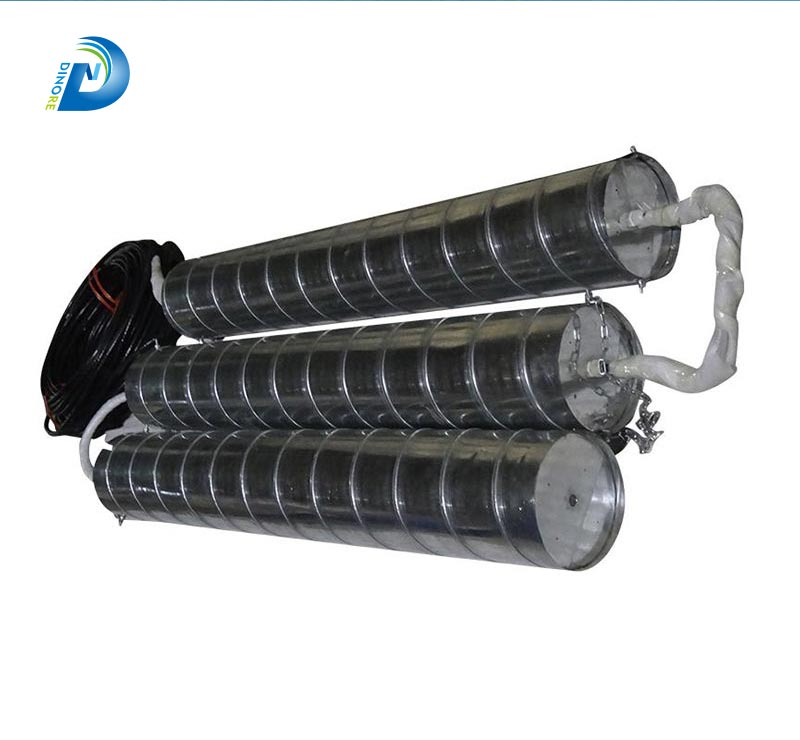
Canister anodes for cathodic protection are factory-preassembled deep-well anode groundbeds built around tubular Mixed Metal Oxide (MMO) titanium elements, carbonaceous backfill, a gas vent pipe, and a galvanized steel casing. Engineers drop them vertically into a drilled well—often deeper than 20 meters—and connect them to an impressed current cathodic protection (ICCP) rectifier. This ready-to-install design distributes protective current evenly along a pipeline corridor, reduces ground resistance, and eliminates on-site assembly errors. From long-distance oil and gas transmission lines to municipal water mains and harbor steel piles, they cover the widest range of buried and submerged metal structures, making a canister anode for cathodic protection a versatile choice.
Understanding Canister Anodes and Their Role in Cathodic Protection
What a Canister Anode Actually Is?
A canister anode is an ICCP groundbed that works on its own. The core is made up of several cylindrical MMO-titanium anodes that are threaded onto a single cable that is already connected. This cable is usually protected with PVDF or HMWPE to protect it from chlorine gas degradation. The anode string is surrounded by calcined petroleum coke, which lowers the resistance between the anode and the earth and moves the electrochemical reaction away from the titanium substrate to keep it from wearing out too quickly.
How It Differs from Sacrificial and Plate Anodes?
Anodes made of zinc, magnesium, or aluminum metals give up their lives to protect the goal structure. Their current budget is limited, but they work well for small, isolated buildings. Flat plate anodes and regular distributed groundbeds need to be put together on-site and take up a lot of space. A deep-well container system only needs a small hole in the ground, protects a much larger area, and works well even in high-resistance soils, where surface-mounted systems quickly lose their effectiveness.
Why MMO Titanium Replaced High-Silicon Cast Iron?
In the past, deep-well systems relied on ferrosilicon or graphite anodes, which are heavy, rigid, and wear out quickly. When MMO titanium anodes are covered with Ru-Ir, Ir-Ta, or platinum oxide at 8–15 g loading, they are about 90% lighter, keep their shape over time, and are rated for 30–50 years at normal ICCP current densities. They meet ASTM B338 Gr. 1 or Gr. 2, which gives procurement engineers a clear standard base for bid papers and approval packages from design institutes, especially when selecting a canister anode for cathodic protection.
Top Uses of Canister Anodes in Pipeline Cathodic Protection
MMO deep-well canister anodes can be found in almost every area that bury or submerge steel. These are the most common types of projects where engineers ask for them.
Long-Distance Oil and Gas Transmission Pipelines
Soil resistance changes a lot over hundreds of kilometers on cross-country pipes. A deep-well canister anode goes after a layer with low resistance below the yearly moisture zone. This keeps the current flow constant no matter what the surface conditions are. The vertical installation also reduces stray current interference with third-party utilities that run in parallel lines. This is a requirement that national pipeline owners, like state oil and gas grid companies, often put on contractors.
Municipal Underground Water and Gas Distribution Networks
In cities, pipeline networks are located in right-of-ways that are very crowded, with little room for surface space and expensive permits for digging. If you put one canister groundbed in a 200–300 mm drilled hole, it can protect several kilometers of distribution main. Because the product comes as a fully assembled and tested package, installation crews can finish each job site in one business day, which cuts down on the time the road has to be closed and the cost of the project.
Storage Tank Floors, Harbor Piles, and Offshore Foundations
The design standards for tank-bottom corrosion under big aboveground storage tanks (ASTs) are based on NACE SP0193. Deep-well canister anodes placed around the outside of the tank drive current evenly under the floor plate. For harbor steel piles and offshore wind turbine foundations, canister-style MMO anodes built into the structure's pile annulus or the ground around it provide long-term current flow that doesn't need to be retrieved on a regular basis. This matches the 30-year design life that is common in offshore energy contracts.
Comparing Canister Anodes with Other Anode Solutions
Picking the right canister anode for cathodic protection means thinking about how long it will last, how hard it is to install, and how much the whole project will cost over the asset's useful life.
A simple comparison of the main types of anodes is shown below:
- Sacrificial anodes (zinc/magnesium/aluminum): No external power needed; suitable for isolated structures or remote areas without grid access. However, current output cannot be adjusted, and they deplete over time—typically requiring replacement every 5–15 years depending on current demand. They are not practical for large pipeline systems with high protective current requirements.
- Conventional impressed current groundbeds (surface or shallow): Flexible for flat terrain with uniform, low-resistivity soils. Installation is straightforward, but they occupy wide surface areas and can create interference zones for adjacent metallic utilities. In high-resistivity soil, their effective protection radius shrinks substantially.
- MMO canister anodes (deep-well): Rated 30–50 years with Ru-Ir or Ir-Ta coatings; small surface footprint; uniform current distribution at depth; IP68-rated cable connections available; compatible with EN 12954, NACE SP0169, and GB/T 50934 documentation requirements. Factory-prepackaged assemblies reduce on-site labor and quality risk.
Because of these differences, canister groundbeds are the best choice for long-term infrastructure projects where it's hard or not possible to do maintenance in the middle of the project.
Procurement Guide: Selecting and Buying Canister Anodes for Pipelines
Before committing to a supplier, procurement managers and design engineers need to make sure that the technical specifications, compliance documents, and supply-chain logistics are all in sync.
Technical Specifications to Confirm
Check the grade of the titanium substrate (ASTM B338 Gr. 1 or Gr. 2), the type of MMO coating (Ru-Ir for chloride environments or Ir-Ta for mixed or freshwater soils), the coating loading in grams per meter, and the material used to insulate the cable. The diameter of the planned borehole should match the size of the canister. Standard assemblies range from 80 × 1000 mm to 100 × 1500 mm, but custom lengths of up to 6 m are possible. With every sale, you should ask for a Certificate of Conformance (CoC) and data from a rapid life test.
Compliance and Documentation Requirements
Large-scale pipeline projects in the US and other countries need paperwork that shows how the performance of the product compares to established standards. Make sure the supplier can give you cross-reference tables for EN 12954, NACE SP0169/SP0176, and GB/T 50934 if your design institute or EPC contractor asks for them. The technical clarification phase of a tender cycle goes much faster for suppliers who keep compliance packages ready to go.
Supply Chain and Delivery Logistics
Staged monthly delivery lowers storage costs and working capital risk for projects that need 50 to 200 parts over the course of 18 months. Check with the seller to see if they can ship in bulk from any Chinese port, use export-standard wooden crates for packing, and accept orders as low as one unit for testing purposes. For glass-smooth titanium surfaces, pearl-cotton on the inside protects against transport vibration, which is particularly important when shipping a canister anode for cathodic protection.
Maintenance and Longevity of Canister Anodes in Pipeline Applications
Installation Best Practices
To keep the anode in contact with the ground evenly, center the canister in the borehole before adding more carbonaceous backfill. Use an IP68-rated compression fitting to seal the cable entry at the well casing head. This will keep groundwater out, which is the main reason why hidden underground installations fail so quickly. As soon as the rectifier is turned on, check the output current and pipe-to-soil potential.
Routine Monitoring Schedule
Check the pipe-to-soil potential at test points every six months for the first two years of operation. After that, do it once a year to make sure everything is stable. Every month, write down the rectifier output voltage and current. If the voltage stays the same but the current drops, it's usually because the anode-to-earth resistance is going up, which is usually caused by the backfill drying out.
Troubleshooting Common Problems
Check the rectifier output first with a low-resistance ohmmeter to see if the cable connection stays open if the protective potential drops below the –850 mV CSE threshold set by NACE SP0169. Coating wear on MMO titanium anodes shows up as a slow rise in driving voltage instead of sudden failure. This gives engineers time to plan a replacement before the protection system stops working properly.
Conclusion
MMO canister anodes are the best way to protect oil and gas pipelines, municipal distribution networks, storage tanks, and marine structures from deep-well impressed current cathodic damage right now. Their design is pre-assembled in the factory, so there is no need for variation on-site. They are estimated to last 30 to 50 years, and their stable current output lowers the total cost of managing corrosion over the lifespan of the asset. When procurement teams and ICCP contractors look at different anode groundbed options, the canister anode for cathodic protection is a low-risk, acceptable choice because it has ASTM-certified titanium substrates, tried-and-true coating formulas, and full compliance paperwork.
FAQ
How long do MMO canister anodes last in buried pipeline service?
Anodes made of MMO titanium can last between 30 and 50 years, but this depends on how much covering (8 to 15 g Ru-Ir or Ir-Ta) is used, how resistive the soil is, and how much current is flowing through them. The units that Tianyi sells come with full CoC paperwork and a 5-year guarantee.
What cable insulation should I specify for aggressive soil conditions?
Chlorine gas, hydrocarbons, and high-chloride soils can't get through PVDF and HMWPE insulation. For media that are very active, HALAR (ECTFE) adds more chemical protection. Before you place an order, write down the type of cable insulation you want.
Can canister anodes be used in high-resistivity soils?
Yes. The placement in the deep well is aimed at layers below the root zone that have lower resistance. When calcined petroleum coke backfill is added, the system keeps the low anode-to-earth resistance even when the resistivity of the top dirt is over 5,000 ©·cm.
Is customization available for non-standard borehole diameters?
Tianyi makes bottle systems based on what the customer wants. You can change the diameter of the casing, the length of the anode string, the amount of backfill, and the type of cable. To get a formal size proposal, send in a soil resistivity profile and the design current requirement.
Request a Quote from Tianyi — Trusted Canister Anode for Cathodic Protection Supplier
When Tianyi's MMO canister anode assemblies are shipped from Baoji, China, they come with full ASTM B338 approval, CoC paperwork, and compliance cross-reference packages for EN, NACE, and GB standards. Our engineering team is ready to help you with a big pipeline project, whether you need a single test unit or a staged 12-month batch program. For technical datasheets and prices, email us at info@di-nol.comm right now.
References
1.NACE International. NACE SP0169: Control of External Corrosion on Underground or Submerged Metallic Piping Systems. NACE International, 2013.
2.European Committee for Standardization. EN 12954: Cathodic Protection of Buried or Immersed Metallic Structures. CEN, 2019.
3.Peabody, A. W. Peabody's Control of Pipeline Corrosion. 2nd ed., NACE International, 2001.
4.Baeckmann, W. von, Schwenk, W., and Prinz, W. Handbook of Cathodic Corrosion Protection. 3rd ed., Gulf Professional Publishing, 1997.
5.ASTM International. ASTM B338: Standard Specification for Seamless and Welded Titanium and Titanium Alloy Tubes for Condensers and Heat Exchangers. ASTM International, 2021.
6.Roberge, Pierre R. Corrosion Engineering: Principles and Practice. McGraw-Hill, 2008.