




Best Titanium Anode for Steel Plate Galvanizing Production Lines
When evaluating electrode materials for continuous electro-galvanizing lines, the titanium anode for steel plate galvanizing stands out as the definitive industrial standard. Built on a Grade 1 or Grade 2 titanium substrate and coated with mixed metal oxides (MMO) such as Ir-Ta or Ru-Ir, these dimensionally stable anodes (DSA) replace legacy lead-silver and graphite electrodes. They deliver low oxygen evolution overpotential, exceptional corrosion resistance, and uniform current distribution — qualities that directly translate into consistent zinc coating thickness and reduced energy consumption across high-throughput production lines.
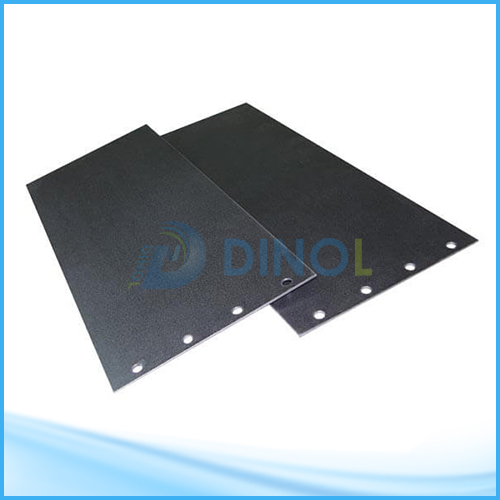
Understanding Titanium Anodes in Steel Plate Galvanizing
How the Electro-Galvanizing Process Works
A constant electro-galvanizing line moves steel strip through a group of electrolytic cells that are full of zinc sulfate or zinc chloride liquid. Water oxidizes at the anode surface according to the reaction 2H₂O → O₂↑ + 4H⁺ + 4e⁻. At the cathode, zinc ions deposit on the strip according to the reaction Zn²⁺ + 2e⁻ → Zn. The anode's electrochemical activity controls the flow of current across the width of the strip. Choosing the right anode is an important engineering choice, not just a purchase.
Why MMO Titanium Anodes Have Become the Industry Standard
Traditional lead-silver anodes break down slowly into the solution, adding metals that change the chemistry of the bath and make it harder for the zinc coating to stick. Graphite anodes wear down quickly, making carbon particles, and need to be replaced often—often every six to twelve months on harsh acidic lines. On the other hand, MMO-coated titanium anodes stay the same size throughout their service life, which is usually between 10 and 15 years when they are used according to the manufacturer's instructions. The titanium substrate doesn't dissolve in either acidic sulfate or alkaline electrolytes, so the cleanliness of the bath is kept without having to spend a lot of money on expensive downtime for cleanup.
The electrocatalytic coating is made to fit the electrolyte chemistry of each line of production. Ir-Ta coatings work best in mildly acidic or alkaline baths with current densities of 100–400 A/m², while Ru-Ir coatings work best in acid sulfate systems with current densities of 300–500 A/m². This matching of coating to electrolyte is the technical basis for anode customization that works. It is also why the same engineering logic behind a titanium anode for steel plate galvanizing applies to any electroplating or cathodic protection duty, where coating chemistry must be selected to suit the specific electrolyte and current density.
Comparing Titanium Anodes with Alternative Anode Options
Performance and Environmental Profile Side by Side
Before finishing specs, equipment managers often compare three types of anodes. There are big differences in how long something lasts, how likely it is to get dirty in the bath, and how well it meets government standards. These differences affect more than just the unit price.
Graphite anodes have the lowest initial cost, but they wear out quickly, which means they cost more in the long run. Consumption of 5–10 kg of carbon per ton of zinc deposited means that the coating needs to be changed more often, the annual maintenance windows are extended, and the coating becomes contaminated with carbon, which makes it impossible to paint, which is a major problem for people who buy automotive steel sheets. Lead-silver alloys are more stable in terms of size than graphite, but they produce lead sludge that needs to be treated as trash in order to meet EU and big Asian market environmental rules. Both problems are solved at the same time by MMO titanium anodes.
When you directly compare the three choices, you can see a clear decision framework:
- Graphite anodes are cheap per unit, but they have high lifecycle costs because they wear out quickly, get dirty in the bath, and need to be replaced quickly. This makes them unsuitable for lines that need to keep tight tolerances on coating thickness.
- Lead-silver anodes are somewhat stable, but they come with the cost of getting rid of lead sludge, the risk of breaking the law, and a zinc layer that isn't completely flat when the anode geometry changes over time.
- MMO titanium anodes cost more at first, but they pay for themselves in two to three years of use because they use less energy, need to be serviced less often, and don't produce lead trash. They are the only choice that works with modern frameworks for environmental compliance.
These differences are very important when production lines are working with automakers that have strict requirements for the materials they send in. In that supply chain, it is necessary to have uniform coating thickness, which can only be done by keeping the anode shape fixed and controlling the flow of current. This is exactly where a properly engineered titanium anode for steel plate galvanizing becomes a quality-control tool, not just a consumable, because consistent anode geometry and current distribution directly determine coating uniformity on the finished steel.
Procurement Considerations for Titanium Anodes
Matching Coating Specification to Your Electrolyte System
Finding the right anode starts with choosing the coating, not with negotiating the price. Putting a Ru-Ir coating in an alkaline bath will cause it to passivate too soon, while putting an Ir-Ta coating in a high-chloride acid bath will make it less effective at releasing oxygen. The best way to avoid costly mistakes is to let the supplier know about the electrolyte composition, operating current density, and temperature range before sending the drawings.
Quality Verification Protocols That Protect Line Uptime
Reliable providers back up technical qualification with tests that can be measured. Before agreeing to a large order, buying teams should ask for the following paperwork and test runs:
- XRF coating thickness maps showing that the MMO loading is the same on the whole anode surface; differences greater than ±10% mean that the thermal spray or brush-coat application wasn't done evenly.
- Accelerated life testing (ALT) results at high current density, using the NACE TM0294 method, give a good guess of how long the product will last in the field.
- SEM morphology analysis confirming that the coating microstructure is free of cracks that would expose the titanium substrate to passivation otherwise.
- Thermal shock adhesion testing which involves heating and cooling the MMO layer several times at 500 °C and then cooling it with water, proves that it will not separate under high-current thermal stress during production spikes.
- Dimensional tolerance certificate that proves the fit of the busbar and cell frame with the production line plans.
These steps of verification are the usual way for big steel makers to make sure that a new anode supplier is qualified before they can be used on the line. If suppliers don't want to give this paperwork, they're putting production lines at risk, and unplanned downtime can cost seven figures per day.
Enhancing Galvanizing Production Line Efficiency Using Titanium Anodes
Installation, Operational Tips, and Real-World Outcomes
Anode service life is greatly increased by using the right installation methods. To keep contact resistance as low as possible, busbar connections must be torqued to the manufacturer's specifications. Joints with high resistance cause localized heating that speeds up coating degradation. The same discipline applies to a titanium anode for steel plate galvanizing, where loose or corroded busbar joints can create hot spots that shorten anode life and disrupt the uniform current distribution the coating process depends on.
The anode-to-cathode gap sets affect how evenly the current flows. Tighter gaps make the coating more even, but they also need more liquid to flow. In published plant tests, lines that switched from lead anodes to MMO titanium anodes saved 8–15% of their original energy. This is because the MMO layer has a lower oxygen evolution overpotential than lead oxide surfaces.
Electro-galvanized steel made on well-kept MMO anode lines always meets the weight requirements for two-sided coatings that are needed for automotive exposed panels and appliance facings. It also helps post-treatment lines for passivation, phosphating, and anti-fingerprint coating, since the cleanliness of the bath upstream affects how well the chemical conversion layers adhere downstream.
New developments in anodes include MMO formulas that can handle higher loads and last longer than 15 years, as well as modular mesh-plate hybrid shapes that make electrolyte turbulence less noticeable and zinc deposition more evenly on wide-strip lines that work above 400 A/m².

Conclusion
In modern continuous electro-galvanizing lines, MMO-coated titanium anodes have proven themselves to be the best material for the core electrodes. Their dimensional stability, low overpotential, coating chemistry that can be changed, and long service life (decades) solve all of the major operational problems that equipment managers face, such as coating uniformity problems and environmental compliance pressure. Choosing the right coating, substrate, and geometry combination for your electrolyte system and current density is what separates lines that work well from ones that need to be fixed over and over. That is why specifying a titanium anode for steel plate galvanizing with the correct Ir-Ta or Ru-Ir coating, Grade 1 or Grade 2 substrate, and matched geometry is now standard practice for lines that cannot afford repeated downtime.
FAQ
How long do MMO titanium anodes typically last in a galvanizing line?
MMO titanium anodes have a service life of 10 to 15 years when they are used normally and at the recommended current levels. The base can be used more than once, so when the catalytic coating wears off, the titanium base can be recoated instead of being replaced. This saves a lot of money in the long run.
What routine maintenance extends anode service life?
The three most important maintenance tasks are checking for coating delamination on a regular basis, checking the resistance of the busbar link during every planned maintenance cycle, and stopping reverse-current events from happening when the line is shut down. Reversing the orientation, even for a short time, speeds up the breakdown of coatings and can shorten their useful life by years.
Are titanium anodes safer than lead-silver alternatives from a regulatory standpoint?
Yes. Titanium anodes don't dissolve in the electrolyte, and they don't make any metal waste in the bath. Lead-silver anodes make lead sludge, which must be thrown away in a special way according to RoHS, REACH, and other national rules that are similar. If you switch to MMO titanium anodes, that type of risk goes away completely.
Can anode dimensions be fully customized to existing cell designs?
Anodes from reputable makers can be made to fit plate, mesh, tube, and hybrid shapes and are made from plans provided by the customer. It is compatible with existing busbar systems in terms of size tolerances and conductive connection interfaces, so cells don't need to be changed.
Partner with Tianyi — Your Trusted Titanium Anode for Steel Plate Galvanizing Supplier
Tianyi makes MMO titanium anodes that are precisely engineered to fit your production line drawings, electrolyte chemistry, and current density needs. As a titanium anode for steel plate galvanizing manufacturer with a lot of experience, we can help you through the whole qualification process, from scientific exchange and sample testing to large-scale production and regular restocking. To ask for a customization consultation, email our engineering team at info@di-nol.com.
References
1.Journal of Applied Electrochemistry— Volume 52, 2022
2.Electrochimica Acta— Volume 398, 2021
3.Surface and Coatings Technology— Volume 421, 2021
4.NACE International Corrosion Conference Proceedings— 2020
5.Steel Research International— Volume 93, 2022
6.Journal of the Electrochemical Society— Volume 169, 2022