




How are ICCP MMO canister anodes installed and connected safely?
Installing an ICCP MMO canister anode for cathodic protection requires a disciplined sequence of steps — from site evaluation and mechanical placement to cable termination and system commissioning. When each phase is executed correctly, these factory-engineered groundbed assemblies deliver stable, low-resistance current output for 20 to 50 years with minimal intervention. This guide walks through the full process, so your field crew and procurement team share the same technical baseline before the first drill bit touches soil.
Understanding ICCP MMO Canister Anodes and Their Role in Cathodic Protection
What Makes an MMO Canister Anode Different?
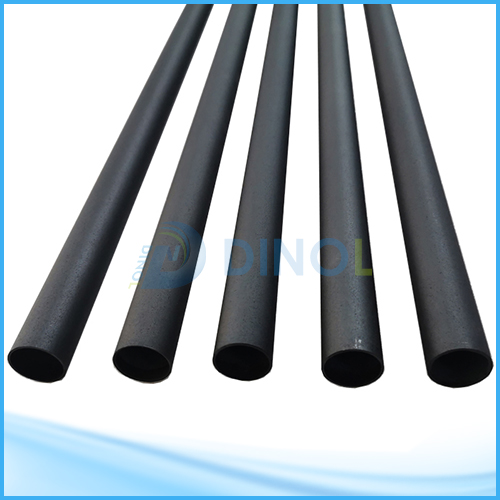
A canister anode is more than just a titanium rod that is dropped into a hole. A rod, tube, or wire-shaped titanium substrate coated in Mixed Metal Oxide (MMO) is pre-packed inside a galvanized steel canister that is full of calcined petroleum coke breeze (fixed carbon >98%, resistivity <0.1 ohm-cm). This factory-controlled setting gets rid of field compaction variables, stops hot spots in high-resistance soils, and makes sure that low-resistance current flows right away when the device is buried.
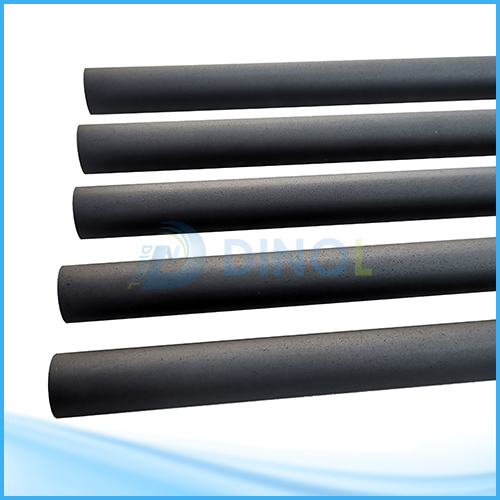
The titanium substrate meets ASTM B338 Grade 1 or Grade 2 and is covered with either Ru-Ir MMO or Ir-Ta MMO, depending on the environment in which it will be used. The rate of use is less than 1 mg/Amp-year, which is higher than what graphite or high-silicon cast iron anodes can reach. When you look at the lifetime cost of the MMO canister system versus sacrificial magnesium or zinc anodes, it clearly wins in terms of both longevity and current efficiency. This is especially true for pipeline routes that run across multiple countries and where the cost of re-entry is too high.
Core Application Environments
In pipeline and infrastructure security, MMO cylinder anodes are most often used in three situations:
- Deep well groundbeds for long-distance pipelines: Vertical installation at depths of 30–150 meters distributes current across multiple soil strata, overcoming high surface resistivity common in arid regions across the Middle East, Central Asia, and the Indian subcontinent.
- Above-ground storage tank (AST) undersides: Pre-packaged canisters installed horizontally or vertically beneath tank floors prevent backfill migration and maintain stable protection geometry throughout the asset's service life.
- Urban utility corridors: The compact canister footprint minimizes excavation interference with adjacent buried infrastructure — water mains, power cables, and telecom conduits — making them ideal for congested municipal gas networks.
When placed horizontally or vertically under the floors of above-ground storage tanks (ASTs), pre-packaged canisters stop backfill from moving and keep the security geometry fixed for the life of the asset. This is a key advantage of specifying an ICCP MMO canister anode for cathodic protection for AST bottom protection, where the factory-controlled coke breeze backfill and fixed canister geometry ensure stable current distribution without the risk of backfill migration or anode displacement over decades of service.
— Utility routes in cities: Because the canisters are small, they don't get in the way of nearby buried utilities like water mains, power lines, and telecom ducts when they are being dug up. This makes them perfect for crowded city gas networks.
Key Considerations Before Installing ICCP MMO Canister Anodes
Site Assessment Parameters That Drive System Design
Before designing a groundbed, the Wenner four-pin method should be used to measure the soil's resistance. Protective current density goals and anode spacing estimates must be based on measured soil data, not guesses, according to NACE SP0169. Different temperature ranges, the amount of chloride present, and the amount of moisture all affect which coating your corrosion engineer should recommend: Ru-Ir for oxygen-evolving soil or Ir-Ta for chlorine-evolving brackish conditions.
The total current demand of the covered structure is multiplied by the output rates of each anode and the attenuation properties of the layer on the pipeline. This gives us the number of anodes and their spacing. According to NACE SP0169 standards, the pipe-to-soil potential must be at or below –850 mV (Cu/CuSO₄) along the whole protected segment for the system to be properly designed.
Before buying and installing anything, it must be made sure that it meets the requirements of ISO 15589-1 (pipeline cathodic protection) and any local laws that apply. Before any long-lead materials can get through customs, your owner's PMC will need written approval of the design.
Step-by-Step Guide to Safe Installation of ICCP MMO Canister Anodes
Receiving Inspection and Pre-Installation Checks
Each box should be checked against the mill certificate and packing list as soon as it gets to the job site. Check the MMO coating loading using the XRF research reports that the provider gives you. Check the micro-ohm resistance values at the anode-to-cable joint. If the number is much higher than the factory baseline, it means the link has been hacked. Check the integrity of the canister for holes or dents that could speed up the corrosion of galvanized steel before the coke breeze settles. These incoming inspection steps are essential for any ICCP MMO canister anode for cathodic protection, because damage or joint resistance drift that goes unnoticed at delivery will only surface as groundbed failure after installation.
Identifying the cables is just as important. Most project requirements call for HMWPE (High Molecular Weight Polyethylene) or dual-insulated Kynar/HMWPE lead wire that can handle the toxic gas environment that is created when the ICCP is working. Before taking the shipment, make sure that the type of cable fits the list of allowed materials.
Mechanical Installation and Electrical Connection
When putting in a deep well groundbed, the steps are usually done in this order:
- Well preparation: After the driller completes the borehole to design depth, flush the well to remove cuttings that elevate contact resistance between coke backfill and native soil.
- Canister lowering: Use a non-conductive centralizer or string the canisters on a fiberglass support rod to maintain vertical alignment and prevent contact with the borehole wall. Center-to-center spacing between multiple canister strings follows design drawings.
- Cable routing: Route the lead wire through conduit from the wellhead to the rectifier cabinet. Avoid sharp bends at the wellhead seal that could damage insulation under thermal cycling.
- Connection termination: Splice lead wires using compression or exothermic weld (Cadweld) joints rated for buried service. Apply a two-part heat-shrink seal with internal adhesive lining. Helium pressure testing of the primary cable-to-anode seal, when specified, validates moisture exclusion before burial.
- Rectifier integration: Connect anode leads to the positive terminal of the transformer-rectifier unit. Confirm polarity — reversing positive and negative outputs destroys the MMO coating irreversibly within hours.
Apply rated current slowly after backfilling and restoring the surface, and keep an eye on the structure-to-electrolyte potential readings at test stations along the protected corridor.
Best Practices for Maintaining and Troubleshooting MMO Canister Anode Installations
Monitoring Protocols That Prevent Expensive Surprises
Closed-interval potential studies (CIPS) done once a year along the pipeline route find problems with the security system before coating failures turn into active corrosion. Every month, write down the output voltage, current, and anode-to-remote earth resistance at the rectifier cabinet. If the groundbed resistance trend goes up without the soil moisture changing at the same time, this usually means that the link joints are breaking down more and more.
Connection seal failures that let moisture in cause wire insulation to break down and current flow to become erratic are common fault conditions. Over time, the contact resistance can go up if the coke column gets stuck in limestone soils. When access is possible, using a clamp-on earth tester to take regular readings of the resistance to ground can help find the damaged string without having to dig it up.
The schedule for maintenance should be in sync with the seasonal changes in soil moisture. In deserts, the dry season often raises the soil's resistance high enough to lower the output current below the safety threshold. This is why it is common to change the rectifier output every three months. This seasonal adjustment is especially important when an ICCP MMO canister anode for cathodic protection is deployed in arid or desert regions, where soil resistivity swings can push the anode outside its designed current density range and compromise protection levels.
Selecting Reliable ICCP MMO Canister Anode Suppliers and Ensuring Smooth Procurement
Evaluation Criteria That Reduce Project Risk
The AVL method for an owner usually takes two to eight weeks to qualify a supplier for long-lead cathodic protection materials. As proof, your provider must give you ISO certification, third-party test reports accepted by SGS or Bureau Veritas, accelerated life test data according to NACE TM0108 standards, and tracked mill certificates for the titanium substrate.
Tianyi's factory in the Baoji High-Tech Development Zone makes MMO-coated titanium anodes with a Grade 1/Grade 2 titanium substrate and both Ru-Ir and Ir-Ta covering choices. Standard deep well groundbed specifications can be met by canisters that are 1 m, 1.5 m, or 2 m long and have outer diameters of 80 mm, 100 mm, or 150 mm. There is no need to wait for custom tooling lead time. When design experts need non-standard geometry, OEM and ODM production options can meet the unique size needs of a project.
For projects in India, Saudi Arabia, Oman, and sub-Saharan Africa, strong packaging and export paperwork are needed. This includes country-of-origin certificates, SGS inspections, and full packing lists. Standard production runs include batches of 50 to 300 units per project order. This keeps unit prices within the limits of what the budget allows.
Conclusion
Safe installation of MMO canister anodes depends on disciplined site assessment, verified material quality, correct cable termination, and systematic commissioning. Each step compounds on the previous one — a compromised joint at installation becomes a failed groundbed five years into a twenty-year design life. Selecting a manufacturer with documented electrochemical testing data and reliable export logistics removes the largest variables from your procurement risk register. The field crew installs hardware; the engineering and procurement team determines whether that hardware will still be performing in 2045. That is why the specification of an ICCP MMO canister anode for cathodic protection should be treated as a long-term engineering decision rather than a line-item purchase.
FAQ
What is the typical design life of an MMO canister anode?
Design lives that are common in the industry are 20, 25, or 30 years, depending on the thickness of the coating and the working current density.
Can MMO canister anodes be retrofitted on an existing pipeline?
Yes, retrofitting deep well groundbeds only needs access through surface digging, which doesn't cause too much trouble for the pipeline that is already running. The new test stations and rectifier connections work with the current monitoring system and don't affect the cathodic protection on segments next to them.
What cable insulation is required for buried anode lead wires?
The standard is HMWPE cables or dual-insulated Kynar/HMWPE cables. Both can stand up to the oxidizing gas atmosphere that forms at the anode surface during ICCP operation and keep their insulation integrity in harsh soil chemistry.
Why does the polarity connection matter so critically?
When the voltage of the rectifier is switched around, cathodic current flows to the anode lead and anodic current flows to the protected structure. This is the opposite of what was meant to happen.
How do you verify a newly installed groundbed is working correctly?
The MMO coating starts to dissolve within hours of reversed polarity, which destroys the anode permanently.
Partner With Tianyi — Trusted ICCP MMO Canister Anode for Cathodic Protection Manufacturer
Tianyi gives pipeline EPC companies around the world tested, project-ready options. Since we're a well-known ICCP MMO canister anode for cathodic protection source, we offer SGS-certified test results, full AVL documentation packages, and batch production in normal deep well sizes. To get a quote that fits your project schedule, email our technical team at info@di-nol.comto see all of our products.
References
1.NACE International. SP0169: Control of External Corrosion on Underground or Submerged Metallic Piping Systems. NACE International, 2013.
2.NACE International. TM0108: Evaluation of Internal Plastic Coatings for Corrosion Control of Tubular Goods in an Aqueous Flowing Environment. NACE International, 2008.
3.ISO. ISO 15589-1: Petroleum and Natural Gas Industries — Cathodic Protection of Pipeline Systems — Part 1: On-Land Pipelines. International Organization for Standardization, 2015.
4.Peabody, A. W. Control of Pipeline Corrosion. 2nd ed., NACE International, 2001.
5.Morgan, John H. Cathodic Protection. 2nd ed., NACE International, 1993.
6.Lazzari, Luciano, and Pietro Pedeferri. Cathodic Protection. Politecnico di Milano Press, 2006.